

Bird News
Bird watching or birding, you may call it what you wish, is great hobby, occupation, form of relaxation, and more than anything else is an ongoing education. The learning experience involved in birding is one that has kept me hooked on watching, reading about, talking to others about, and surfing the net for information about birds for lo these many years.
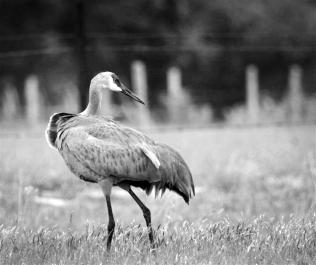
Late spring can be an interesting time for Vineyard birders. Although the migration of dicky-birds as well as shore birds, waterfowl and hawks has finished for the season, there are always surprises. The sandhill crane that appeared last week isn’t a bird one would expect to see during a normal Vineyard spring migration. The return of the nesting pair of merlins on Chappaquiddick, which were reported by Rob Bierregaard and Dick Jennings on May 14, is an ornithological dividend. Lanny McDowell, Allan Keith, Pete Gilmore and I saw one of the merlins on May 23 and located the nest following Rob and Dick’s directions. The merlins are quite defensive and are probably already on eggs. These will take around a month to hatch and then the young merlins will need a month to mature enough to take wing. It is interesting that these merlins returned to the same area where Mary Adelstein and Margaret Fowle first saw them in early June 2008. We are still the only location for nesting merlins in Massachusetts! We hope our merlins will be as successful as last year.
The results of Felix Neck Wildlife Sanctuary’s annual Bird-a-thon tops the news for this week. A total of 119 species were observed from 6 p.m. on Friday, May 15, to 6 p.m. on Saturday, May 16. Twenty-three birders participated in this marathon Massachusetts Audubon Society event, scheduled to coincide with the peak of the northward migration.
It is a treat to find young people who are interested in what is happening in the natural world, not the virtual computer world. A couple of days ago I called John Nelson, the science teacher at the Martha’s Vineyard Regional High School, and he answered the phone so that his students could communicate with me. The class, thanks to Mr. Nelson, has access to a spotting scope which is permanently focused on an osprey nest which is located on the floodlights of the regional’s football field. I spoke with three of John’s students. John Cooperrider let me know that the regional’s pair of osprey arrived in early April and that he and the rest of the class have been watching their activities ever since. Tom McHugh noted that the male was much smaller than the female, yet he was bringing fresh herring to his mate several times a day. Tracy Bowker added that she also noted the size difference and also that before the female laid her eggs, both osprey added twigs to the existing nest as well as a plastic six pack holder. The class still doesn’t know how many eggs the female osprey is sitting on but maybe after Dick Jennings and Rob Bierregaard finish their survey of the Vineyard osprey nests this week they may find out.
What has 16 million bricks, the dark red ones from Maine and the remaining lighter pinky-red bricks from Pensacola, Fla., and is 90 miles from Cuba and equal distance from mainland Florida? Fort Jefferson.
Birders have a tough decision, as there are two very important bird-oriented events this weekend; one for least terns and another for the Massachusetts Breeding Bird Atlas.