

Bird News
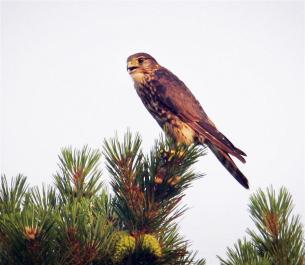
It all started with a message on the bird hot line which I received on July 2. A Chappaquiddick summer resident called to say that she had a pair of merlins that appeared to be nesting on her property. Hmm, said I. I was pretty sure there were no records of merlins nesting in Massachusetts, but I checked the Birds of Massachusetts, by R. Veit and W. Petersen before I called. I was right.
It is very weird for this Island girl to spend a week at 8,000 feet and walk in snow in June. Last week I attended the American Birding Association Conference in Snowbird, Utah.
The mountains were spectacular but so was Salt Lake. The variety of habitats I visited was mind-boggling.
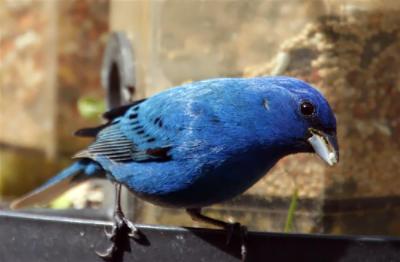
Indigo buntings must be the deepest and brightest blue of all the birds we are likely to see on the Island. A close-up view of a male in good lighting will inevitably invoke a gasp or a “Wow!” from the viewer.
Their song is quite spectacular too. Books describe it in various ways: a musical series of warbling notes, with each phrase given in pairs, or as a lively, high, sharp, strident urgent warble with phrases at different pitches. Of course these verbal descriptions do not do the song justice.
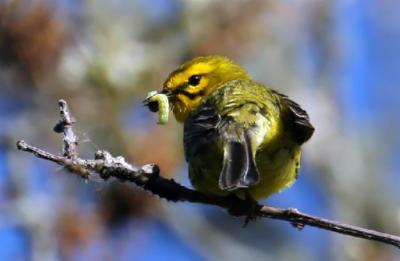
Visions of wide open spaces are what one thinks of when they hear the name prairie warbler. Unfortunately, this lovely yellowish warbler has not been named appropriately. Dendroica discolor is the prairie warbler’s Latin name. Loosely translated, this Latin moniker means multicolored dweller of trees. Now that aptly describes the prairie warbler. How prairie got into the mix remains a puzzle to me.
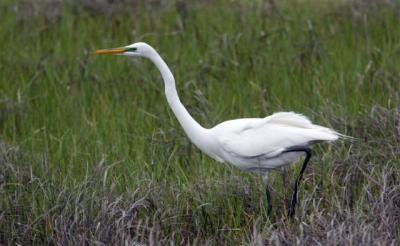
“Susan, I have what I swear is a peacock hanging precariously onto my niger (thistle seed) feeder. Earlier the same bird was enjoying cooling off in my garden sprinkler. I am sure it is someone’s pet — do you know who owns peacocks in West Tisbury?”

Misidentification of a bird species is always embarrassing, but when it is one made on a group of birds very difficult to separate, it is not quite as bad.