

Nature & Science
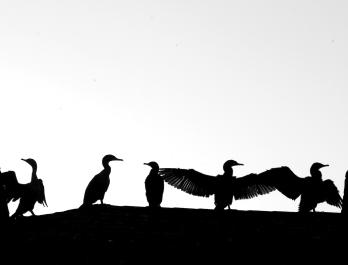
The double-crested cormorant may be legally protected, but if the town of Chilmark and the Wampanoag Tribe of Gay Head (Aquinnah) get their way, the Island will soon see fewer of the pesky birds, whose voracious appetites threaten fish restoration projects.
The tribe is seeking a special permit from the U.S. Fish and Wildlife Service to harass and kill the birds in order to protect the historic herring run. Chilmark is applying for the same permit to protect the new flounder restoration project. This is the first time the town has applied for the permit.
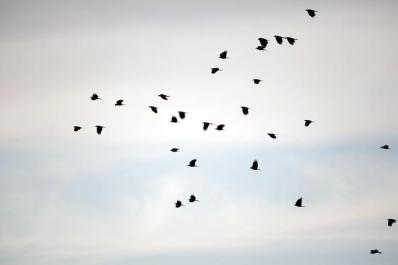
There is a group of about 1,500 winter commuters a day between the Cape and Martha’s Vineyard, and not one of them takes the ferry. They all fly.
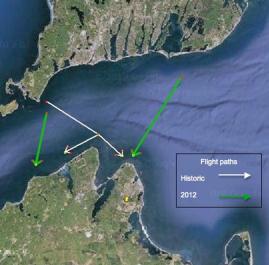
The commuters are crows. They leave for the Cape early in the morning and return to the Vineyard around 4 p.m. to spend the night here.
The phenomenon, known among some birders for years, is now the subject of a scientific study that promises to shed light on the reasons for, and effects of, this curious behavior.
Approximately 1,500 crows roost at the land bank’s Tradewinds Preserve off County Road in Oak Bluffs. This roost was noted this winter as a result of the recent Christmas Bird Count; Tom Chase’s field team counted these crows and found the second confirmed sighting of fish crows on the Island. Allan Keith’s field team could not find last year’s roost of crows off North Road in Chilmark, which included the first confirmed sighting of fish crows on the Island.
Elephant grass is the elephant in the room--or, in this case, the field.
Scientifically known as Miscanthus, and commonly called plume grass, maiden grass, Eulalia grass, and Chinese or Japanese silver grass, elephant grass has been popping up all over the Island. This nonnative plant, along with its many ornamental cultivars, has become very popular in our yards and gardens. Increasingly, however, I am seeing it along trails and roadsides and in open fields.
Tonight’s gibbous moon appears near the bright red planet Mars. The two are in the zodiacal constellation Leo, a constellation we usually associate with spring and early summer. Mars rises first before 9 p.m., followed by the moon; but the best view of them as a pair will be closer to 10 p.m. or later when they are higher in the east.
Temperature: Precip.
Day Max. Min. Inches.
Fº Fº
Feb. 3 45 30 .00
Feb. 4 42 29 .00
Feb. 5 46 31 .00
Feb. 6 41 22 .00
Feb. 7 44 32 .00
Feb. 8 49 28 .00
Feb. 9 39 28 .01*
*Melted precipitation
Water temperature in Edgartown harbor: 43º F.
Almanac
A comprehensive guide to weather and tides on the Island.

Vineyard Gardener
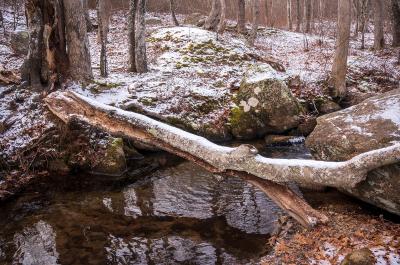
I guess this past week weather-wise is called a January thaw. We did not really experience it the last several years as December was unseasonably warm.
Farm & Field
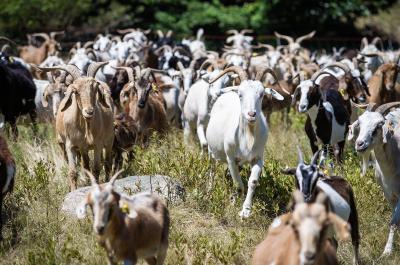
Beige and brown and tan and black, with horns spiraled or semicircular or in undulating waves, a legion of goats marched up the hill toward us, bleating in anticipation of fresh grass and leaves.