

Nature & Science
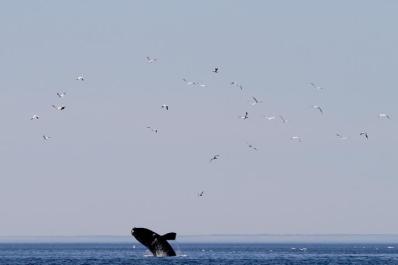
Until a week ago the waters off of Race Point in Provincetown were a pageant of marine life, with divebombing gannets, 80-foot fin whales slicing the surface, dolphins and porpoises circling like gnats and docile North Atlantic right whales skimming blithely by, mouths agape.
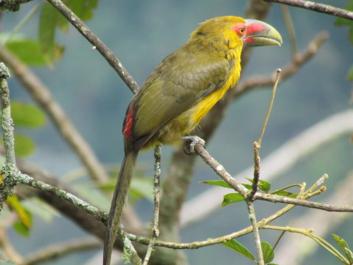
Flip Harrington and I always plan an escape from March madness and find a good birding area to visit. This year we were glad not to be on-Island after reading the Gazette issues we missed, madness hit the Vineyard with a vengeance this March.
Coltsfoot is a horse of a different color. This early spring flower resembles a dandelion, but don’t be fooled. Its resemblance is superficial. The round yellow blossom is at first glance a look-alike, but upon inspection you can see some obvious differences.

State fisheries officials have warned Vineyard conch fishermen that if significant conservation measures aren’t taken soon, the Island’s biggest fishery will collapse and be difficult to restore. After meeting last Friday with the state officials, a number of local fishermen said the conch fishery is in serious trouble and the state can’t act fast enough.
The world can be divided into two categories: The haves and have-nots.
The same is the case in nature and, more specifically, in mammals. In the group of haves, you will find many species of primates (but not spider monkeys), rodents (minus the lagomorphs or rabbit family), moles, shrews, hedgehogs, bears, cats and dogs, walruses, seals, sea lions, raccoons, otter, bats, weasel and skunk, among others. These species can hold their heads high.
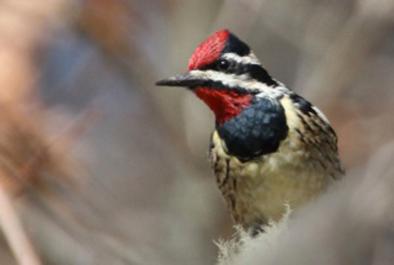
Black-capped chickadees are singing frequently now, and it is a welcome sound of spring. Their song is a clearly whistled feee-beee. Chickadee song on the Vineyard is unique, as both notes are sung on the same pitch; almost everywhere else the second of these two notes is at a lower pitch than the first note. The chick-a-dee-dee-dee that we hear frequently is their call note rather than a song.
Almanac
A comprehensive guide to weather and tides on the Island.

Vineyard Gardener
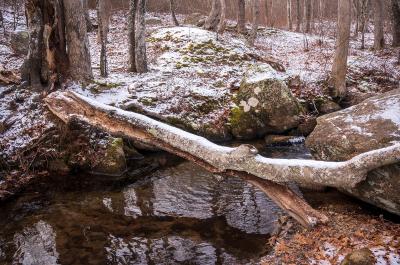
I guess this past week weather-wise is called a January thaw. We did not really experience it the last several years as December was unseasonably warm.
Farm & Field
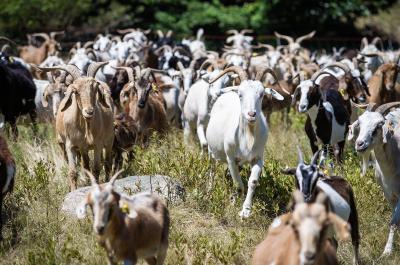
Beige and brown and tan and black, with horns spiraled or semicircular or in undulating waves, a legion of goats marched up the hill toward us, bleating in anticipation of fresh grass and leaves.