

Farm & Garden

About four years ago I was working on a landscaping project on a horse farm in West Tisbury. Word quickly spread around the farm that a horse had lain down and died in its stall that morning. There was somberness in the air on that hot summer day, with the humidity promising a thunderstorm in our near future. Horses are not small creatures, and a front-end loader was brought in to extract the animal from the barn. The scene became quite loud as chains were rigged this way and that and the engine on the machine was revved for more power.
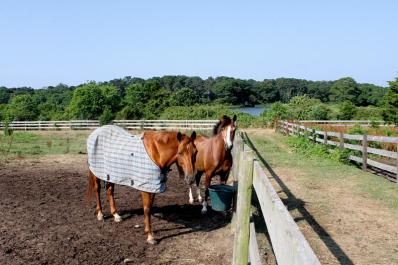
Check yourself, check the children, check the cats and dogs. And when it comes to checking for ticks, don’t forget about horses. Equestrians on the Vineyard and throughout New England are now constantly on the lookout for Lyme disease symptoms in horses.
I’m desperate for rain. I don’t mean a tiny sprinkling or a passing thunderstorm with a five-minute downpour. I need two or three days of a steady soaking. When I was a child, I remember many summer days of rain. We either played happily outside getting thoroughly drenched or spent hours of board game fun on the front porch.

Chilmark tends to be on the darker side. Edgartown is rather light, and in springtime, the honey produced in West Tisbury and Vineyard Haven is so light in color it’s almost clear.
“They’re all different, and people really like that — they like the local, local, down to the town,” Tim Colon, owner of Island Bee Company says, standing over one of his hives in the backyard of his Vineyard Haven home. Mr. Colon has 130 hives across the Island in every town except for Aquinnah. “The color all depends on what’s blooming.”
Everyone in the gardening and landscaping business has been commenting on how weird the season has been. We’ve been talking about the mild winter and super-warm spring. Both seem to be factors in how quickly the summer plants have moved along. I saw some New England fall asters blooming at the entry to the YMCA, for heaven’s sake.
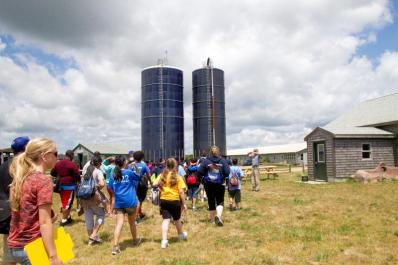
A group of middle school girls cautiously approached a pile of Dutch belted calves at the Farm Institute one morning last week, dodging large piles of dung and tiptoeing their way closer.
“They’re big,” one girl said of the seven-week-old calves.
“They’re cute,” said another.
“This one is especially friendly,” farm educator Emily Palena said. “The worst thing she’ll do is lick you.”