

Farm & Field
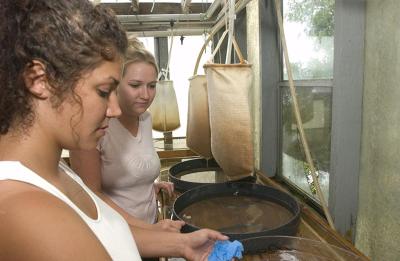
At first glance, Rick Karney does not appear to be a farmer. He works on the water and is usually more damp than dirty.
But to watch him in action is to be sure that the work Mr. Karney does at the Martha’s Vineyard Shellfish Group is hardly different from the work Island farmers do in their fields and stables and greenhouses every day.
Coffee grinds, apple cores and curly orange carrot peels: straight to the trash they go in most households. But on Island farms, these food scraps (along with egg shells, wilted greens and watermelon seeds) go to the compost. For the farmers, this trash is treasure.
“It’s like crop insurance,” explained Jim Athearn of Morning Glory Farm last week as he stepped down from his tractor.

Julian Barbosa was raised on a farm where he learned to cook with vegetables grown in his backyard. When he moved to Martha’s Vineyard four years ago, he continued cooking, both at home and later at Zephrus Restaurant in Vineyard Haven where he is the sous chef.
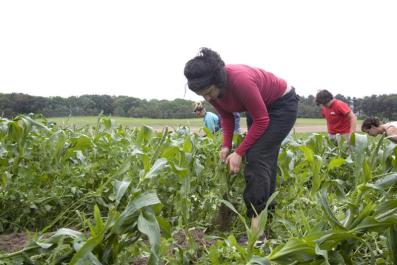
The seeds are planted and the first hay harvested. Across the Island, farms are full of activity and, just as their farmers are busy with animals and crops, farming advocates are working tirelessly to protect the agricultural tradition here.
Despite all this hard work, there is little to no coordination of agricultural activities on Island.
The road leading into Flat Point Farm in West Tisbury is surrounded by hay fields and on Friday afternoon the late-day sun brushed their tops in shades of gold.
In one hand, Doug Brush, 26, held a cold beer — it was 5 p.m., after all. In the other he held a hammer. With him was his business partner, Jeff Munroe, 28. Together, they were finishing a self-designed movable pen for their 226 rock cornish-cross baby chicks, which arrived in the Vineyard Haven post office the day before.

As the story goes, the history of farming at Katama began in the first World War when Edgartown families planted army and navy beans deep in the rich soil there. Yet maps of the Island which date from 1862 show fences bordering the land, indicating that agricultural use of the land can be traced to an even earlier date.