

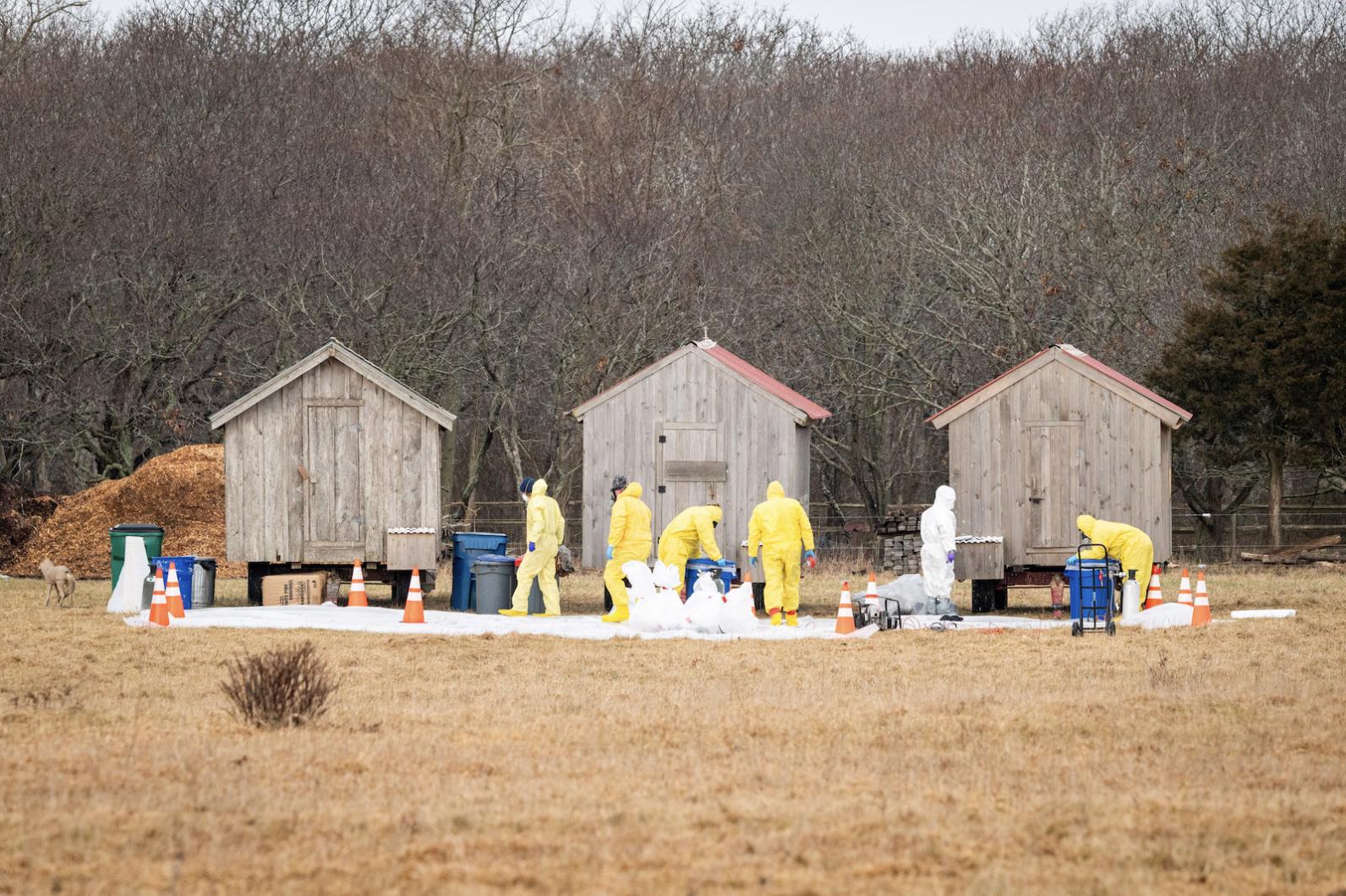
Bird flu made a resurgence on the Vineyard over the holidays after the disease wiped out half of the 350-bird flock at Slough Farm in Edgartown.
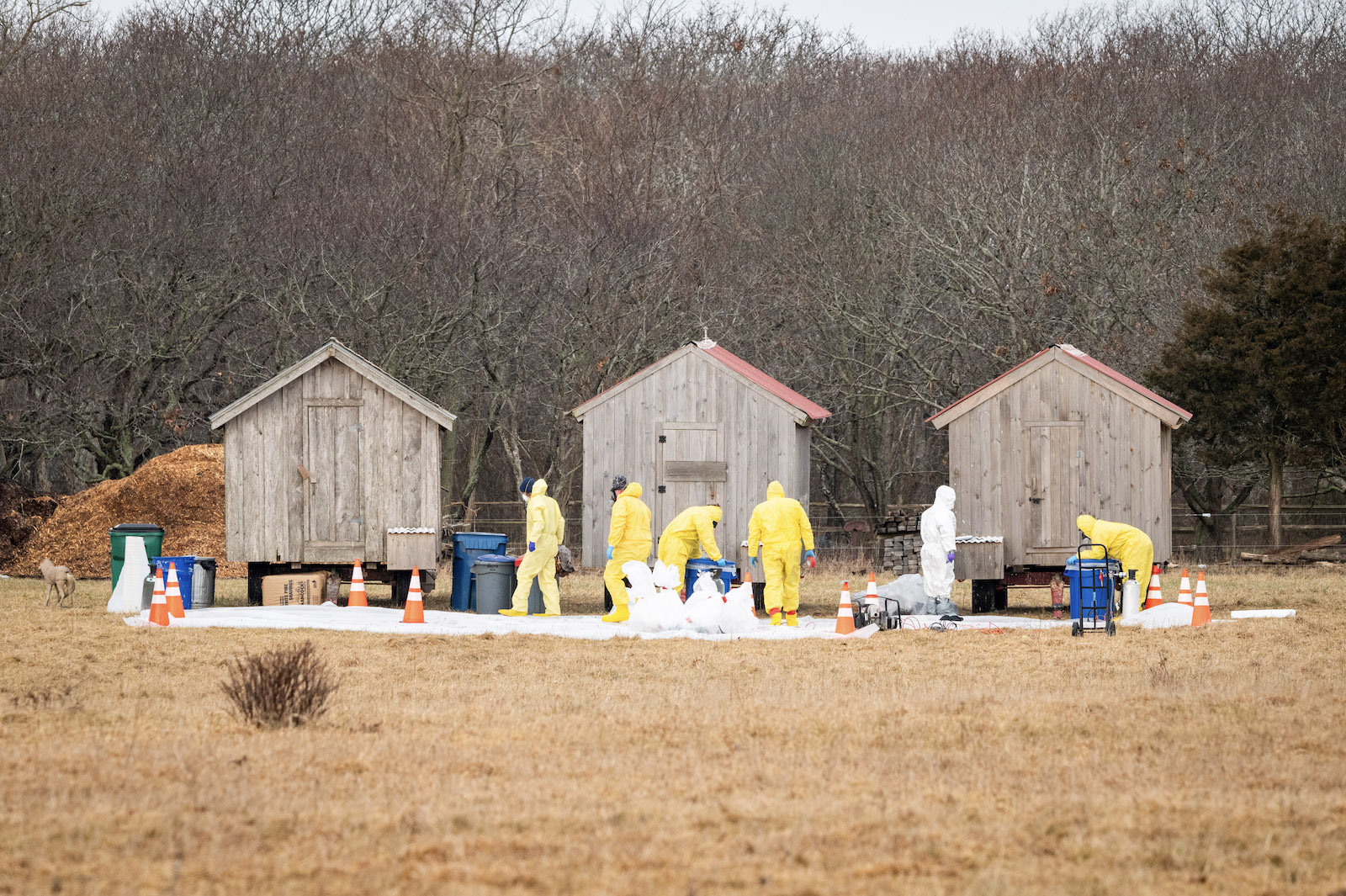
Bird flu made a resurgence on the Vineyard over the holidays after the disease wiped out one of the largest chicken flocks on-Island.
The highly pathogenic avian influenza hit the 350-bird coop at Slough Farm in Edgartown, killing about half of the flock, said Julie Scott, the executive director of the nonprofit farm. The Massachusetts Department of Agricultural Resources (MDAR) euthanized the remaining birds and disposed of them on Tuesday after positive test results, Ms. Scott said.
Public health officials on the Vineyard and at the state are urging bird owners across the Island to take precautions to help stop the spread of the disease to other farms and backyard flocks.
“Wild birds don’t adhere to town lines or property lines, they’re naturally migratory and that’s how they spread infection,” said Brice Boutot, the Edgartown health agent.
Slough Farm first noticed a dead bird on Dec. 26 and contacted MDAR when more dead birds were found the following weekend. State officials arrived on the Island Tuesday to deal with the rest of the flock, which Slough farm had been using to provide eggs for many food equity programs, including the free fridge at the West Tisbury Library.
“We donated 3,000 dozen eggs last year,” Ms. Scott said. “So, obviously we can’t do that. It’s a big hit to our food equity programs.”
The bird flu has been recurring in Massachusetts since 2022 and can be fatal to humans in rare cases. The flu caused a stir on-Island last winter when the virus killed a flock of wild turkeys and a homeowner’s personal chicken coop.
Mr. Boutot said there’s an uptick in the virus during the cold and wet winter months. To protect poultry, the state suggests keeping birds indoors or in covered pens. Guidelines said to remove bird feeders or bird baths that encourage congregation.
The state also suggests avoiding contact with wild or dead birds by calling local animal control officers if needed and keeping pets away. Dogs should be leashed and cats kept indoors, as the virus can be fatal to felines.
Martha’s Vineyard has deep agricultural roots and other farms were stepping up precautions in the wake of the chicken deaths at Slough.
Simon Athearn, the CEO of Morning Glory Farm, which is nearby Slough, said farmhands have been checking their chickens daily for signs of the bird flu and so far, the farm is in the clear.
“Right now, we’re good, we haven’t experienced any evidence, however with Julie’s notification we stepped our biosecurity back up,” Mr. Athearn said.
Morning Glory has also cleaned all of its hen house footbaths and changed the way staff move between egg houses so that one person is assigned to each location. Pasture birds have also been placed in a barn so wild geese don’t come into contact with them.
One of the most effective way to stop the spread of avian flu is to report sightings of dead birds, according to public health officials.
To encourage residents to report, Mr. Boutot explained that the state will only disclose the county where outbreaks were located. Neither MDAR nor the town health department would confirm the outbreak at Slough Farm, though Ms. Scott disclosed the situation to raise awareness for nearby farms and homeowners who have flocks of their own.
“Its the same geese going to all these places - ducks and seagulls and whoever - and somebody’s infected,” Ms. Scott said. “Plus, we all have hundreds of starlings and songbirds in our chicken coops all the time. So that’s one of the reasons why we wanted to share the location.”
Ms. Scott said the chickens at Slough Farm are influential to many of its operations such as fertilizing the ground with their manure. Slough Farm was founded in 2016 as a non-profit on three acres of Katama land and Ms. Scott said the chickens are also an important part of their educational mission.
The farm’s livestock veterinarian will host a poultry workshop on Sunday Feb. 8 from 1 p.m. to 2:30 p.m. for anyone, including homeowners with backyard chicken flocks, that have questions about the virus.
Mr. Boutot emphasized that a wild bird will infect domestic flocks and once the virus spreads, there is little that can be done.
“It’s safe to say once it’s in the flock, that flock is infected and it has a high mortality rate,” Mr. Boutot said.
The state put the field where Slough Farm’s chicken coop is located on a fallow period for the next 120 days, meaning no poultry is allowed into or out of the facility. The farm’s chicken feed and feeders were taken and incinerated.
Mr. Boutot said MDAR assessed all the egg and poultry products and found no contaminated products had been distributed to the public. MDAR also reports that there is no risk of infection from consuming eggs or chicken.
Ms. Scott said the state will reimburse the farm for the birds it lost. The farm is having internal discussions about how Slough will proceed.
“We’re debating internally whether we’re going to try again with more chicks or buy pullets, but we don’t want to get out of the egg game,” Ms. Scott said.
To report sick or dead poultry go to www.mass.gov/reportpoultry. To report sightings of five or more sick/dead wild birds go to www.mass.gov/reportbirds.
Comments
Are the multiple families
Mike Ack EdgartownAre the multiple families that live in close proximity to where these chickens were kept in any danger?
Fair question Mike! The
Lea Hamner Chilmark, MAFair question Mike! The answer is no. The very few humans infected with Highly Pathogenic Avian Influenza H5N1 in the United States from infected chickens *directly* handled sick chickens. No humans in Massachusetts to-date have been infected with H5N1. The CDC H5 Current Situation website has been a great resource for tracking public risk (which is low at this time): https://vineyardgazette.com/news/2026/01/07/bird-flu-knocks-out-island-….
This is a tough reminder of
Murray HarveyThis is a tough reminder of how vulnerable Island agriculture is to forces that don’t respect property lines, seasons, or good intentions. What happened at Slough Farm isn’t about mismanagement — it’s about exposure, geography, and biology doing what they do.
The loss of that flock hits on multiple levels: food equity, education, soil health, and morale. Donating thousands of dozens of eggs a year isn’t just a statistic — it’s part of the Island’s quiet safety net, and people will feel that absence.
What’s especially important in this coverage is the emphasis on realism. Once avian flu enters a flock, there are no easy fixes, and pretending otherwise doesn’t help farmers or backyard chicken owners. Reporting dead birds, tightening biosecurity, and temporarily changing habits may feel inconvenient, but they’re some of the few tools we actually have.
It’s also worth noting that transparency here serves the community. Sharing the location wasn’t about blame — it was about awareness, and giving neighboring farms and residents a chance to respond responsibly.
This is one of those moments where vigilance, not panic, matters most — and where supporting local farms means understanding the risks they carry on everyone’s behalf.
How can the community and
Charlie McLaughlin Pawtucket, RIHow can the community and visitors assist in a recovery?
Add new comment