


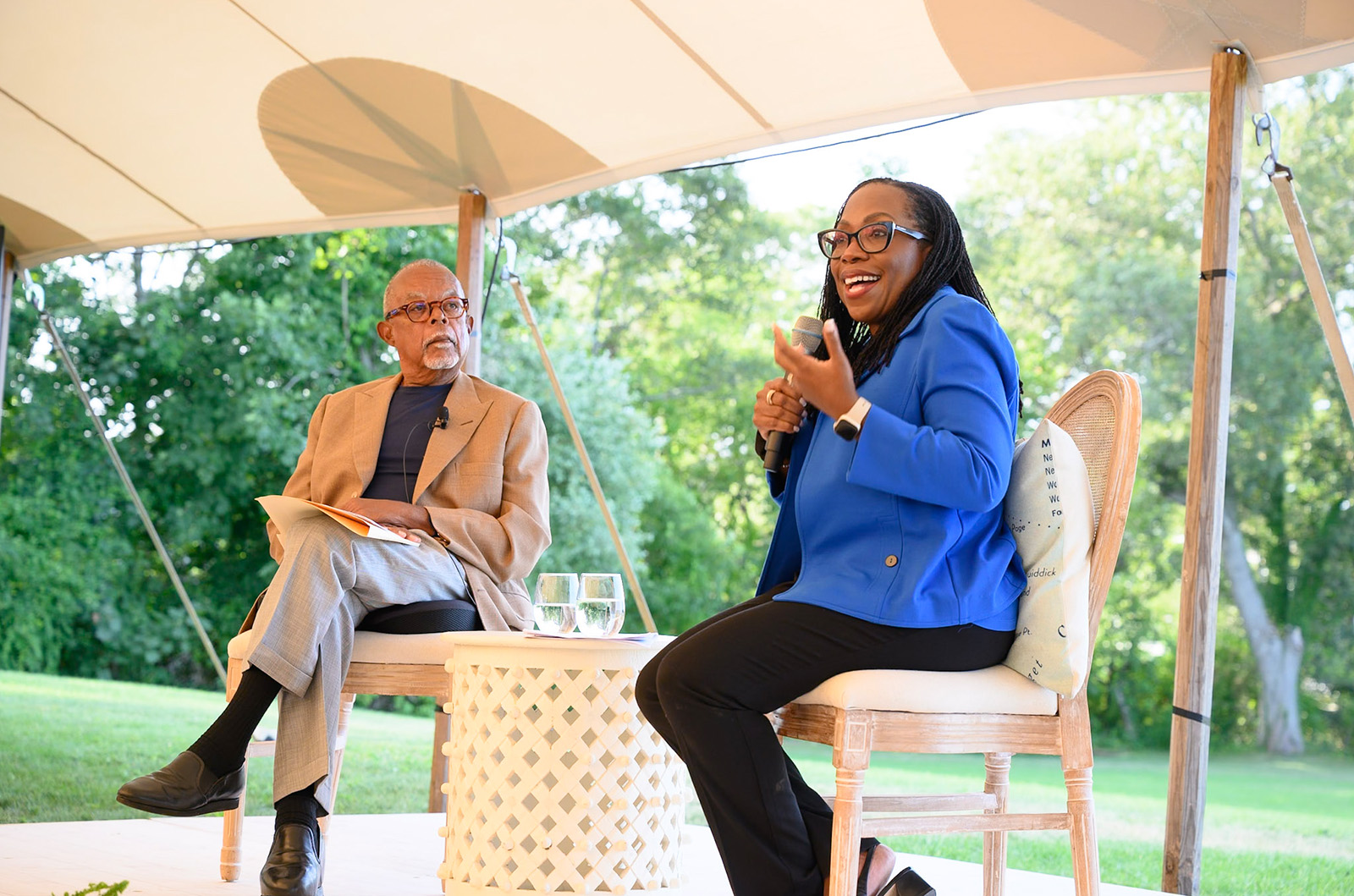
Supreme Court Justice Ketanji Brown Jackson, the first ever Black woman to sit on the country’s highest court, was on the Vineyard over the weekend to discuss her work and new memoir.
Supreme Court Justice Ketanji Brown Jackson, the first ever Black woman to sit on the country’s highest court, was on the Vineyard over the weekend, discussing her work and her memoir as part of the Martha’s Vineyard Black Book Festival, and in discussion with Henry Louis Gates Jr. at the Martha’s Vineyard Museum.
Justice Jackson’s memoir is called Lovely One, which is the meaning of her West African name, Ketanji Onyika.
Speaking to an overflow crowd at the museum on Saturday afternoon, Justice Jackson recalled a moment when she was 12 years old, and accompanied her mother to a pool party. After drifting away from the pool wall she panicked and began sinking to the bottom. Justice Jackson’s voice became frustrated as she talked about how disappointed she was at the time, since she had taken swimming lessons and knew how to stay afloat.
“I think that experience really gave me the kind of resolve that it has taken to believe that no matter how deep a situation is, no matter where I find myself, I am going to swim,” Justice Jackson said.

Justice Jackson also made an appearance at the Black Book Festival.

Justice Jackson also made an appearance at the Black Book Festival.
The conversation with Mr. Gates was part of the Union Chapel Education & Cultural Institute Charles Ogletree public forum series. Mr. Gates’s groundbreaking work in African American genealogy has won wide acclaim and helped many find strength in their ancestry. He asked Justice Jackson about her upbringing, and the inspirations in her life.
“So much of who I am and what I’ve come to be, I believe, is because of my predecessors — my grandparents, my parents [and] generations even before them, who envisioned a better life for African Americans and who worked toward that end,” Justice Jackson said. “I see myself as actually the inheritor of all of the blood, sweat and tears from generations past.”
Justice Jackson shared that her grandparents grew up in Georgia during the 1920s. Her grandfather was a chauffeur for a white family, and eventually started his own landscaping business.
The family moved to Miami where they lived under segregation.
Justice Jackson was raised in Washington, DC, where her parents were educators. She was born a few years after the Civil Rights Act and the Voting Rights Act were passed, she said.
“[My parents] really had an attitude of optimism about the future, given the changes in the law that then allowed for African Americans to take part fully in society,” she said. “My parents thought, ‘Well, this is our shot, this is our chance... [and] we are going to be very intentional about making sure that [our daughter] knows that she can do anything she wants.’”
Justice Jackson said that as a child she would draw in coloring books across the table from her father, who was studying for law school.
Justice Jackson's memoir came out last year.
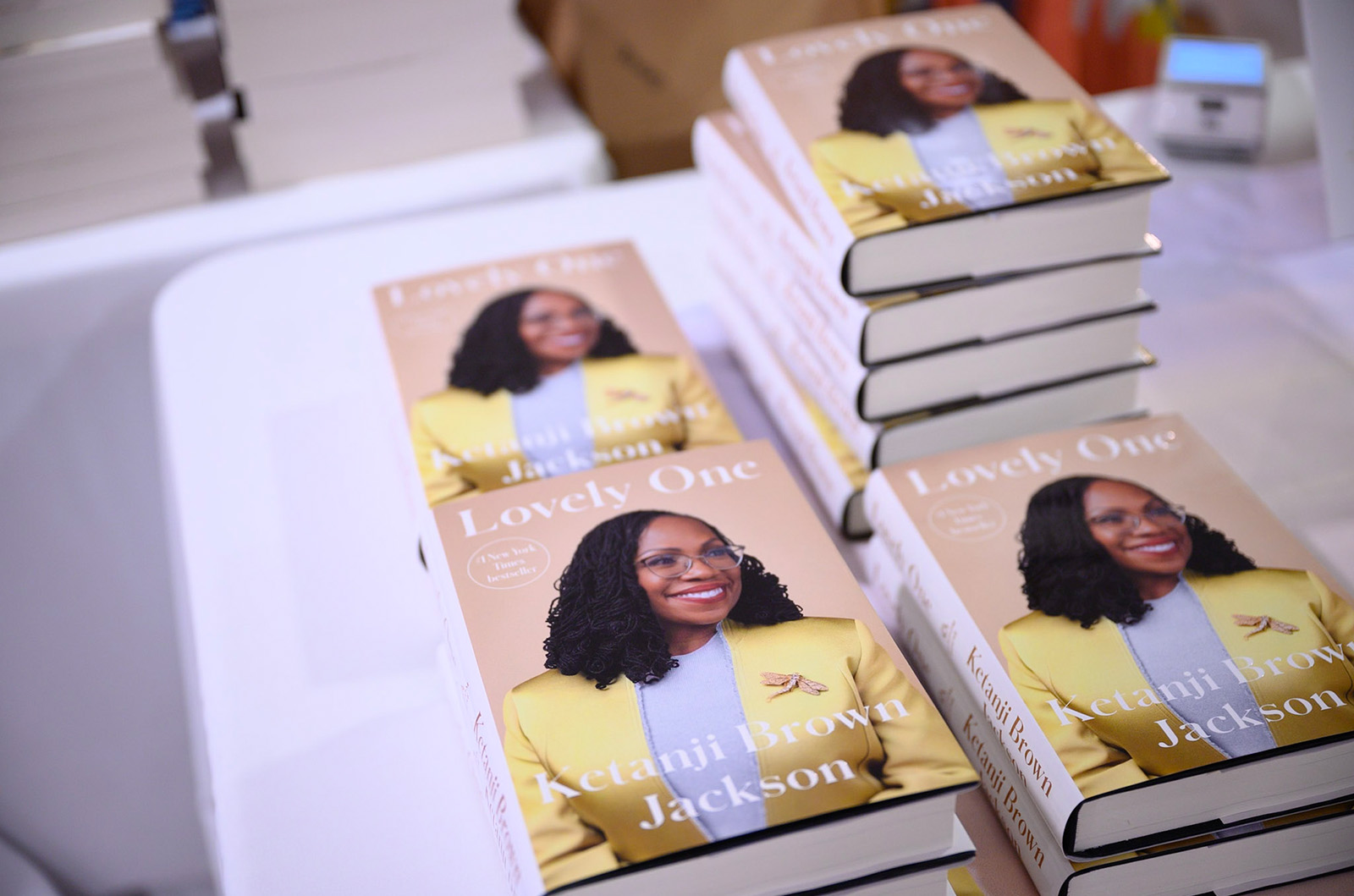
Justice Jackson's memoir came out last year.
In middle school, she remembered flipping through the magazines her parents allowed in the house — Essence, Jet and Ebony — and reading that Judge Constance Baker Motley, the first Black woman to serve as a federal judge and argue in the Supreme Court, had her same birthday.
“I just thought I could be a judge because of her,” Justice Jackson said.
“She would be proud of you,” Mr. Gates said. “I knew her well because her son, Joel, and I met in prep school.... We would celebrate our birthdays together.”
During her time at Harvard, Justice Jackson was in the Black Students Association when a white student hung an illuminated confederate flag from his window. She said the group worked tirelessly, demanding that the university require the student to take the flag down.
“A lot of students were focusing so much on this campaign, that we really were not getting to class as regularly as we should, and our grades were slipping,” she said.
She was reminded of a quote from American novelist Toni Morrison, who said one of the functions of racism is distraction. She mentioned this at BSA meetings, and they realized they needed to stay focused on the long-term picture, balancing their immediate concerns with the work they needed to do in their college classes.
Justice Jackson said there have been many teachers in her life, and her family has supported her throughout her career. She also said that she and her husband, gastrointestinal surgeon Dr. Patrick G. Jackson, have been partners through each other’s careers, each doing what they can to help the other succeed and thrive.

Justice Jackson was the first Black woman appointed to the Supreme Court.

Justice Jackson was the first Black woman appointed to the Supreme Court.
Justice Jackson said her historic appointment to the Supreme Court has given her a platform that is different from the other Justices.
“I think anybody who has been a first in a different position feels the weight of attention...” she said. “But I take that, in many ways, to be a privilege. I hope that because I’m doing this now, there will be future Black women on the Supreme Court.”
Earlier in the day, Justice Jackson headlined the second Martha’s Vineyard Black Book Festival, where she was interviewed by Traci Wilkes Smith, the festival’s founder.
She opened the talk by reading from the preface of her book, which recounts her being sworn in to the Supreme Court. She took the oath on two Bibles — her family’s and the Harlan Bible, which was donated by John Marshall Harlan, who was the sole dissenting vote in Plessy v. Ferguson, the U.S. Supreme Court decision that legitimized racial segregation and led to the Jim Crow laws.
Justice Jackson told the crowd that when she applied to Harvard, where she earned both her undergraduate and law degrees, she noted in her application that she wanted to be the first African American woman on the Supreme Court. At the time, she was also interested in theatre and noted that she also wanted to be the first Supreme Court Justice to appear on a Broadway stage.
She was appointed to the Supreme Court by President Joe Biden in 2022 and made her Broadway debut in December 2024, appearing for one night in the romantic comedy musical, & Juliet.

Overflow crowd oacks the museum tent.
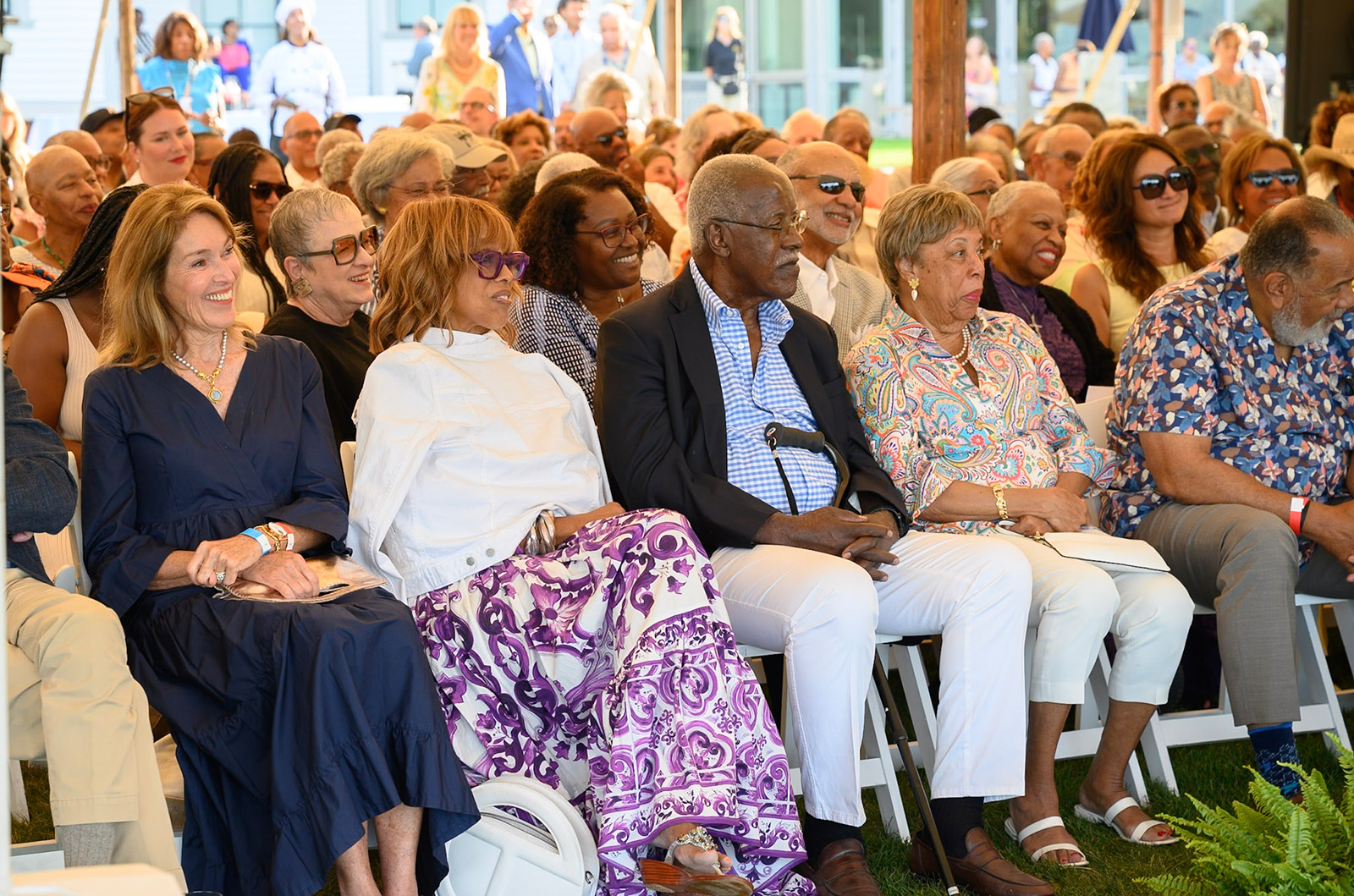
Overflow crowd oacks the museum tent.
At Harvard, Justice Jackson said she made lifelong friends in a class about Black women writers, and noted how important it was to find other Black students on a predominantly white campus.
“You need that connection to be able to withstand the environment and for me, taking a class on Black women writers was the place where a lot of other Black women appeared,” she said.
Justice Jackson advised the crowd to pay close attention to what is happening in politics today.
“It’s very important that people stay tuned in to what is happening in our government and in our society,” she said. “The real danger is for people to tune out because this is your government. We live in a democracy where the people are supposed to be the ones who decide what happens, and so people have to remain engaged in order for that to happen.”
Comments
I had the honor of being
Deborah L. Harris Oak BluffsI had the honor of being present for the Justice's presentation. It was quite inspiring and informational, as she shared with us details of her life from childhood to the present. She is truly an inspiration and just the kind of person we want deciding such important issues on the highest court in the land. We are grateful for and inspired by her work!!
Add new comment