


Suzan Bellincampi

You could blame the devil for spawning this horned plant.
Or you could hold Thomas Jefferson responsible for its appearance on America’s eastern beaches. In 1807, he planted its seeds at Monticello “in an oval bed southeast of the house.” No matter whom you fault, the mellow yellow blooms of the horned poppy are on our beaches to stay.
The hardest conker usually wins.
Methods for hardening your conker include soaking or boiling it in vinegar, baking it or painting it with varnish. Though there are many methods to firm up your conker, none is advised in this column, since doing so is considered cheating. So to be true, one must keep his or her conker pure, hardening it only with age.
Don’t needle me too hard for missing out on this one.
Though I have a sharp eye when it comes to wild edibles, somehow stinging nettles passed me by. As one of the first spring greens, they can be consumed when they first leaf out in early to mid-April. Even at the end of April it is possible to pick this plant, but don’t wait too much longer than that.

My activities last weekend were punctuated with exceptional beauty.
During Felix Neck’s annual bird-a-thon fundraiser this past Saturday, my mission was to find and identify as many birds as possible. Somehow, though, my attention got diverted to other winged wonders.
Butterflies were out in full force, but there were two species in particular that made me pause — as punctuation often does. The insects in question were the comma and question mark butterflies.
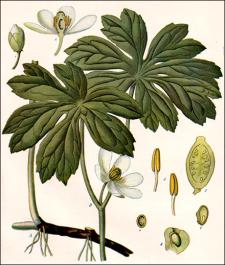
This little plant is the apple of my eye.
Found in wet meadows and woods, May apple beckons the botanist with its unique appearance, ancient lore, and potential for danger.
Money doesn’t grow on trees. It does, however, grow from flowering plants -- if you know where to look.