Mike Seccombe


Tisbury voters will be asked to approve some $700,000 for a better place to put their garbage and another $640,000 for a better place to put their emergency services at a Sept. 30 special town meeting.

The precise details on the waste disposal proposal still are being worked out, but the deal would involve Tisbury and Oak Bluffs rejoining the other four Island towns in a single waste district, and acquiring land adjacent to the current waste district site in Edgartown for some $1.4 million.

0

One day, after a performance of his play The Patriot Act a couple of weeks ago, Ronald B. Campbell Jr. was approached by an audience member, an older man, in tears.

The estrangement between the central character in the play and his son echoed the audience member’s own estrangement from his son.

“I’m going to call him,” the man said.

0

Martha’s Vineyard Public Charter School director Bob Moore had spent the past couple of weeks thinking about what he would say to inspire students on the first day of the new school year.

Then, yesterday morning, he found a nine-year-old student had said it better. So he read Susa Breese’s letter to the several hundred students, parents and faculty, who stood and sat around him.

0

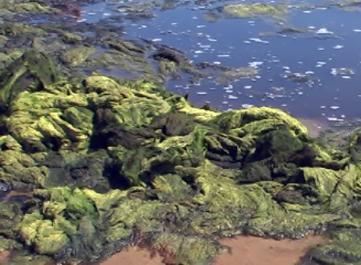
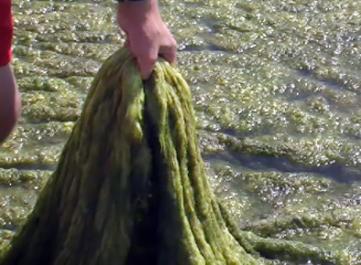
Were it not for the smell, you might mistake the light, fibrous, grayish stuff in Bob Woodruff’s shed for the material they make egg cartons from.

But the low-tide aroma is the giveaway. What we have here is dried slime. Or, more correctly, dried algae of the species Enteromorpha clathrata, which this summer grew in unprecedented profusion over much of the Edgartown Great Pond.

0

When it comes to divining the will of the people, it is hard to think of anything simpler than the latest method employed by the Martha’s Vineyard Commission for gathering opinions on future development on the Island.

Beans and coffee jars at the Agricultural Fair. If you wanted no more development, you put a bean in one jar, if you wanted a little, you put a bean in another jar, and so on.

3

Experts are mystified by the bloom of an unknown type of algae this summer on the Edgartown Great Pond that has covered acres of the pond’s surface, choking out light to eelgrass beds and then sinking onto shellfish beds.

A sample of the algae was sent this week to the Smithsonian Institution after attempts to positively identify it through records at the Polly Hill Arboretum and through the Woods Hole Oceanographic Institution were inconclusive.

1