


Lanny McDowell
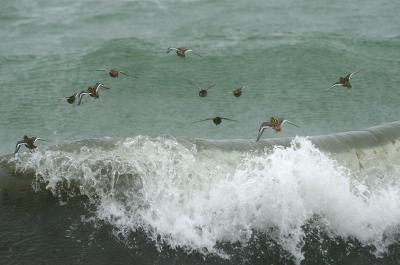
The news that an early, significant storm might be heading up the Atlantic coast was more exciting than any of the spring avian arrivals.
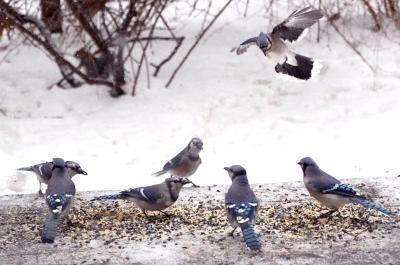
“It’s all about the food.” This time of year and these icy conditions make this literally true for virtually all of the avian population.

Managing our expectations has a lot to do with birding. For birders at the bottom of the expertise hierarchy to those at the top, our expectations can help us see a greater variety of birds, or they can hobble our judgment with misleading information. Finding the right border between caution and optimism is one of the intriguing balancing acts of birding, especially when there is some competition in the air, which, let’s face it, can be part of the fun.

You do not need a degree in natural science to become familiar with the different ways that birds use camouflage to either evade the notice of predators or the notice of prey, or both of these. Some birds have the advantage of plumage designs that mask the outline of their bodies, disrupt recognition of their shape or even disguise which direction they are looking or heading.
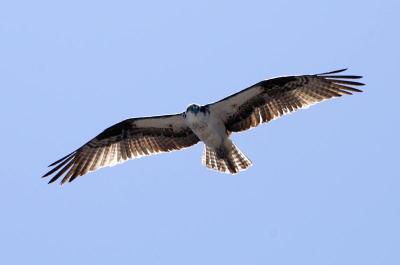
It’s the season for the ospreys to return, which, along with the arrival of red-winged blackbirds and other migrant icterids and an uptick in birdsong volume and variety, signals a kickstart in bird awareness right about this time each year.

The newly-hatched young of Arctic-nesting shorebirds are able to fend for themselves completely, just a few days after emerging from the egg. The parents shelter them some in those first few days and they sound an alarm for predators. They do not feed the youngsters, who learn to find food right away, capitalizing on the nightless days on a tundra expanse that erupts with abundant insect life.