


Although frost still covers the ground some mornings, Island boards of health already have their focus turned towards summer and tick season.
At last week’s All-Island Selectmen’s meeting, Tisbury health commissioner Michael Loberg and Edgartown health agent Matthew Poole presented their annual year-end report for the Tick-Borne Illness Reduction Initiative, a five-year study funded by a grant from the Martha’s Vineyard Hospital. The study has just completed its second year.
So new tick-borne virus, no tests available. So 50 deer per square mile, 100 square miles, that’s 5,000 deer on the Vineyard. The way I hear it, no deer equals no ticks. As I have said before, 5,000 — given certain changes in regulations — 75 per cent of that sounds like a doable number, very doable, over the course of several years.
Bloodthirsty? Not as thirsty as the ticks.
The Vineyard Haven Library is holding two events that focus on Lyme disease. On Tuesday, Feb. 12, at 7 p.m. the library will screen the documentary Under Our Skin. This movie follows the journey of several patients and their difficulties with both the disease and the health care industry. For more information, visit underourskin.com.
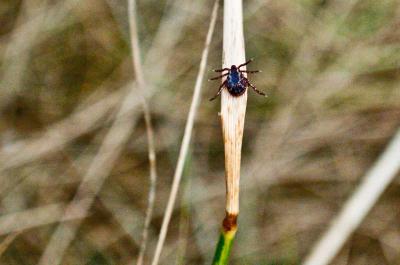
A tick-borne disease so new it only has a scientific name has been identified in United States patients for the first time, including at least one person from Nantucket. Borrelia miyamotoi is a relative of Lyme disease with similar symptoms including fever, headache, muscle ache, and fatigue.
Unlike Lyme disease, B. miyamotoi presents recurring fevers in patients and does not trigger a bulls-eye rash. Nor does it cause a positive test with traditional Lyme disease testing, said Dr. Sam R. Telford 3rd, a professor of infectious diseases at Tufts University.

In an attempt to quantify the Vineyard deer population, a Mount Holyoke College professor flew across the Island last Friday afternoon taking thousands of aerial infrared photographs for a tick-borne illness study. While a snowy, 20 degree day on Martha’s Vineyard may not be most visitors’ optimal conditions for a flight around the Island, professor of geography Thomas Millette deemed Friday’s weather ideal. A frozen ground, calm winds and an overcast sky all optimize the efficiency of the thermal imaging system developed by Mr. Millette.
Lyme disease, the tick-borne illness that has been documented at epidemic levels on the Vineyard, is now the focus of a growing public health initiative that involves Island doctors, boards of health and university researchers.
The initiative, which aims to zero in on prevention, education, and improved data collection, is seen by at least one leading expert as a possible model for the rest of the state.