

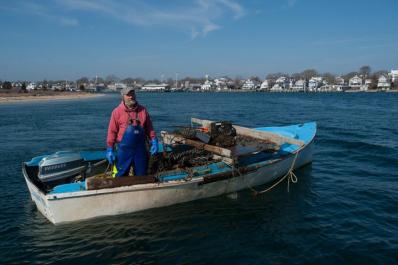
If you are looking for a successful measure of the bay scallop season, which ended this week, the results can be found in large piles of shells in three down-Island towns.
There was a huge pile of shells next to a fish shack at the foot of Skiff avenue in Tisbury last week, as well as similar piles at the old Edgartown dump and in Oak Bluffs at Madeiras Cove. It was a good year, though there are many who have memories of better ones.
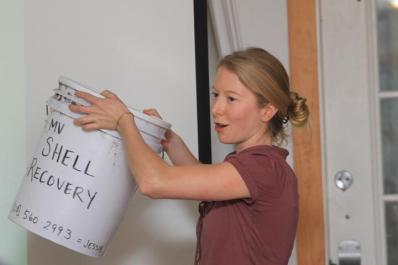
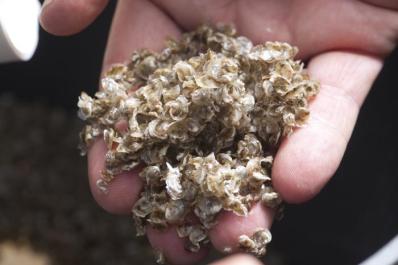
Vineyarders are rightfully proud of the yearly abundance of oysters and scallops pulled from Island ponds, but little is made of what goes back into the water. Jessica Kanozak, creator of the Island’s nascent shell recovery program, hopes to change all that. After the first year of a pilot program on the Vineyard to return seashells to the sea, experts and community leaders met Saturday to discuss the program’s strengths, weaknesses and potential for expansion.
The Martha’s Vineyard Shellfish Group had one of its most productive summers, mass producing millions of baby quahaugs, bay scallops and oysters. And to top it all off, the shellfish hatchery produced twice the usual numbers of bay scallop seed.
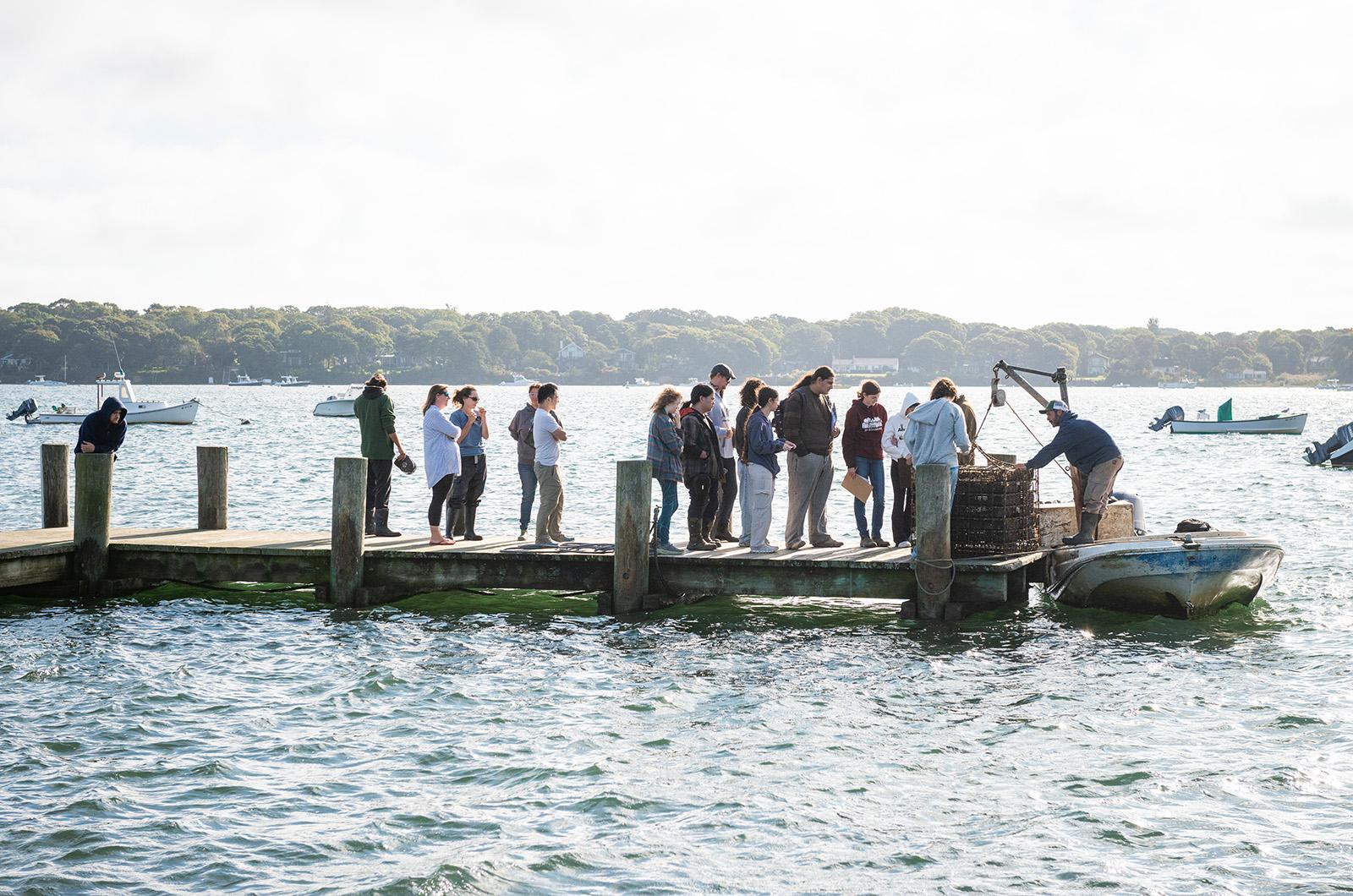
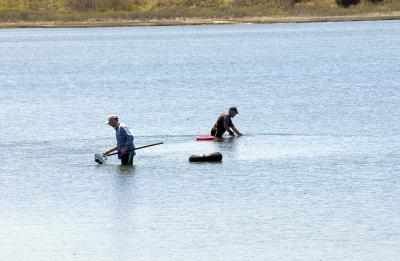
Volunteer Edgartown shellfishermen worked the tides last week to transfer young bay scallops out of harm’s way at Cape Pogue Pond, after an algae bloom seen a year ago returned.
Cochlodinium polykrikoides, a single-cell dinoflagellate, staged a late-summer comeback in the large, pristine bay that lies north of the Dike Bridge on Chappaquiddick. The algae is not harmful to humans but can be toxic to shellfish.
Clam chowder, bay scallops, fried oysters. Wampum bracelets. Shellfish are the grand bounty of the soft, sparkling salt ponds that ring the Island shore. We’d be hard pressed to find a local cultural symbol more significant than the water-worn purple and white quahaug shell. Purple — the Island color.
Surf and Turf
From Gazette editions of January, 1936:
Menemsha Pond appears to be producing an unusual variety of scallops this winter. Although the set is not particularly heavy, the scallops, especially those in Gay Head waters, are said to be the largest ever marketed in this locality.