

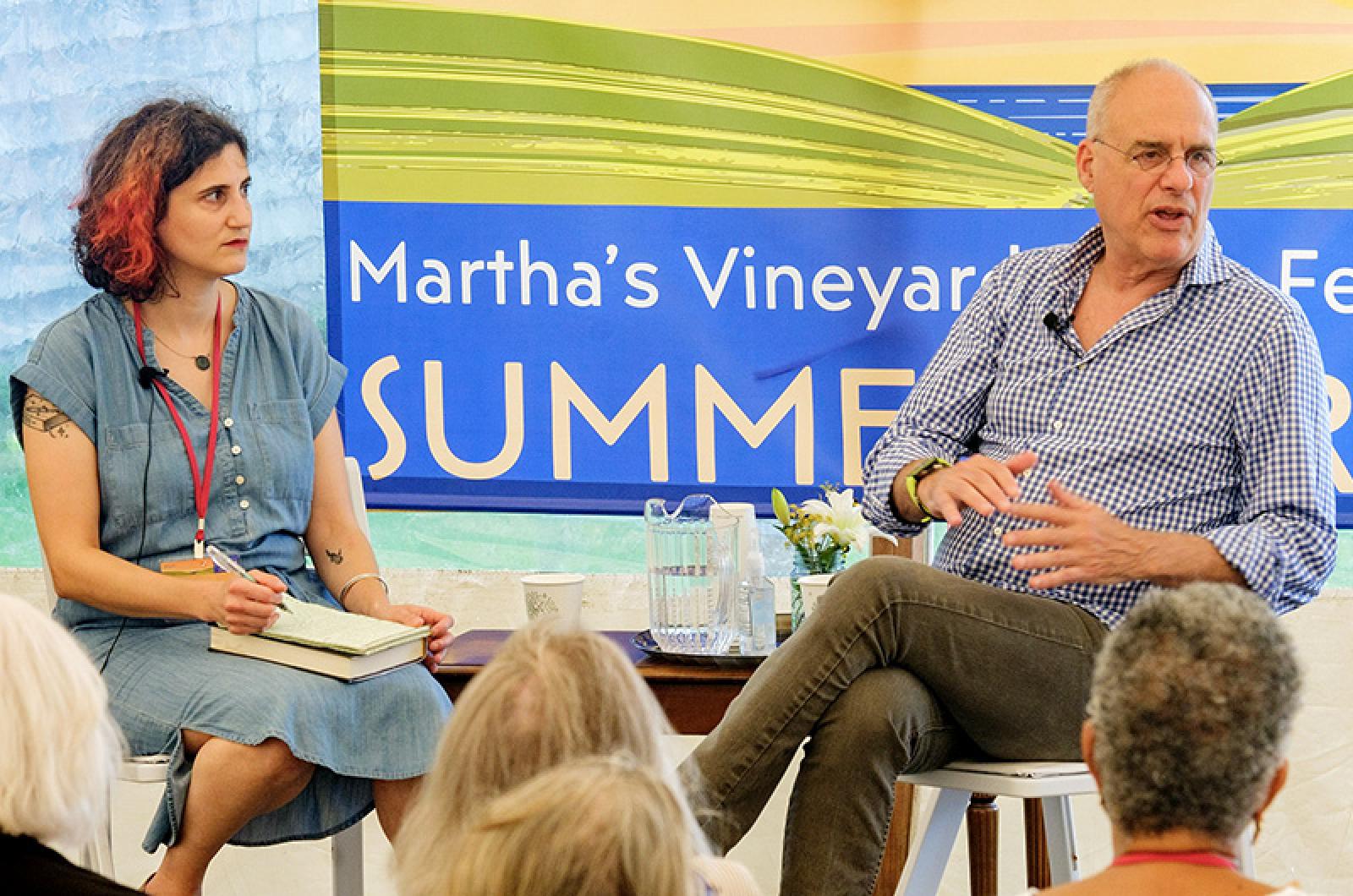
When Andrew Marantz, a New Yorker staff writer, attended the “DeploraBall” on the eve of Donald Trump’s inauguration in 2016, he didn’t expect there to be good company.
It’s a rainy evening and you turn on the television to find your favorite sitcom. A small wave of comfort washes over you and you let that feeling settle you deeper into the couch.
In 1947, two years after the defeat of Germany, a relatively obscure, Wyoming-born artist set his canvas on the floor of his Long Island home, splattered thick beads of paint across the surface and radically changed the course of American art.
Following Robert F. Kennedy’s path through the civil rights movement, historian Patricia Sullivan said she couldn’t help but well up with emotion writing the last few pages of her new book, Justice Rising: Robert Kennedy’s America in Black and White.
After nearly 20 years working in economic policy, Heather McGhee realized she needed a different approach to understand the fault lines of American division.
Walter Isaacson suggests that if one is searching for a summer read, a nail-biting mystery perhaps, his latest biography on the woman behind gene editing is the way to go.