


Commentary
All in the Family
By William A. Caldwell, Pulitzer prize winner, long-time Vineyard Gazette columnist etc. From the Vineyard Gazette editions of January, 1983:
The new tax bills for Tisbury Great Pond properties were a shocker all right. The camp that I co-own with my three siblings, as the Sturgis Family Trust, was valued at $2,123,800 in fiscal year 2007. Now, with no effort on our part, it’s supposedly worth $4,419,700. For years we’ve been managing to pay the taxes — $9,568 in fiscal year 2007 — by renting the camp out most of the summer. The new tax bill, $17,511 and change, means renting for nine or ten weeks with no margin for error: no cancellations, and nothing left over for maintenance either.
I turned 21 in 1968, the first year I had the chance to vote. With an anti-Roosevelt Republican father and a liberal leaning Democratic mother, I tread a torturous political path. And 1968 was a year when caution was thrown to the wind, early and often. No one imagined the year would turn out to be a most tumultuous political experience.
It began with the Tet offensive at the end of January, 1968, a Viet Cong onslaught on American troops. People in the United States had been led to believe we were on the verge of victory, so the enemy uprising was amazing.
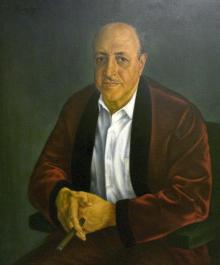
Forty years ago my father, Island artist Stan Murphy, was commissioned to paint a portrait of our country’s first black cabinet member, Dr. Robert Weaver. Weaver, a civil rights leader with a doctorate in economics from Harvard, became Secretary of Housing and Urban Development (HUD) when he was appointed by President Johnson.

The old America I knew took a hike last week and a new America emerged before my unbelieving eyes at approximately 9:30 in the evening. That was the hour my belief system was turned upside-down, when Barack Obama was projected to win the Iowa caucuses and it was extraordinary.
A Place for Planning
More than thirty five years ago, an engineering firm looked at the six towns on the Vineyard and envisioned a possible seventh town carved into the Island’s center, around the regional high school and along the Edgartown-Vineyard Haven Road.
The firm, Metcalf and Eddy, saw the area as a social and economic center, a place for larger development not appropriate for the down-Island downtowns or the ecologically sensitive up-Island towns.