

In U.S. District Court in Washington, D.C. on Monday, Judge Royce Lamberth granted Revolution Wind a preliminary injunction against the stop work order issued by the Department of the Interior in December.
For the second time since September, a federal judge has allowed an offshore wind farm that was shut down by the Trump administration to resume construction off the coast of Aquinnah.
In U.S. District Court in Washington, D.C. on Monday, Judge Royce Lamberth granted Revolution Wind a preliminary injunction against the stop work order issued by the Department of the Interior in December.
The department said construction needed to be halted at Revolution Wind and several other projects that were in the works, including Vineyard Wind, because of new national security concerns raised by the Department of Defense in classified documents.
During the court hearing Monday, Judge Lamberth said that the government gave little reasoning for its stop work order, and, after reviewing classified materials, couldn’t see why construction couldn’t continue.
“Given that the [Bureau of Ocean Energy Management] became aware of the new classified information in November of 2025 and did not act until Dec. 22, 2025, I’m not persuaded that any such emergency exists in this case,” Judge Lamberth said. “Nor have I been provided any evidence of a new finding of particularized harm such that the government could order an immediate suspension.”
In a statement after the legal win, Revolution Wind backer Orsted said the project, which was already almost 90 per cent complete, will resume construction work as soon as possible. The company had previously hoped it would start generating power this month.
President Donald Trump has been transparent about his disdain for offshore wind energy projects, and the administration has made several attempts to stop any permitting and construction. In a recent meeting with oil industry executives, the President said that wind farms are “losers,” according to the Associated Press.
“I’ve told my people we will not approve windmills,” the President is quoted by the news agency. “Maybe we get forced to do something because some stupid person in the Biden administration agreed to do something years ago. We will not approve any windmills in this country.”
Attorneys for Revolution Wind and the states of Connecticut and Rhode Island, where power from the 65-turbine project will go if completed, said at Monday’s hearing that they had been left in the dark about the nature of the national security issues, despite attempts to learn more in an attempt to mitigate the concerns.
Revolution Wind said it brought three experts with top security clearance for a meeting with the federal government on Dec. 30 to get more details about the concerns, but were later told that information couldn’t be shared due to the pending litigation.
“If there is really an issue and if they really want to solve it, why not have a conversation about it?” asked Janice Schneider, the attorney for Revolution Wind. “And candidly they should have had this conversation before they even issued the stop work order to begin with, and we think that is a violation of our due process rights.”
Rhode Island Sen. Jack Reed, a member of the Armed Service Committee, also had not been able to get more detailed reasoning for the stop work order, according to Sarah Rice, an assistant attorney general.
In prior statements, the Department of the Interior has raised the issue of radar “clutter.” The movement of the massive turbine blades and the highly reflective towers can hinder radar, obscuring moving targets and generating false targets, the Department wrote in a statement when the stop work order was issued.
Department of Justice attorney Peter Torstensen said those concerns are amplified because the projects are controlled by foreign entities. Mr. Torstensen said one of the reasons for the stop work order was to take a pause before projects were completed and connected to the grid.
“If they get all the way down the line to completing construction and everything becomes operational and there was mitigation measures that could have addressed the concern and then been incorporated into construction, then you lose that opportunity if you don’t stop and actually try to engage in the discussion to determine appropriate mitigation measures now,” he said.
Judge Lamberth wasn’t convinced though, saying the Bureau of Ocean Energy Management simply cited national security concerns without any explanation. The bureau also conceded that it wasn’t sure that its new concerns can be mitigated and did not explain why construction couldn’t continue while it investigated the question further.
“Revolution Wind has agreed at every stage of the approval process to work with the government to mitigate national security concerns,” the judge said. “I can see no reason why the project will not continue to do so even when construction is complete.”
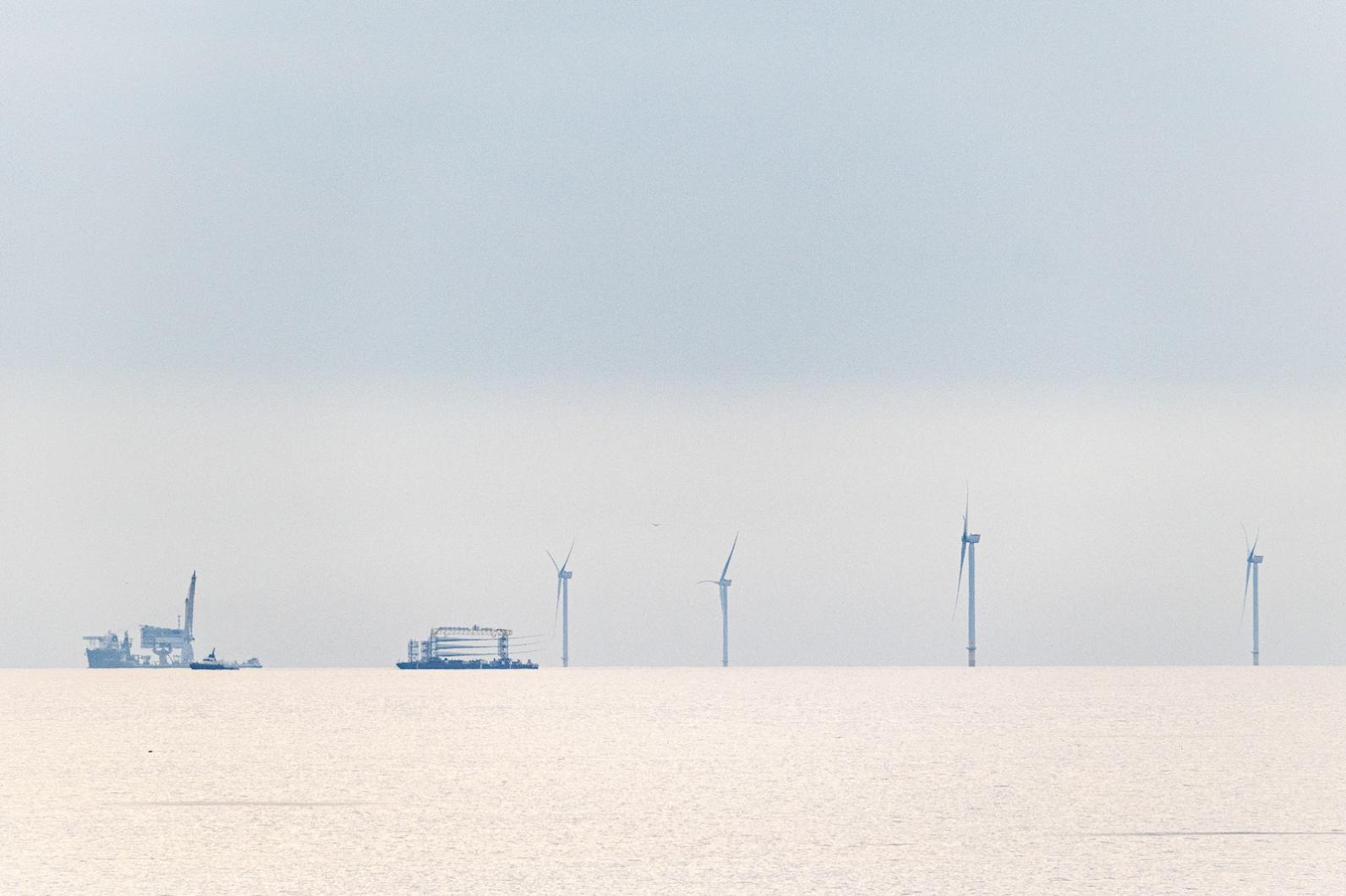
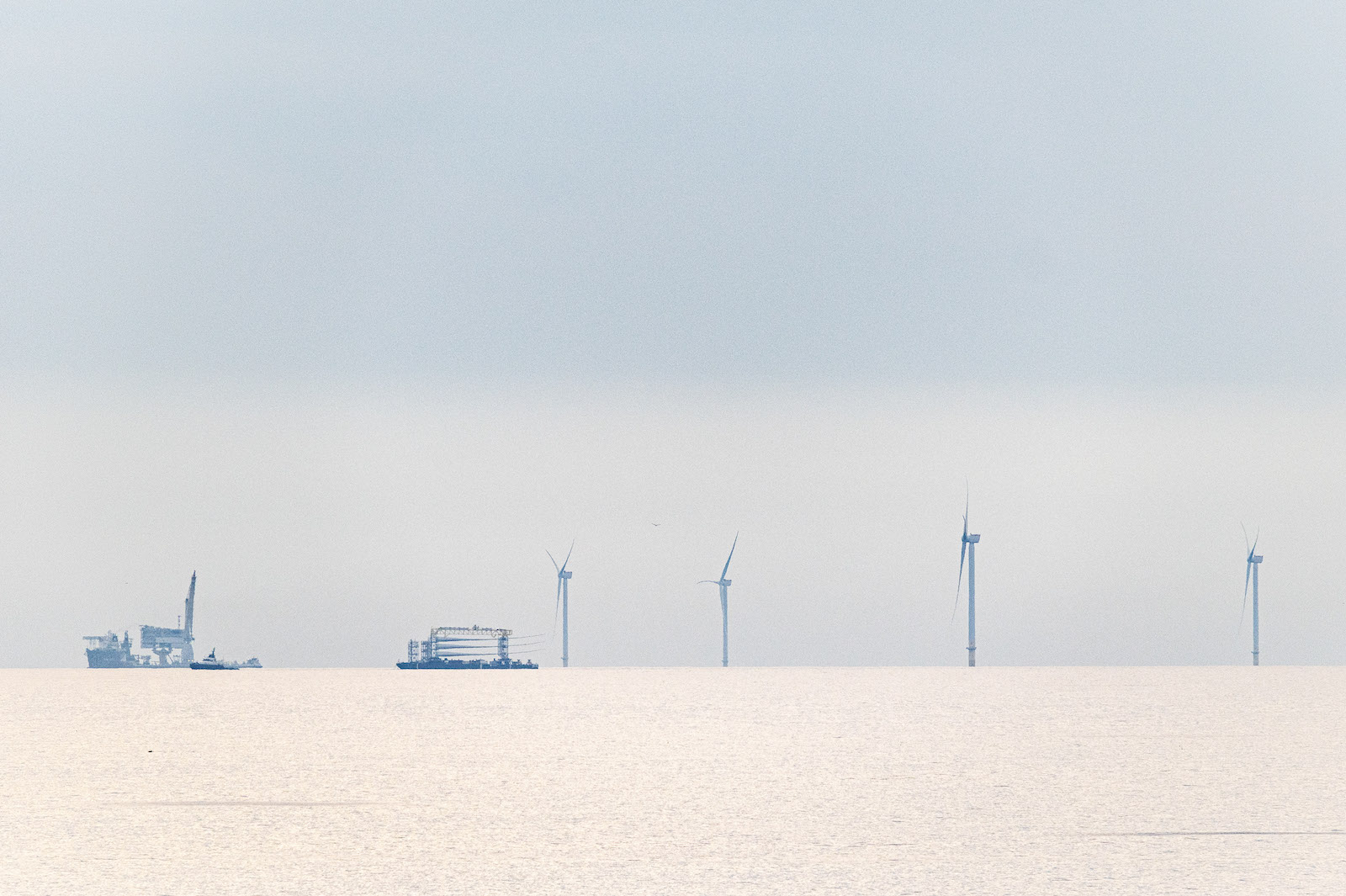
Located 12 miles off the coast of Aquinnah, Revolution Wind is the closest offshore wind energy farm to the Island, and was one of the first projects to face national security concerns from the government. In August 2025, the Bureau of Ocean Energy Management made a similar move to stop construction before it was overturned in court.
The latest ruling comes as the wind farm is trying to finish construction before the end of February, when one of the highly specialized boats it has hired will no longer be available. There are few boats in the U.S. that can help build the towering turbines and Revolution Wind has said a certain critical boat was only available until the end of next month.
Empire Wind, a project off New York, and Coastal Virginia Offshore Wind, a project off VirgInia, have also sued the federal government over the stop work orders. Revolution Wind was the first to get court-ordered relief.
Vineyard Wind, the lone major wind farm that has a physical presence on Martha’s Vineyard, has stayed silent in the weeks after the stop work order. The company has been allowed to continue some work on the project, which was already producing power, but it has not joined the other projects in a legal battle to overturn the order.
Comments
In my opinion, this ruling is
Murray HarveyIn my opinion, this ruling is not a victory for offshore wind. It is a procedural ruling about how a stop-work order was issued, not a finding that the national security concerns were unfounded or resolved.
The judge did not say radar interference, maritime safety risks, or cumulative offshore impacts don’t exist. He said the federal government failed to justify an emergency suspension after waiting weeks to act on newly identified classified information. That’s a timing and process problem — not a scientific or security conclusion.
A slow or poorly executed response by federal agencies does not make the underlying risks disappear. National security concerns don’t evaporate because the paperwork was thin or the explanation incomplete. They remain unresolved, even if the court found the shutdown procedurally flawed.
The article leans heavily on the lack of publicly disclosed details, as if that absence proves the concerns are speculative. But the government has stated repeatedly that the information is classified. Limited disclosure is not evidence that the risks are imagined; it’s a function of classification.
Radar clutter, interference with detection systems, altered vessel traffic patterns, and limits on emergency response are well-known effects of large, permanent offshore structures — especially as projects accumulate in dense corridors. These impacts don’t freeze in time at approval. They evolve as scale, density, and operating conditions change.
For those of us on the Island, this isn’t an abstract energy policy debate. These are working waters. Ferry routes, fishing grounds, search-and-rescue operations, and coastal monitoring systems operate here every day. Offshore decisions shape how those systems function for decades, long after court rulings and press cycles move on.
Approval under one set of assumptions should not be treated as permanent immunity from reassessment. Pausing to address unresolved risks is not obstruction, and it is not opposition to clean energy.
Calling this ruling a “victory” doesn’t resolve the risks — it just postpones confronting them, while construction keeps moving forward.
If a large part of your
Jacob Oak BluffsIf a large part of your argument centers around the notion that the 'national security concerns' are classified and therefore not considered as part of this ruling, I would encourage you to re-read the section of the article which states "Judge Lamberth said that the government gave little reasoning for its stop work order, and, after reviewing classified materials, couldn’t see why construction couldn’t continue."
I did read that section, and
Murray HarveyI did read that section, and I don’t disagree with it. The key point, though, is why the judge reviewed the classified material. He was assessing whether the government met the legal standard for an emergency stop-work order, not making a final determination that the underlying concerns were resolved or inconsequential.
In that context, saying the judge “couldn’t see why construction couldn’t continue” speaks to urgency and procedure, not to whether the risks go away once turbines are fully built and operating. The ruling turned on timing, justification, and particularized harm — not on a finding that radar interference, cumulative impacts, or mitigation questions have been settled.
From an Island perspective, that distinction matters. Construction resuming after a procedural ruling doesn’t resolve unresolved risks for ferry routes, working waters, or emergency response. It just means the government didn’t clear a high bar for an immediate shutdown.
That’s why I said this isn’t a victory for offshore wind. A preliminary ruling about process shouldn’t be mistaken for closure on questions that will affect these waters long after the court filings are forgotten.
People hate wind farms, here
Mrs. Mary EdgartownPeople hate wind farms, here on the island, and everywhere they are installed. This is not a victory, its always been a "Green New Deal' money grab. The project should end now, before it costs the tax payer millions more to remove the garbage installed off our coasts! Enough is enough.
I for one LOVE offshore wind
Mr M TisburyI for one LOVE offshore wind farms much more than coal plants no matter where they are. Natural gas is an interim half solution to global warming. We have to “suffer” the industrialization of something if we want to keep sea levels below peaked hill.
My view, for what its worth,
Dr. Z EdgartownThese windfarms are butt-ugly and should've either been built further off of the coast, or never built at all. Payback periods for these projects are not measured in years, but in decades, and no responsible business would have ever made the investment. Why weren't tidal energy-generating technologies considered? Tidal devices are cheaper to build; may placed below the water line; and generate energy indefinately (i.e., tides are always in motion). Instead, the views off of the island are damaged, energy continues to be more expensive; and we will always need to deal with clean-up associated with blade-breakage, oil leakage, fires, bird & mammal kill, etc. Please stop the madness!
Add new comment