


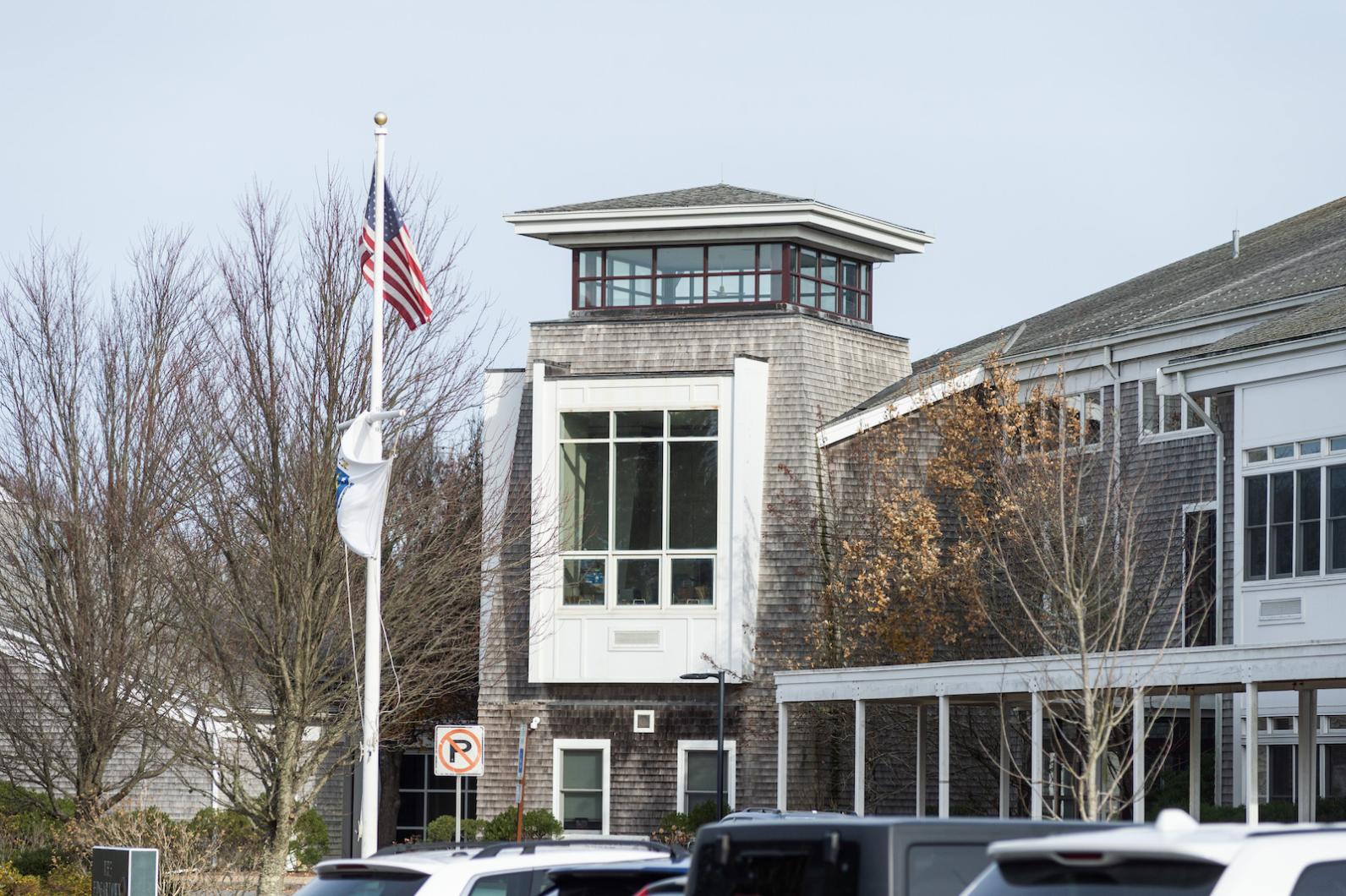
A recently-completed review by the Massachusetts Association of Regional Schools suggested regionalization could benefit the Island's elementary school systems.
To manage the public education of roughly 2,300 Island students, Martha’s Vineyard has six individual school committees — more than in almost any other superintendency union in the state, according to a recently-completed review by the Massachusetts Association of Regional Schools (MARS).
Following interviews and focus groups with Island educators, along with classroom visits and extensive research into state education department data, the MARS group presented its findings earlier this month to a subcommittee of school officials that has been weighing the pros and cons of creating a regional district.
“There’s multiple school committees, different policies and systems, and that does contribute to administrative inefficiencies, sometimes just in duplicated efforts [and] inconsistent implementation of initiatives,” said Carol Costello, one of four retired educators and administrators who have been studying Vineyard schools since last spring.
Some educational services on the Vineyard have been regionalized already, the consultants noted, such as the special education and English language programs, music instruction and therapeutic services managed by the superintendent’s office.
But in both financial and learning terms, the MARS group said, Island schools have much to gain by moving from a superintendency union to a regionalized school district with consolidated budgeting and a shared educational plan.
Under state law dating back to 1870, a superintendency union is a cooperative arrangement in which two or more public school districts share one superintendent and a central office staff, while maintaining their own elected committees and campuses. Known formally as Martha’s Vineyard Public Schools, the Island’s superintendency union is one of 16 that remain in Massachusetts. The all-Island committee, made up of members from the four elected school committees, oversees the superintendent and central office, with expenses split among the six towns according to a cost-sharing formula.
The five individual committees, however, have autonomy over most of their schools’ operations, from curriculum to hiring and firing.
Each of the three down-Island towns has an elected committee for its one school, while the two schools serving Aquinnah, Chilmark and West Tisbury are managed by the elected Up-Island Regional School Committee. Representatives from these four committees also make up the Martha’s Vineyard Regional High School Committee.
“In a regional school district, the superintendent has an overall responsibility for all the schools in the district. In your situation, each of the schools or each of the districts [has] their own principal that’s responsible to their own school committee,” MARS consultant Mac Reid said.
The current system of four independently-managed elementary school districts for children in kindergarten through eighth grade (the Chilmark school runs from kindergarten through fifth grade) has fostered high per-pupil costs and per-teacher expenses, Mr. Reid said.
While Island teachers have contracts limiting their class sizes to 25, he said, the actual number of town students per classroom is far fewer — averaging 13.4 children in kindergarten and first grade, just over 16 in grades two through five, and 15 in the sixth, seventh and eighth grades.
By combining grades across town lines, schools could re-balance these low student-to-teacher rates and streamline their payroll expenses, Mr. Reid said.
There would also be a non-monetary payoff in social benefits to the children themselves, who would have more peers to engage with, he said.
Middle schoolers, in particular, lack social opportunities because there are too few of them on each town campus to support an after-school program there, Mr. Reid said.
“It’s important for them to have some peers that they can relate to and enjoy being with,” he said.
An all-Island middle school would give tweens and young teens the social advantages of a larger student body, Mr. Reid said.
“It would certainly enhance the extracurricular activities, because there would be enough students of the same age that you could build a great after-school program,” he said.
A dedicated middle school also would allow the district to coordinate learning programs so that all graduating eighth-graders are equally prepared for the regional high school, Mr. Reid said.
The Island’s current system fosters unequal conditions from town to town, Ms. Costello said, citing conversations with teachers.
“The access to enrichment [and] extracurricular opportunities is uneven... especially [for schools] who can’t afford or don’t have the staff to be able to offer more,” Ms. Costello said.
“We heard that quite a bit from the staff,” she said.
Teachers also face inconsistencies because there is no dedicated human resources function for Island schools, Mr. Reid said.
“Right now, your staff have three different places to go to. Some staff go to [business affairs manager] Mark Friedman for HR support. Some of your teachers go to somebody in their own school, and some of your teachers in three of the towns go to the town hall,” he said.
Island superintendent Richard Smith has repeatedly sought to add shared human resources at the central office, but his proposals have given way to budget constraints as the all-Island school committee sought to minimize annual increases in spending.
A central human resources staff would put all teachers on an even footing while offering them more support across the board, Mr. Reid said.
“Having been a director of [school] personnel... in the past, I know that that position could help staff with personal issues that they have, but it also can help the district with personnel issues,” he said.
Regionalization also could bring more state money to Vineyard schools, according to the MARS report.
Down-Island towns, for instance, could see their total transportation expenses reduced by close to $200,000 a year if they form or join a regional district, consultant Stephen Hemman said, because the state education department reimburses 85 per cent of the busing costs for regionalized schools.
The up-Island and high school districts currently receive nearly $800,000 a year in transportation reimbursements, Mr. Hemman said.
In focus group discussions, Island teachers and school staffers were open to the concept of regionalizing, the consultants said.
“There was a very big interest in having more colleagues at the same grade level,” Mr. Reid said.
“There might be only two second grade [classes] in some schools, maybe three... the teachers felt that they didn’t have a lot of peers that they could bounce ideas off and grow together with,” he said.
On the other hand, Ms. Costello said, teachers expressed concern that a fully regionalized curriculum would stifle their creativity and school identity.
It doesn’t have to be that way, she said.
“Having been in this field for so many years, [I can] affirm for teachers that they’re not losing their style of teaching. It’s not being taken away from them,” Ms. Costello said. “They can still put their spin on how the curriculum is being taught. That’s the gift of being a great teacher, to be able to take the words on paper and put it into action in a way that children will understand.”
The MARS consultants said their final written report would be ready for this month’s all-Island school committee meeting, scheduled for Jan. 22 at 5:30 p.m. in the high school library and online.
Comments
The time for this is long
Bob EdgartownThe time for this is long overdue and it’s just a matter of when so let’s get started on it now. The only reason this has not been done sooner is because of the luxury of having so many homeowners from off Island that have no kids in our schools. Our taxes keep going up and our largest tax burden is the school system and one we need to get in control. Regionalization is good for the kids and it’s good for the taxpayer in my book it’s a win-win.
It makes sense.
MikeD WtIt makes sense.
Many folks including myself have been saying this for years.
According to the research group this would benefit everyone in many ways and levels.
I support moving toward a
Murray HarveyI support moving toward a fully regionalized Island school district because the current structure no longer matches the realities of scale, cost, or student need. On Martha’s Vineyard, we already expect students to come together at the high school level. Extending that logic downward is not radical; it is consistent.
Regionalization is not about homogenizing classrooms or erasing town identity. It is about governance that actually fits an island educating a relatively small number of students. Multiple committees, multiple policies, and fragmented authority may feel local, but they dilute accountability and make long-term planning harder.
A single district would allow resources to be directed where they matter most: teachers, students, and programs. It would support reasonable class sizes, broader peer groups, and stronger academic and extracurricular offerings, especially for middle school students who are isolated by town lines. It would also professionalize administration by providing consistent human resources support and clearer leadership.
Change always carries risk, but standing still does as well. Maintaining a system designed for another era means inefficiency, uneven opportunity, and rising costs without corresponding benefits. Thoughtful regionalization offers a chance to improve equity, stability, and educational quality for all Island students now and long term.
Murray Harvey's comment is
Peter palches Oak BluffsMurray Harvey's comment is the most thoughtful brief statement on this critical topic that I have ever read.
Absolutely not, no
Lorraine EdgartownAbsolutely not, no regionalization. As a tax payer of decades I oppose regionalization as outlined.
Do you have any compelling
EdDo you have any compelling reason for this stance? Obviously it has always been this way but progress necessarily involves change. Curious if you have any thoughts on why regionalization is a non-starter for you?
Good comment, Ed. Many
Lorraine EdgartownGood comment, Ed. Many studies have shown that class size is important in education, the teacher to student ratio. The island elementary schools have a ration of ten or fewer students to each teacher, according to online research, the reported year of 2023. Young children are best not being on long bus rides, or having a larger teacher student ratio. Granted, the island is small and bus rides not that long, but it all enters into what is best for our children during their formative years in the public school system. In fact, the best education in the public schools came out of the one room school house where grades one to six were often in the one classroom. Those schools educated what we now call the "Greatest Generation". Our public schools have fallen dramatically in educating students for the next decades.
Regionalization is just
David ChilmarkRegionalization is just asking for more chaos…. Tisbury’s $80 million school disaster could end up being subsidized by the rest of the Island, all for the sake of saving a few bucks on buses. C’mon. Meanwhile, High School REGIONAL School Committee is a mess - spending years bickering over sports fields while test scores keep dropping. Now they want to merge everything and hope it magically fixes itself?
Massachusetts Association of
Sara Piazza EdgartownMassachusetts Association of Regional Schools? Gee, I wonder which way they would lean on this issue? How about getting a few other experts on board, educators who would be more objective. There are many downsides to regionalization. I hope this issue will be looked at from all angles.
One way money will be saved
Tis res VHOne way money will be saved is by reducing teaching positions. Is that what we want?
This conversation is long
Long overdueThis conversation is long overdue and should’ve been implemented long ago. The primary issue that’s gonna stand in the way of it ever happening is the lack of a regional funding formula. The current formula at the high school has been at the forefront of 70 years worth of arguments. Quite frankly, Edgartown will never go for it and I don’t blame them when you have your cake and you get to eat it too, and it would be hard to convince me to change either
Oh, no, the dreaded R word.
Sara Oak BluffsOh, no, the dreaded R word. When I washed ashore I was told two things: the person you're talking about is the brother-in-law of the person you're talking h to; and, don't ever say the R word. Clearly both of those admonitions are still in play
Finally. I’ve been calling
Tom Engley West TisburyFinally. I’ve been calling for this for years. One Campus k - 12. Face it our island is too expensive to live for young families. I’ve heard lately of people buying houses for outrageous prices on the spot. Six figure salaries for teachers on average. Teachers deserve a good salary but it untenable.
Not just the schools, but all
paul adler WTNot just the schools, but all agencies, like police, fire, government offices, etc. Absolutely foolish to pay for 6 of everything. Such a waste of taxpayer money.
Next step - create island
Chris KatamaNext step - create island-wide police and fire departments. Too many redundancies and too much cost.
I normally favor local
jose Oak BluffsI normally favor local control wherever possible, but MV is only 9 square miles meaning that "regional differences" should not be that significant. And of course, there is only one curriculum by the time a student reaches high school meaning that regional differences no longer matter at some point. Our current system creates unnecessary costs and redundancies which makes our Island less affordable. I see what duplicative school districts do for the layers of administrators, but I don't see the benefit for the taxpayer or student.
Jose, Hopefully you weren't
Enough Already OAK BLUFFSJose, Hopefully you weren't educated on island. MV is much larger than 9 sq miles but many multiples of that!
The charter school seems to
Ken Edg.The charter school seems to be successful. Maybe we should go back to k-12 grade schools.
Very few charter schools are
Albert GosnoldVery few charter schools are K-12.
Why?
Absolutely correct, bring the
Sara Piazza EdgartownAbsolutely correct, bring the schools, K-12, back to each town. Live local.
This is a perennial debate.
Julian Wise ChilmarkThis is a perennial debate.
Add new comment