

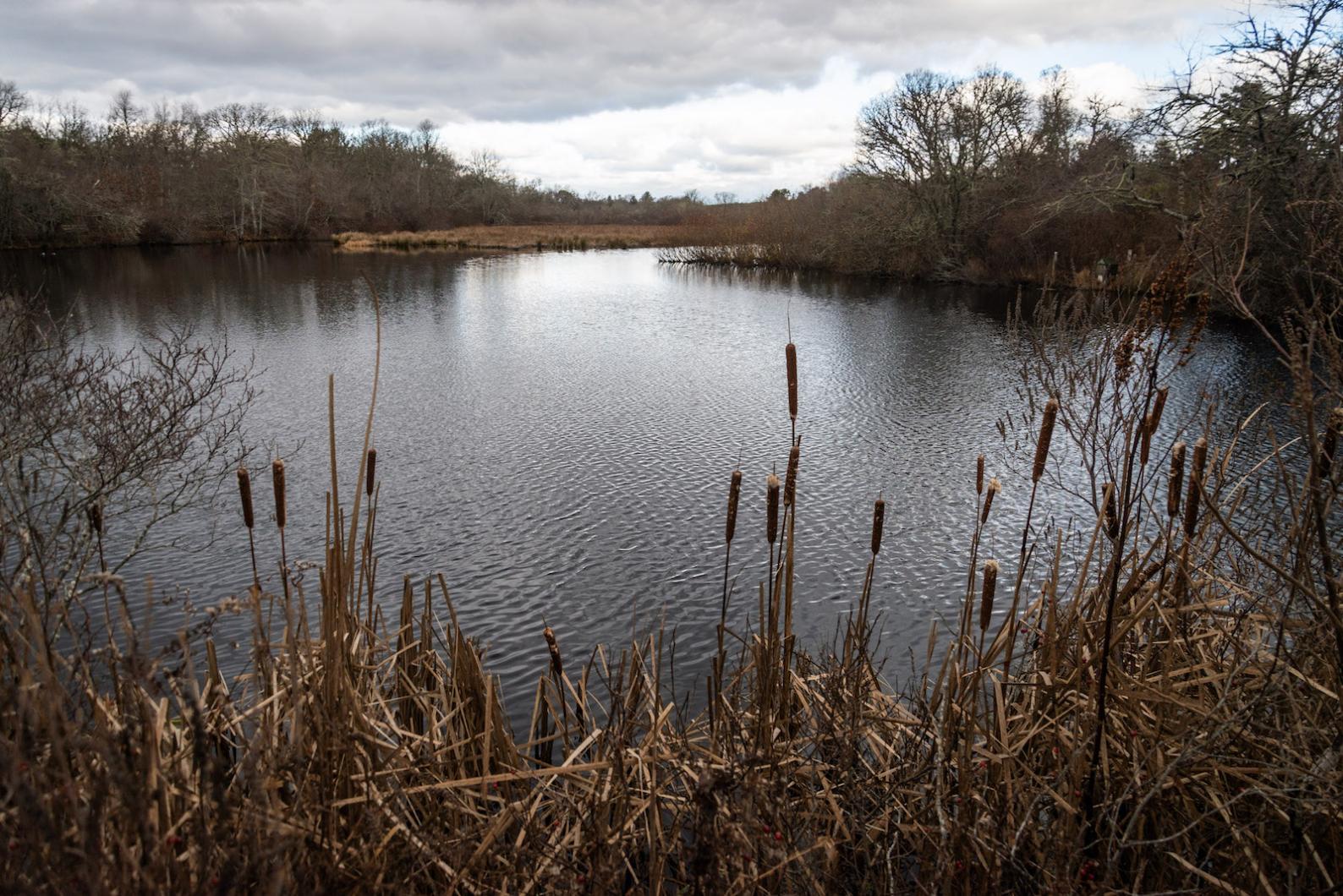
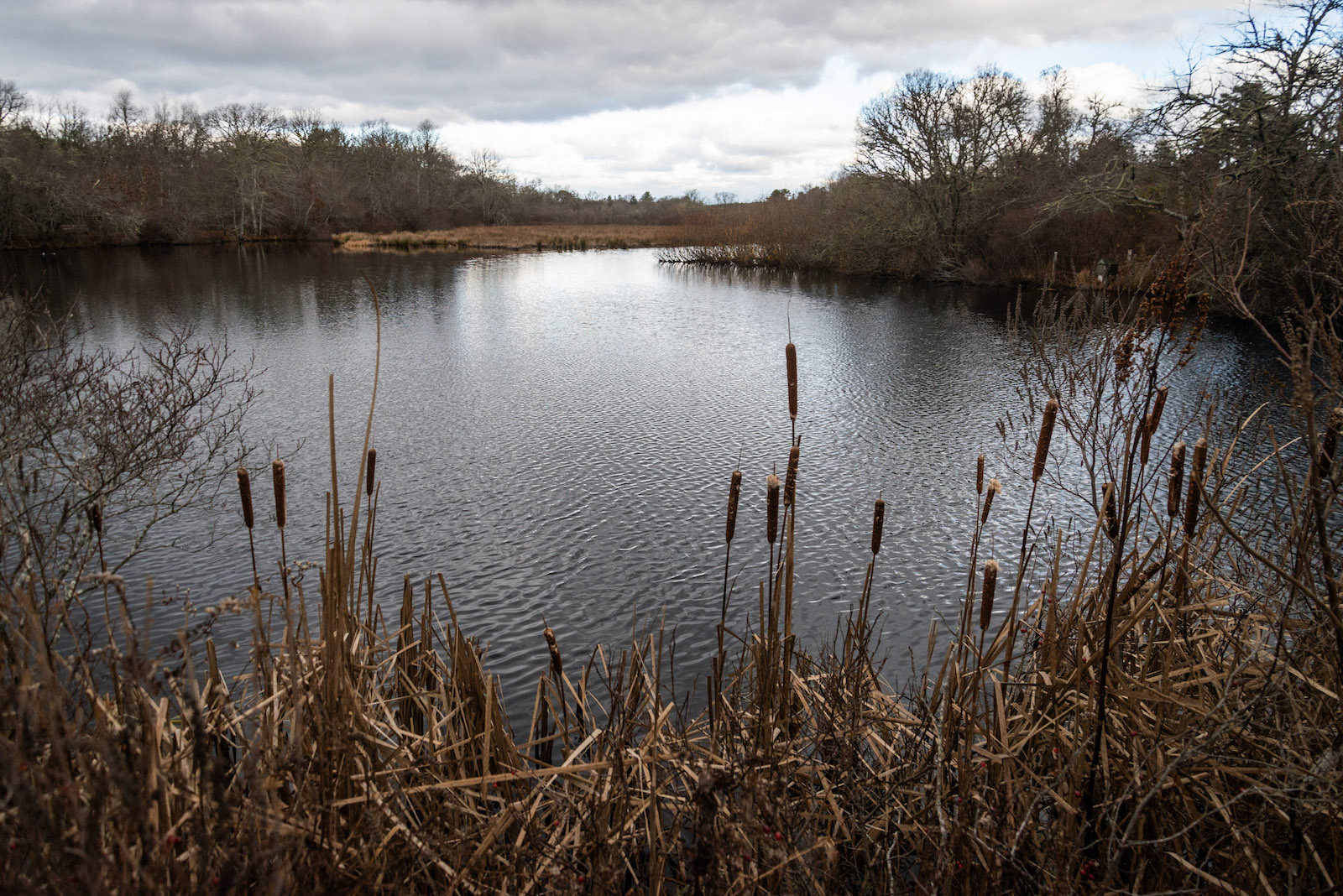
The state designated a grant last week to look at the possible removal of the Mill Pond dam in West Tisbury.
The state designated a grant last week to look at the possible removal of the Mill Pond dam in West Tisbury.
The Massachusetts Department of Fish and Game awarded $50,000 to help with the preliminary design study for the removal of the dam, according to department representative Krista Haas.
The town has been pondering what to do with the dam since recent studies show the dam has stifled water flow in the area, resulting in extremely high water temperatures that make it inhospitable for native fish, such as brook trout, eel and herring.
Though there has been support for removing the dam, others have advocated for the pond’s preservation due to its beauty and historical value.
Mill Brook watershed management committee member David Bouck emphasized that undertaking the study doesn’t mean the town is already planning to remove the dam.
“You don’t have to do the dam removal once they give you this grant,” he said. “But this is essentially that engineering design or that feasibility study to say, if you were going to move ahead with this option, here are all the things you would have to do.”
While dam removal is an option to consider, the committee is continuing to explore other possibilities to address the health of the nearly 3,000-acre watershed. One of those options is constructing a stream bypass, which would cut off Mill Pond’s access to the stream so the pond could be filled with groundwater.
For the last few months, the committee has been looking into grant opportunities to explore various preservation options.
“We’re in this mode right now where any opportunity that looks like we might have a chance to apply and get some money to do feasibility studies for all these various alternatives, or a full alternative analysis, even just one at a time... we’re trying to jump on it and get it done,” Mr. Bouck said.
Committee member Bill Wilcox emphasized that years of research have been conducted to inform future decisions and that community conversation is encouraged.
“The approach that we’re in is developed out of all the data that we collected. Both the stream temperature and the insect populations that indicate the quality of the stream are all saying we have to do something, because it’s not a good environment downstream of each of the dams that are on Mill Brook,” he said.
The Mill Pond’s exact origins are unknown, but relate to the history of European settlers that looked to harness the network of fast-moving streams. The building across the street from the pond, known as the Old Mill, has shown up in records dating back to the 1700s, and was used for wool processing.
The building was abandoned by textile makers as the trade moved off Island, but the pond has become a cherished part of the scenery.
“The Old Mill became regarded as a quaint relic of a bygone era....” Bow Van Riper, the Martha’s Vineyard Museum’s librarian, said at a talk earlier this year. “The way [Mill Pond] nestled in the bend of the road became an integral part of West Tisbury’s image of itself.”
The main goals of the watershed committee are to intertwine preservation of the dam’s history and the ecological impacts of the dam’s relationship to the pond, according to Mr. Bouck.
“We want to enhance the ecological function of [the pond] and restore the health of the stream,” he said. “We also want to preserve the aesthetic and historic value with the site [to address] the needs of the voters and the adjacent landowners in the town.”
Editor's note: a previous version of this article incorrectly stated the grant amount. It is $50,000.
Comments
What is the problem we are
Carol Oak BluffsWhat is the problem we are trying to solve?
The cost to taxpayers, disruptions to residents and traffic would be considerable.
And what would happen to the Old Mill building? Those streams run high and fast behind it.
We have a similar issue here,
Stephen F Amaral Crossville, TennesseeWe have a similar issue here, being controlled by a city council of 5 members,doing away with trustees, etc., to meet their own greedy development goals. There was talk of raising our own dam. I countered the idea with my own idea of dredging the city water lake 10 feet deeper, and using the rich soil as fill, or even provided to the local farmers, who had lost their top soil from erosion. All of our navigable rivers practice that process. The city would instantly gain more water to sell; which they do here,and would negate the need for raising the dam. Many people had never heard of that before in this area, but were very interested, including one of the former trustees that had been terminated. The trustees were in the city's charter dating back to 1934. My family goes back to the early 1900's on Martha's Vineyard. If a specialist were called in to dredge those ponds deeper, after all the years of silt; the silt could be used, even for archeological purposes too, and the trout would have naturally cooler water again. If you can get game and fish involved; there is a fish in the south, referred to as the mosquito fish. I don't know the scientific name. It may be helpful in those pond? I am just an aging retired Navy Chief Petty Officer now, who still loves the island, and I am very proud of my family and extended family roots throughout the island. God Bless.
Add new comment