


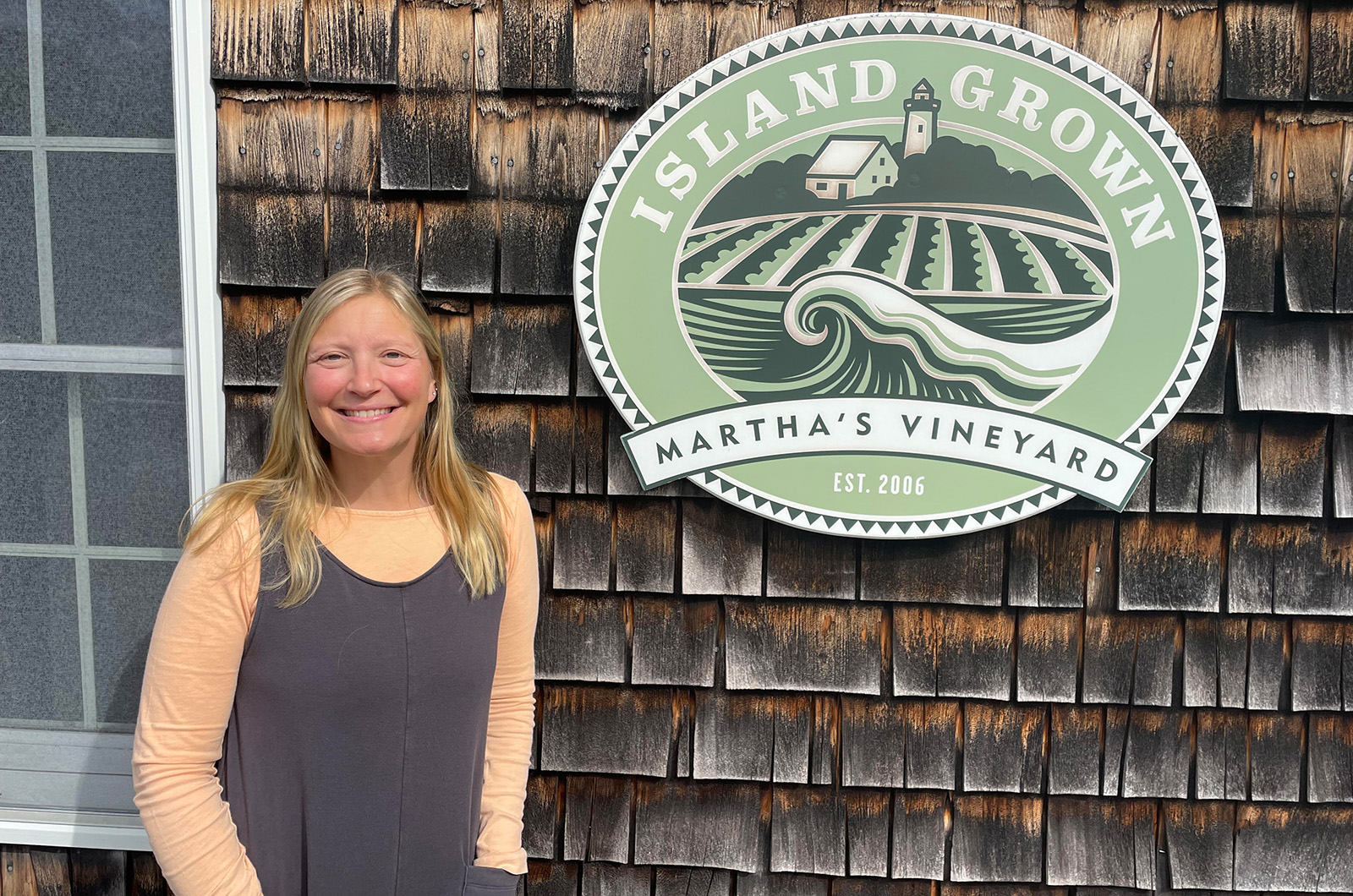
Island Grown Initiative is partnering with towns and schools to install several small food waste recyclers across the Vineyard. Proponents hope to cut back on the millions of pounds of food waste trucked off-Island annually.
A plan to revive composting on Martha’s Vineyard is starting to take shape after the lone public composting center shut down last year.
Island Grown Initiative, a nonprofit that previously ran the community compost program, is partnering with Vineyard towns and schools to install several small food waste recyclers across the Vineyard. Those involved hope that the new recyclers will cut down on the millions of pounds of trash trucked off-Island while also supplying farmers and gardeners with prized fertilizer.
“Instead of spending money to take food waste and ship it off Island and burn it, we could spend money to be able to process it here and create a nutrient rich soil amendment to support Island soils and just support the healthy climate,” said Noli Taylor, the co-executive director of Island Grown Initiative (IGI).
Sophie Mazza, who previously led IGI’s community composting center before it was closed in September 2024, is spearheading the effort to install food waste recyclers that transform food waste into nutrient rich soil. The previous initiative ended after its pilot program on the IGI campus ran its course. The current effort aims to incorporate multiple sites.

Oak Bluffs voters approved installing a composting machine at their transfer station.
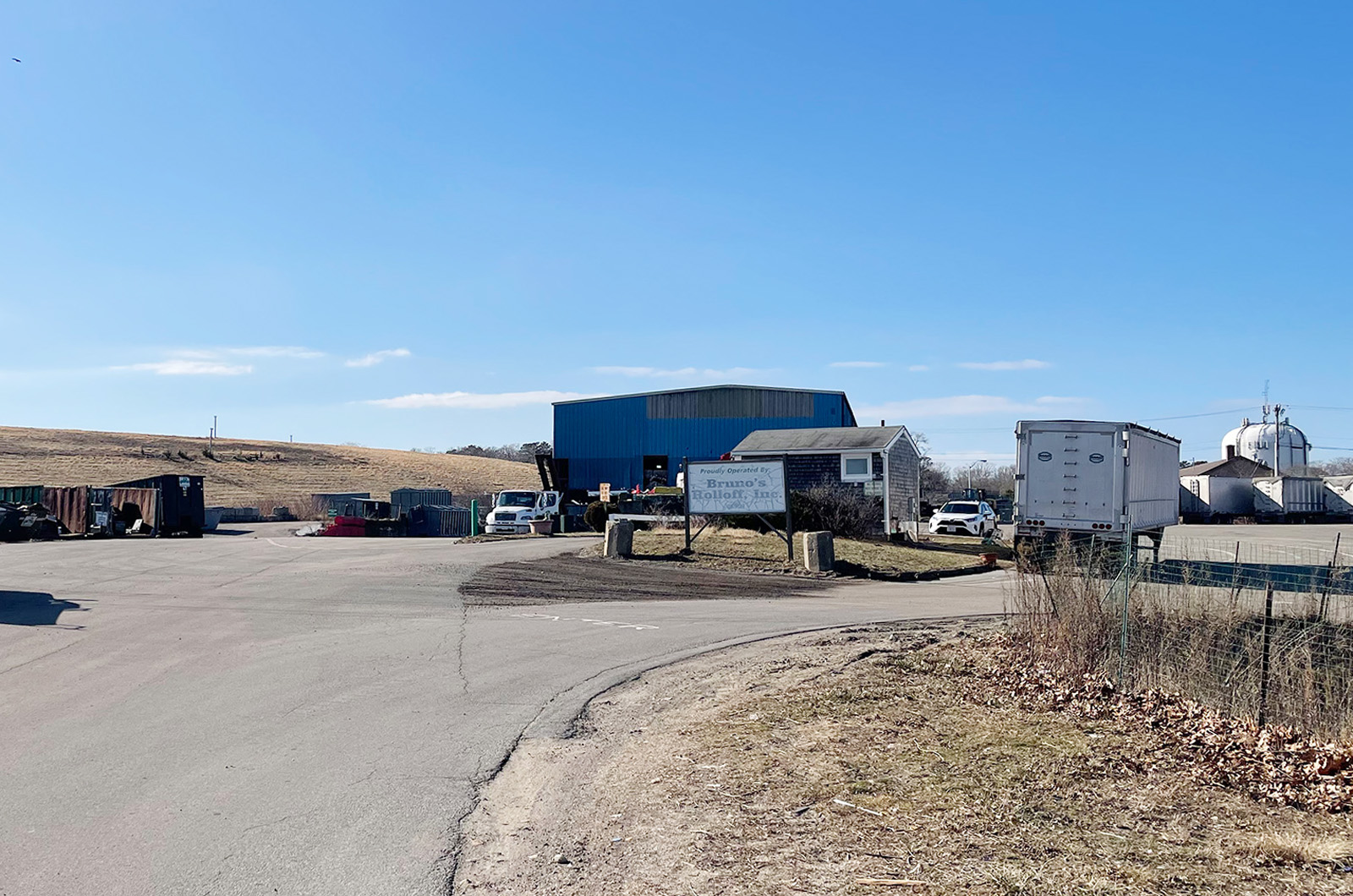
Oak Bluffs voters approved installing a composting machine at their transfer station.
So far, Oak Bluffs voters approved a machine at their transfer station during the April annual town meeting. The Martha’s Vineyard Refuse District is waiting on a grant from the state Department of Environmental Protection to install one at its transfer station.
Ms. Mazza presented a proposal to the West Tisbury select board last week, and the board unanimously supported putting a warrant article to town meeting next spring that would install a machine at the West Tisbury transfer station.
She is hoping to speak to the select boards of Chilmark and Aquinnah soon, as both towns’ boards of health have given their approval.
The support from individuals from different towns has had a significant impact on pushing this initiative forward and paves the way for a multi-pronged approach to combat the issue.
“The hope here is that once these residential food waste recyclers are in place, we have this network of people now that we know are supportive of the issue and hoping that this can help advance the larger, commercial, Island wide solutions,” Ms. Mazza said.
Each machine, including the installation and upkeep, costs between $40,000 and $70,000 depending on the location. Whether there will be a fee to bring food waste to the transfer stations is still being ironed out.
Ms. Mazza has also targeted schools as ideal installation locations to not only reduce food waste, but also use as an education tool.
The Martha’s Vineyard Public Charter School has ordered a food waste recycler and hopes to have it running by the end of the year. Charter school assistant director Scott Goldin said that the installation of the food recycler further enhances the composting education that is already part of the school’s curriculum.
“We’re really excited to continue making it holistic and embody the start-to-finish attitude and create those habits in our kindergarten students, who go home and tell their parents what they see at school,” he said. “It’s the purest form of community education.”
Additionally, the Vision Fellowship, through an anonymous donor, has secured funding for a machine to be installed at the regional high school and it was approved at a high school committee meeting Monday evening. The Chilmark School is hosting a slightly different system — a food recycler that will be installed inside the building.
IGI is now overseeing the funding efforts for equipment costs for the remaining schools and hopes the installation is part of a larger initiative of increasing the education surrounding composting.
“The schools can now be their own enclosed ecosystems where they are growing food in the school gardens, students are eating part of that food as part of their garden education, then they are scraping their food scraps at lunch and then helping to run the composting program,” Ms. Mazza said. “They get to see this whole life cycle of food in real time and contained on campus, which will provide a really rich educational opportunity for them.”
This approach to composting, with several outposts instead of the singular large-scale composter at Island Grown Initiative’s farm in Vineyard Haven, is new to the Vineyard, but is being sought to make the network more balanced and sturdier.
“The more we’ve been working on it and speaking with other composters throughout the state, this decentralized model is really what a lot of people are doing, because in the end, it actually makes a stronger network,” Ms. Mazza said.
Composting was popular with Islanders before the pilot program run by the MV Organics Recovery Committee was halted. The Island produces 16 million pounds of food waste annually, according to Ms. Mazza, and more than three million pounds of food scraps from households and businesses were composted at IGI’s farm location during the program’s eight years.
At the West Tisbury select board meeting, Ms. Mazza said that approximately 190,000 pounds of waste were brought to the town transfer station last year, which equated to around 72 trucks shipping the waste off-Island to an incinerator. About 75 per cent of food waste Island-wide is residential, according to the 2016 Island Organics Feasibility Study.
The EcoRich food waste recyclers that are planned to be used with the new program churn out “soil nutrient rich soil amendment,” Ms. Mazza said. While slightly different from finished compost that goes through a multi-month process, this material is ready to use after three weeks, where it can be mixed with soil in gardens, town greens and playing fields.
“You push a button, augurs turn inside the machine, food waste gets chopped up, processed, dehydrated and then it comes out the other side 24 hours later, where it has been reduced in volume by 90 per cent at that point,” Ms. Mazza explained at a West Tisbury select board meeting last week. “[The output] has to cure for three weeks and the material coming out of machines is referred to as a nutrient rich soil amendment.”
Ms. Mazza is doing this work as part of a three-year Martha’s Vineyard Vision Fellowship. This is her second fellowship focusing on this issue.
Melissa Hackney, executive director at Martha’s Vineyard Vision Fellowship, said that Ms. Mazza’s work perfectly encapsulates the vision fellowship’s mission.
“Encouraging and supporting food scrap recycling on the Island has been a priority for the fellowship since its inception,” Ms. Hackney said. “She’s really passionately committed [to] making a positive change in this area.”
Though the road to bring back composting has been long, these recyclers are a significant step forward to a long term solution to minimize food waste, supporters say.
“It’s really going to take all of our community members to participate with us in reducing food waste at home, reducing food waste in restaurants and businesses, and then finding these ways to compost and process the food that does need to be thrown away on site,” Ms. Taylor said.
Comments
This has got to be one of the
MWG ChilmarkThis has got to be one of the most important things we can do as a community to reduce our dependence on an already overburdened regional logistical system. Such an amazing and cool effort. So looking forward to the inevitable success of this initiative, and those like it that will hopefully follow.
This is a hugely important
Ian Ridgeway West TisburyThis is a hugely important initiative for our Island. Go Sophie! Food waste is valuable, and paying to ship it off the island is a mistake on many levels.
Any composting of any
Lorraine EdgartownAny composting of any materials without deleterious effects on our planet earth is a good thing. I consumer heaps of veg and fruit and the peeling and leaves, etc., of plant material is a good compost. However, i have had skunks and racoons did up the items; my next experiment is to whirl the material in my high speed (sounds like a jet engine) blender to make a liquid and pour it on my garden and plants. NO idea if this works, or not.
Will the finished compost be
Katie West tisburyWill the finished compost be available in some way to town residents at each transfer station?
Sophie is passionate and
PFASSophie is passionate and hardworking we are lucky to have her. Testimony by experts at MVC hearings in no uncertain terms said PFAS is most prevalent in our septics and compost, pretty scary because both of those speak to our food. Is there a plan to mitigate?
This is an excellent
Rose Boston and KatamaThis is an excellent initiative and should be embraced by islanders. Composting is sensible and reasonable - it’s clearly a beneficial solution for the tons of food waste being transported off island. Composting in one’s backyard may not appeal to some (for valid reasons). Establishing convenient drop off sites should attract participation. Great work!
In response to the commentor
Woody FilleyIn response to the commentor PFAS, there is definitely evidence that PFAS can be present in sewage sludge for a number of reasons. And if you are buying compost that is made from sewage sludge (aka biosolids), there is a chance that it will also contain PFAS. That is why it is so important to know where your compost comes from. Your backyard compost, or even compost made at commercial scale, is very unlikely to have PFAS or other contaminants when using food scraps and other natural sources of carbon (leaves, etc.) That is why it is essential that when you are separating for compost that you only put in food scraps. Contamination is one of the biggest challenges to large scale compost operations. That is why all these efforts to separate our food waste and develop composting options for MV is a win-win. We will know the quality of "Island made" compost and we will reduce the truck loads of food waste being sent off Island for disposal. Thanks Sophie for all your many years pioneering this movement.
Add new comment