


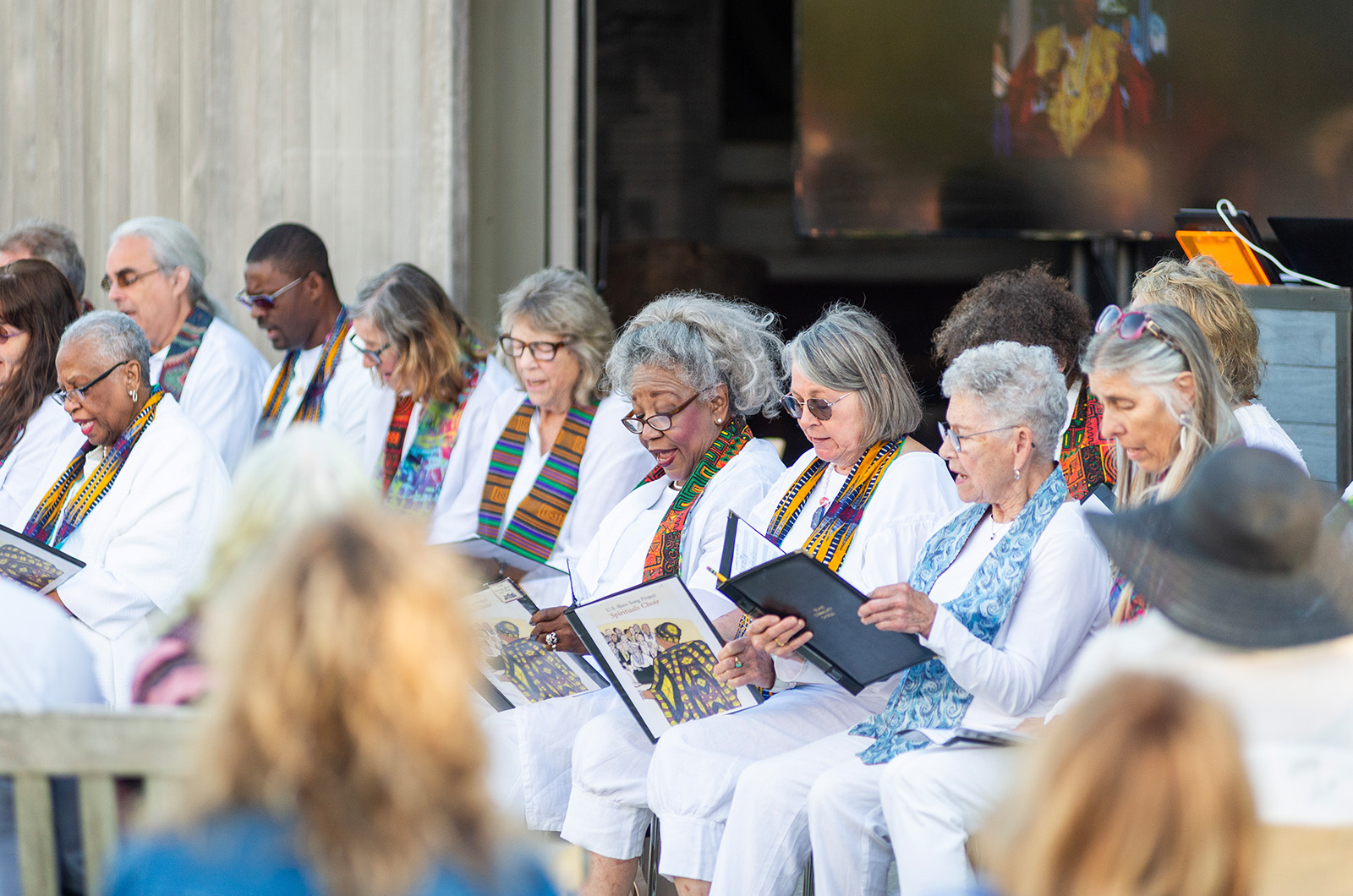
Friends, family and choir members gathered at the Martha’s Vineyard Museum on Wednesday to honor Jim Thomas, who founded the US Slave Song Project’s Spirituals Choir.
Jim Thomas’s voice had an astounding range.
When performing with the US Slave Song Project’s Spirituals Choir — the organization he created to preserve and spread traditional slave songs — Mr. Thomas could sing any part, from bass to soprano.
“He would just bounce from part to part,” said Phil Dietterich, the choir’s accompanist and a musical partner of Mr. Thomas for decades. “If someone was flailing, he just lifted and did their part. He always knew who needed help and he would dive in with his voice.”
Mr. Thomas died in March at 86 years old. On Wednesday, friends, family and choir members gathered at the Martha’s Vineyard Museum to honor Mr. Thomas in a tribute of words and music.
“Jim Thomas’s life was marked by a deep love of learning, music and service,” said his daughter Lara Pacheco dos Santos during the tribute.
Mr. Thomas grew up in Humboldt, Tenn. and earned his degree in history and government from Fisk University. During college he sang with the Fisk Jubilee Singers, a world-renowned group that has been performing spirituals for almost 200 years.

Mr. Thomas leading the US Slave Song choir in 2010. He died this past March.
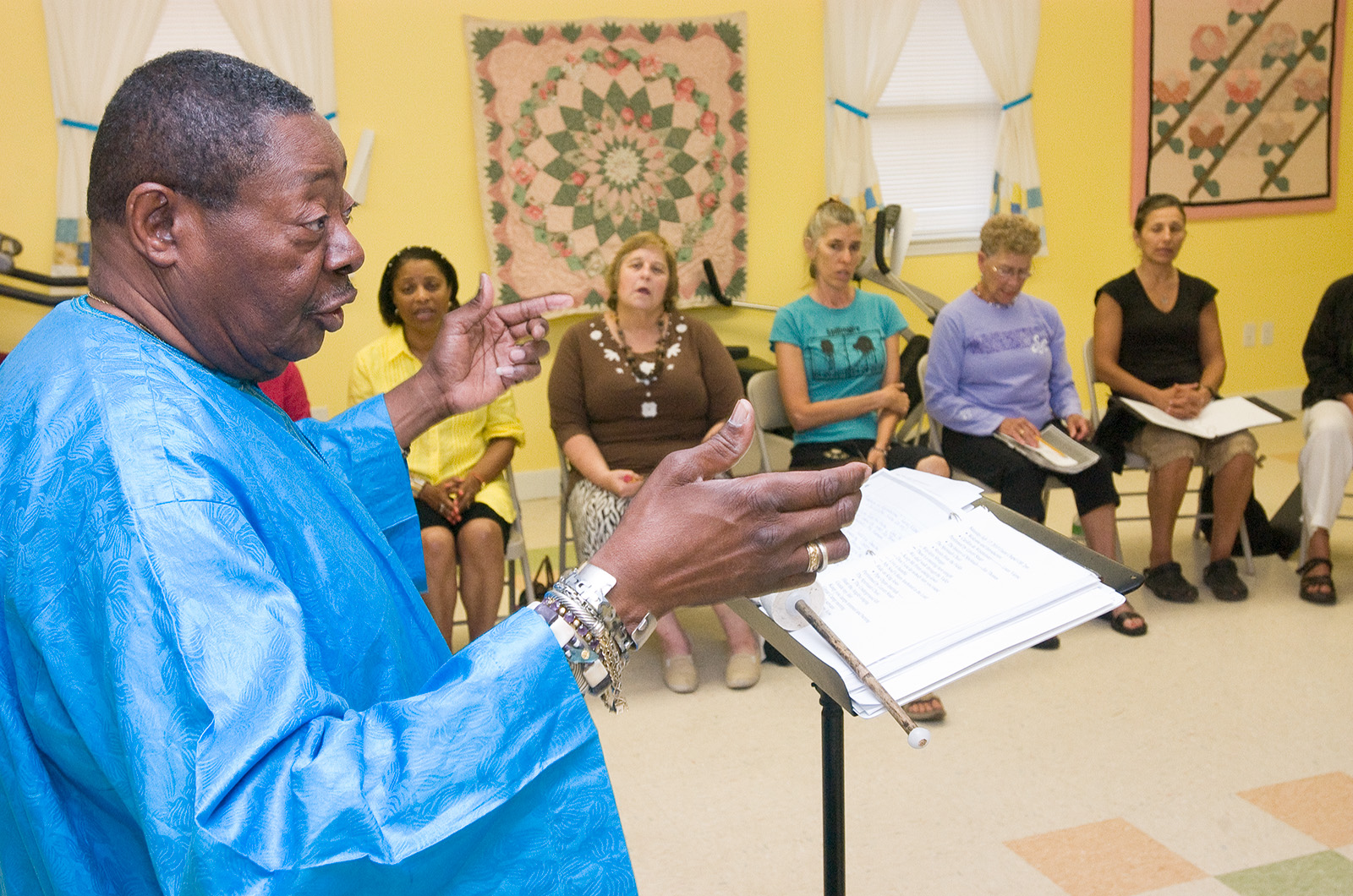
Mr. Thomas leading the US Slave Song choir in 2010. He died this past March.
Mr. Thomas had a long career with the Red Cross, serving in many countries around the globe. He founded and directed the Red Cross Festival Choir from 1976 to 1999, and continued as a Red Cross volunteer after his retirement.
He founded the nonprofit US Slave Song Project in 2005, after he was asked to direct a gospel choir at the Martha’s Vineyard NAACP. Within a year, the choir had turned to singing spirituals, traditional slave songs sung on plantations.
Over the next 20 years, the choir performed these spirituals to various audiences around the Island, while also explaining the structure and symbolism featured in songs intended to communicate messages about freedom, escape and the Underground Railroad.
“These pieces of information were just as important as the tunes,” said Mr. Thomas in an interview played at the tribute. “People singing the tunes — they have kept the tunes alive, but the stories about the context in which they were created is far, far more important.”
Many songs contained codes and messages to communicate under the surveillance of slave masters. Harriet Tubman, for example, was often called “Moses,” or “Sweet Chariot.” The Jordan river represented crossing the Atlantic Ocean when slaves were brought over from Africa, and “heaven” or “the promised land” referred either to Africa or freedom in the North.
“Jim’s connection to slave songs began in childhood when he spent summers with his great grandmother, Anna Dukes,” Ms. Santos shared.
Mr. Thomas often stayed with his great grandmother, who was born into slavery, at her log cabin in Bolivar, Tenn., where she shared stories with him about her life.
“Those early experiences inspired his life’s mission to preserve and share the sacred songs of African enslaved people,” Ms. Santos continued. “He called them the secret songs of the slaves, music that carried hidden messages and spiritual strength, believing these songs were true American folk songs.”
Mr. Thomas founded the nonprofit US Slave Song Project in 2005, after he was asked to direct a gospel choir at the Martha’s Vineyard NAACP.
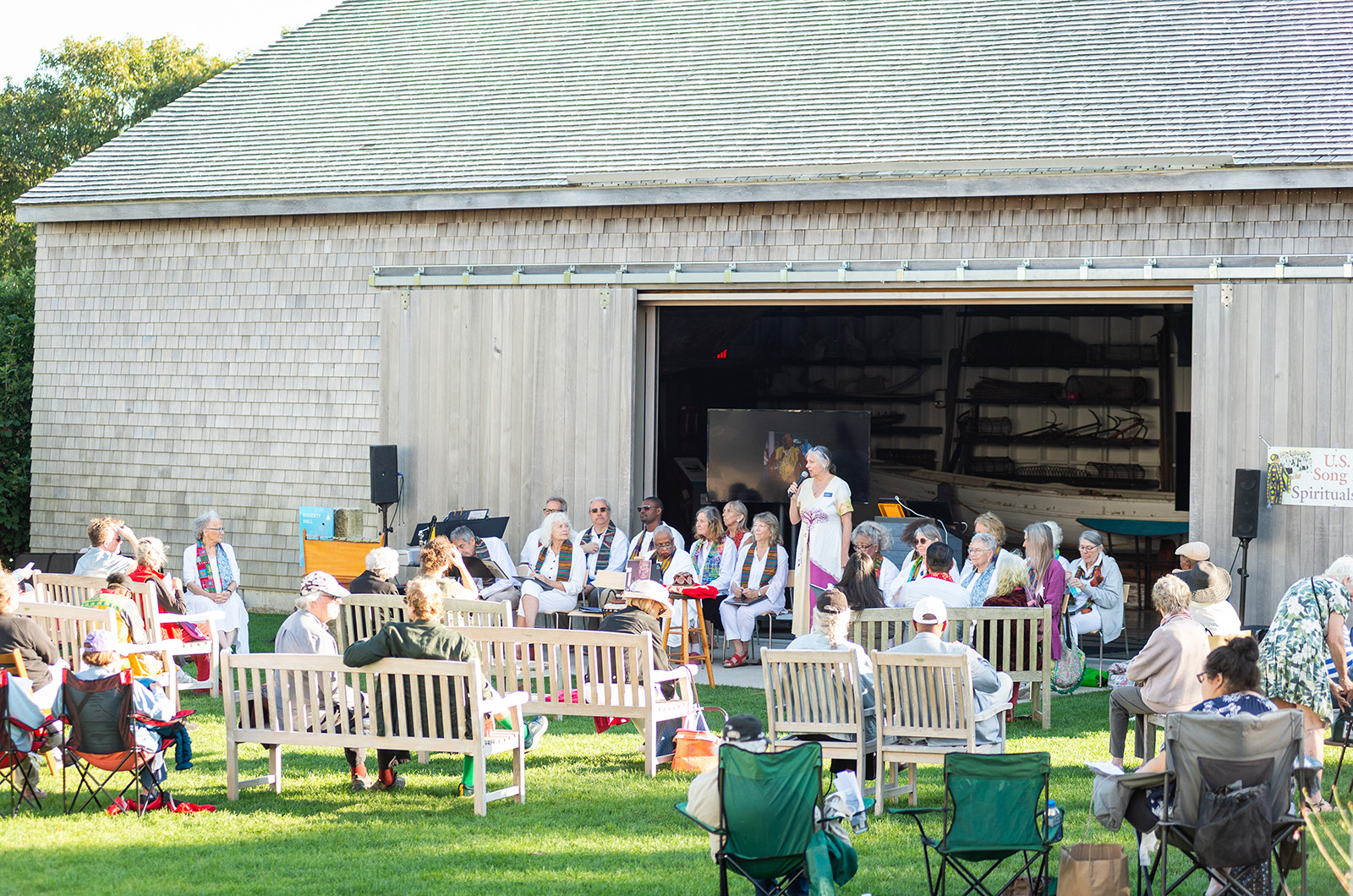
Mr. Thomas founded the nonprofit US Slave Song Project in 2005, after he was asked to direct a gospel choir at the Martha’s Vineyard NAACP.
With Dr. Lorna Chambers-Andrade, Mr. Thomas published two guidebooks explaining the history, symbolism and importance of US Slave songs.
Before inviting the audience to sing a few songs with them, the choir performed two farewell songs for Mr. Thomas: Fare ye well and There’s a man goin’ round takin’ names.
The latter wasn’t a part of their normal repertoire, Dr. Chambers-Andrade told the Gazette. For months before he died, a small group of singers would come to his house on Saturdays to sing spirituals, surrounding him with music while he was sick.
“It was like a sort of hospice,” said Mr. Dietterich.
A few weeks before he died, Mr. Thomas asked Dr. Chambers-Andrade to learn There’s a man goin’ round takin’ names. She performed it on their last Saturday gathering, a week before Mr. Thomas died.
“He loved it,” Dr. Chambers-Andrade said. “He says to me, ‘I love what you did with that song,’ and I knew then he was saying goodbye to me. This was his way of saying he was leaving us.”
A soloist performed the spiritual at the tribute, replacing the lyrics with Jim Thomas’s name.
“Now death is the man takin’ names,” he sang. “He has taken Jim Thomas’ name and has left our hearts in pain.”
Members of the US Slave Song Project are currently discussing how to continue Mr. Thomas’s work.
“[Jim] hoped the project would continue once he was no longer here, and we are doing just that, carrying on his legacy,” Ms. dos Santos said during the tribute. “His legacy was in the music he preserved, the people he touched and the many lives enriched by his service, wisdom and love.”
Comments
Michael Prichard was the bass
Laura Prichard West Tisbury, MAMichael Prichard was the bass soloist for "There's a Man Going 'Roun Takin' Names." He first sang with Mr. Thomas in a benefit concert on May 25, 2008 in Oak Bluffs' Union Chapel. That "Concert for a Cause" was a second Memorial Day benefit concert for New Orleans youth - in two years we raised over $5,000 for school music programs affected by Hurricaine Katrina with the help of Vineyard residents. You can hear a moving version of this song performed by Paul Robeson at: https://www.youtube.com/watch?v=asiBoHlKDkM
Hayley Sandlow did a fine job
Philip Dietterich Oak BluffsHayley Sandlow did a fine job writing the article on Jim Thomas' tribute Wednesday night at the MV Museum. However, there was one typo
in the song "There's A Man Goin" Round Takin' Names" sung beautifully and correctly by Michael Prichard. It is the word "pain" which
should have been used instead of "vain" in this sentence of the third verse " Now Death Is The Man Takin' Names, He has taken Jim Thomas's
name and has left our hearts in pain".
Editor's note: Thank you. It
Vineyard Gazette West TisburyEditor's note: Thank you. It has been corrected.
I met Jim 20 years ago when
Brook Urban ChilmarkI met Jim 20 years ago when we were doing disaster relief for the Red Cross in Montgomery, AL. It was my first deployment and he mentored and taught me so much. We had an immediate connection beyond the RC through the Vineyard. May he rest in peace.
Add new comment