

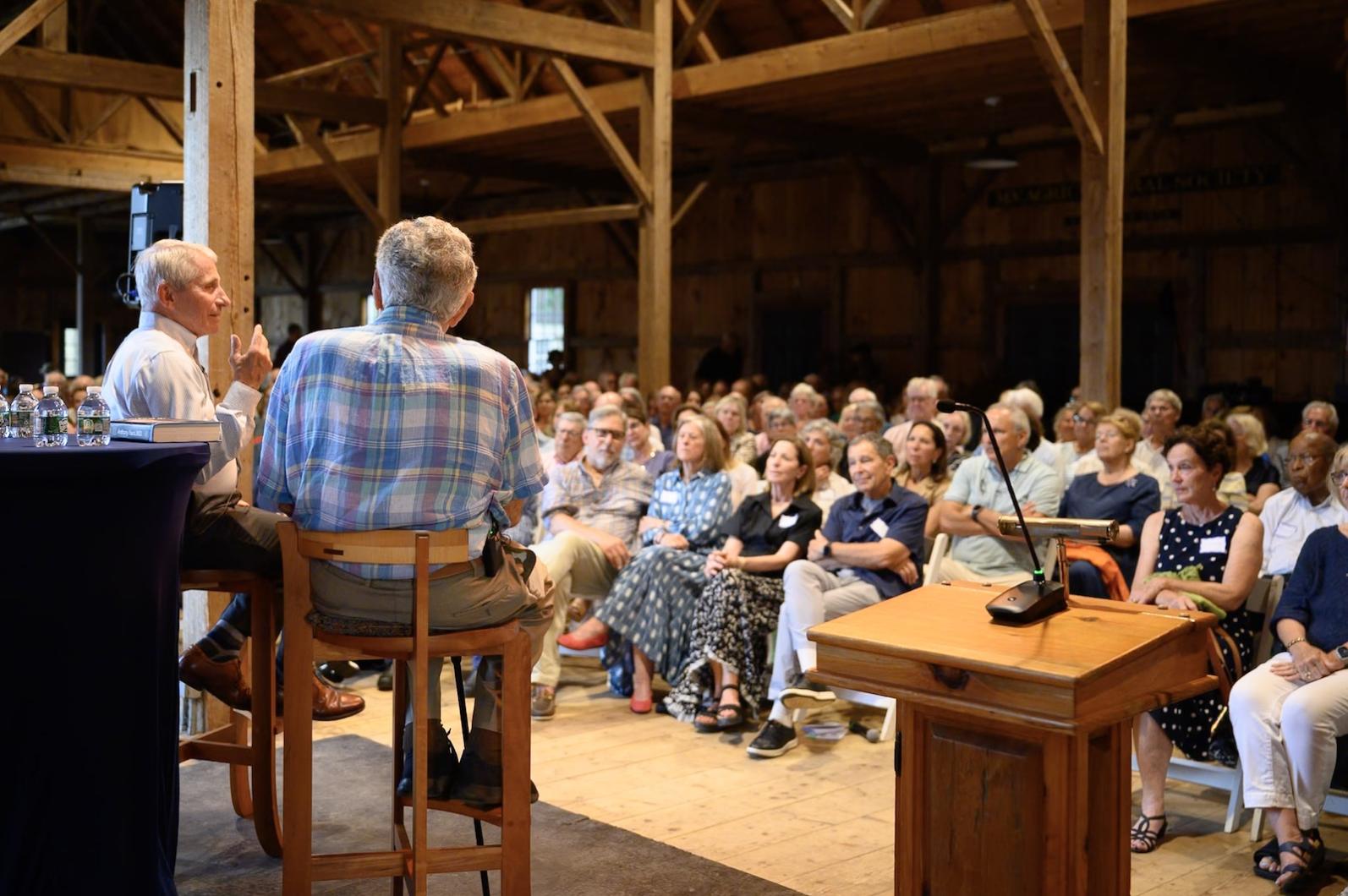
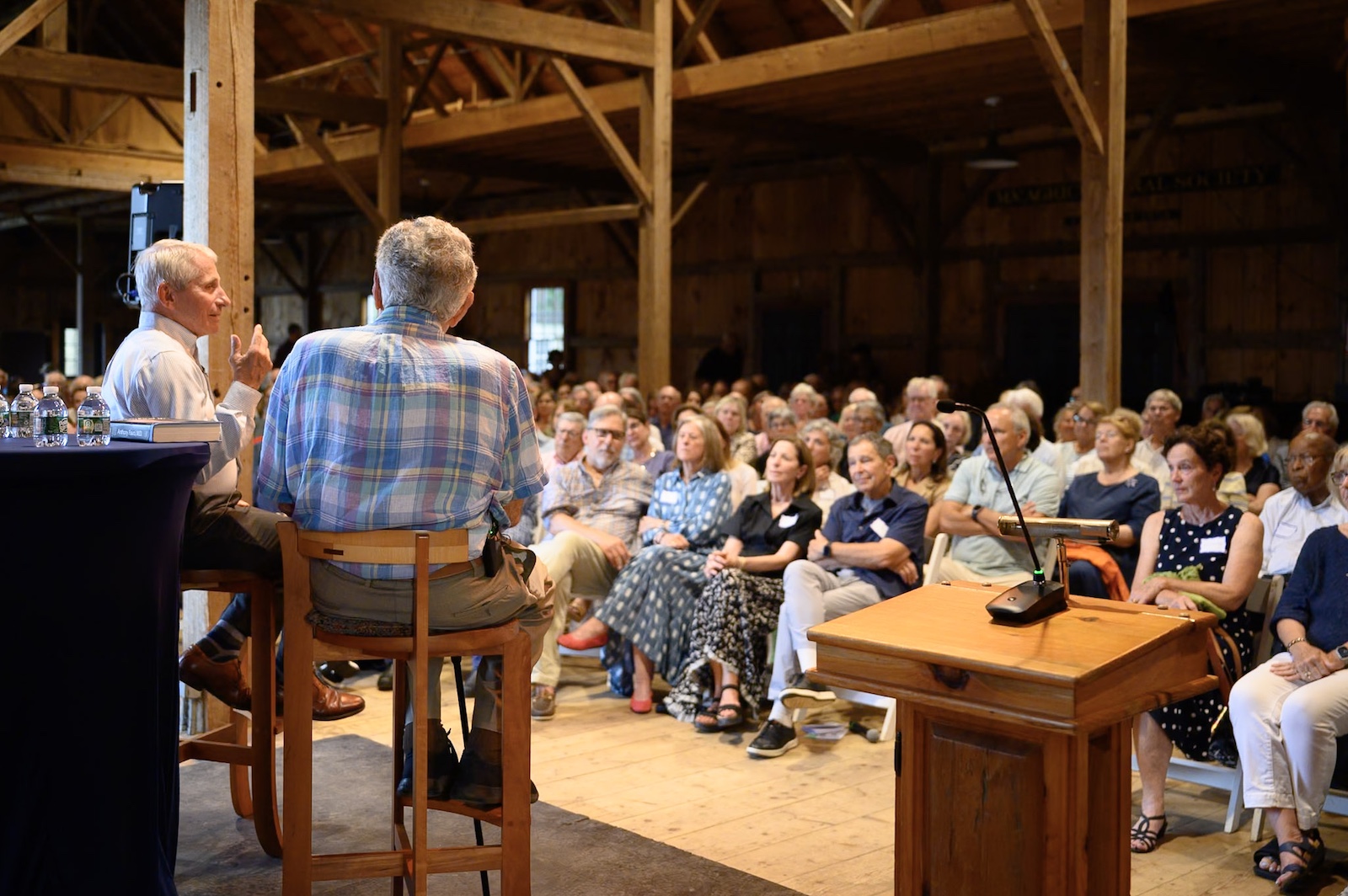
The renowned public health and immunology expert was on the Island Thursday, visiting Martha’s Vineyard Hospital and speaking to a sold-out crowd at the Agricultural Hall.
Dr. Anthony Fauci is doing fine.
That’s how he responded to the first question during the Summer Institute’s speaker series talk on Thursday evening when asked how he was doing.
“Given the state of the United States, relatively speaking, fine,” Dr. Fauci said. “You know, I’m okay.”
The renowned public health and immunology expert was on the Island Thursday, visiting Martha’s Vineyard Hospital during the day and speaking to a sold-out crowd at the Agricultural Hall that evening for the second event of the speaker series.
Onstage with Dr. Jordan Cohen. Event was hosted by the Summer Institute Speaker Series.
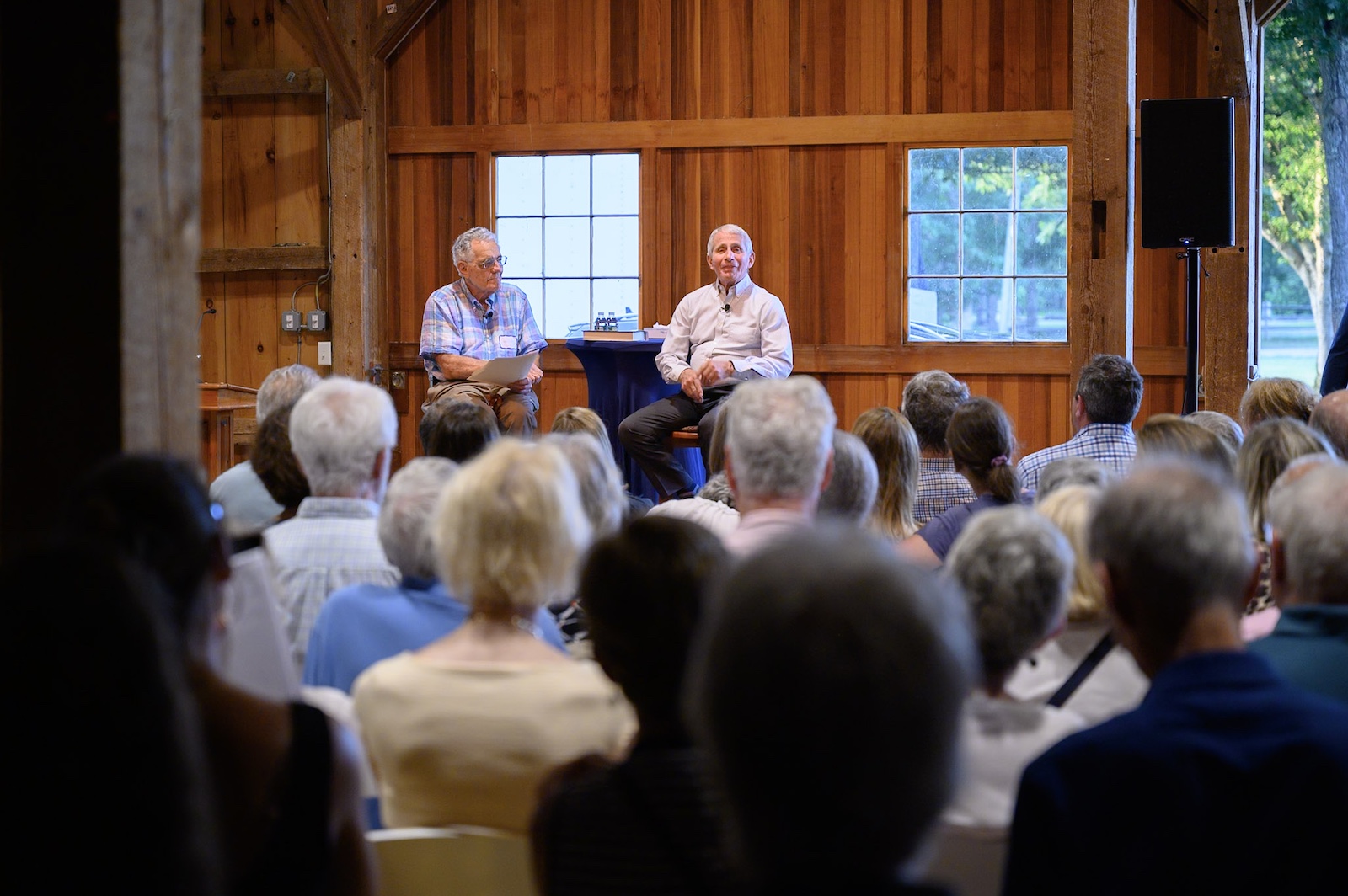
Onstage with Dr. Jordan Cohen. Event was hosted by the Summer Institute Speaker Series.
At the hospital, he and his wife, Christine Grady, toured the facilities and spoke with staff.
Denise Schepici, the hospital president and COO, presented him with a deck prism. The devices were installed in the floors of ships to illuminate rooms below deck.
“I give this to you symbolically for keeping us in the light of science,” she told him.
Dr. Fauci has visited the Vineyard a few times for meetings, he said, but his wife has a deeper connection. She worked as the hospital’s nursing supervisor from 1978 to 1979.
The conversation at the Agricultural Hall was moderated by Dr. Jordan Cohen and included questions from audience members. The discussion covered decades of American public health’s successes and failures, but was also at times light hearted and humorous.
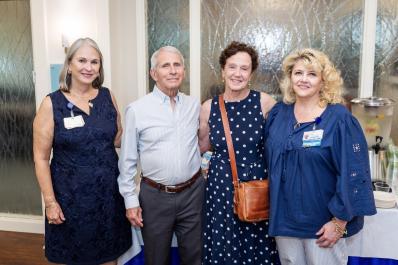
Dr. Fauci also stopped by the hospital. Left to right, MVH COO Denise Schepic, Dr. Fauci, his wife Christine Grady, and Renee Clancy.
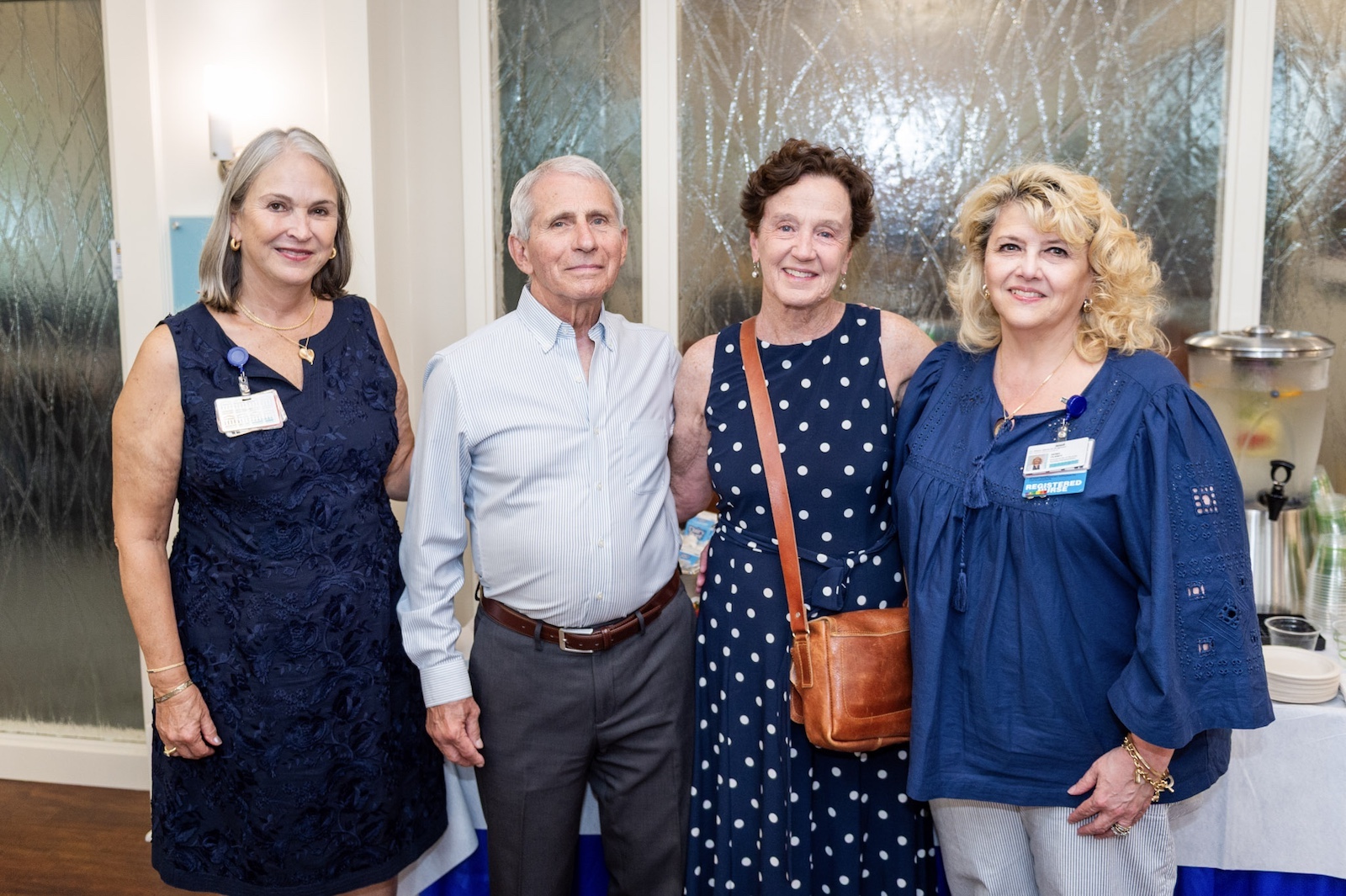
Dr. Fauci also stopped by the hospital. Left to right, MVH COO Denise Schepic, Dr. Fauci, his wife Christine Grady, and Renee Clancy.
Dr. Fauci served under seven presidents, and was the head of the National Institute of Allergy and Infectious Diseases (NIAID) for decades. Since 2023, he has been a distinguished university professor at Georgetown University, and holds an appointment in the McCourt School of Public Policy there.
He said COVID-19 was his “worst nightmare,” decades before it appeared. Then, in January 2020, he watched as, in a matter of weeks, the disease became a world-wide public health crisis that would go on to kill millions of people.
Immediately, Dr. Fauci and his team met to begin developing a vaccine, with the Pfizer and Moderna COVID-19 vaccines released in November 2020.
“In that period of less than a year, we did something that was completely unprecedented, because it usually takes an average of 7 to 10 or more years to develop a vaccine,” Dr. Fauci said. “We did it in 11 months.”
What was less successful was the United State’s overall response to the virus, he noted.
Audience was rapt throughout the presentation.
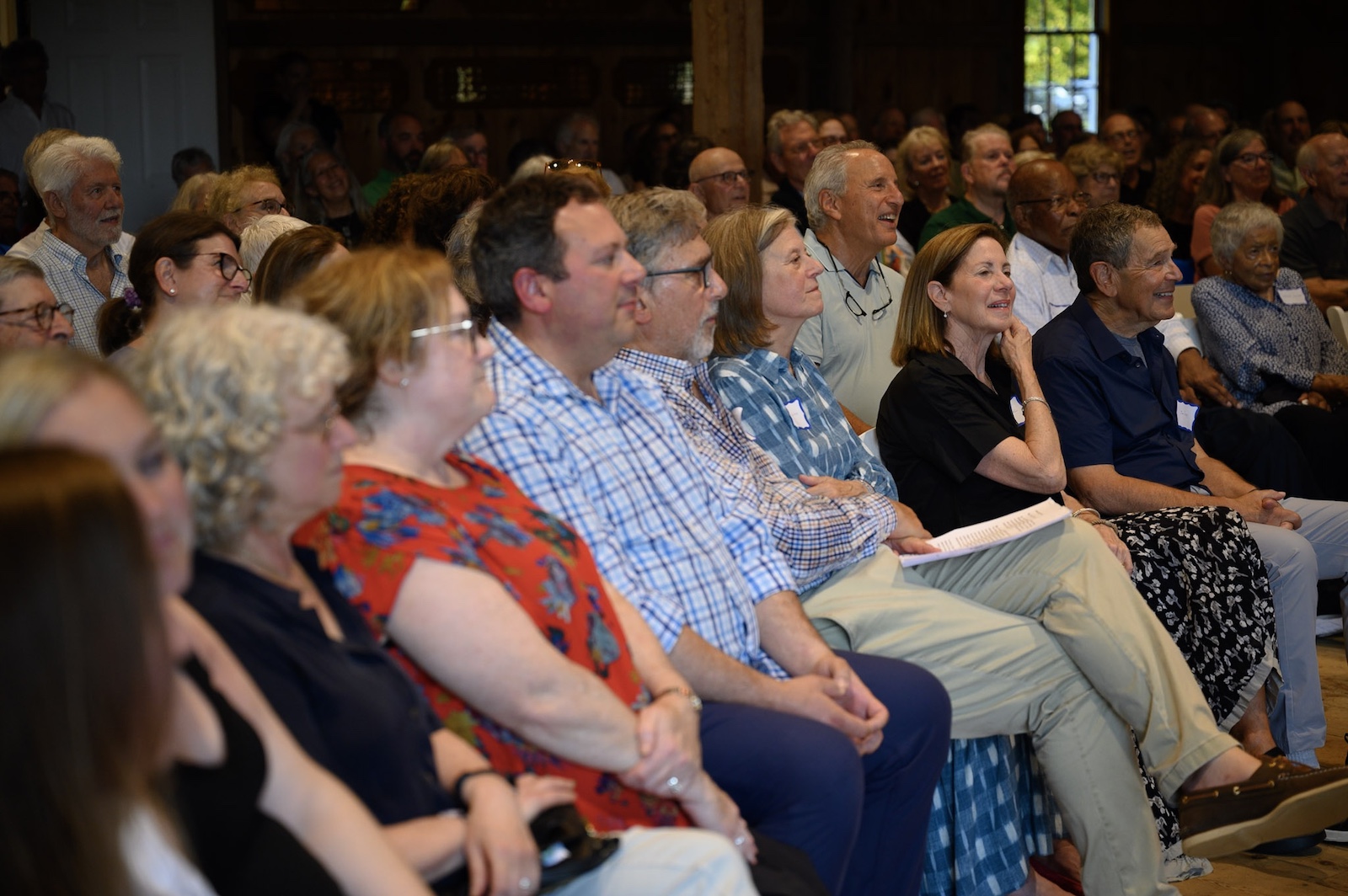
Audience was rapt throughout the presentation.
“There was a degree of divisiveness which made it impossible to mount a unified, effective public health response,” he said, adding that more Republicans living in red states were hospitalized and died from the virus than Democrats living in blue states.
“That doesn’t make any sense at all, that your political affiliation should determine whether you live or die from an infectious disease,” he said. “We should have realized that the common enemy was the virus, and we as a country were acting like the common enemy was each other. That’s exactly what went on for years, and unfortunately, it’s present even to this day.”
Dr. Fauci stressed that he is not “anti-Republican,” and that he is not a political person at all. He described his warm, personal relationships with many presidents he served, although he did tell George H. W. Bush “no” after the then-president personally asked him to direct the National Institute of Health.
“I was obviously very nervous,” Dr. Fauci recalled. “It wasn’t like I was all confident. I said, ‘Mr. President, I really do believe I can serve you and the country better if I stay in my position as the director of NIAID.’
“He stopped and looked at me for what seemed like five minutes. It was about 12 seconds,” Dr. Fauci continued. “And he said, ‘You know, I respected you an awful lot up to now, but I respect you even more now. Why don’t you just go ahead and do your thing, and we’ll still be friends.’”
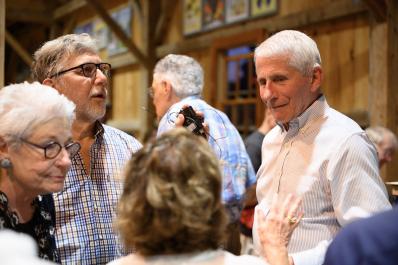
Speaking with audience members after the talk.
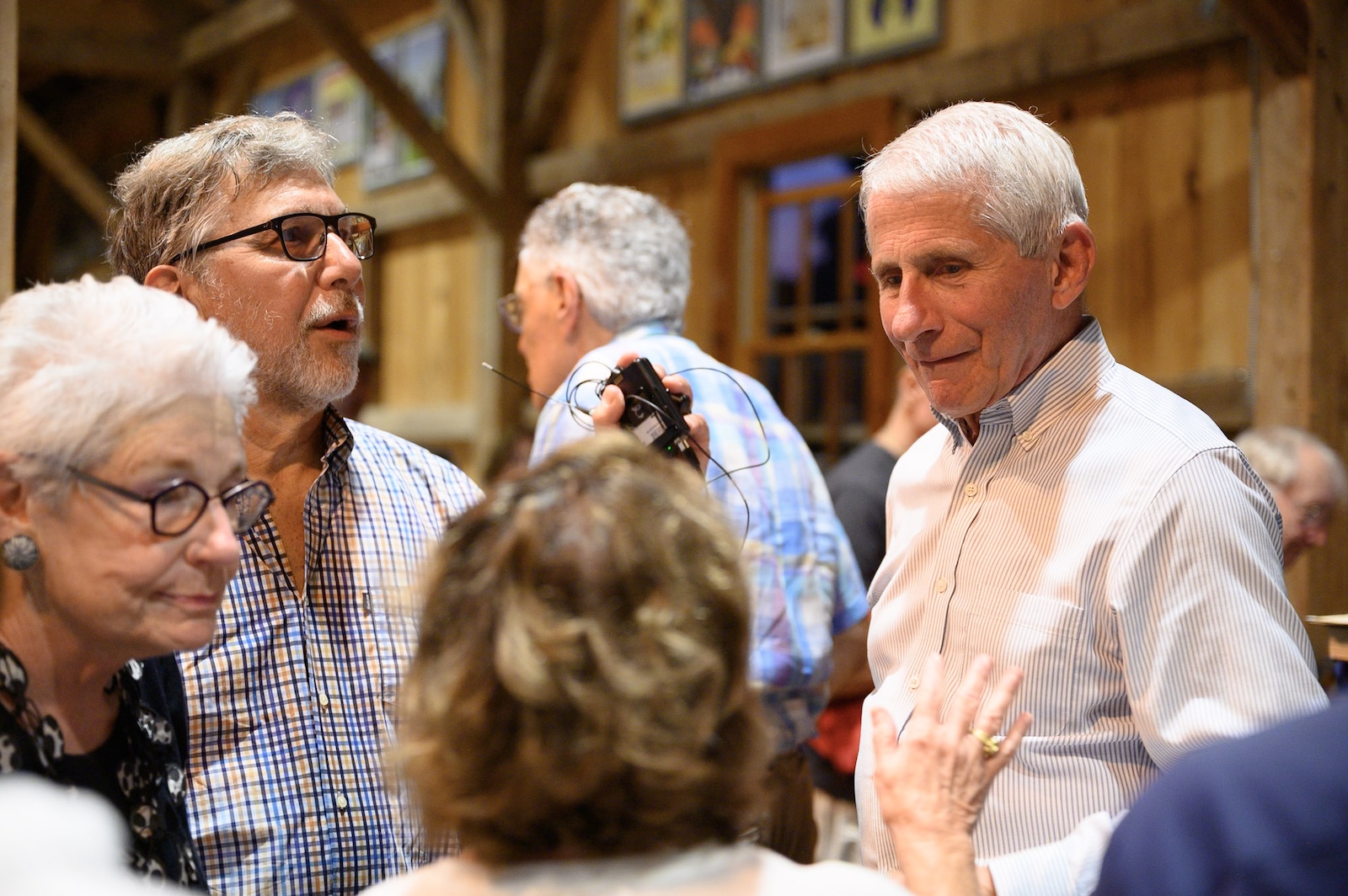
Speaking with audience members after the talk.
During the pandemic, however, his relationship with President Trump was much different. While the virus still raged in April of 2020, the Trump administration claimed hydroxychloroquine or ivermectin would cure it.
Day after day, on camera in the White House press room, Dr. Fauci would then have to debunk these myths. It was an “uncomfortable position,” he said, and one that made him seem like he was trying to “undermine the administration.”
“I can tell you that unleashed a tsunami of hostility towards me that is present to this day and hasn’t gone away,” he said.
Also present to this day is the anti-vaccine movement. Since being confirmed by the senate, Secretary of Health and Human Services Robert Kennedy Jr. has rolled back vaccine guidelines and requirements.
“It really is frightening when the Secretary of HHS essentially is denying the seriousness of measles,” Dr. Fauci said.
Members of the audience asked Dr. Fauci about vaccines, from the lack of a vaccine for HIV to the false claims that vaccines cause autism. One audience member asked about a vaccine for Lyme disease, and another directed her question on anti-vaccination to Ms. Grady.
“I think it’s the responsibility of the public health and medical professionals to explain why [not vaccinating is] a bad choice,” Ms. Grady said. “They can explain it, they can support it, they can direct information, they can challenge them, but they can’t force people.”
“We’re living in an arena of the normalization of untruths,” Dr. Fauci said, earlier in the talk.
Dr. Fauci also described his early motivation to study medicine, explaining that his father ran a “mom and pop pharmacy” in the 1940s and 1950s. A far cry from today’s chain pharmacies, his father’s pharmacy was the “hub of the neighborhood” where pharmacists not only filled prescriptions but often acted as the physician and even marriage counselor.
His father was also a “terrible businessman,” Dr. Fauci said. When a customer could not afford a prescription, his father would tell them to “put it on the bill and if you get enough money, pay it later.”
“Can you imagine doing that with CVS?” Dr Fauci said.
It was the responsibility of serving the community that his father prioritized above all else, a way of looking at life Dr. Fauci continued to develop at a Jesuit high school and college.
“That really served as the fundamental basis of why I went into medicine,” he said.
And thankfully he did, he acknowledged, instead of pursuing the All-American college basketball career he had dreamed for himself in high school, as a five-foot, seven-inch point guard.
“Then I started playing against college players and I really became very aware that a five-seven, really fast, good shooting, point guard will always get killed by a very fast, good shooting, six-three point guard,” he said.
After the talk, audience members approached Dr. Fauci, thanking him and shaking his hand. Dr. Stephen Salloway, who studies neurology at Brown University, called him an “amazing example” of a scientist in the service of public health.
Addison Antonoff contributed reporting.
Comments
I am a RN. 64 year old small
Laura Sherby OhioI am a RN. 64 year old small town hospital nurse. Just listening to Anthony Fauci’s audio book Anthony Fauci M.D. On call a doctor’s journey in public service. Very interesting. His leadership and dedication over those years of service at the NIAID is to be commended. I hope we will see more people like him in our future.
Add new comment