

This summer’s heightened public interest in ticks, and the associated illnesses, was reflected by a recent article in the Vineyard Gazette.
This summer’s heightened public interest in ticks, and the associated illnesses, was reflected by a recent article in the Vineyard Gazette – a lengthy piece full of locally relevant information from Island tick biologist Patrick Roden-Reynolds and his predecessor Dick Johnson. The most realistic and effective approach to reducing the number of ticks is certainly to reduce their food supply, specifically deer. This has proven effective elsewhere, including on other islands, but it is challenging to implement and will require a great deal of patience.
In the meantime, our experts note that the best way to reduce the risk of tick-borne illness is to focus on personal protection: wearing insect repellent and repellent-treated clothing, and doing thorough and frequent tick checks. While we at Vineyard Conservation Society greatly appreciate the article’s amplification of this essential advice, we are concerned that its opening vignette — a look at an in-progress study of whether broadcast spraying of insecticides is effective in reducing tick numbers — does not adequately address the environmental harms of indiscriminate insecticide use.
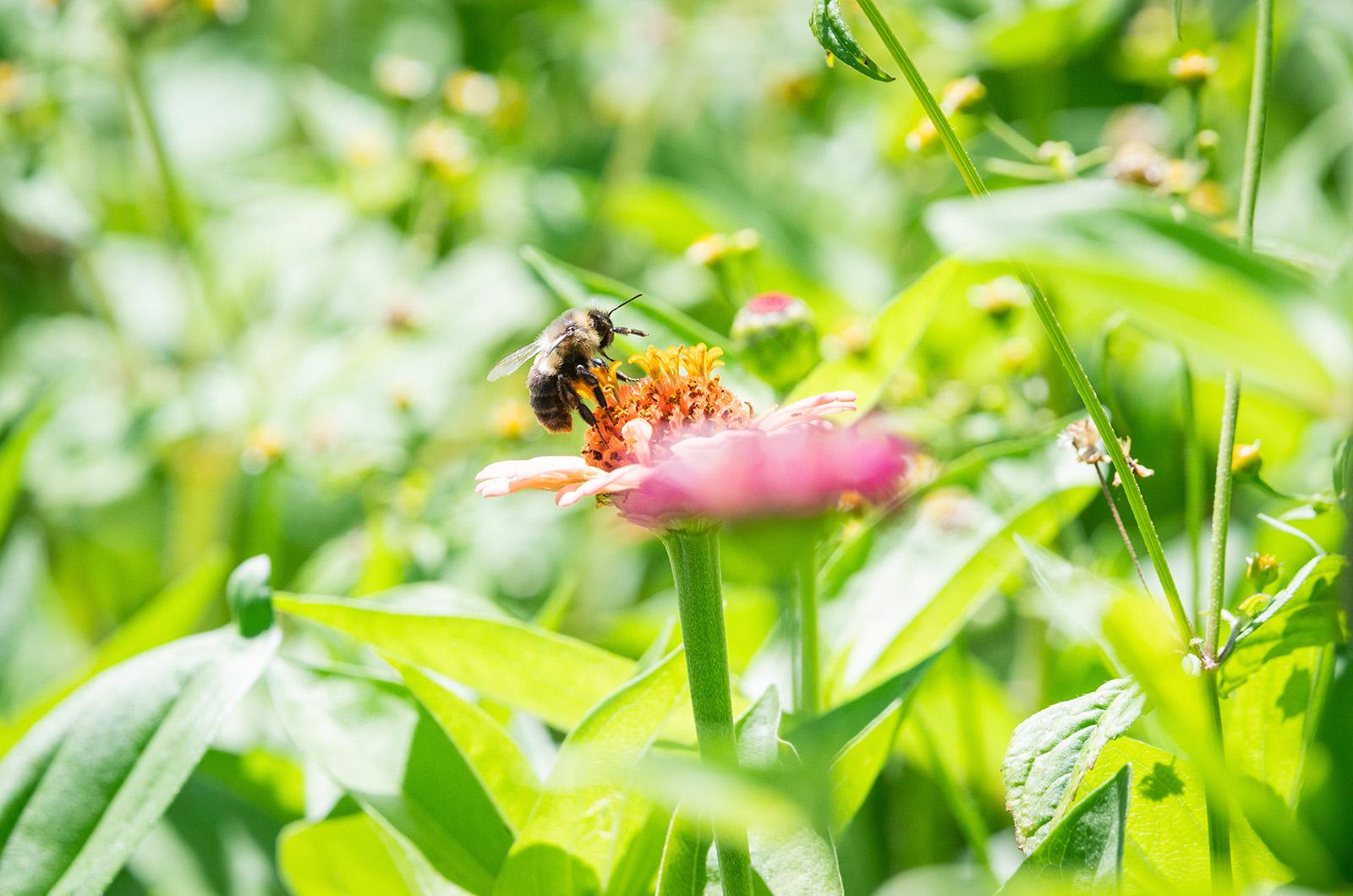
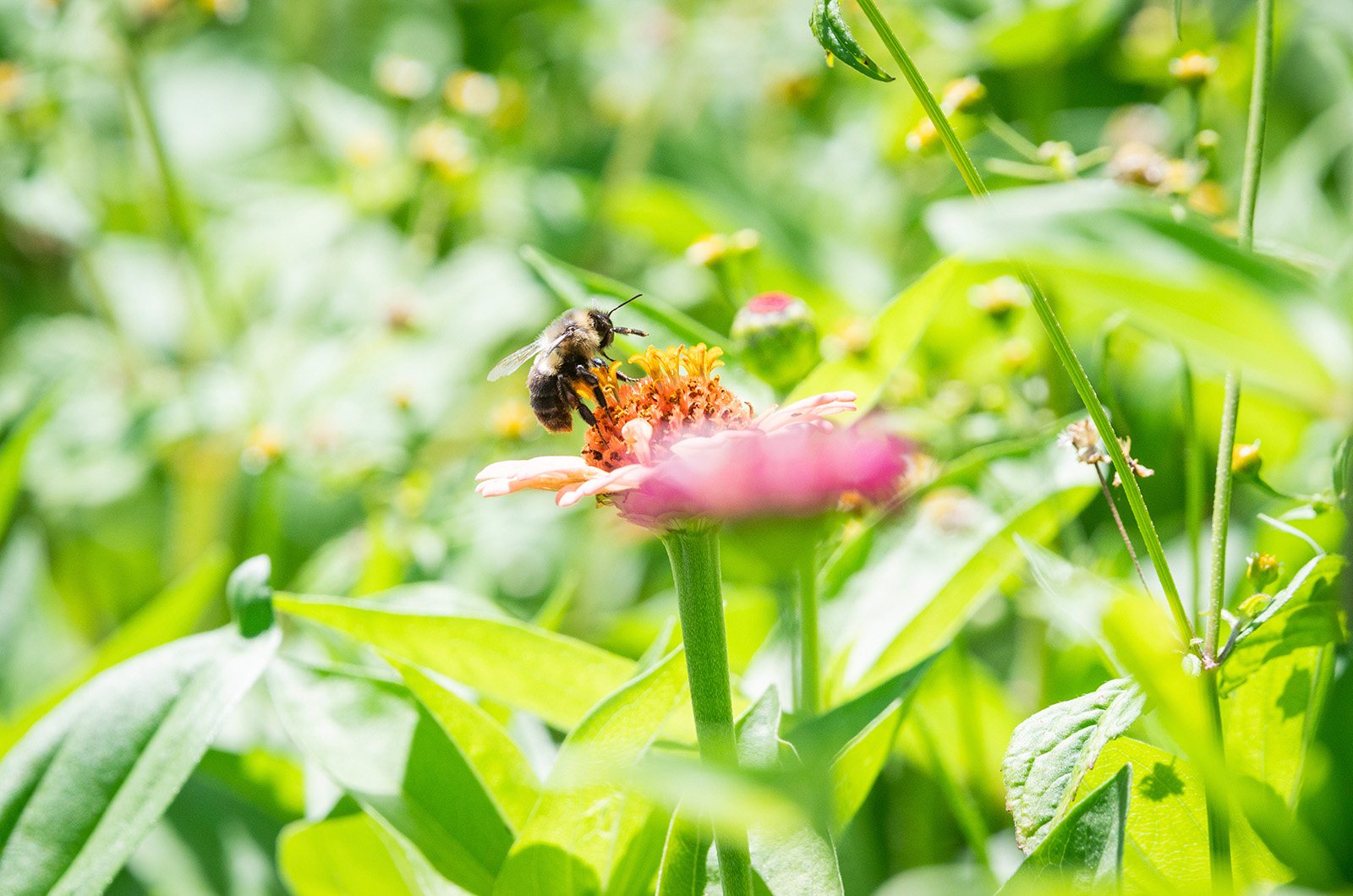
In short, widespread spraying of permethrin (the subject of the study), is lethal to pollinators and other beneficial insects, and highly toxic to aquatic life. This is especially concerning to our organization because it is now happening here. Over the last several years, a veritable cottage industry of high-volume outdoor insecticide spraying has quietly sprung up on the Island, receiving little critical attention against the background of so many other headline-grabbing issues.
To be sure, tick-borne illnesses are a serious problem on Martha’s Vineyard and should not be trivialized, but neither should the consequences of pesticide spraying on the Island’s farms and natural areas. Treating a piece of land, be it a lawn or a soccer field, is qualitatively different from spraying your socks, because any products (either synthetic or naturally derived) that are effective at killing ticks will also kill many beneficial organisms. This is because insecticides target biochemical pathways widely shared among insects, arachnids and other arthropods.
Permethrin, for example, is a neurotoxin that destroys the ability of nerve cells to communicate with muscles, effectively paralyzing a wide diversity of species. Likewise, naturally derived products such as oils and soaps may well be preferable in some ways, but they are similarly non-specific when it comes to killing insects. It is notable that companies are marketing cedar oil sprays to control both ticks and mosquitoes, two organisms less similar to each other than they are to spiders and bees respectively.
Therefore, the result of broadcast spraying to reduce tick abundance on a particular patch of land will necessarily impact beneficial species, with the size of the effect depending on the scale of the application. To put the ecological impacts in perspective, when conservationists decry the broadcast spraying of insecticides, we often reference the fact that they are highly toxic to pollinators. This is true, and important, but also understates the issue. These chemicals are highly effective at killing a wide spectrum of organisms, making a profound impact on local food webs. Consider what happens to an insect-eating animal when its food source is cut in half — and some portion of the remainder are survivors of insecticide spraying. While the phrase “toxic to pollinators” implies the harm is functionally a side effect — an unfortunate cost that accompanies the benefits of killing the ticks — that’s nonsense from the biological perspective. Permethrin kills bees in the very same way that it kills pests: effectively, instantly and through the same biochemical mechanism. Understood this way, the harm to pollinators is just part of a much larger impact on the native biodiversity of the area.
This harm to native biodiversity is especially tragic on the Vineyard, which has one of the most well-documented insect faunas (including pollinators) in New England. Much of this diversity did not survive on the mainland because of the widespread application of DDT in the 1950s and 1960s. The ecological consequences of that heavy pesticide use, an injury from which our Island was largely spared, are why we should resist the newfound local fervor for broadcast spraying, even in the face of the ever-present threat of tick-borne illness.
Finally, it is critical to remember that no attempt to reduce the number of ticks — whether by spraying pesticides or culling the deer herd — will ever reduce the number so low that we can ignore the need for regular tick checks.
Returning to the Gazette story, it closes with a great analogy for the simple reality that, rather than trying to fight ticks by altering the whole ecosystem, we must instead protect ourselves, as individuals. In the article, Stephen Rich, a zoonotic disease expert at the University of Massachusetts Amherst, said he “hoped people would think of the current situation in the same light as when society learned of the cancer risk from sun exposure. Where sunscreen was pretty much unheard of decades ago, it is now commonplace for people to apply SPF when they head outside.”
As Dr. Rich put it: “We don’t want the sun to go away. That’s just something we have to do to go outside.”
His analogy is hard to dispute. There are indeed better ways to manage the very real risks of sun exposure than attempting to darken the world, just as we can effectively manage the risks of tick-borne illness without trying to sterilize it.
Jeremy Houser is the director of science and policy at the Vineyard Conservation Society.
Comments
Very well written and
Thomas Green AquinnahVery well written and informative article.
Here in Aquinnah I have never seen so many ticks. I do tick checks multiple times a day on myself and my dog. If I am doing yard work I always wear permethrin treated clothes which helps tremendously. I do not spray my yard but try to keep it trimmed as low as possible.
We have deer in our yard daily which are beautiful to see but are not a good sign.
Is it possible to lengthen deer hunting season on the island? We definitely need to cull the deer population to try to decrease the tick situation that is associated with them.
There were proposed changes
KMurphy ChilmarkThere were proposed changes to the deer hunting season, I'm not sure if it passed on not:
https://www.backcountryhunters.org/new_england_bha_supports_proposed_be…
The number of deer on the
Selden Bacon, Jr ChilmarkThe number of deer on the island must be reduced. This will not be accomplished by fiddling with the length of the hunting season. You can use any words you want ("herd management?") but in the end it comes down to killing off literally thousands of deer if you want to reduce the tick population on the island in a meaningful way.
Even in small in-town flower
Katherine Scott TisburyEven in small in-town flower beds I notice a dramatic reduction in just a few years---since ca. 2021, when I started planting the flowers---in the number of insects buzzing around them. It was so rewarding to see how "if you plant it, they will come." Last summer I saw a single monarch butterfly.
Yesterday was the first day I noticed the loud cicada chorus that heralds high summer.
If we continue with this indiscriminate spraying of Permethrin, we face the possibility of "silent summer" as well as the "silent spring" that prompted Rachel Carson to sound the alarm on DDT.
I am a beekeeper of a number
David Damroth ChilmarkI am a beekeeper of a number of decades now. It has been a struggle to keep hives alive because of the many environmental threats to their existence, I.e. Varroa mites and the unpredictable ravages of climate change.
I watch my hives closely. One that seemed a bit weak this year turned out to be quite strong. I watched the bees returning to the hive in February bearing pollen from some early producer.
In May I smelled the oder of one of the “biologically safe” sprays used to repel ticks.
2 hours later my entire hive was dead.
Even the safe insecticides like Neem oil are quite toxic to bees.9e
We are sold a bill of goods by these greener materials.
It a completely false narrative that serves only to soothe worried consumers.
Use all with extreme care.
Add new comment