

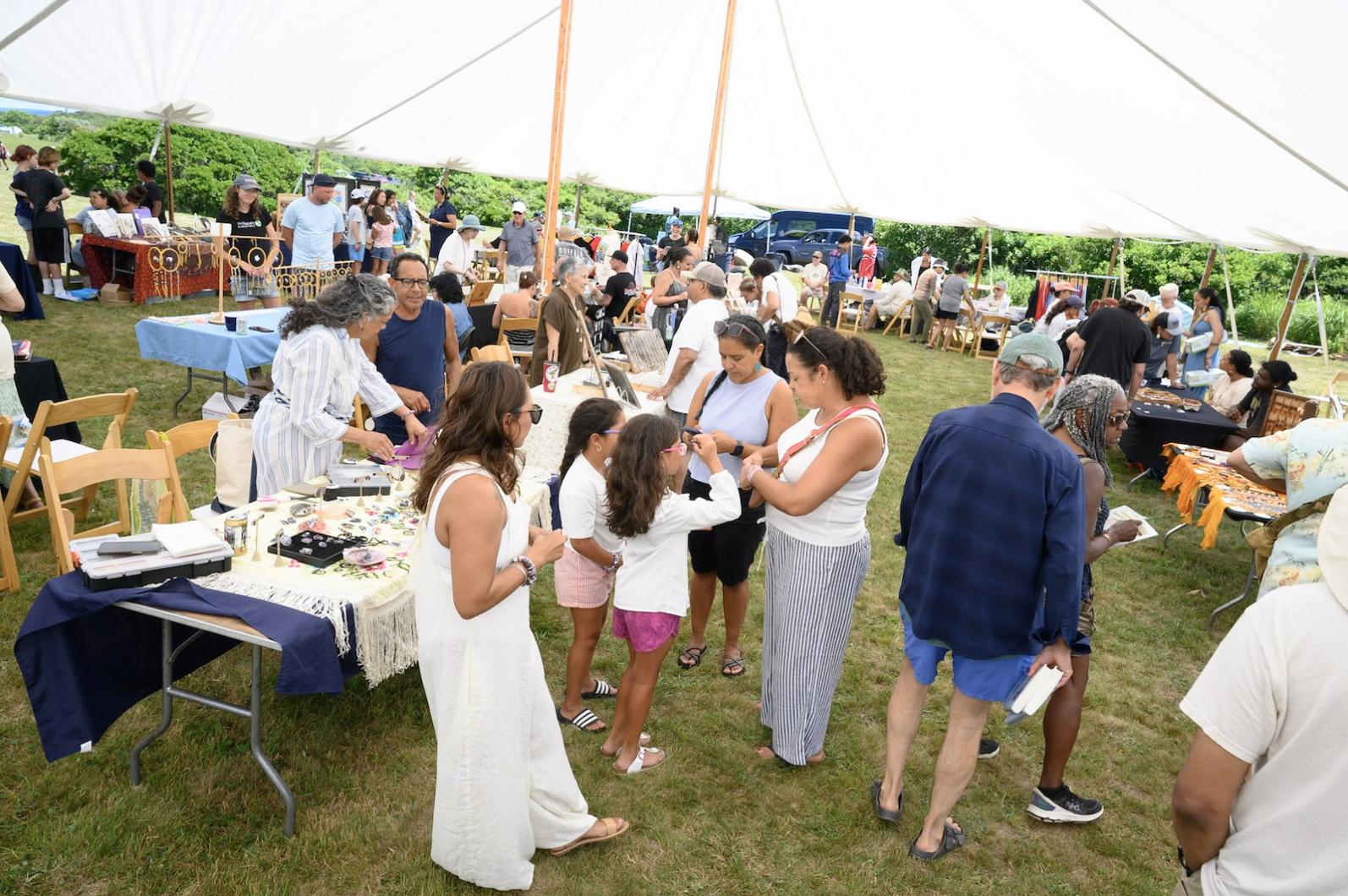
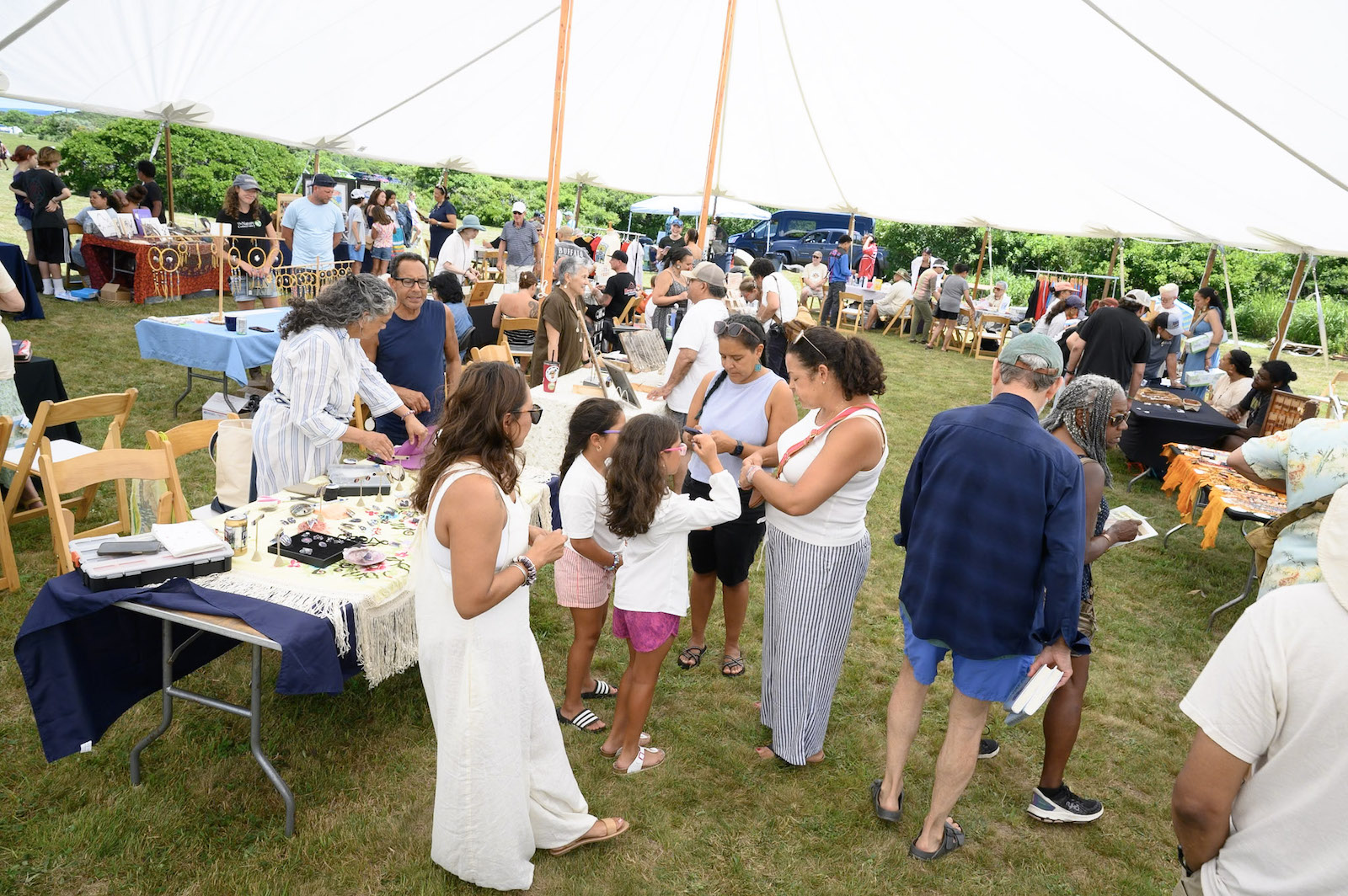
Nearly 30 artisans took part in the Native Artisans Festival in Aquinnah Saturday. The annual event is now in its 18th year and works to share the value of Indigenous art with the Island community.
Tiffany Vanderhoop stood proudly behind a table lined with beaded jewelry Saturday as patrons browsed brightly-colored patterned earrings with her signature brass charms lining the bottom.
Ms. Vanderhoop was one of roughly 30 artisans taking part in the Native Artisans Festival at the Aquinnah Circle, hosted annually by the Aquinnah Cultural Center. She is a member of the Wampanoag Tribe of Gay Head (Aquinnah) and said the festival is growing and working to share the value of Indigenous art with the Island community.
“More people are starting to attend and notice, and I think it’s really important for Native people to be taking up spaces like this [that are] attended by everybody and valued,” she said.
Tiffany Vanderhoop watches her son Carl at work.
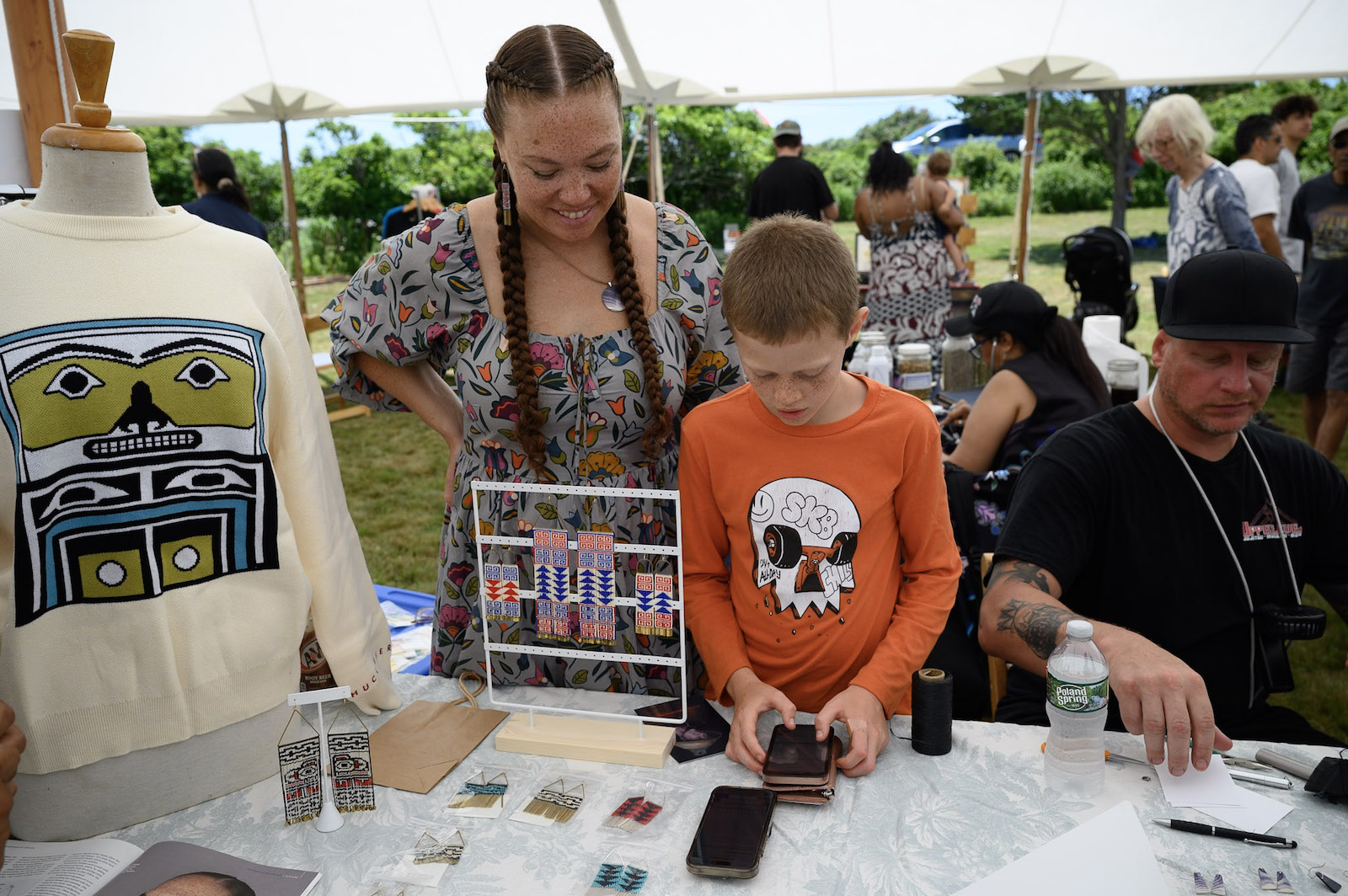
Tiffany Vanderhoop watches her son Carl at work.
Ms. Vanderhoop said her beadwork bridges a connection with her ancestors and the festival helps her teach others about her history. Ms. Vanderhoop is also part Haida, an Indigenous peoples of the Pacific Northwest coast, and her geometric designs are inspired by textiles from both the northeast and northwest.
She counts each bead in her traditional Haida language, Xaat Kíl, which she said further immerses herself in the culture. While many non-Native people view Indigenous culture as a relic of the past, she emphasized that Native art continues to grow and thrive in the present day.
“[Native art] is contemporary, diverse, innovative and it’s always evolving and changing with our current times,” she said.
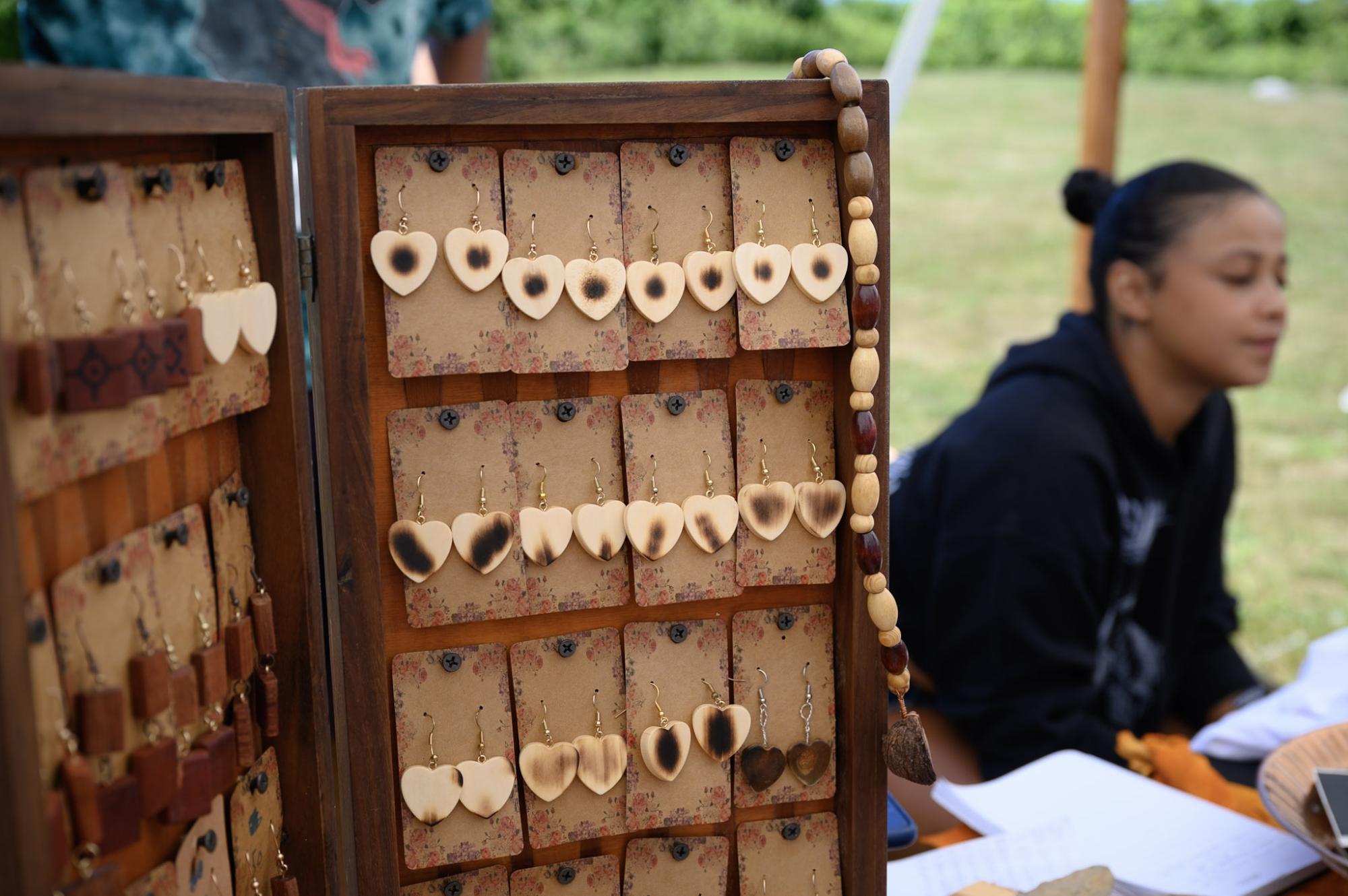
Ridge Spears of the Narragansett tribal nation, sold leather pouches with fringe and buckles made from deer bones, beside jewelry made from carved cedar, seashells and walnuts.
“It all comes from the Earth,” Mr. Spears said. “We go and gather, find the walnut pieces and crack them, [looking for designs]. It’s fun.”
He said foraging has been ingrained in him from a young age. He would gather mushrooms, grapes and blueberries for food and the woods are still his favorite place to be. Mr. Spears enjoys sharing his passion with others at events like the festival.
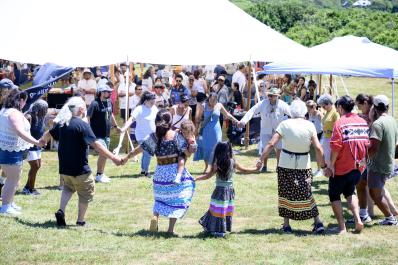
Attendees dance to traditional songs.
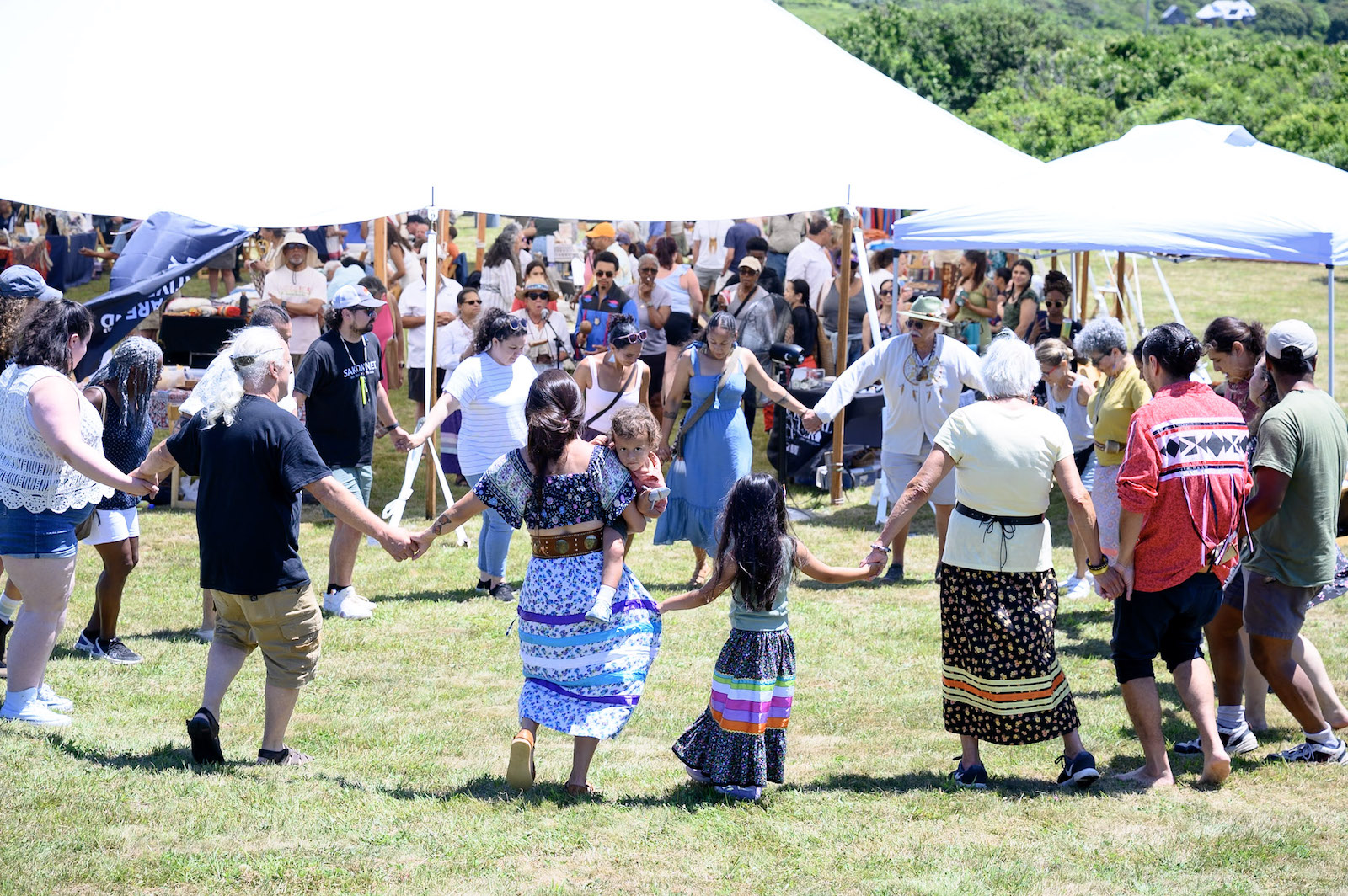
Attendees dance to traditional songs.
“I always love when somebody sees something completely new,” he said. “Nobody else has an antler necklace… it brings out so much different art and just puts more ideas out there.”
Beside him, Rae Monroe, also of the Narragansett tribal nation, sold t-shirts with a logo of a Native woman wearing a feather headdress. Text surrounds the image saying “Chief Women Of The Land”.
“I think anyone can be a Chief woman of the land,” Ms. Monroe said. “This is not exclusive to just Native women or Native people.... If you protect women, children, elders, the land. You’re a chief woman.”
Throughout the day, the Wampanoag Nation Singers and Dancers danced through the aisles, singing traditional songs and beating a drum.
Mariah Thornton, a member of the Wampanoag Tribe of Gay Head (Aquinnah), smiled behind a table lined with hand-stitched leather goods such as handbags and key holders, some delicately painted with horses, orca whales and bird footprints. She quickly sold-out of jewelry holders designed to look like lillypads, the flowers painted in a shimmery pink.
Ms. Thornton rides horses and started making leather goods when she had to repair her equipment. She said she sources the leather from all kinds of discarded hides, including alligator, which is sourced sustainably.
Rae Monroe, who came to Aquinnah from the Narragansett tribal nation, shows off her work.
Rae Monroe, who came to Aquinnah from the Narragansett tribal nation, shows off her work.
“Most people are going ‘oh, I want vegan leather’ [but] it’s actually plastic-based,” Ms. Thornton said. “Most of this leather that I’m using, a lot of it actually would have been waste from the meat industry.”
Kristin Thomas-Jones and her husband Bobby Thunderhawk Jones, of the Narragansett tribal nation, sat behind jars full of dried herbs and braided sweetgrass. They sold bags of Nukon herbal tea, which they said helps to relax the body before bed time, and Mohtompan herbal tea, a refreshing replacement for coffee.
“I believe in using these herbs to lead you to more of a healthier lifestyle,” Ms. Thomas-Jones said.
Wampum was aplenty at the festival, the ripples of purple shimmering in bracelets and dream catchers. Tracy Leigh Adams, whose work is found all over the Island, said she enjoys seeing all the different ways Native artisans shape the shells.
“Everybody has their own style,” Ms. Adams said. “A lot of people flatten down the surfaces. I leave the surface just how it is. You can feel the actual curve of the shell.”
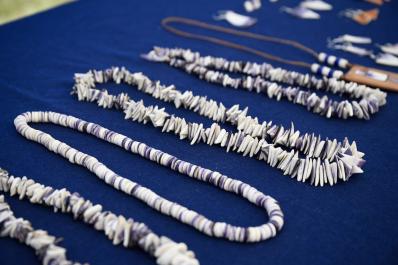
Wampum necklaces by Hartman Deetz.
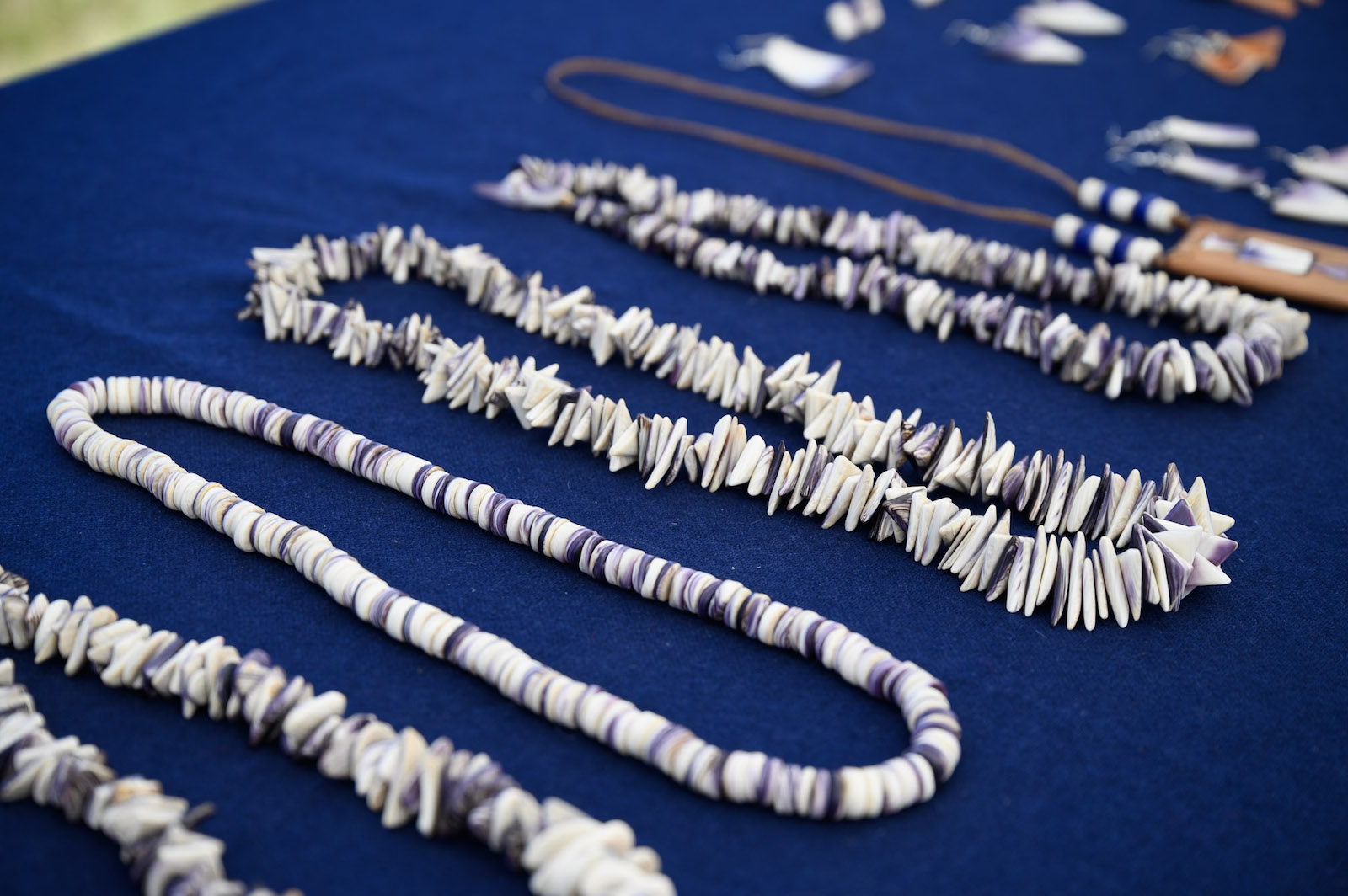
Wampum necklaces by Hartman Deetz.
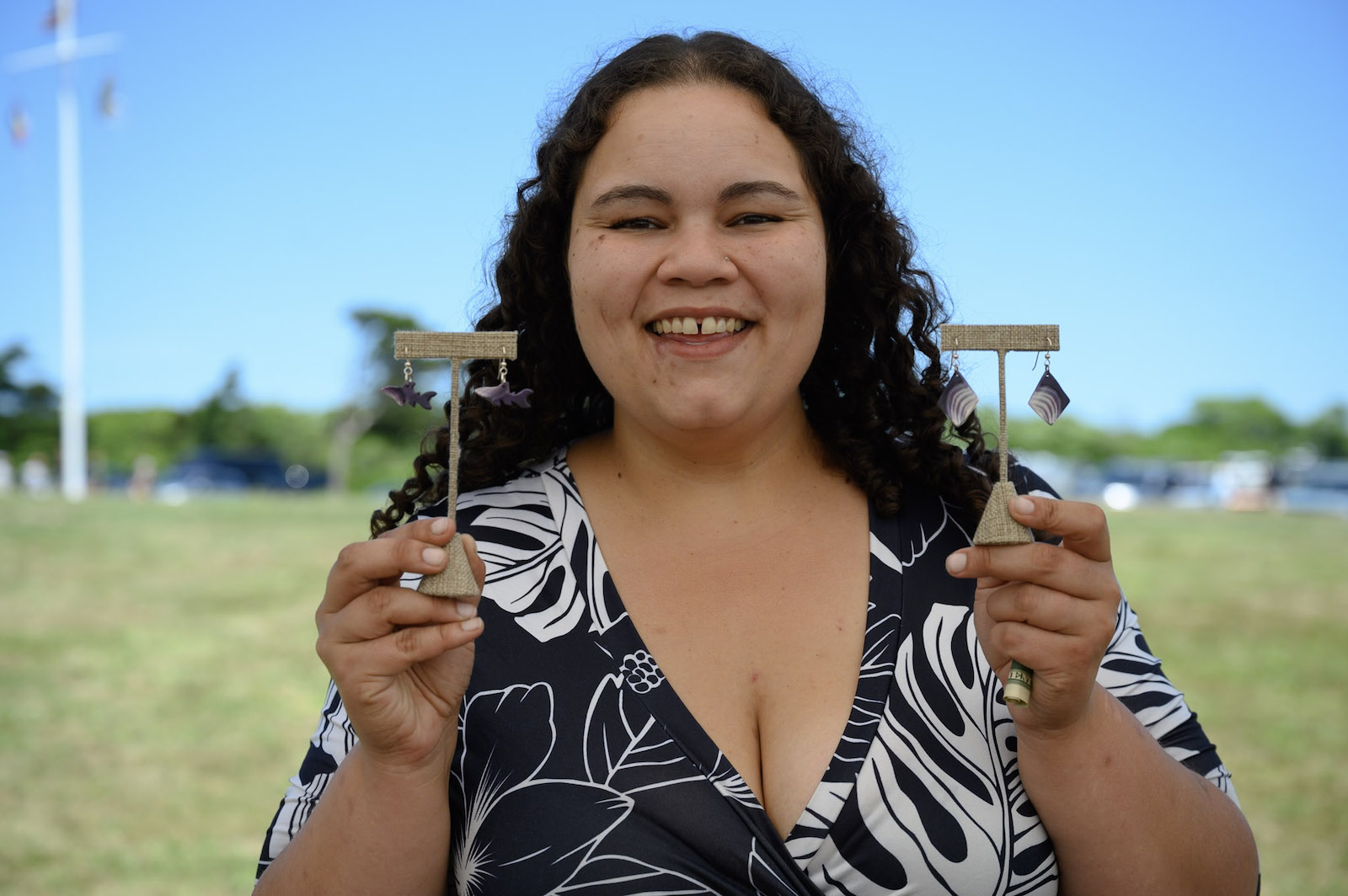
She crafts bracelets and necklaces, often carving the deep purple into the shape of whale tails. With a laugh, she warned not to look too closely at her hands that are roughened by years of work.
“Your hands are always dry and splitty because they’re always wet…” she said. “They’re always a mess, but they make beautiful jewelry.”
Ms. Adams said the festival feels like a family reunion, when cousins from off-Island return to celebrate art, culture, and connection. The act of making wampum, too, is rooted in family.
“That’s what my ancestors were doing here in Aquinnah,” she said. “I feel special that I can continue that tradition, even if I’m using new tools.”
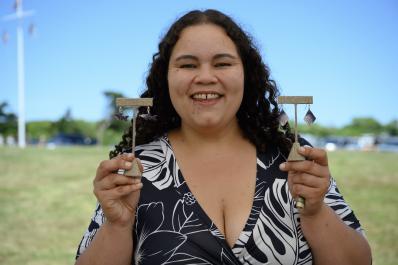
Tracy Leigh Adams holds up her wampum necklaces.
Comments
A Nation is made of many
Metacom AquinnahA Nation is made of many tribes. God bless the USA!
Add new comment