

A new bill before the state legislature that proposes to change how Massachusetts defines when certain beaches are considered public is making waves on Martha’s Vineyard and could upend centuries of precedent.
A new bill before the state legislature that proposes to change how Massachusetts defines when certain beaches are considered public is making waves on Martha’s Vineyard and could upend centuries of precedent.
About halfway through Gov. Maura Healey’s $3 billion environmental bond bill, filed last month, is a provision that would allow the state to take ownership of barrier beaches that move below the low water line of a great pond.
“In areas where natural processes, with or without human intervention, have caused the landward or lateral movement of a barrier beach into an area below the historic low water line of any great pond, the portion of the barrier beach relocated into the former bottom of the great pond shall be and remain in Commonwealth ownership in perpetuity,” the governor’s Mass Ready Act reads.
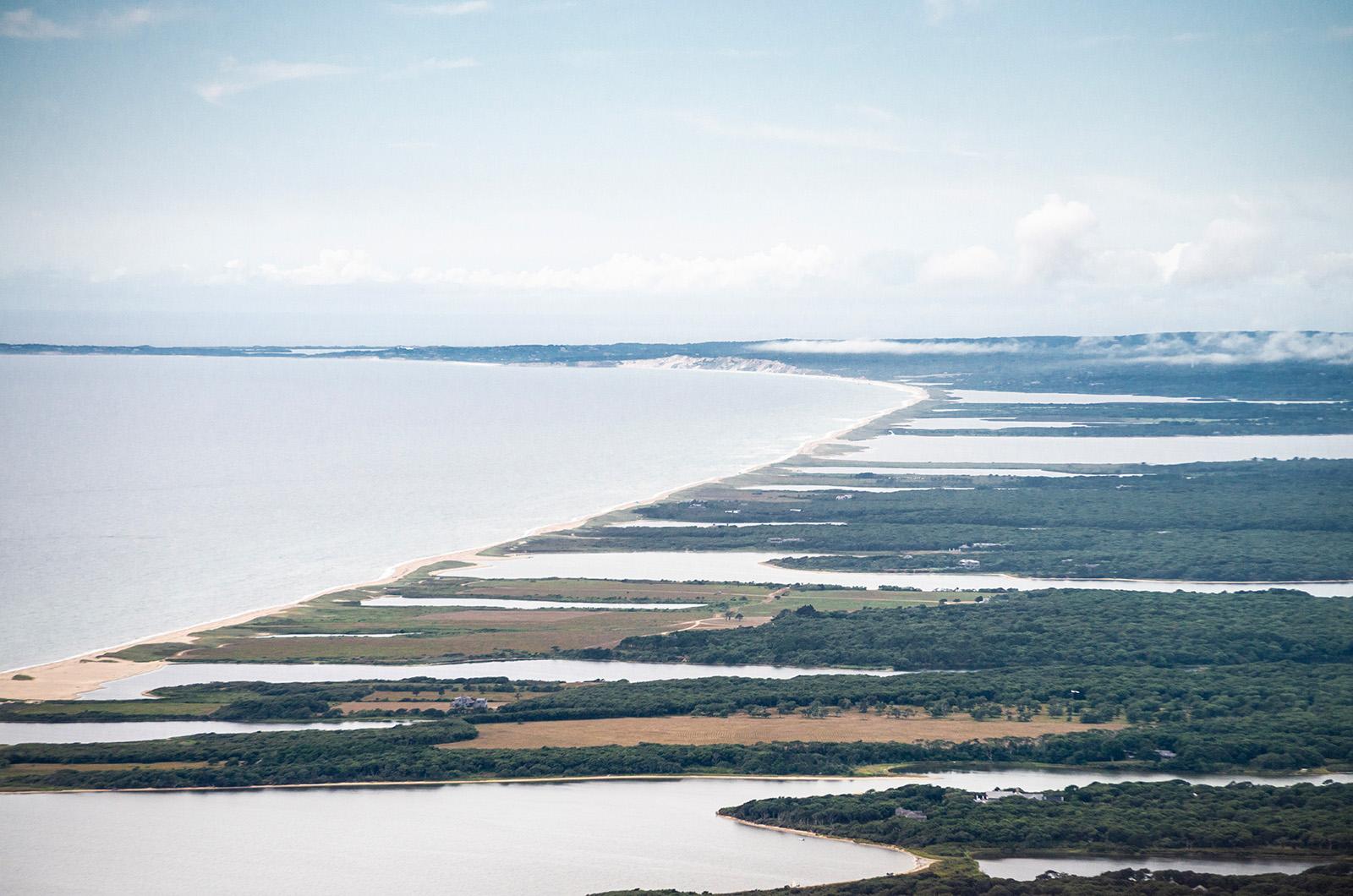
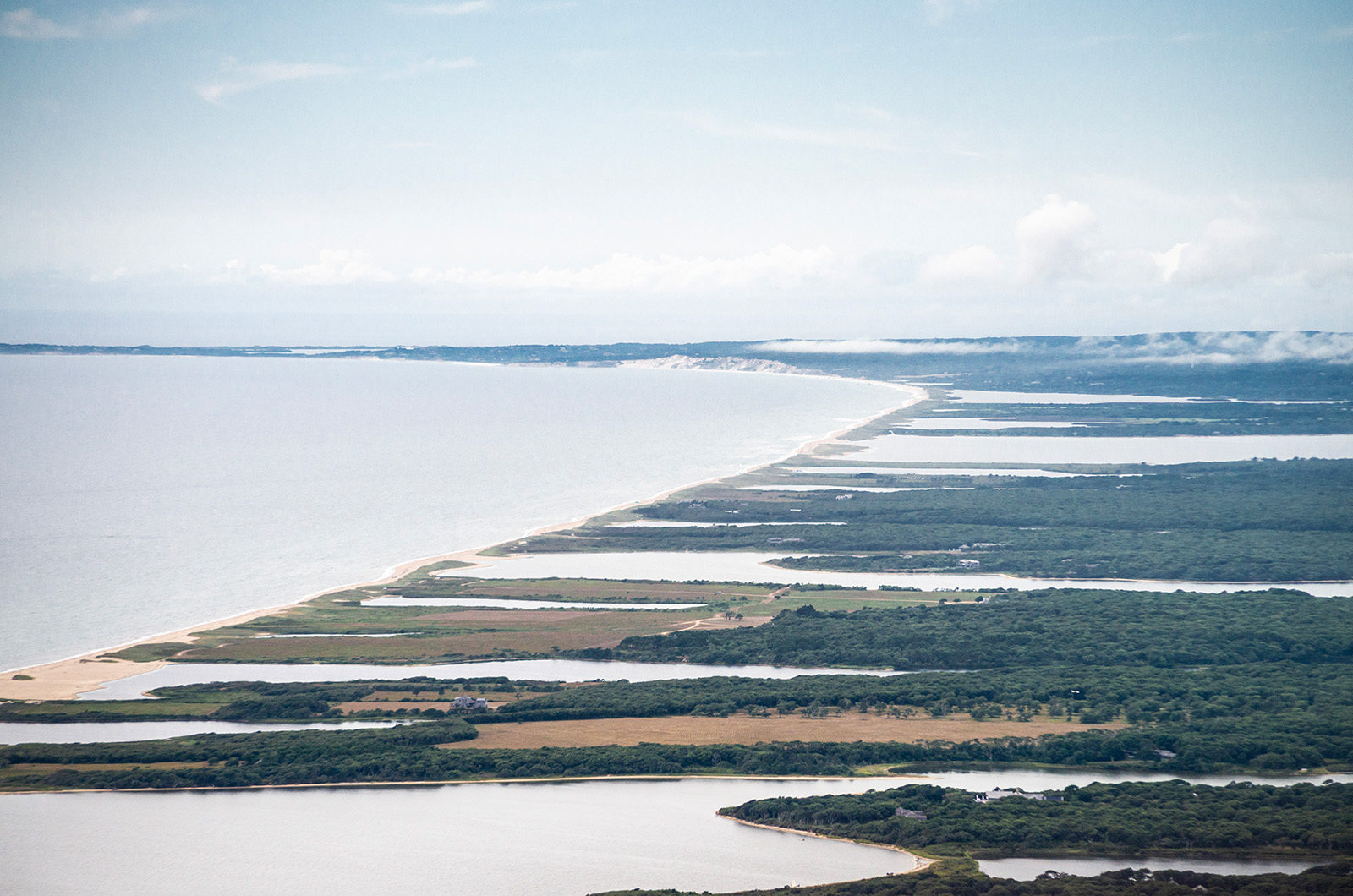
The Vineyard has one of the highest concentrations of great ponds in the state, and there are hundreds of private barrier beach parcels along the Island’s south shore that separate the Atlantic Ocean from the ponds.
The sun sets over Edgartown Great Pond.
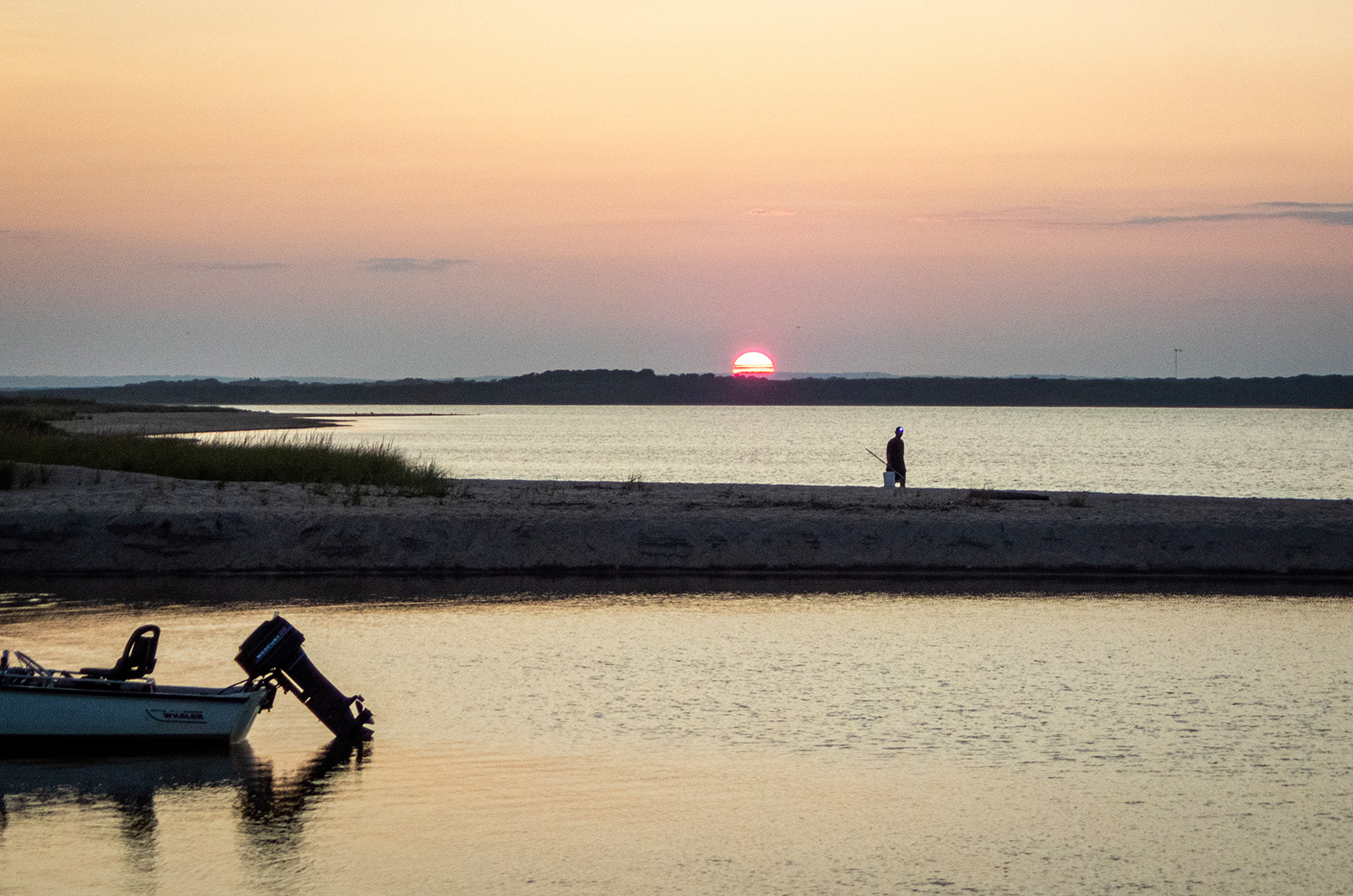
The sun sets over Edgartown Great Pond.
While some support the measure as a way to make more beaches public, others have questioned the true intentions of the bill and wondered about the potential fallout from changing rules that have roots back to ancient Roman law.
In a statement, a spokesperson for Governor Healey said that increasing beach access has long been a priority for the governor.
“This provision, which is similar to one previously proposed and advanced by the Legislature, is about making sure that everyone has access to great ponds and barrier beaches across the state,” Karissa Hand wrote in a statement.
But others took a dimmer view of the proposed legislation. Opponents said the bill’s language could result in a mountain of litigation, all while not really improving the public’s ability to use the barrier beaches. They also were skeptical about the origins of the bill, as it mirrors arguments made by Richard Friedman, a prominent Cambridge developer in a years-long fight with his neighbors over beach rights along Oyster Pond in Edgartown.
“The litigation expenses and havoc it would create is enormous,” said Eric Peters, a Vineyard-based real estate attorney who is a member of the Pohogonot Trust, which has been locked in litigation with Mr. Friedman. “Nobody has really carefully thought through all of the intended and unintended consequences of this.”
Going back to colonial times, Massachusetts has largely allowed private landowners to hold rights to the beach all the way to the low tide line, though the public can go between the high and low tide lines for the purposes of fishing, fowling or navigation.
Along barrier beaches on the Vineyard, Nantucket, Cape Cod and beyond, the sandy strips are ever-changing, meaning a property can wax and wane over time. Under the current law, when a beach erodes and moves into the great ponds, which are classified as ponds larger than 10 acres, that land becomes property of the state.
But, according to real estate attorneys, if those sands later move to another property, they largely fall under the ownership of that land holder.
What this bill would do, in the eyes of the Pohogonot Trust and others, is stop the accretion portion of the law on these properties by keeping the beach in the hands of the state even if the sand later moves out of the pond.
“What they are doing is a taking,” said Jeff Flynn, another member of the Pohogonot Trust.
The issue of barrier beach access has come up several times over the last two decades. Since 2004, Mr. Friedman, in an attempt to get beach access on the south shore, has sued his neighbors and made several appeals. Two of the trusts sued by Mr. Friedman, the Job's Neck Trust and the High Road Trust, are headed by the Kohlberg family, which owns the Gazette. But Mr. Friedman, whose Island home has been the Summer White House for President Bill Clinton, has been on the losing end of several decisions, including one as recently as last year.
Mr. Friedman, who has made many donations to the Healey campaign for years, did not respond to a request for comment from the Gazette this week.
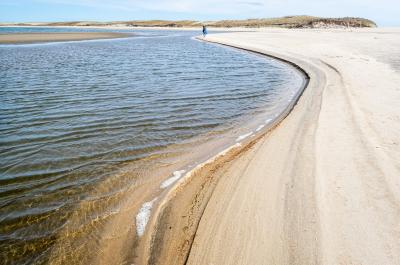
Massachusetts has some of the strictest laws about beach access.

Massachusetts has some of the strictest laws about beach access.
The legislature has also broached the topic, though taken no action. In 2011, a bill was introduced to the state legislature by Frank Smizik, a representative from Brookline, which has no great ponds or barrier beaches.
The provision had never made it through the legislature in the past, but opponents were concerned that with the governor’s backing in a bill that otherwise attempts to provide aid for responses to flooding, heatwaves and wildfires, it could have a better chance this session.
Bond bills allow the state to borrow funds for certain issues, essentially acting as a priority signaler for lawmakers. Such a longstanding battle being included in the bill puzzled Mr. Flynn, since there is no funding needed.
“How does an issue like this get put in the middle of a bond bill,” he said. “The issue has been around for at least 15 years....It’s kind of out of place in this bond bill.”
While Mr. Flynn and Mr. Peters said that this spat could seem like a battle between affluent homeowners, it could have other effects. If large swaths of beach are taken by the state, that could take property off the town tax rolls and result in higher taxes.
“Everybody loves the salacious rich people on Martha’s Vineyard fighting about the beach [story],” Mr. Flynn said. “But guess what, this affects a lot of people. This is broader than just two abutters on a place like Martha’s Vineyard.”
Vineyard lawyers are trying to understand the proposal, which is only two brief paragraphs in the bill, one of which is a definition of a barrier beach. The proposal does include language that says the regulation would not convert ownership of any portion of private property to public ownership in violation of the state or U.S. constitution.
Some questioned what would be used as the baseline for the movement of the beach, and the wording was confounding to real estate agents, whose industry here on the Island could see a drastic change if the bill is passed.
“I’m trying to fully understand it myself,” said Julie Flanders, the owner of Flanders Up-Island Real Estate in Chilmark.
The Vineyard has 16 great ponds, including Edgartown Great Pond, Tisbury Great Pond and Chilmark Pond. Every town on the Island, with the exception of Tisbury, has at least one great pond.
Ms. Flanders wished that town leaders and potentially affected parties could all get together to discuss the issue before it makes its way through the legislature.
“It’s important for the Island to understand it, discuss it and have a response or plan,” she said.
State Sen. Julian Cyr, the Island’s representative at the State House, has been a vocal supporter of more access to beaches in the district and the commonwealth. Massachusetts has some of the strictest beach access rules in the country, and he filed a bill with similar language in January.
He hadn’t yet closely reviewed this piece of the governor’s bond bill in detail, but plans to review it as the session continues, he told the Gazette.
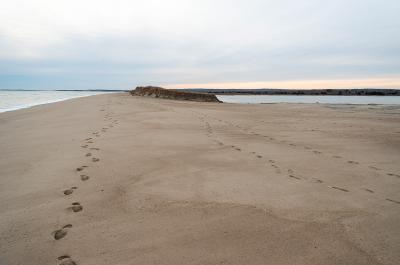
The shifting sand could have big implications moving forward.

The shifting sand could have big implications moving forward.
Mr. Flynn with the Pohogonot Trust did point out that even if the bill is approved, it may do little for the public’s access to these beaches. In many instances, the only way to get to the sand is by going across the ponds, or through the private properties that abut the beach. The only other way to get to them is walking, potentially for miles, below the low tide mark — something people can already do.
“It doesn’t really speak to the issue of access specifically,” he said of the bill. “If you look at it, how can access be gained to the barrier beach if it’s on a body of water that’s privately held on the other side.”
Both the Trustees of Reservations and the Martha’s Vineyard Land Bank hold barrier beaches that abut great ponds. A spokesperson for the Trustees declined to comment on that provision of the bill, saying CEO Katie Theoharides was focusing on other coastal resilience portions of the legislation.
James Lengyel, the executive director for the land bank, has been expecting a battle like this to make it to the legislature.
“I’ve long wondered when the commonwealth would address it,” he said. “[The] issue was on a collision course with time.”
Comments
"...the commonwealth.
Geraldine Brooks West Tisbury"...the commonwealth. Massachusetts has some of the strictest beach access rules in the country" and the Vineyard had the stictest. You buried the lede. Hardly anywhere has restrictions as limiting to public access as the Vineyard, not even other MA places like Nantucket, where beaches are public and the plutocrats don't seem to mind. It's time for a change.
I completely agree with Ms.
Chris OBI completely agree with Ms. Brooks and Gov. Healey. At a time when national policies are benefitting the 1% more and more, we need to allow greater access for everyone to the lovely natural resources on this island.
Did you not read this part:
Doug Massachusetts taxpayerDid you not read this part: “It doesn’t really speak to the issue of access specifically,” he said of the bill. “If you look at it, how can access be gained to the barrier beach if it’s on a body of water that’s privately held on the other side.”
There will be little to no enhanced public access to the beaches by the passage of this bill - it was brought forth by one person who owns abutting private property and for that person and their entourage's access alone.
The news article seems to be
Nancy Dole West TisburyThe news article seems to be pretty one sided. If the Gazette does not support this legislation, maybe this needed to be an editorial opinion piece.
Yet another example of the
Bill Keenan Edg.-VH roadYet another example of the rich bending the intent of the law to THEIR use and enjoyment and away from that of public access. IT SPEAKS VOLUMES OF THE SNEAKY NATURE OF HOW THIS WAS INSERTED IN A BILL. Some "good government" organization should INVESTIGATE how this was inserted and report who did this!
There is a reason this has held for a century. This proposal and the individuals that are behind it with their agents doing the dirty work of trying to implement it, join a LONG list of pushy people telling Islanders what's best for them.
PEOPLE SPEAK-UP !!!...If you don't, these people will roll right over you and wall you out.
This is beyond my
AnonymousThis is beyond my comprehension but I will say that first photograph is very beautiful. Nicely done Ray Ewing, is that from a plane?
I agree that the public needs
Katherine Scott TisburyI agree that the public needs greater access to our beaches, but this is not the way to go about it. The whole Richard Friedman picture looks suspect---like a politically connected rich guy swinging around his weight. Not a good look for either him or Healey.
To increase beach access the state should start by simply purchasing some stretches of beach or leasing them from owners, for public use during the summer months.
The only other way I see is to totally overhaul Mass. law regarding beach access; Rhode Island could be taken as a model. According to Google's AI, "Rhode Island law ensures the public can access the shore laterally, up to 10 feet landward of the visible high tide line."
How about no private beach
Tony FHow about no private beach ownership, like Hawaii and Oregon. Its insane to live in a state surrounded by water and not being able to go to most of the beaches!
This is a land grab by the
JJ VHThis is a land grab by the Commonwealth and the elite in office and power - the results of decades of one-party rule. This flies in the face of long-established practice and law. As the article notes, these rules and laws date back to the Roman times. In the US, most of our laws are based on English Common Law with long established practice dating to Colonial times when there was a similar debate over resources and availability. Leave this well enough alone. We already have a land monopoly on island - the Land Bank. They've acquired a tremendous amount of private land and made them public, with increased environmental negative impacts.
Who remembers the debate over Noman's Island back when the USN and USAF had their practice bombing range? He made the very clear point and case that opening up spaces to the public has increased negative environmental and other impacts - increased traffic, noise and disruptions, trash and debris, off-trail traffic, trash, and disruption, and overall lack of respect for the spaces.
That's what will happen with these barrier islands if they're opened up to the general public or owned by the government.
Leave well enough alone and let the thousands of years of precedent stand in place.
If private beaches
tom BostonIf private beaches essentially become public beaches, will the current owner's property taxes plummet?
Are you asking for a friend?
William Pflug Vt and WTAre you asking for a friend?
“If you look at it, how can
Paul Newton“If you look at it, how can access be gained to the barrier beach if it’s on a body of water that’s privately held on the other side.” Not ALL of the land is privately held. Wilson's Landing? Wouldn't the public be able to drop in a "pond permissable" kayak, SUP, or zodiac?
Here's hoping that the
jc West TisburyHere's hoping that the private beaches here, as well as those who've fought for decades to keep them that way, end up on the losing end of a few decisions of their own, starting with this legislation. As Geraldine Brooks put it a few days ago, time for a change.
"... others have questioned
jc West Tisbury"... others have questioned the true intentions of the bill and wondered about the potential fallout from changing rules that have roots back to ancient Roman law." Ancient Roman law? C'mon. I agree with Geraldine Brooks - time for a change.
Add new comment