

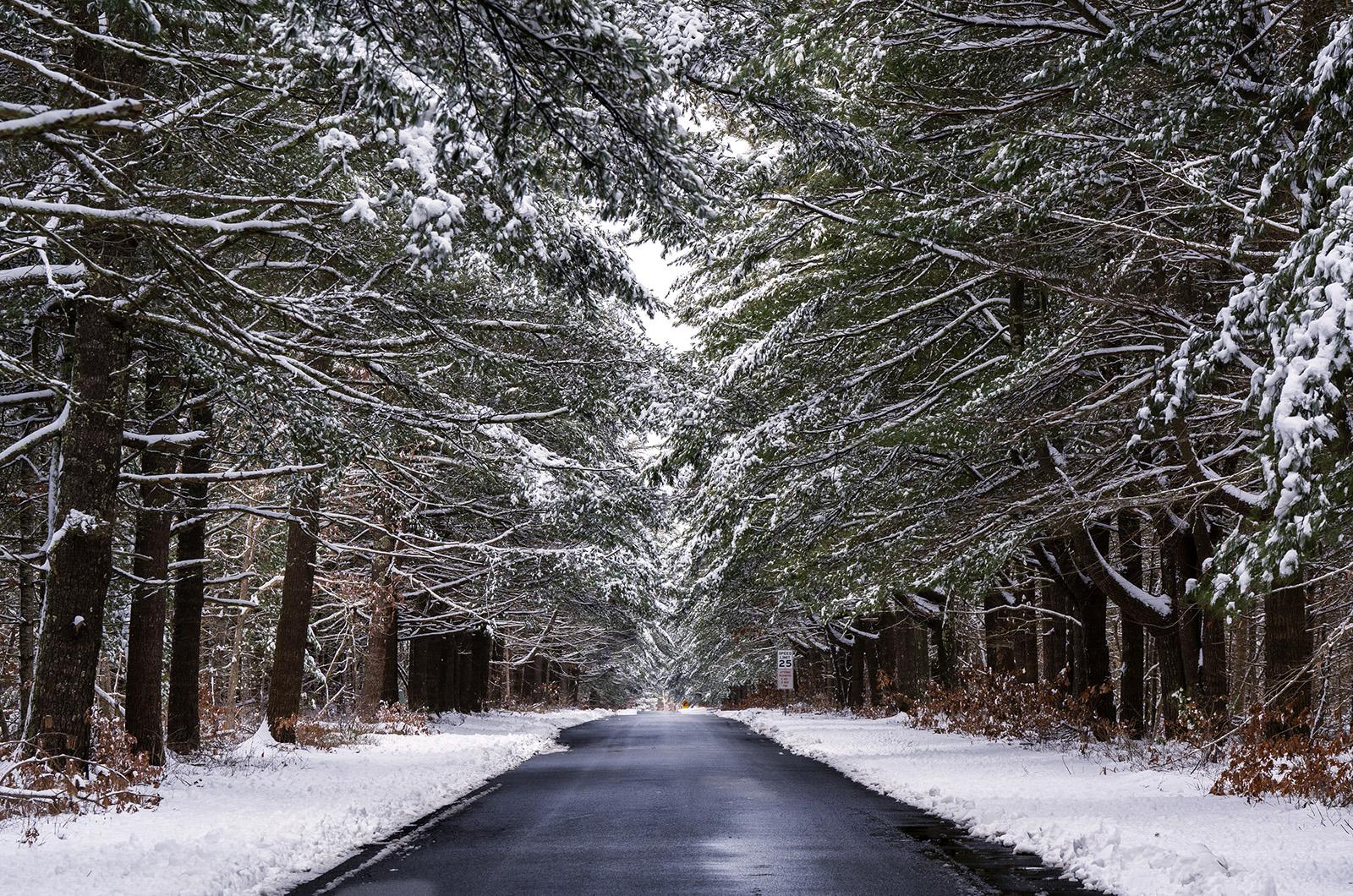
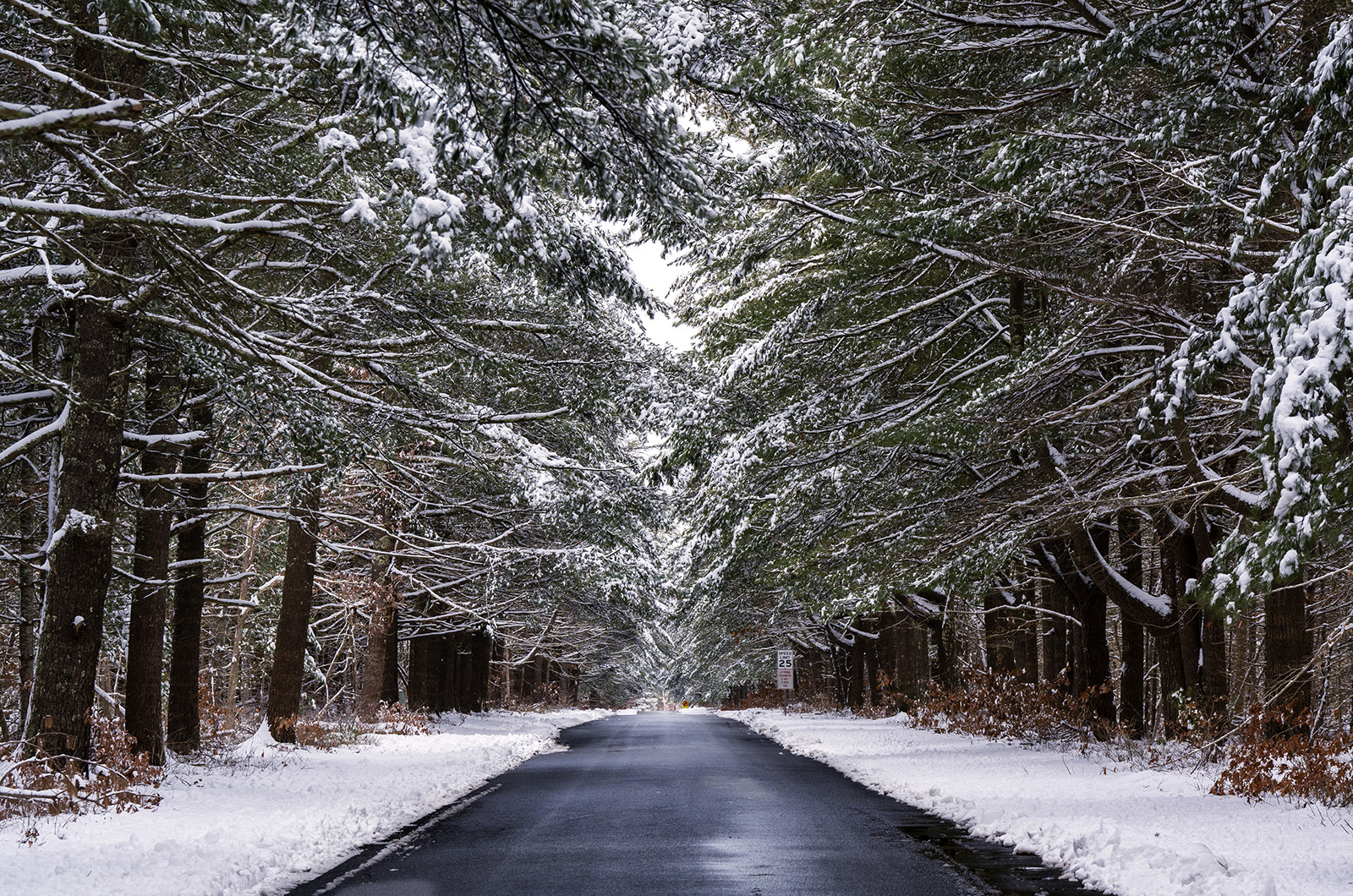
The state’s pending plan to clear 175 acres of white pine and other trees in the Manuel F. Correllus forest has earned the endorsement of a coalition of Island ecologists, fire chiefs and other conservation groups.
The state’s pending plan to clear 175 acres of white pine and other trees in the Manuel F. Correllus forest has earned the endorsement of a coalition of Island ecologists, fire chiefs and other conservation groups.
The Manuel F. Correllus State Forest Task Force, a group formed by the Martha’s Vineyard Commission last year, came out this week in favor of the state Department of Conservation and Recreation’s controversial proposal to clearcut the swath of non-native pines in an attempt to restore the southeast corner of the forest into a sandplain grassland.
The task force, which includes representatives from the commission, Island fire departments, Vineyard Conservation Society, Polly Hill Arboretum, BiodiversityWorks and other groups, published a two page-letter that contended the cutting would improve fire safety, help preserve the forest’s biodiversity and cultivate one of the last sandplains left in the world.
“What we are really trying to convey is that there are a lot of dimensions to the project,” said Dan Doyle, the special projects planner with the Martha’s Vineyard Commission and a member of the task force. “There’s no single issue that should be examined by itself without understanding all these other facets of the work.”

The state is looking to cut down 175 acres of pine trees in the forest.
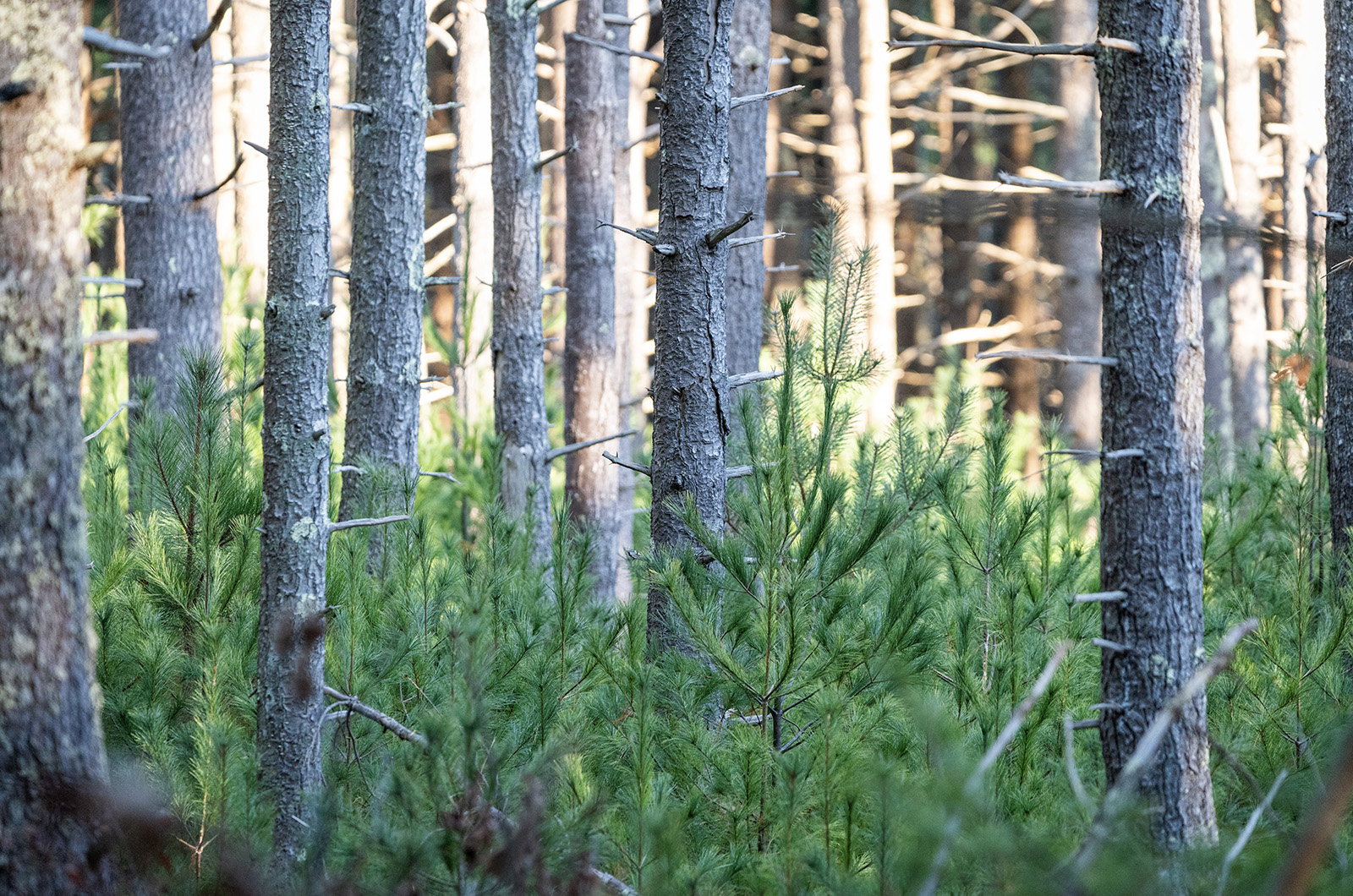
The state is looking to cut down 175 acres of pine trees in the forest.
The Department of Conservation and Recreation (DCR), which manages the 5,300-acre forest in the center of the Island, proposed the clearing in 2022. The plan came at the behest of the Natural Heritage and Endangered Species Program, another agency that ordered DCR to remove pines to make up for past fire lane clearings in the forest.
The plans resurfaced in the public eye in November, when DCR came down to lead a tour of the forest and explain its idea. The plan garnered some backlash from Islanders who found it counterintuitive for an organization in charge of a forest to clear a large section of trees.
The task force argued that the pine trees eyed for clear-cutting weren’t historically in the state forest.
An original set of pines was planted in the 1920s, part of an effort to create a local lumber industry. The idea didn’t last and the plantation was left to seed — eventually overgrowing and creating a monoculture in the landscape, according to proponents of the clearcutting plan.
At the turn of the 20th century, the Nature Conservancy estimated that more than 90 per cent of coastal sandplains had been lost since the middle of the 19th century across the northeast U.S. Of the 60,000 acres on Long Island, N.Y., only 65 acres remain, making the state forest a bastion for the species that depend on these landscapes.
Converting the area to a coastal sandplain would help preserve a habitat that is rapidly disappearing around the U.S. and the world, the task force contended.
“From my perspective, the removal of the plantations and reestablishsment of native barrens and vegetation would be a real ecological improvement,” said Matt Pelikan, one of the Island’s leading naturalists and a task force member.
The forest is home to a high concentration of rare species that depend on the sandplain. There are more than 30 species of plants on the state’s endangered species list in the forest, according to the state.
Tim Boland, the executive director of Polly Hill Arboretum, pointed to the diminutive green adder’s mouth orchid, a five-inch flower, as an example of an extremely rare plant in the forest.
“They are kind of the last stand for these species,” he said. “The only way really to manage over time the rest of the biodiversity... is to modify the environments that have been overcome.”
Pine forests are common in other parts of New England, meaning that their removal wouldn’t be a loss for those species, and Mr. Boland believed cutting the pines out would help make way for the flora and fauna that have few places to turn.
“It’s an artifice of a forest,” Mr. Boland said. “There’s very little plant life there and correspondingly very little diversity.”
Opponents have worried that trading in pine trees for more flammable grasslands could lead to more forest fires, a prospect that has concerned firefighters even before the devastating wildfires in Hawaii and California.
Edgartown fire Chief Alex Schaeffer admitted the oak barrens and grasslands do catch fire more easily, but said that those are the kind of fires that Island firefighters are capable of handling.
He worried that if the pines ever did catch fire, it could be a blaze that require off-Island aerial support to extinguish. Embers could drift for miles, creating several different fires at once.

The plans caused backlash when it resurfaced in the fall.
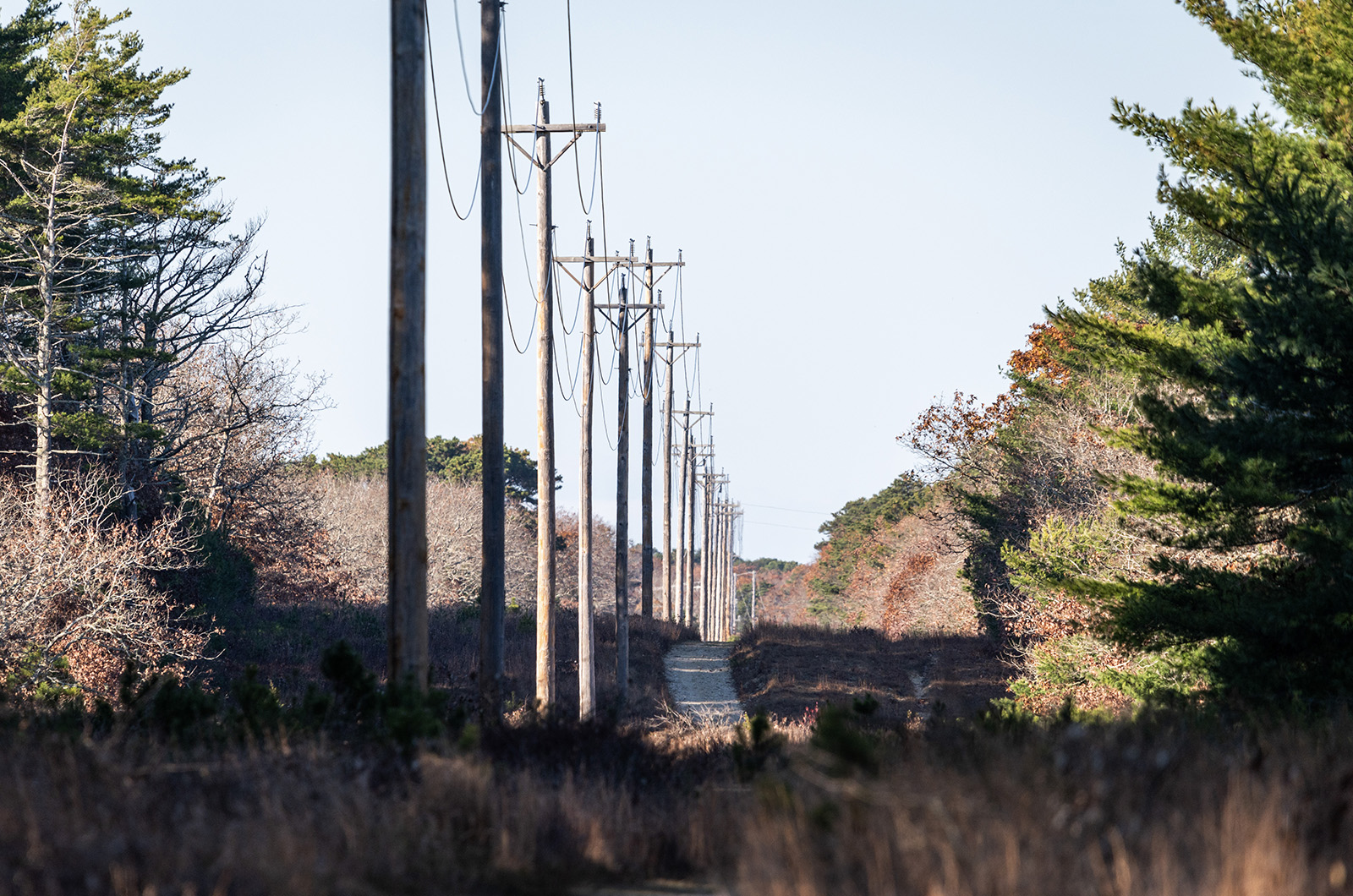
The plans caused backlash when it resurfaced in the fall.
“The local fire departments have the tools and experience to deal with [the sandplain],” he said. “Our resources are limited.”
The project has drawn vehement opposition and even sparked a petition to stop the work. David Foster, a former member of the task force and longtime director of the Harvard Forest, felt the idea was ill-conceived and deserved to be vetted more.
“Although advanced ostensibly to augment biodiversity and reduce fire danger, the plan runs counter to established state and societal priorities on climate change and the environment,” Mr. Foster, a West Tisbury resident, wrote to the state earlier this month. “Furthermore, there has been no engagement with the local community, established state advisory committees or climate-oriented forestry recommendations.”
Mr. Foster also argued that the idea of returning the forest to its past before the ill-fated lumber industry isn’t really based on strong historical evidence.
“There is no evidence that barrens and sandplain grasslands were a natural feature in New England before European arrival,” he said. “All sandplain grasslands occupy abandoned pastures, and all evidence indicates that barrens resulted from colonial deforestation and environmental degradation.”
Even a member of a committee set up to help advise DCR on forest management has second thoughts about the project.
Bob Leverett, the chair of the state’s Forest Reserve Science Advisory Committee, said the state prefers a hands-off attitude for its reserves, which include the state forest. The exceptions usually are when it comes to safety or infestations.
He didn’t think the plan for the state forest fit that criteria, and was against the clearcutting plan. Instead, he advocated for letting nature take its course.
“We didn’t see reasons to monkey with other aspects or features of reserves,” Mr. Leverett, a Northampton resident, said. “We typically would not recommend a removal of a plantation just because it was a plantation once upon a time.”
The Island has had a fraught relationship with DCR in the past, and there were concerns among residents that the agency wouldn’t follow through with its plan responsibly.
“It was clear during the November site visit with DCR staff that there is no long term plan in place for land management once these trees are removed,” West Tisbury resident Prudy Burt wrote to the task force in December. “Nor is there an approved budget for same, or for any unexpected outcomes such as invasive species management or other needed mitigation.”
A DCR spokesperson this week said that the state is still developing its cutting plan. Once completed, it will go to the Edgartown conservation commission. DCR will solicit bids from contractors and could start work in 2025, with an initial concentration on 79 acres of forest.
DCR will likely give the task force a presentation on the plan at the task force’s March 12 meeting, and the public is encouraged to attend.
Mr. Doyle said he understood the passion around the forest and feels it highlights how important the reserve is to Islanders.
“People have a really strong affinity for the place,” Mr. Doyle said. “They don’t always agree on the best way to manage it, but everyone cares.”
Editor's note: a previous version of this article incorrectly stated the Edgartown conservation commission process. It has been corrected.
Comments
Could this be done gradually,
Chris EdgartownCould this be done gradually, or in certain areas at first, to assess outcomes? Versus all at once? Just a thought. We border a preserve in Edgartown and a lot of white pines get blown down adjacent to our small lot on occasion. Fortunately missed the house!
Echoing what Mr Forester
Jon TisburyEchoing what Mr Forester noted, the island was forested, including White Pine, before the arrival of European settlers. The "Coastal Sand Plains" developed in the interior of the island after it was clear cut multiple times and overgrazed with livestock, leaving the topsoil degraded. In the long run, leaving the pine groves will help develop the soil and return the area its richer pre-colonial habitat.
I hope the wood is used for
Bob Kelly Oak BluffsI hope the wood is used for some purpose, or at the very least offered as firewood.
Yes, there should be a
gabrielle m whitcombe West TisburyYes, there should be a firewood bank on island.
Softwoods do not belong in
John Muir BostonSoftwoods do not belong in fireplaces or wood stoves.
Am I understanding this
Jonathan P West TisburyAm I understanding this correctly? Someone wants to clear-cut 175 acres of native trees, not considered 'native' because they were planted and did not arise 'naturally'. Really? And this is so they can 'create' more 'native' sandplain grasslands. Why do I hear echoes of 'we had to destroy the village in order to save it' ? And, as someone who has a fair bit of experience with clear-cuts, the destruction and long-term damage is serious, long-lasting and is hard to square with any conservation ethic.
"letting nature take its
Peter J Edgartown"letting nature take its course."? We experienced a fire in the pines probably 20 years just north of Edgartown Vineyard Haven Road. It was obvious that it was not a controllable event, with dead tree exploding with a bang when the flames reached them. We were lucky that it was a west wind. If it have been a north or northwest wind the fire would have jumped the road and gone on south to the ocean. Much worse than grass fires. An important point in this article is that the island has equipment and training to deal with them. Pine forest fires are not something we want on the island. We don't want to be like California.
It sounds like a “make work”
JG OBIt sounds like a “make work” project, with not a lot of thought as to how the final result would be managed. I would vote to leave the white pine forest as is, with minimal thinning as required to keep the forest healthy.
Past time to do this. As it
Lorraine EdgartownPast time to do this. As it is now, it is a fire hazard. Learn from the recent fires around the country. I have traveled and lived in dense forests, here and abroad, the managed forests do not have the huge, intense fires that we see here.
I’m not so sure about this…
AM 02539I’m not so sure about this….the ‘new’ grasslands are admitted to be highly flammable….so a fire starts there and moves quickly to the pines that remain. Not sure we really are gaining a lot on the fire safety front.
How come the gazette never
Charlie Callahan So Boston/EdgartownHow come the gazette never prints comments about using some land in the forest for affordable housing. 10 acres on the edge of the forest on the Tisbury rd could allow for a couple hunded nice 2 bedroom apts for those who need a little help on this greedy island. It's almost as though the gazette favors those against helping those who need a little help. Those are the people who really keep this island going. Not the muffies and buffies with 7 figure trust funds
Rather than clear cutting 175
Nancy Kilson West TisburyRather than clear cutting 175 acres of trees, how about clearing pockets within the 175 acres. And if there is no budget for this, is it a serious discussion anyway?
Who gets the lumber? That’s
Paul BunyanWho gets the lumber? That’s worth some $
This cutting was done on a
tis adult TisburyThis cutting was done on a much smaller scale years ago. It was not quality wood and was not a good choice for firewood.
Fire chiefs have been begging for the removal of all this dead wood for decades.
It is about time we listened to them.
Why does it have to be all or
Kyle Crossland Oak BluffsWhy does it have to be all or nothing? Why not selectively cut stands of dense white pine forest, which will open up more sky and revitalize the sand plain grassland habitat? Maybe that is the plan, but by the sound of it, it seems like a shocking major deforestation operation and for what practical benefit? This just seems short sighted and lazy. If part of the decision to do this is for fire prevention strategies, again why not do it selectively rather than total?
What is actually needed are a
Marty Milner TALLAHASSEEWhat is actually needed are a series of accessible fire breaks running throughout the entire forest- right now everyone knows it is a tinderbox timebomb. All the planning in the world and reclaiming grasslands, or located clear cutting becomes useless after on large uncontrolled forest fire. What is the actual priority?
After the clear cut, what’s
Carla CooperAfter the clear cut, what’s the plan for managing the grasslands? More controlled burns? Aren’t we trying to reduce carbon emissions? Someone help me understand this. I think it’s prudent to thin out the plantation, create fire breaks and encourage a diverse habitat, but clear cutting 175 acres seems like a solution in search of a problem.
What a disgrace. So VCS wants
Johanna HynesWhat a disgrace. So VCS wants the island to ban plastic water bottles and gas guzzling leaf blowers but hey go ahead and chop down over 15,000 mature trees from the forest. Makes a lot of sense.
For the full two page letter
Dan Doyle Oak BluffsFor the full two page letter issued by the Task Force, see: https://www.mvcommission.org/sites/default/files/docs/Position%20statem…
The petition launched by the
Katherine Scott TisburyThe petition launched by the citizens group that calls for putting the brakes on the DCR's clear-cutting program can be accessed here:
https://www.change.org/p/stop-clearcut-in-manuel-correllus-state-forest
I think everyone should take
Judith Anne West TisburyI think everyone should take a walk in White Pines,and feel the silence, the peace, they block noise pollution, freshen the air, we can not breath without trees producing oxygen.These majestic trees should stay as they have stood for hundreds of years. It’s not like they are dead or dieing.What’s with this 1900’s mentality to kill what nature has created. Every week we read kill off the Turkey’s,Coyotes , the Deer,what’s next your neighbors?
Add new comment