



A plan to re-route a portion of an oversand vehicle trail on Chappaquiddick is being challenged by a group of landowners, which believes more study should have gone into the proposal.
A plan to re-route a portion of an oversand vehicle trail on Chappaquiddick is being challenged by a group of landowners, which believes more study should have gone into the proposal.
A cadre of about 50 abutters, landowners and Edgartown residents earlier this month filed an appeal with the state Department of Environmental Protection over The Trustees of Reservations Proposal to alter the bayside trail near Tom’s Neck on Cape Pogue.
The Trustees received approval from the Edgartown conservation commission in September to retire about 1,300 feet of the sandy trail in order to cut about 600 feet of new trail. The proposal had come as the old section of trail was frequently being flooded due to rising tides.
But the Chappaquiddick group, led by James Williams, felt the Trustees had failed to present enough evidence that the plan would not hurt the area around the corridor, potentially resulting in more flooding.
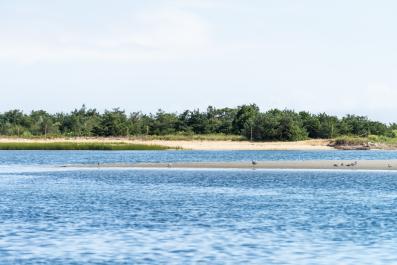
A view from the trail the Trustees hopes to move.
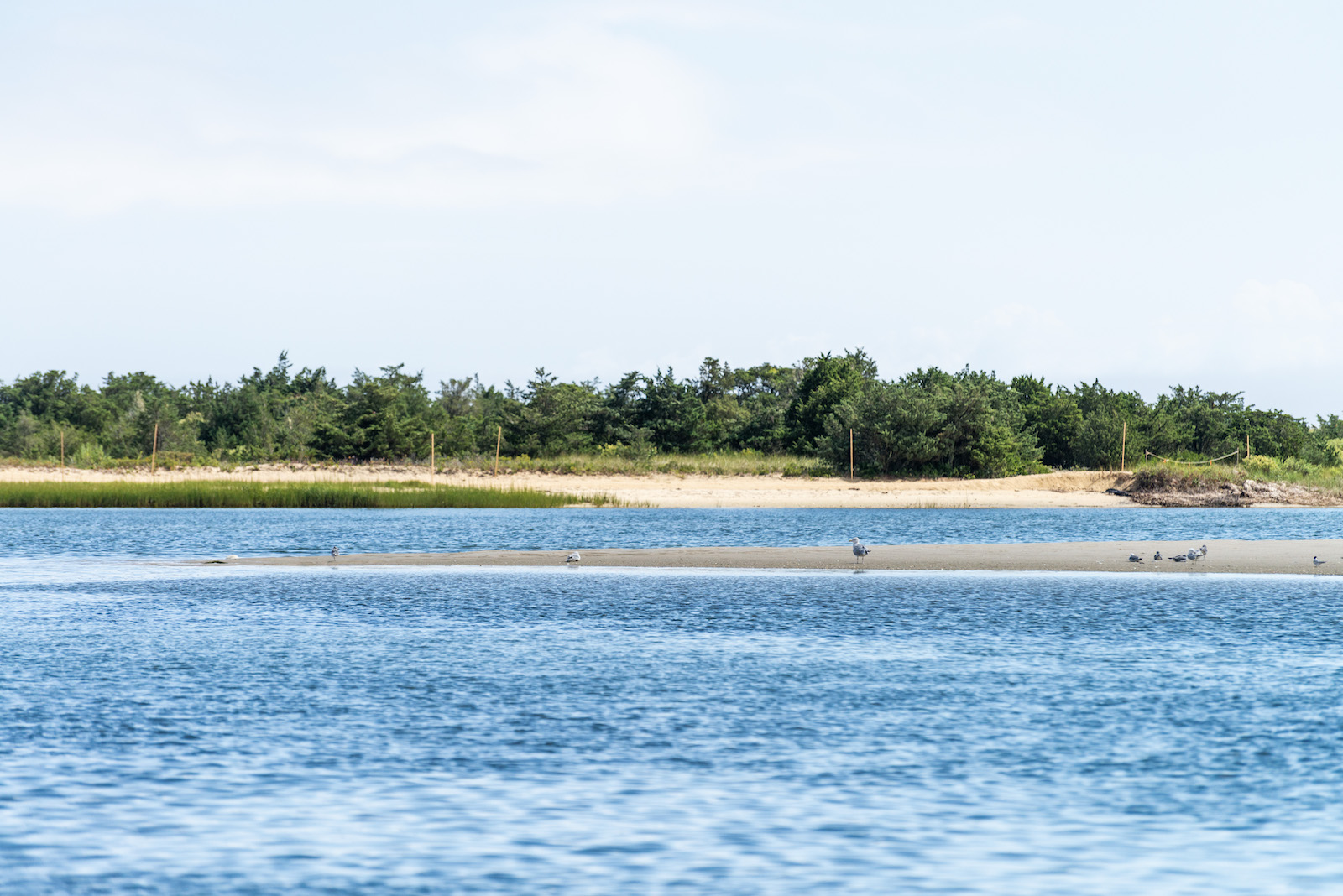
A view from the trail the Trustees hopes to move.
“I think the major concern is the lack of due diligence,” Mr. Williams said.
The group also felt that the conservation commission shouldn’t have approved the plan while the DEP is considering other appeals filed by abutters and the Trustees over the regulations the commission set for oversand vehicles earlier this year.
“There seems to be a race to decide the matter here,” Mr. Williams. “There’s no race required.”
Darci Schofield, the Islands director with the Trustees, said she was disappointed in the most recent appeal. The project was designed to improve conservation, resilience and public access to Cape Pogue.
“This portion [of trail] in recent years has experienced regular flooding during storms, astronomical tides and sea level rise,” she said in a statement to the Gazette. “As a result of the flooding, salt marsh was beginning to migrate into the trail, which is critical to protect for the overall resiliency of Cape Poge.”
The project included planting American beach grass along the retired portion of trail, and creating a pedestrian path. The design was consistent with the state guidelines for oversand vehicle trails, according to Ms. Schofield, and entailed removing a pair of cedar trees which would be replaced with four other trees.
The trails on Chappaquiddick have been a contentious issue for years, with some feeling that the town allows too many vehicles onto the 16 miles of Trustees-managed trails while others say the town is too restrictive.
In May, the conservation commission voted to cap the number of vehicles on Leland and Wasque to 200, and Cape Pogue at 30. The DEP has not yet issued a ruling on the previous appeals over those conditions.
The Massachusetts Environmental Policy Act Office, commonly known as MEPA, however did rule last week that the Trustees’ beach management plan for the area did not have to go through a full environmental impact review by several state agencies.
Ms. Schofield said that the decision means the DEP is the only agency that will review the plan under the state wetlands protection act.
While the DEP processes the growing pile of appeals, the Trustees is also set to go to the Edgartown planning board for permission to run its operations after its original permit from more than 30 years ago was found to be missing.
There is documentation that the Trustees were granted a special permit from the town in the 1990, but town officials and the Trustees cannot find it. Without the permit in hand, the town’s zoning board of appeals ruled that the Trustees needed to go back to the planning board for approval for its activities on Cape Pogue.
The Trustees applied for a special permit earlier this month, and a meeting is scheduled for Dec. 17.
Comments
The Massachusetts Division of
Rich Thompson EdgartownThe Massachusetts Division of Marine Fisheries highlighted this plan as an example of adaptive management. The Edgartown Conservation Committee overwhelmingly approved the plan. But a tiny group of self-serving non-resident abutters, know better? This obstructionist behavior is seen by Vineyard citizens for what it is - a blatant attempt to transfer wealth from the public to 11 private landowners, where the "masses" will not longer be welcome. There is no "race to decide the matter here". There is overwhelming public frustration at having public beaches held hostage for the past two years through the various manipulative legal contrivances of a tiny group of private landowners. This appeal is simply the latest manifestation of their excruciating efforts.
We the people must be adaptive to the evolving reality of nature, and be respectful of the fragile environment. But we must also respect property law. Mother Nature may take what she wants, but the same does not apply to these egregiously entitled abbuters.
I expect guidance from the Commonwealth to provide a framework for reconciliation to these trying matters, and a harmonious return to peaceful, respectful, managed enjoyment of the Chappy beaches we all love.
Well Said
Fred Edg/HobokenWell Said
This project aims to restore
Peter Sliwkowski, President of MV Beachgoers Access Group (MVBAG) ChappyThis project aims to restore public OSV access to the bayside, providing essential entry points to calmer waters. Without this OSV access, families with young children, elderly visitors, and individuals with disabilities would face significant obstacles in reaching the area.
The plan was developed by The Trustees in partnership with the Woods Hole Group, a highly respected environmental consulting and engineering firm based in Massachusetts. With over 35 years of expertise and a proven track record of completing more than 3,000 projects worldwide, the Woods Hole Group specializes in science-based solutions for coastal, ocean, wetland, and terrestrial challenges.
Further bolstering the project, it received taxpayer funding through a grant from the Division of Marine Fisheries (DMF), emphasizing its importance to the Commonweath.
How many lawyers does it take
Darby EdgartownHow many lawyers does it take to access Chappy? I don't know, but the joke's on us.
Add new comment