

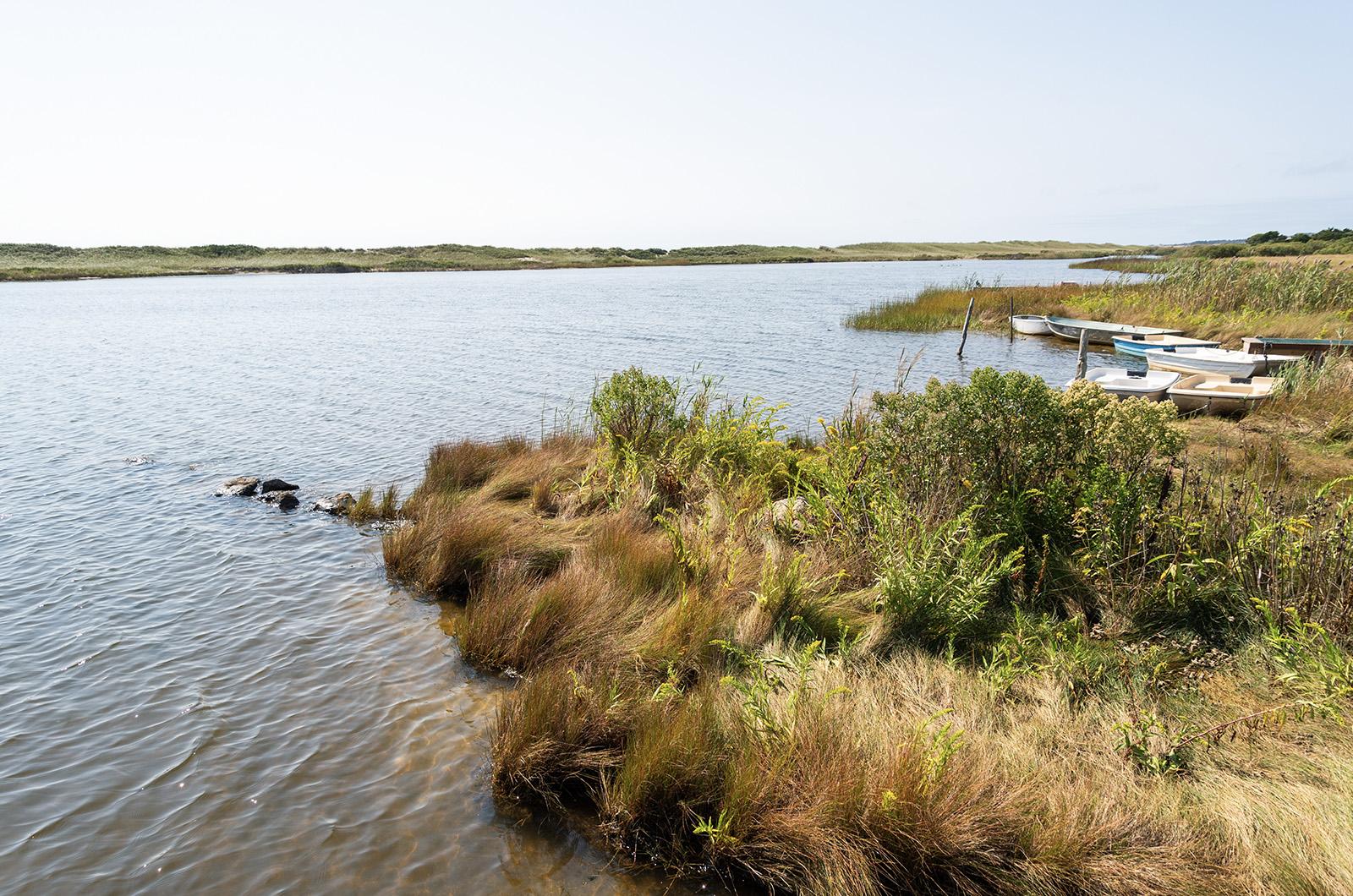
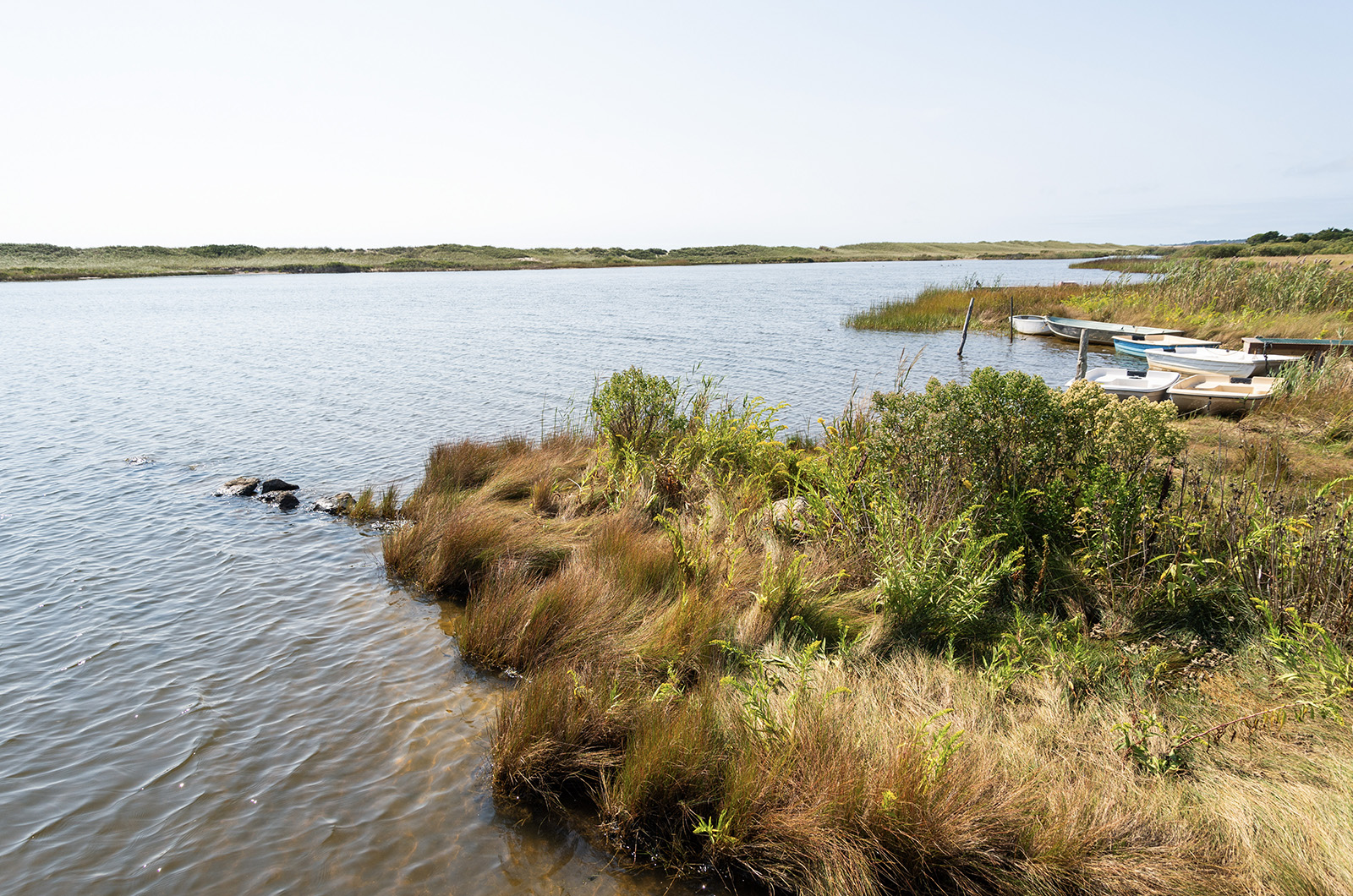
Local scientists and advocates are undertaking new research and exploring new preservation efforts in an attempt to save Chilmark Pond, one of Martha’s Vineyard’s unhealthiest ponds, from harmful algal blooms.
Local scientists and advocates are undertaking new research and exploring new preservation efforts in an attempt to save one of Martha’s Vineyard’s unhealthiest ponds from harmful algal blooms.
Chilmark Pond, one of 16 Great Ponds on the Island, has seen high levels of nitrogen for years, and warnings over cyanobacteria blooms are now regular events. For the past four months, parts of the pond have been under the highest warning level for poor water quality.
Now scientists are considering ways to improve the water quality, aided by state-of-the-art technology that can identify nitrogen-loaded “hot-spots” in the pond linked to septic systems, agricultural runoff and other sources.
“Cyanobacteria is a global problem,” said Emily Reddington, Chilmark Pond Foundation program director. “There are innovators from around the world who have come up with solutions . . .so [we’re trying to] find and vet solutions that are not only going to have potentially beneficial impacts, but to also rule out any ones that could damage the ecosystem.”
Warnings about algal blooms are a common sight at the pond.
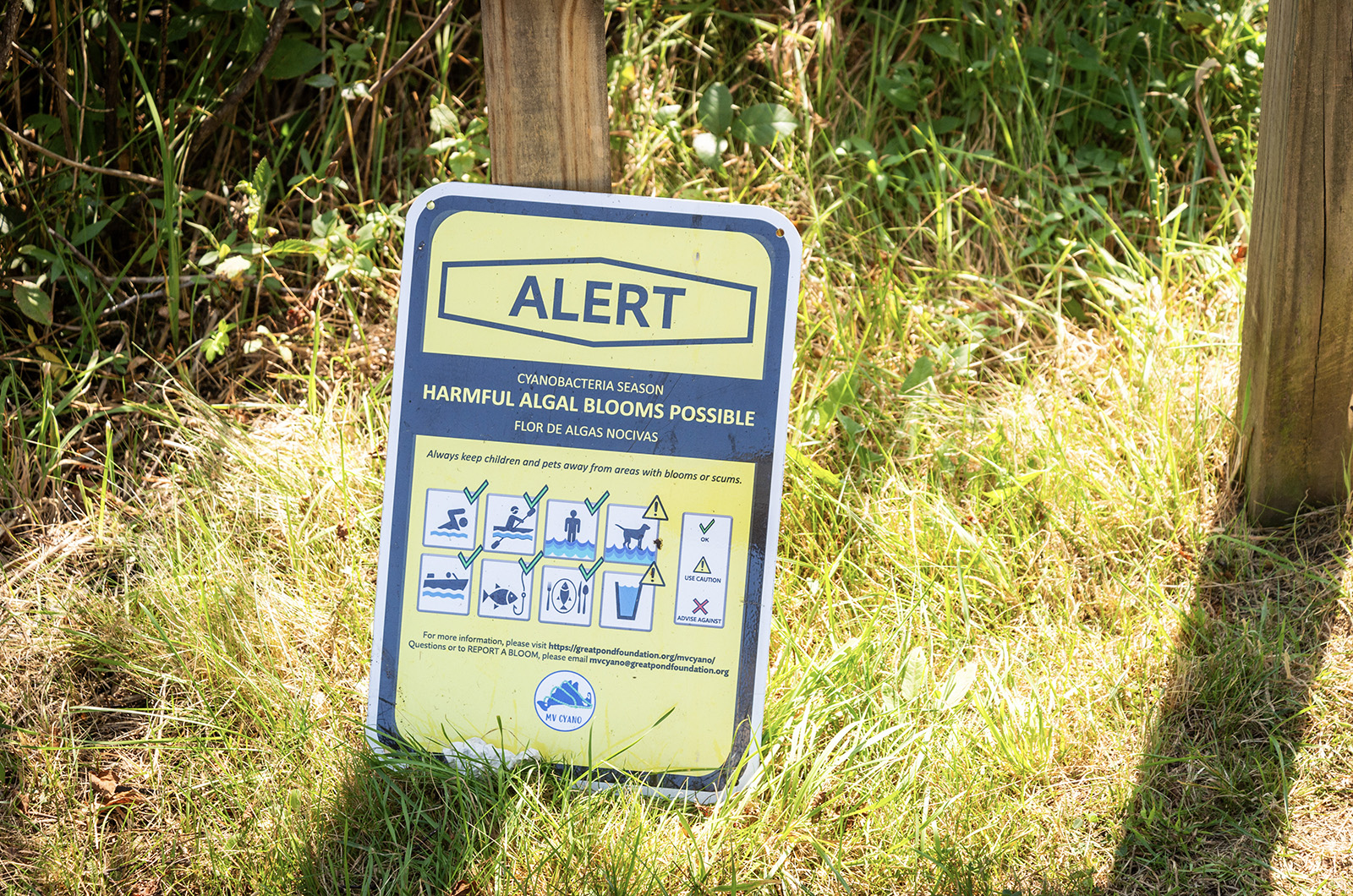
Warnings about algal blooms are a common sight at the pond.
Situated along Chilmark’s south shore, the pond splits into three areas, known as upper, middle and lower Chilmark Pond. High nitrogen counts have been documented in the pond going back to at least 2014, when the Massachusetts Department of Environmental Protection issued a report through its estuaries project stating that nitrogen levels were at their limit.
Since then, cyanobacteria blooms have proliferated. Known for their blue-green color, cyanobacteria are a group of single-celled photosynthetic organisms. When present in high concentrations, known as blooms, the bacteria produce toxins that can be harmful to humans and dogs.
Chilmark Pond began to show signs of environmental decline in the 1980s, when human activity and development increased, according to Amy Salzman, an ex-officio member of the pond foundation. The recent rise in storm activity has helped exacerbate the problems, as sand is pushed in and ponds become shallower.
“The ecological health of Chilmark Pond and all the ponds on the Island and on the Cape has been deteriorating over the years because of a variety of things,” Ms. Salzman said. “Nitrogen is number one [and also] because of more violent storm activity that is pushing sand [into the ponds]. Nature wants to basically close these ponds.”
The pond foundation is exploring various methods to improve the water quality, including sonic technology, where ultrasonic waves are sent out by a device at the bottom of the pond to prevent cyanobacteria from forming.
“It sends out a frequency that reduces the ability of cyanobacteria to metabolize or grow well,” Ms. Reddington said. “This sonic pulse that goes out is adaptive, and it can change in response to real-time monitoring, so the system that would go out is not harmful to plants, animals, or humans.”
The technology is manufactured by LG Sonic, whose algae-control devices are used worldwide. Long Island is currently adapting this method in Lake Agawam.
Scientists are considering both traditional and new methods to help preserve the water quality.
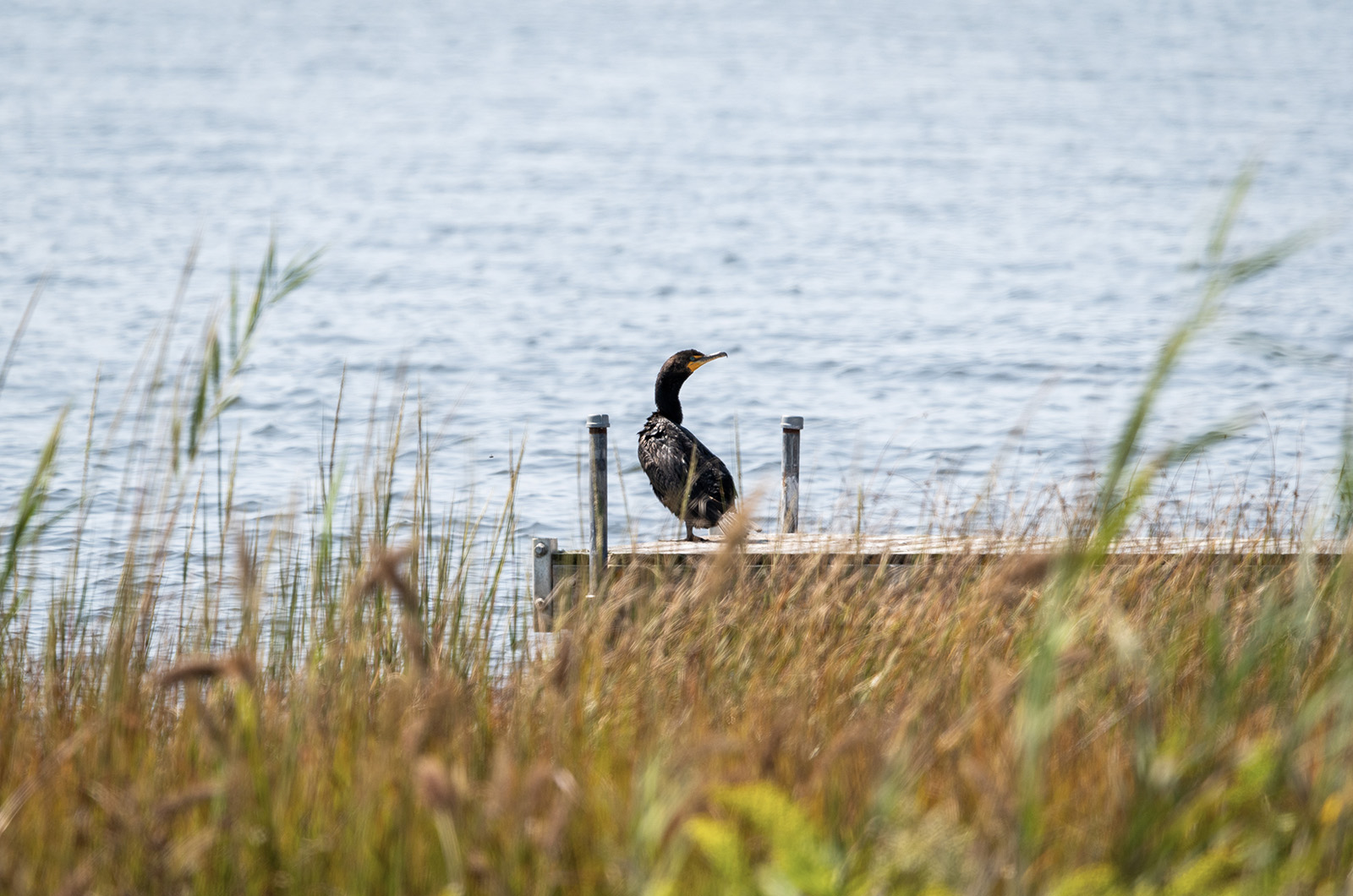
Scientists are considering both traditional and new methods to help preserve the water quality.
Another technique is thin layer placement, where nitrogen and phosphorus-rich mud are removed from the pond bottom and deposited along the shoreline, building up marshes and increasing pond resiliency in the process, according to Ms. Reddington.
“It’s a climate resilient strategy, because marshes are really resilient when it comes to climate change,” she added. “It would prevent erosion, but it would also get those [dangerous] nutrients out of the pond and improve the water quality and lower nitrogen and phosphorus. [It then] reduces the likelihood of cyanobacteria blooms and other types of ecosystem impairment.”
Thin layer placement is already being used in Rhode Island, New Jersey, New York and Connecticut. Massachusetts is developing a pilot program, with Chilmark Pond under consideration as one location for the pilot.
“The fact that the doors are opening to even consider this project is a wonderful thing,” Ms. Reddington said.
Javier Lloret, a scientist with the Marine Biological Laboratory in Woods Hole, received a grant this summer to collaborate with the Great Pond Foundation to improve Chilmark Pond as well as Edgartown Great Pond.
Mr. Lloret, who gave a presentation on past work with the ponds in August, plans to employ modeling techniques and isotope analysis to trace where nitrogen comes from.
In his presentation, Mr. Lloret said about 58 per cent of the nitrogen in Chilmark Pond comes from wastewater, and a large share of the added nutrients can be isolated to a handful of coves.

The pond is being eyed for a new pilot program.
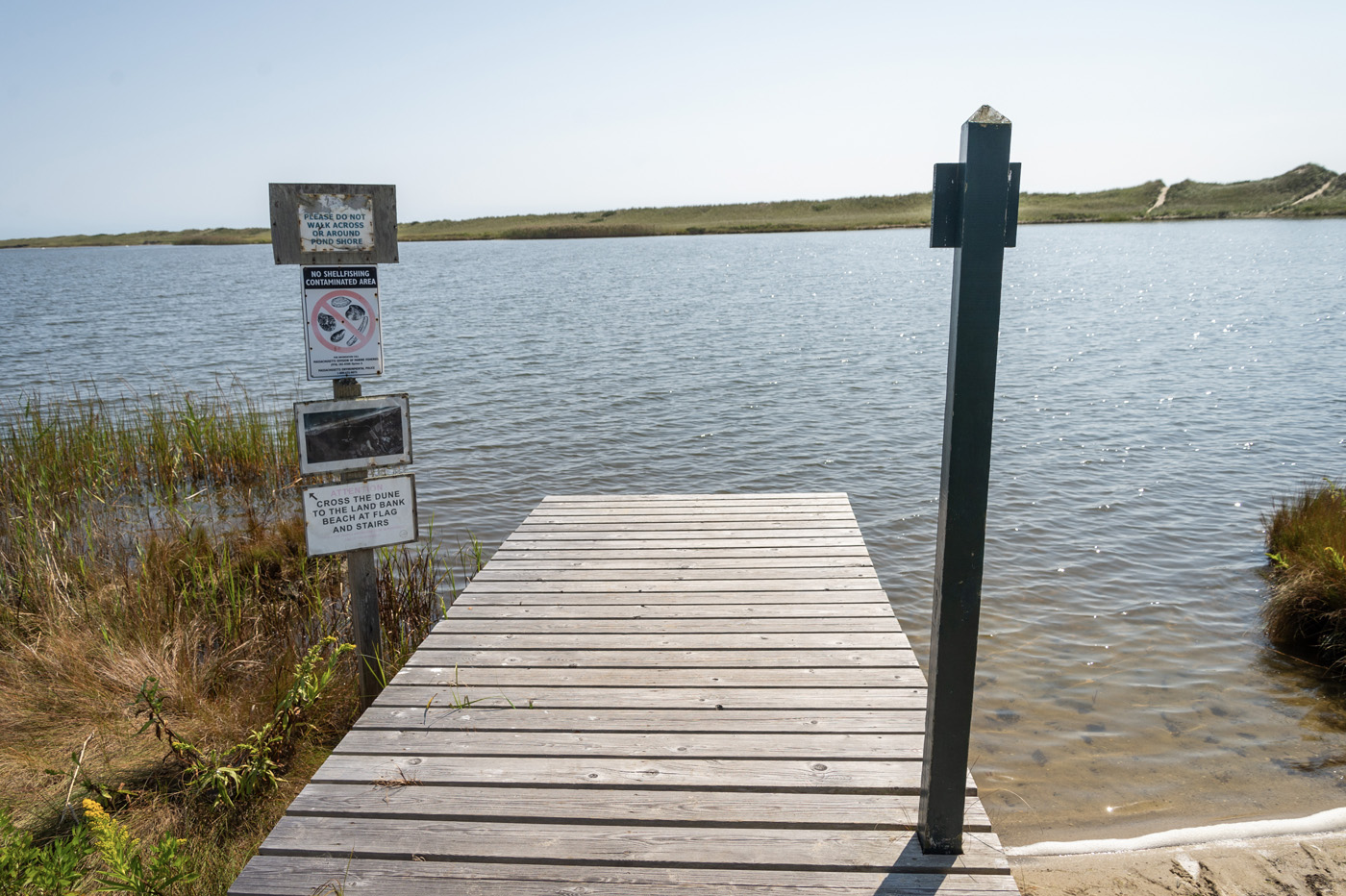
The pond is being eyed for a new pilot program.
“Some coves in some particular locations in these two ponds are responsible for the majority of inputs, which is going to have implications for the design of effective management strategies,” he said.
More traditional methods have been considered, too, though they have faced an uphill battle at times.
The Chilmark Pond Foundation applied for a dredging permit from the town conservation commission in 2019. Last year, the permit had reached the final stages when the U.S. Fish and Wildlife Service informed Ms. Salzman of the possibility of the presence of the endangered northeastern beach tiger beetle in the area where they were planning to put the sand.
The process of obtaining the permit remains ongoing while the foundation works with the Chilmark conservation commission to find a solution.
The town board of health is also involved. Modern-day septic systems are designed to keep fecal matter from contaminating the groundwater, but they do not mitigate the polluting effects of urine. “[Septic systems] are designed to do one thing very well,” Ms. Salzman said. “Urine is the source of a lot of nitrogen that is working its way through the groundwater into the ponds.”
A Martha’s Vineyard Commission report was released in 2023 with suggestions to decrease the amount of nitrogen coming from septic systems, including upgrading to innovative/alternative (I/A) septic systems, which are designed to remove more nitrogen. Tisbury currently has a requirement for the newer I/A systems.
The practice of “cutting” the pond to create a channel into the ocean for flushing is also done about four times a year, when conditions allow, said Ms. Salzman. This practice is still used in the Edgartown and Tisbury Great Ponds.
The foundation’s ultimate goal with all the efforts is self evident.
“People remember being able to bring your family in and spend the day splashing in the water and not thinking about the potential toxicity of cyanobacteria,” Ms. Reddington said. “I think both the goal and the path ahead is to figure out how to increase the health of the pond so that people can spend the time recreating and really celebrating nature, but also having it be healthy enough for nature to grow back.”
Comments
Sad article,highlighting the
Nick MVSad article,highlighting the poor progress,in resolving the same ol' man-made mistakes no one is willing to address in a timely manner.
Make the cut already!
Danny East ChopMake the cut already!
The ponds are *supposed to* collect sand from the ocean and nutrients from the land; the problem is we aren’t letting any of it back out.
We all know when a storm is about to batter the coast, but we fail to take advantage of the opposing conditions, when king tides conspire with calm seas to flush out the ponds. Happens a few times each year but we sit idle letting the ponds languish.
Not only does this compound the nitrogen problem, but it also hastens erosion. When these big high tides can’t find a breach, they bounce back out to sea with greater force and drag sediment along with it, leaving beaches narrow, steep and more susceptible to erosion. It’s why we still lose coastline under calm seas. It’s noticeable to islanders who frequent the beaches, and measurable by scientists and surveyors alike.
No high tech solution is going to outlast the ponds desire to flow into the sea.
But, we might only need shovels and a tide calendar to solve this one.
I completely agree - make the
Carol Lampson formerly ChilmarkI completely agree - make the cut already! The pond was opened to the Atlantic every year when I was a kid, over by the Association beach (we were on Abel's Hill, on the pond side) and the water in the summer was clean, clear and alive with minnows, blue crab, sand crabs and sometimes herring. WHY is the cut not being opened?!
There was a cut earlier this
Steve Fischer ChilmarkThere was a cut earlier this summer. I believe the water level determines if and when a cut can be made. Judging by a recent paddle, Chilmark Pond is quite low.
It seems like making the cut
Gary BostonIt seems like making the cut merely treats the symptom, but not the disease. While a great step, it doesn't address the source of the problem. There should be a multi pronged attack. Relatives of mine have a house on a lake in NH which has been shut down for the last few years due to cyanobacteria, and so had a lake wide assessment done. For them, the largest factor was rain water runoff, where the rain washes leaves, pine needles etc into the water to decompose there. According to this article, the main source is wastewater, which I assume to be from septic systems. Homeowners should take steps to upgrade their systems if needed, but also canvas their property and take steps to reduce rain water runoff.
The technology to reduce and
Alice JT Off islandThe technology to reduce and eliminate nitrogen from private septic systems is available. It should be better promoted by local board of health and mandated for new and replacement septic systems.
Seems to me the simplest and
Mr. B ChilmarkSeems to me the simplest and cheapest thing to do is let the pond fill up and then open it to the sea. Has this been tried in the recent past? Is the pond large/deep enough to produce a sufficient "surge" to deepen the cut?
When I was a kid the Chilmark
Mike SomewhereWhen I was a kid the Chilmark lower pond cut was opened at least once a year
Commenters should know that
Prudy Burt West TisburyCommenters should know that Chilmark Pond is opened on a regular basis throughout the year, timing is dependent on weather/wind conditions, salinity, water quality conditions, fisheries, and pond water levels reaching a certain height- a good hydraulic head means a more durable/ longer opening allowing more complete flushing of the pond and exchange with the ocean. Pond opening decisions are made by the Chilmark Pond commissioners.
Most recently, the pond was opened just last week.
Barrier beaches naturally move landward, and this one has been doing so since the last glacier receded. What has changed in this equation, in addition to warmer water temperatures and increased acidity in our oceans, is the addition of us and all of our attendant nitrogen- lawns, septic, and atmospheric sources of same.
If everyone wants to solve
Carlos Degotta Vineyard HavenIf everyone wants to solve the problem here is what you do, use flow maps to see which septic systems are flowing into effected body of water. Enforce that all those systems be closed and a retaining tank be installed with a solids grinder. Tank pumped out periodically when near full they come with built in sensors which place appointment for septic truck. These systems are being and have been installed on properties which flow into at risk lakes in New Hampshire, if enforced uniformly it would and should be the cost of living here.
This seems right, as far as
Jim BostonThis seems right, as far as it goes. The people responsible for the problem should be responsible for remediation. It's not just septic systems, but lawn fertilizer, etc.
Harvesting nitrogen used to
Dee Ouchman Isles of LangerhansHarvesting nitrogen used to be a vast industry upon which huge fortunes were made. Harvested from outhouses,bat caves, bird rookeries, deserts and even from air itself. Ships used to unload in Wood's Hole. The Alchemy of Air is a great book on how nitrogen harvesting essentially saved the world.
Opening the cut at Hancock
D. Koren Chilmark Midddle PondOpening the cut at Hancock Beach on the lower Pond does nothing for the middle and upper Parts of the pond. No fresh seawater from the cut ever makes it up to those areas and therefore do not replenish them. the commissioners after looking at the science should consider opening or alternating cuts in the upper and middle pond.
Chilmark Pond sound like an
Ana da Sousa Oak BluffsChilmark Pond sound like an ideal location for a permeable reactive barrier - I’m concerned and curious why there’s no reference at all to such an option. These are minimally invasive (injection wells with vegetable oil pumps in and strategically placed for maximum nitrogen uptake) and proven effective and very costs effective as opposed to requiring homeowners to install incredibly expensive septic system replacements. Edgartown’s early drafts of the Comprehensive Wastewater Management Plan propose multiple locations to reduce groundwater nitrogen flows into great ponds and Sengekontacket. Quick and easy but for the permitting! A case study could quickly receive approval from DEP. That in addition to breaches
Add new comment