

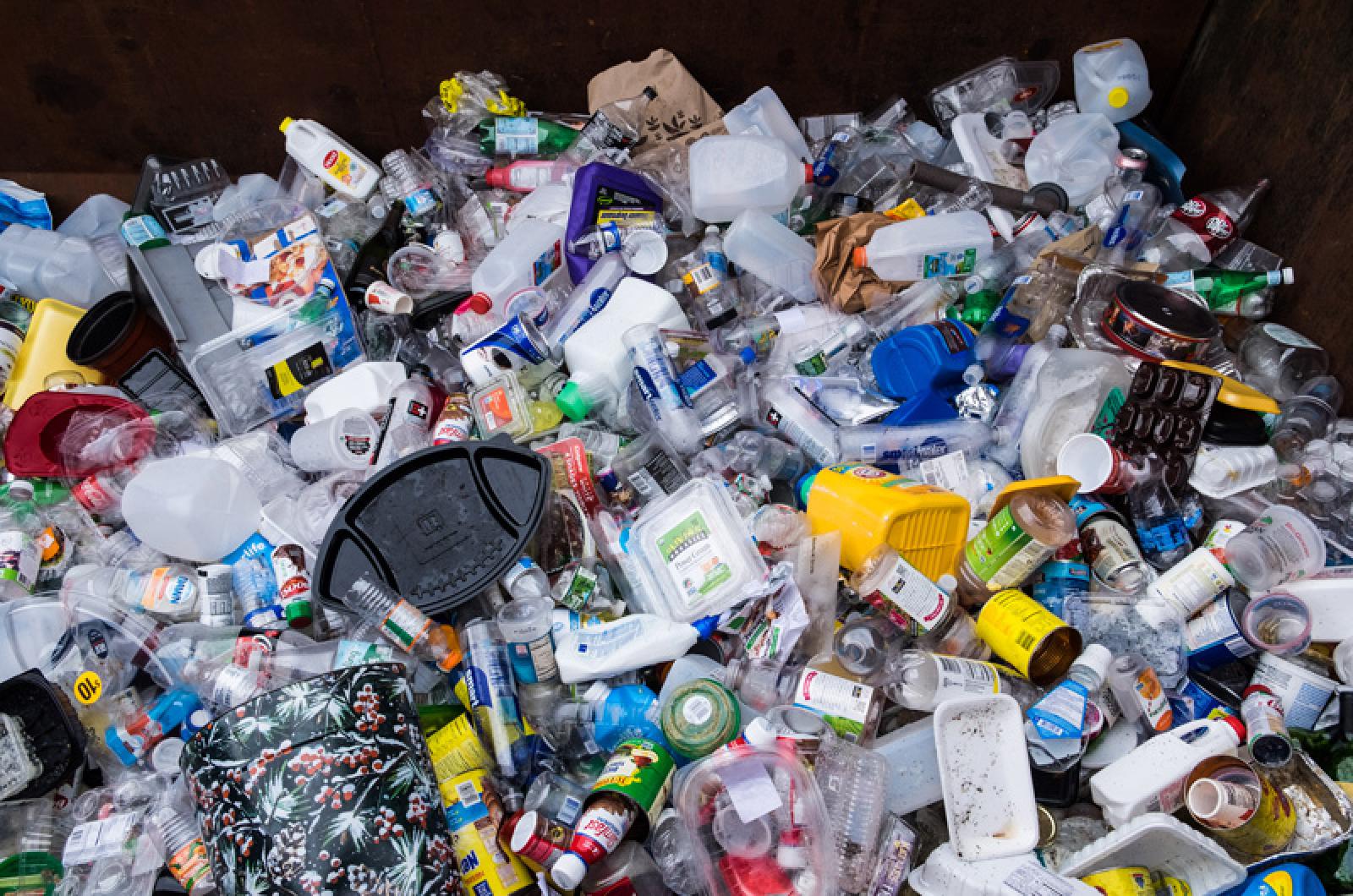
The Martha's Vineyard Commission has been presenting a new report on waste to Island officials, raising questions about how to reduce waste, save money and find better ways to recycle.
When it comes to trash removal on Martha’s Vineyard, numbers tell a compelling story. Last year alone, the Vineyard sent more than 2,000 large trucks off Island packed with the stuff we call solid waste, including garbage, recyclables and construction debris. That’s enough to take up space on some 260 freight ferries.
All municipal solid waste generated by the six Island towns is shipped off-Island in one form or another.
But numbers are only the tip of the iceberg. Against the backdrop of climate change, longstanding government practices seen through today’s lens as inefficient and costly, and a shifting regulatory landscape at the state level, the Martha’s Vineyard Commission has begun a gentle push for the six towns to take a fresh look at how they handle their trash. The regional planning commission is recommending that the towns take a first step by forming an Islandwide task force on solid waste.
“The world is changing,” Adam Turner, the commission’s executive director, told the Oak Bluffs select board at a meeting last month. “We would like the towns to get ahead of it, so we’re not faced with choices we won’t necessarily want to make.”
Island Grown Initiative has stopped its composting program, potentially leading to more food waste going off-Island.
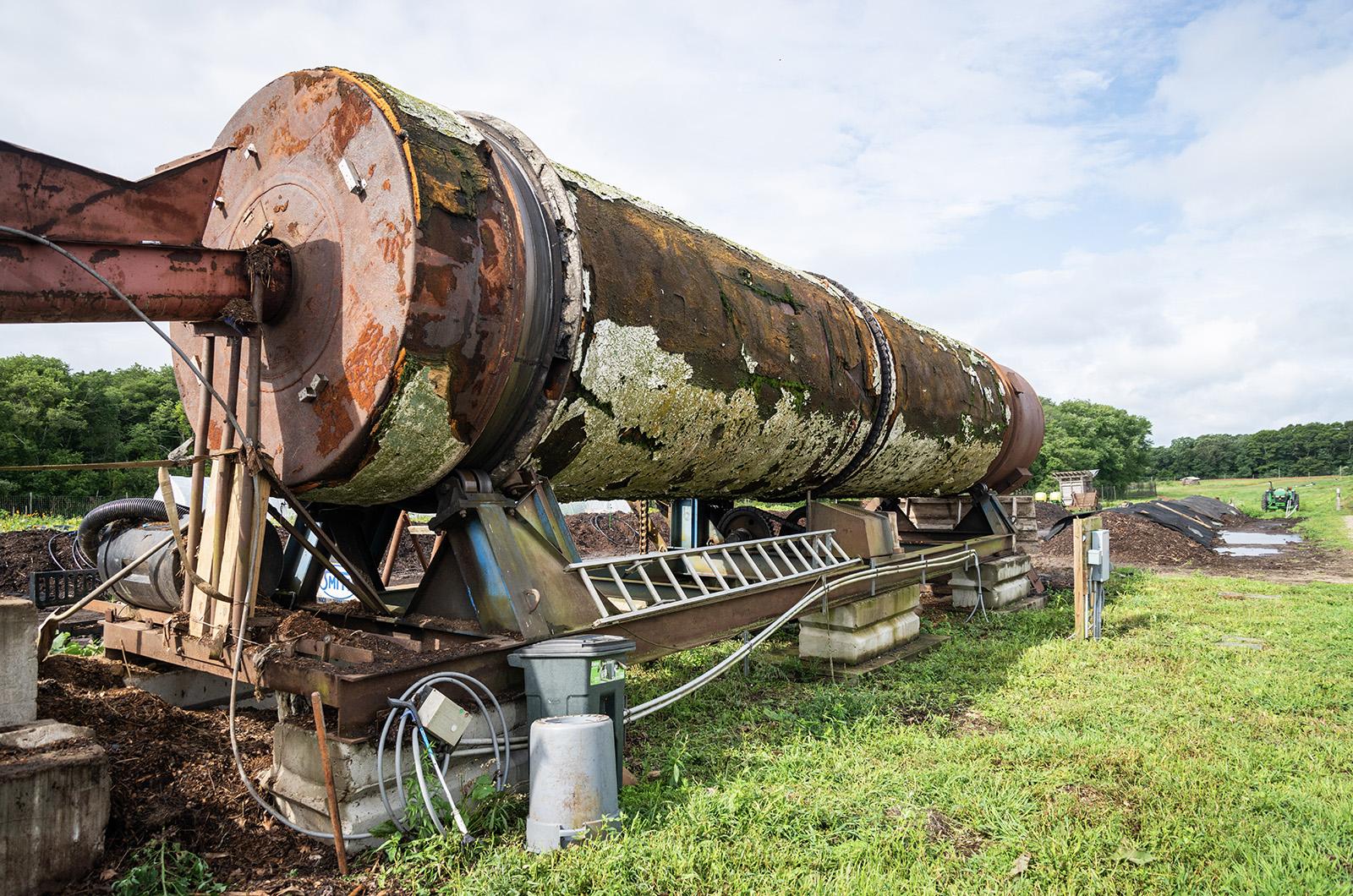
Island Grown Initiative has stopped its composting program, potentially leading to more food waste going off-Island.
The move to form the task force comes in tandem with a report released by the commission outlining the current state of trash and recycling on the Island. Commission staff have been making the rounds to Island select boards with the report, which among other things raises questions about how to reduce waste, save money and find better ways to recycle.
At the meetings, Mr. Turner, Kate Warner, the commission’s regional energy planner who prepared the report, and Woody Filley, who contributed to the project, explained the state of waste and recycling on the Vineyard and sought recommendations for the task force.
There are two government entities on the Island for trash removal: the Martha’s Vineyard Refuse District, which includes Aquinnah, Chilmark, Edgartown and West Tisbury, and a separate two-town district which includes Oak Bluffs and Vineyard Haven.
According to the commission report, an estimated 2,110 trucks full of solid waste were taken off-Island last year.
Municipal solid waste, the regular garbage that gets thrown away at the dump, makes up the largest portion of the waste stream. By weight, municipal solid waste makes up about 60 per cent of last year’s waste stream. The commission estimated about 852 trucks of municipal solid waste left last year.
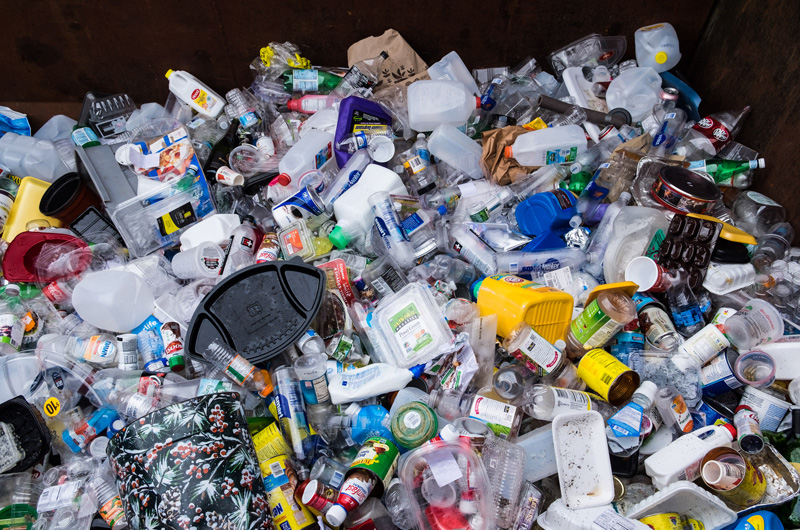
In addition to solid waste, Steamship Authority records show 794 trucks full of recyclables left the Island, as well as an estimated 464 trucks of construction and demolition waste. At the Oak Bluffs meeting, Mr. Filley said 216 truckloads of food waste have been shipped off-Island yearly.
Municipal solid waste is normally taken to a facility in Wareham where it is incinerated. Ms. Warner emphasized both the financial and environmental impacts of shipping waste off-Island. According to the commission, waste is more often being shipped farther south and west, which will increase transportation costs.
“Solid waste and the shipping of trash both contribute to greenhouse gas emissions and shipping trash off-Island is expensive and not popular with our neighbors,” Ms. Warner told the Oak Bluffs select board.
The report also examines how the Island recycles and identifies gaps in the current system.
Both the Martha’s Vineyard Refuse District and the two-town district collect recycling. The two-town district separates mixed paper and cardboard from the rest of the stream, takes them to other facilities and is able to get a higher value for them.
Ms. Warner raised the question of whether there is a better way to handle the process, given the limited space on the Island.
“How can we better handle the separating of materials? We have limited land area with which to process waste, whether for composting or separating various aspects of the waste stream to make it more valuable,” she said.
How best to handle food waste is a question that looms large on the Island. Food waste amounts to about 6,500 tons of waste every year, and the Vineyard’s only large-scale composting program, run by Island Grown Initiative, closed in September after an eight-year run as a pilot.
The state Department of Environmental Protection requires that commercial food waste cannot be thrown out by groceries and restaurants that produce a half ton or more food waste each week, and instead must be composted, recycled or otherwise reused or recycled. Melissa Hackney, the executive director of the Martha’s Vineyard Vision Fellowship, told the Gazette this summer that local establishments will be exempt from the rule due to the lack of a centralized facility. Speaking to the Oak Bluffs select board, Mr. Filley said creating a permanent composting program makes sense for the Island because there is a demand from landscapers, farmers and gardeners for compost on-Island.
The commission report highlights several ways to reduce Island waste beyond composting. Crushing and tumbling glass waste for re-use on sub-roadways is a process underway in the Cape Cod town of Dennis and could be considered here (glass contributes weight to the waste stream, the report notes). Clothing and textile disposal is another area touched on in the report, which notes the success of the West Tisbury Dumptique and floats the idea of whether it could be replicated in other towns.
Mr. Filley suggested that once a task force is formed, hiring a waste consultant could help the Island find a path forward.
“We can get all of the stakeholders together for handling waste on the Island,” he said. “That group could also then select a consultant and get us ready for the future.”
The full report on Martha’s Vineyard solid waste can be found on the home page of the MVC website (mvcommission.org).
Comments
I use the transfer station
Tom Engley West TisburyI use the transfer station near the airport. I go about every other week my truck full of cardboard and house hold trash go on the scale off the scale dump in general trash area go to metal area dump there go back get weighted stop and pay almost always about 15 to 20$ then go dump card board for free Saturday I stoped at metal pile and someone had dumped a pile of hand tools all good some brand new I got down and picked out what I wanted good stuff. The point I’m desperately trying to make is at old dumps you could dump pick reuse recycle now they discourage it not completely but in construction area they have to run the loader to keep up with what’s dumped. Good reusable lumber is being thrown out we need to slow down take our time the politics and society are out of control lots of wasted time. And I feel it’s too cheap to throw stuff away charge more people may be more aware of what they throw out.
It might be possible to do a
Marty Milner TallahasseeIt might be possible to do a joint venture with local nurseries, gardeners and landscapers. They could be supplied with compost and seedlings and could grow on several "Martha's Vineyard" tree varieties- Beetlebung, Copper beech, Mulberry, Linden, Juniper etc. These could then be sold locally or wholesaled off island as a "value added" resource to produce funding or reduce costs.
If we annually ship 2110
Jack A. West TisburyIf we annually ship 2110 truck loads full of waste off island, why don't we spend a little bit of money buying industrial compactors that compact the trash immediately into the shipping container? Compacting can dramatically increase the amount of garbage shipped in a shipping container. I would think we would save a lot of money and reduce the number of truck loads off island. Industrial compactors are safe and used in transfer stations throughout the Boston area.
My only question involves the
Mr. B ChilmarkMy only question involves the increase in weight-per-truck that compacting would entail. Would the present tractor/trailers be able to manage this?
Why doesn't the island build
JD Naron Vineyard HavenWhy doesn't the island build a small scale incineration plant somewhere away from the high traffic areas? Clean burning incinerators with exhaust scrubbers could handle the waste without being bad for the environment (its being burned anyway off island). They could also be used to help the hospital dispose of biohazard medical waste and save them from having to ship off island as well.
I work on ships for a living and most of them run incinerators. They aren't very complicated, you just have to keep up with the maintenance on the burner tips and blowers. They pretty much run themselves.
Massachusetts has had a
L. Loucks Vineyard HavenMassachusetts has had a moratorium on new waste incinerator construction since 1990.
"Municipal solid waste is
James D. Sullivan"Municipal solid waste is normally taken to a facility in Wareham where it is incinerated"
Add new comment