


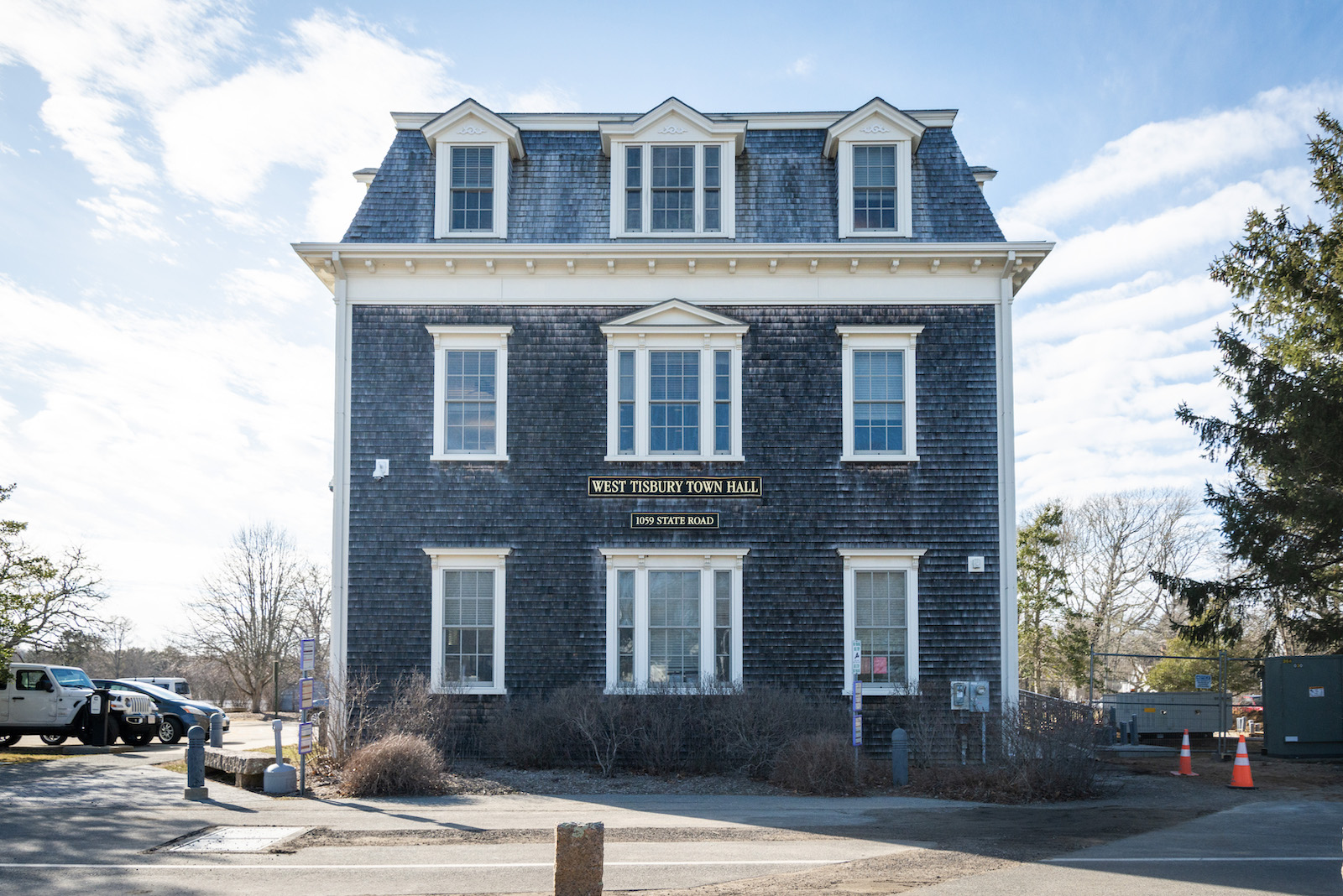
As the town continues to figure out which homeowners would qualify, seasonal and year-round residents packed the board meeting to give their thoughts.
A proposal to enact a residential tax exemption in West Tisbury drew supporters and critics out at the select board meeting Wednesday.
The town has not yet decided whether to approve the exemption, which would lower property taxes for people whose primary residence is in the town and put some of that burden on second homeowners, rental properties and vacant land owners. But as the town continues to figure out which homeowners would qualify, seasonal and year-round residents packed the board meeting to give their thoughts.
For full-time residents, the general reaction seemed positive as it would lower the burden on rising taxes, while seasonal residents were more skeptical, also noting the rises in costs of living and possible impact of higher rates.
Tisbury and Oak Bluffs have approved similar tax exemptions and the West Tisbury select board is expected to make a final decision in the fall after hearing input from the board of assessors and homeowners.
“I think we need to get as much pre-qualification done as possible so that we can feel confident in making our decision,” select board chair Jessica Miller said. “In terms of setting the rate, I personally would think that would defer to the wisdom of our board of assessors and to the principal assessor to guide us.”
Some residents are in favor of the exemption, citing it as a way to decrease the burden on those who are already struggling to afford their property taxes.
“A lot of the second homes and third homes that are built here have raised the values of the neighborhoods, and in some of those neighborhoods are people that cannot afford the taxes that we all pay,” Christopher Lyons, a year-round resident, said. “That I believe is one of the reasons why we are looking at this to help some of the people who are not as well off, who live here year-round, who cannot necessarily afford the same tax rate that [others] can afford.”
Jonas Herbsman, a seasonal resident, said his biggest concern is how the rising taxes would change his own budget concerns.
“What I’m concerned about is the level of services that seasonal or second homeowners use relative to the level of services that full time homeowners use is obviously disparate,” he added. “I personally am happy to pay the taxes, if I’m paying at the same rate as somebody else is paying to provide those services.”
Others, including Rachel Baumrin, had mixed feelings about the possible exemptions. She was a seasonal resident and is now full-time. Her family continues to be seasonal residents.
“I think my father would never have voted for this, because he would have had to pay more taxes,” Ms. Baumrin said. “But at the same time, now I live here and my community is dwindling because of the lack of affordable housing and the higher rates of living here. And I don’t want to continue to see that because it’s the ethos of the Island.”
The public is encouraged to continue submitting letters with their thoughts to the board of assessors office.
“Your property tax is a very unique tax and it does not take into consideration one’s ability to pay it,” said Michael Colaneri, the chair of the board of assessors. “This is to help a lot of local people. This isn’t something to fight the class war. It is important to realize that if [this exemption] does get decided, it could help a lot of people.”
Editor's note: a previous version of this story misattributed a quote said by Michael Colaneri. It has been corrected.
Comments
This is a bad idea and takes
Jennifer WTThis is a bad idea and takes a sledgehammer to a complicated problem of housing affordability. For example, why should a full time resident who lives in a $5 million house and makes $2 million per year, pay a lower rate than someone who owns a summer house worth $1 million and make $100k per year and never rents their house out? Also, year round residents contribute more to the affordability problem because they use more services. The affordability problem is caused by MV being an island, not summer residents. Let’s follow the lead of the more successful towns like Edgartown and Chilmark that have one rate, not Tisbury with two rates.
House prices are dictated by
Edward T. MVHouse prices are dictated by supply and demand. A person buying a house as a full time residence contributes equally to the demand side as a person buying a house as a summer residence. To argue that summer residents cause housing affordability ignores basic economics. Either increase supply (build more houses) or decrease demand by making MV less attractive for all buyers (both full time and seasonal).
Interesting proposal. One
Brian Thomas EdgartownInteresting proposal. One thing that always amazed me about buying a house here is the real estate agents never brought up the amazing property tax disparity between towns. Most agents I spoke to were unaware of it and if they knew at all their information was inaccurate.
A well managed town such as
just a thought edgA well managed town such as Edgartown with a FAIR tax rate attracts second home buyers who appreciate the being treated FAIRLY. If we weren't here (and we use fewer services and no schools) who would be buying the $35 hamburgers. Thats why nobody I know would ever buy in Tisbury as second homeowners are treated poorly, despite subsidizing the year rounders who use more municipal services.
Real estate taxes for the
Charlie Callahan So Boston/EdgartownReal estate taxes for the most part are peanuts here compared to off the island. I own a little house in Edgartown and pay 1/4 in taxes for this house as compared to a house I own in So Boston of comparable size.
Charlie,
Jack West TisburyCharlie,
We are talking two different animals big city vs a rural small town? Of course the taxes are going be lower…
That’s because the assessed
Mark EdgartownThat’s because the assessed value of Edgartown RE is over $13bn and most of the higher end homes are seasonal and don’t use services most of the year keeping the tax burden low.
We already have taxation
Henry VHWe already have taxation without representation on this Island as summer people. We are paying for your schools, which is one of the largest parts of the budget in most towns, and we don’t use them. How much more should we pay for you, on something we get no value out of ?
yes it is frustrating. you
Michael edgartownyes it is frustrating. you own property, but cant vote on issues regarding your property, because is is not your "primary residence". until that changes it is tough noogies, isn't it? until a movement is made it will stay that way. maybe it has to be deemed illegal to tax people differently, by the Supreme Court? you want to talk about dividing people, talk about not liking each other, this is a perfect example. the short term rental crowd is coming out with their "rules for renting" your private property....I cant wait to see what rules my neighbors are going to impose on me when I not only come to the island, but rent out my private property. they actually want you to submit your rental lease to the town for approval....think on that for a while..
In many jurisdictions,
Nancy ChilmarkIn many jurisdictions, property tax abatement is afforded to a variety of homeowners, such as seniors and low-to-moderate income homeowners. Rather than exacerbate the divisions between full-time and seasonal residents, perhaps it would be more productive and community-building to give tax relief for reasons that would resonate with both groups of homeowners.
Very smart comment Nancy. I
RRG VHVery smart comment Nancy. I agree with this approach. Making assumptions about who might fall into what financial category solely based on year round vs seasonal seems incorrect. However making sure that seasonal properties are not investment properties being used solely as short term rental properties is an issue that needs to be dealt with. Perhaps a different tax designation? or more than just the rental tax, which gets passed on the renters I most cases I believe.
So you are advocating for
Tom BostonSo you are advocating for more taxes on top of the STR tax? Not to mention seasonal owners, whether they rent their home or not, are already paying the lion's share of property taxes to begin with? When is it enough?
Tax abatements for certain
Mike EdgartownTax abatements for certain groups is just not fair and does not treat all residents equally. Fairness is fairness for all.
If they are gonna give tax
Charlie Callahan So Boston/EdgartownIf they are gonna give tax relief,give it to disabled vets,the people who made it possible for these people to have $1,000,000 homes. There are plenty of them on the island and I was lucky and never diable but a lot of my friends were. Some states allow disabled vets to not have to pay any real estate taxes
The towns need to spend
Mike EdgartownThe towns need to spend responsibly. Tax increases should never outpace inflation and when they do service levels need to be responsibly decreased. Taxes do not need to be like a stock market and continuously go up. Act responsibly and over time your municipality will be more affordable to all. Selecting certain groups for targeted tax cuts to help swing elections in favor of certain parties is not right .
Add new comment