

A legal tug-of-war over Edgartown’s new rules for the Chappaquiddick oversand vehicle trails has broken out, with the nonprofit that manages the coastline and a citizen’s group both filing appeals with the state this week.
A legal tug-of-war over Edgartown’s new rules for the Chappaquiddick oversand vehicle trails has broken out, with the nonprofit that manages the coastline and a citizen’s group both filing appeals with the state this week.
The Trustees of Reservations, which oversees the 16 miles of trails to the prized Chappy beaches, filed an appeal with the Massachusetts Department of Environmental Protection on Friday, asking the agency to overrule the Edgartown conservation commission’s decision to cap the number of vehicles allowed to drive on the sand trails, as well as close access past the Cape Pogue lighthouse to an area known as the Gut.
Chappaquiddick attorney Rachel Self, representing a group of 65 abutters and residents, also challenged the conservation commission’s ruling, saying there was no scientific backing employed during the permitting process.
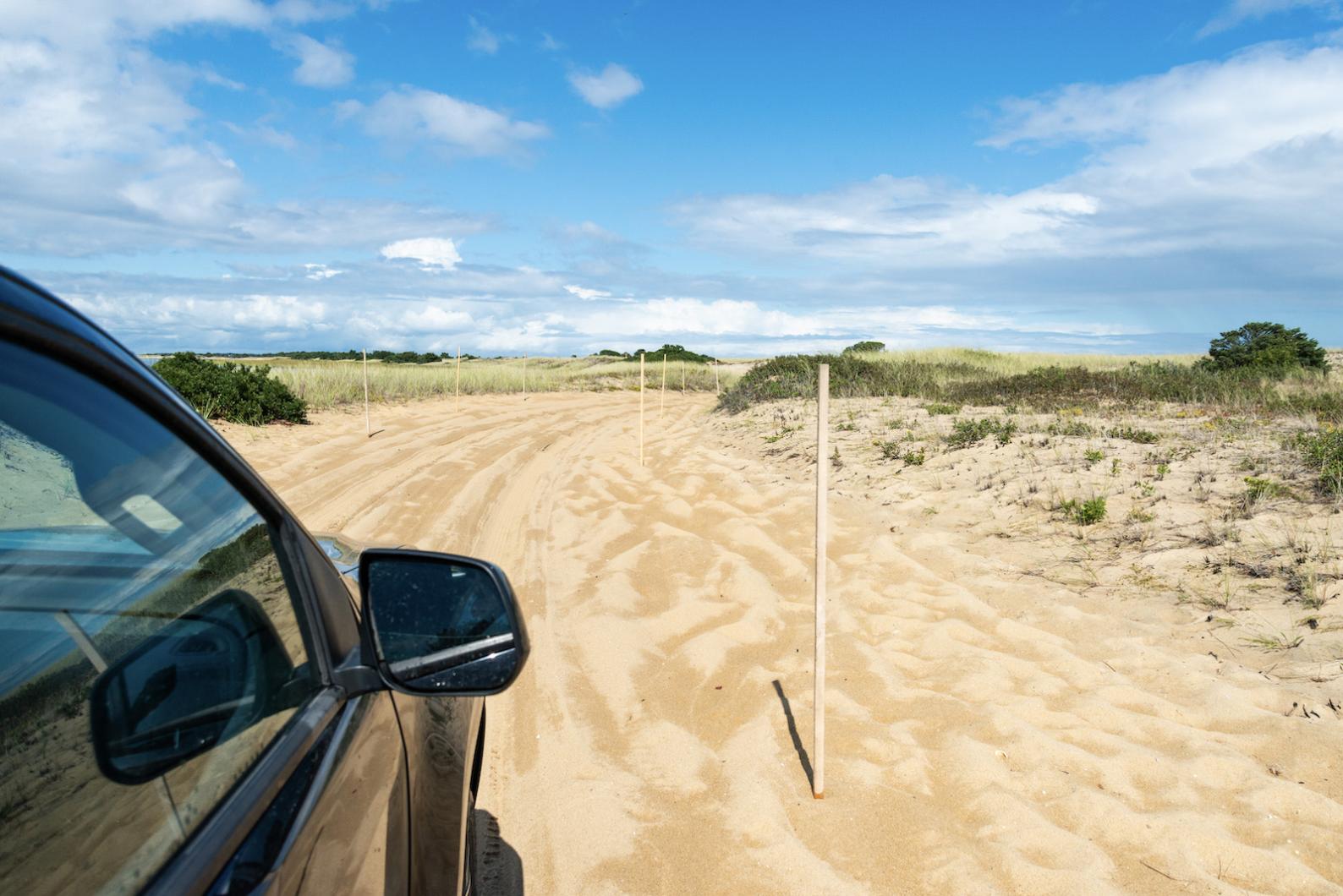
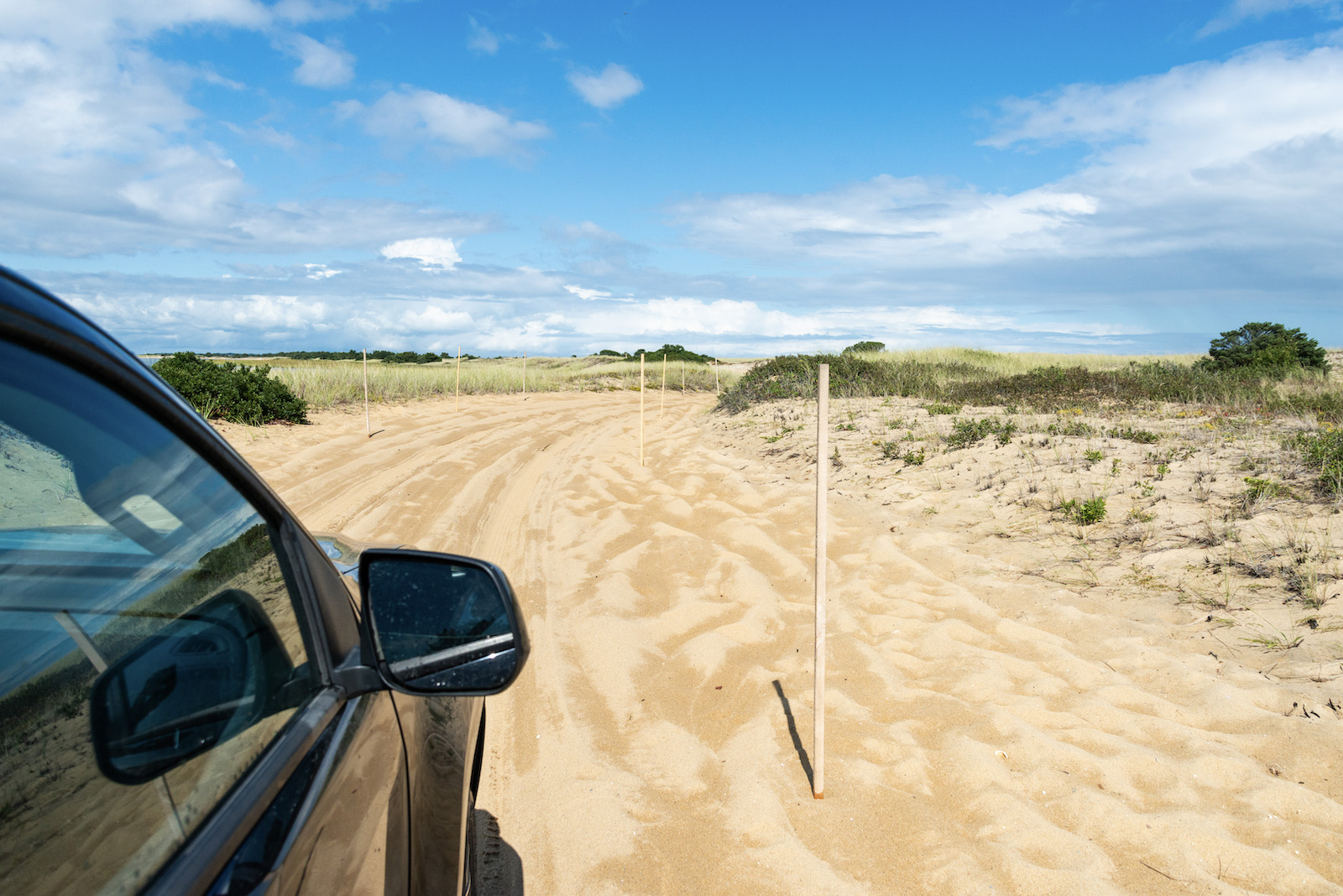
The Trustees of Reservations manages about 16 miles of oversand vehicle trails on Chappy.
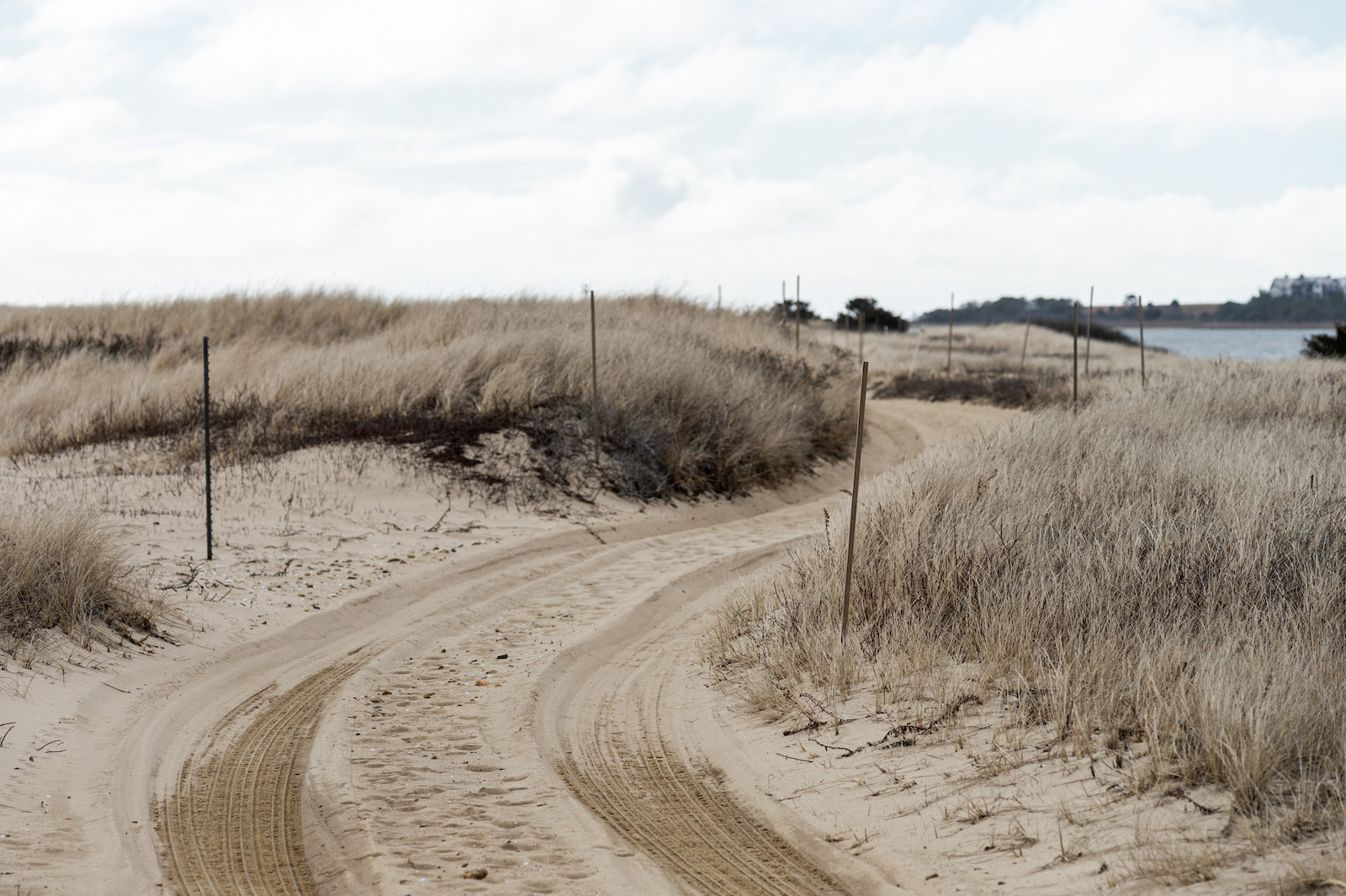
The Trustees of Reservations manages about 16 miles of oversand vehicle trails on Chappy.
At the heart of the argument is the commission’s May 15 vote to limit the number of oversand vehicles at Leland Beach, Wasque Reservation and on Cape Pogue. After months of meetings, and testimony from fishermen, beachgoers, Chappy residents and the Trustees staff, the commission decided to limit Leland and Wasque to 200 oversand vehicles at a time, and Cape Pogue to 30.
The commission also denied access to oversand vehicles past the Cape Pogue lighthouse.
The Trustees contend the new limits are too restrictive, and were not crafted in line with the state’s Wetlands Protection Act – the statute that is supposed to be the guiding light for the sensitive barrier beach area.
“The Commission’s orders for Cape Poge categorically remove 30 acres of Trustees property from access by the public, including noted fishing areas at the Gut, and severely limited the number of [oversand vehicles] in areas that, historically and according to state guidelines, accommodate significantly more visitors than the Commission has allowed,” the Trustees said in a statement Friday.
The Chappaquiddick citizen’s group seeks a more restrictive solution. In its appeal, filed Tuesday, group said the Trustees should have had more data backing its application.
“There were no studies or testimony provided from any biologist, scientists, ecologist, or coastal engineer,” the group wrote to the DEP. “No human impact studies were done. No [oversand vehicle] impact studies were done.”
The citizen's group, made largely of Chappaquiddick residents, worried about the toll the conservation commission’s limits could take on the beaches.
There is nothing to “support a proposition that what remains of our barrier beaches could support this intensity of use by recreational [oversand vehicles] coming and going, 24 hours per day, 365 days a year, as many times as desired,” the appeal stated.
The DEP can override local conservation commissions if their rulings don’t fall in line with state laws, and the DEP has done this in past Edgartown rulings, including the commission’s denial of wind turbine power cables running through Edgartown waters.
Kate Theoharides, the president and CEO of the Trustees, previously publicly lambasted the conservation commission oversand vehicle limits, saying they were designed to appease Chappaquiddick landowners.
In paperwork filed with the DEP, the Trustees also objected to the commission’s order to potentially install gates along Cape Pogue Elbow and the Gut and hold monthly meetings to talk about operations.
“The orders impose an onerous, burdensome monthly reporting requirement that is not mandatory to meet any performance standard of the Wetlands Protection Act regulations and would not trigger any action,” the Trustees wrote. “No other land trust on Martha’s Vineyard is subjected to a monthly reporting requirement.”
The Trustees had requested that it be allowed to have up to 300 vehicles across all of its trails. The commission instead choose to have two limits, one for Cape Pogue and another for Leland and Wasque.
The Trustees said this bifurcated limit was not needed and reiterated the request for 300 oversand vehicles in total across all properties in its appeal to the DEP.
In a statement Monday, the conservation commission said it was confident that DEP would uphold the commission's ruling and rejected the allegations of placating of landowners.
“The Commission considered the fragile nature of the beach and the historical use of OSVs, with attention to the changing nature of the beach,” the commission wrote. “Between the Elbow and the Gut, for instance, twice daily tidal cycles innundates the entire beach during portions of each day and the changing width of the beach north of the Dike Bridge makes it unsuitable for OSV passage during a significant portion of the year. The OSV trails north of the Dike Bridge, moreover, are significantly different from the trails on property to the south, requiring different standards.”
A spokesperson for the Trustees declined to comment further than the statement released by the nonprofit, which manages properties across the Island and Massachusetts.
Applicants have to appeal commission orders within 10 business days. The conservation commission officially signed off on the new limits on May 20 and the appeal period ends on June 4.
During the hearings the commission made a point to allow the existing regulations to remain intact until any appeal ended. Beachgoers sought this provision in case the new limits were appealed after the old ones expired – leaving no permission for oversand vehicles.
Peter Sliwkoski, the president of the Martha’s Vineyard Beachgoers Access Group, said this was crucial.
“The current order of condition which allows access from Leland’s to the Town Jetty will be in place until the new order of conditions are filed and not appealed,” he said earlier this month after the conservation commission’s vote. “This means, we will have at least the same access we had last year.”
Editor's note: this article has been updated with information about citizen's group's appeal to the DEP and a statement from the conservation commission.
Comments
Thank you TTOR for fighting
John ChappyThank you TTOR for fighting to restore historical access to Cape Poge and the gut. The ConCom should enforce the Wetlands Protection Act and not set limits that serve no purpose other than to provide a private playground for select individuals. I just wish the TTOR would allow dogs on Cape Poge and the guy year round as they did in the past.
Allowing the few private and
Tiapoint EdgartownAllowing the few private and privileged to continue to hog-tie and hamper the enjoyment of so many? Come on, these are public lands (Town of Edgartown) or, properties owned by a private conservation trust supported by donations ...why are they (we) at the mercy of these few? It is not their land and yet, have been able to finagle, through protracted legal quagmire, to assert control. It's not a stretch of imagination to think what's next? Perhaps the abutters of Cow Bay decide they've had enough of the Edgartown town beach at 'The Bend in the Road' and hire lawyers to tie-up that property, preventing pubic enjoyment? Perhaps those neighbouring the landing along Sengekontacket will do the same? Or, maybe those around Brayleys Landing (Eel Pond) will do the same. This in not about conservation. It's about 'I've got mine and to heck with the rest of you'.
FREE CAPE POGE
Free Cape Poge EdgFREE CAPE POGE
This is what happens when you
Bob EdgartownThis is what happens when you get very technical and legal. It gets so complicated that it’s hard to understand What is even going on there now.
They want the Conservation
MarieThey want the Conservation land for themselves. So selfish
It seems that the only long
Patricia ChappaquiddickIt seems that the only long term solution is for the state to use eminent domain to take the private residences on Cape Poge. That would end the dispute and ensure continued public access in the same way that the state took land to ensure public access to Leland Beach.
Wowza! Never thought of that.
Kiki Summer VisitorWowza! Never thought of that. Wouldn’t that be something to see!
Interesting that the abutters
Ryan T. WTInteresting that the abutters are appealing the decision. One possible outcome is that the DEP could block all OSV access to Cape Poge, including access by the Cape Poge residents (who also need an order of conditions to access their property by OSV). This may be a case of be careful what you wish for.
One thing that is getting
Lilly Edgartown, MAOne thing that is getting lost in all this is how MV compares to Nantucket. Nantucket is very beach friendly, with many, many OSV beaches managed by both the town and Trustees. Nantucket beaches are also much more dog friendly, with dogs allowed on most beaches. Nantucket has also seen much better real estate appreciation. As a Realtor that works both islands it is becoming harder and harder to recommend people invest in MV. The island seems to be digging its own grave, with Nantucket having a much more friendly and welcoming environment.
Does Chappy need OSV's
Albert GosnoldDoes Chappy need OSV's
Yes, it’s the only way to
LillyYes, it’s the only way to access the vast majority of the beaches on Chappy.
Are you really implying that
Johan Gold OBAre you really implying that real estate here isn’t appreciating fast enough? I think we would all benefit from a precipitous drop in values so that the community can have a chance to survive. Please leave us alone and focus on ACK for your commissions.
This is an embarrassment for
Kyle EdgartownThis is an embarrassment for Edgartown. The privileged few making self-serving rules. The DEP will back the Trustees.
Standard in MA. Towns may set
William FALMOUTHStandard in MA. Towns may set tighter environmental, health and safety rules than state rules. Towns con com will not be overruled here.
If the residents that are
Mike ChappaquiddickIf the residents that are purporting to care about science and dressed up as a “citizens group” are right then they shouldn’t live there. And if so the property should be taken by eminent domain to protect the fragile area. You cannot have your cake and eat it to at taxpayer expense. And you can pay for the dike bridge repair or better yet tear it down the you can prevent overuse. See the hypocrisy!
I couldn’t agree more. And
Daniel VHI couldn’t agree more. And remember that the Trustees received a large grant from the state last year to repair the OSV trail on Cape Poge. If the state DEP now restricts OSV access as the residents request, that state money will have been used to repair a private road. If the residents don’t want OSV access they should access their properties by boat as they want the public to do.
Cape Pogue is arguably THE
Brian Vineyard soundCape Pogue is arguably THE most remote location IN THE STATE, requiring TWO ferry rides and several miles of off road driving to access, let alone the cost of the sticker (which isn't cheap). For the handful of millionaires that reside there to make it seem like the beach is OVER RUN with vehicles is simply ABSURD and laughable.
Why doesn't the DEP check and
Charlie Callahan So Boston EdgartownWhy doesn't the DEP check and see if all these special people have septic systems that conform with rule regarding septic systems close to the water.I doubt if any of them can pass a title V inspection
The residents are concerned
Albert GosnoldThe residents are concerned about overuse.
How many people are too many?
How many OSVs are too many?
How many people on MVI are too many?
I find it unbelievable that
Pauline N. Edgartown, MAI find it unbelievable that the town spent a large sum of money to rebuild the Dike bridge and the town is now talking about rebuilding the Dike bridge bulkhead, when it could end up being used by only a few private residents. If OSVs are restricted, no town money should go towards infrastructure to Cape Poge--the residents should pay for it themselves.
The town holds the ultimate
AustinThe town holds the ultimate trump card. If the DEP restricts public OSV access, the town can declare the Dike Bridge bulkhead unsound and block all OSV access, including resident OSV access. That would force a compromise.
Thank you Trustees for
Elizabeth EdgartownThank you Trustees for advocating for continued public access to the Chappy beaches.
Duxbury doesn't seem to have
Jeffrey BostonDuxbury doesn't seem to have a problem with OSVs. Then again, they do have a more robust management structure put in place.
If OSVs are prohibited there
Jillian EdgIf OSVs are prohibited there will be insufficient parking for people to walk onto East Beach. The current lot at Dike Bridge holds around ten cars. The town may need to use eminent domain to take property near Dike Bridge to create a lot more parking. So many consequences from restricting OSVs.
Ten spaces are more than
Albert GosnoldTen spaces are more than enough.
It's 2024, not vey many people will walk a quarter mile, or more, to get to the beach.
If there were 200 OSVs on the
Jillian EdgIf there were 200 OSVs on the beach those people will still want to go to the beach if OSVs are banned so they will need somewhere to park. The swimming beach at East Beach will also be very crowded as there is only one entrance over the bridge. OSVs allow people to spread out.
Add new comment