

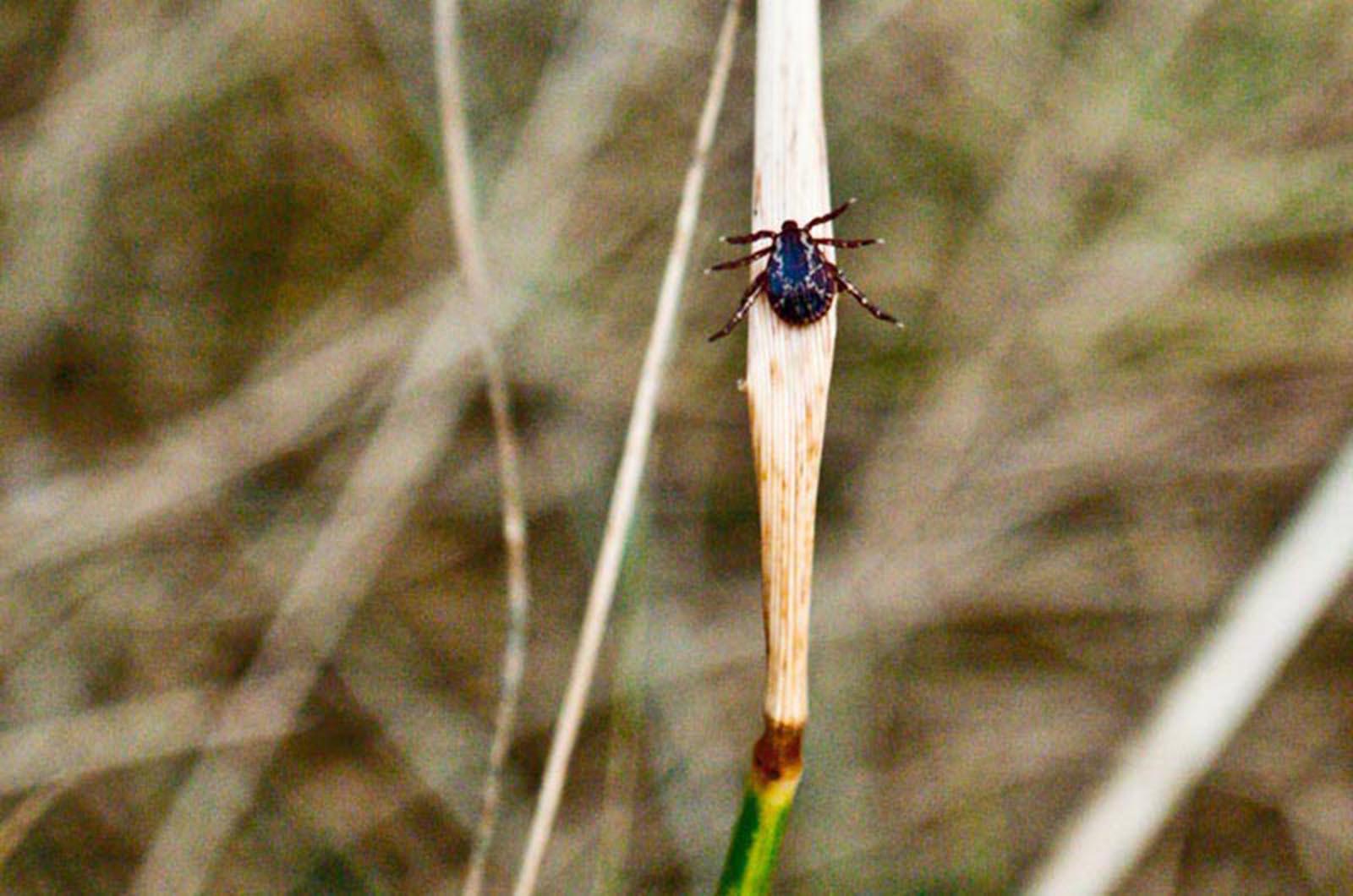
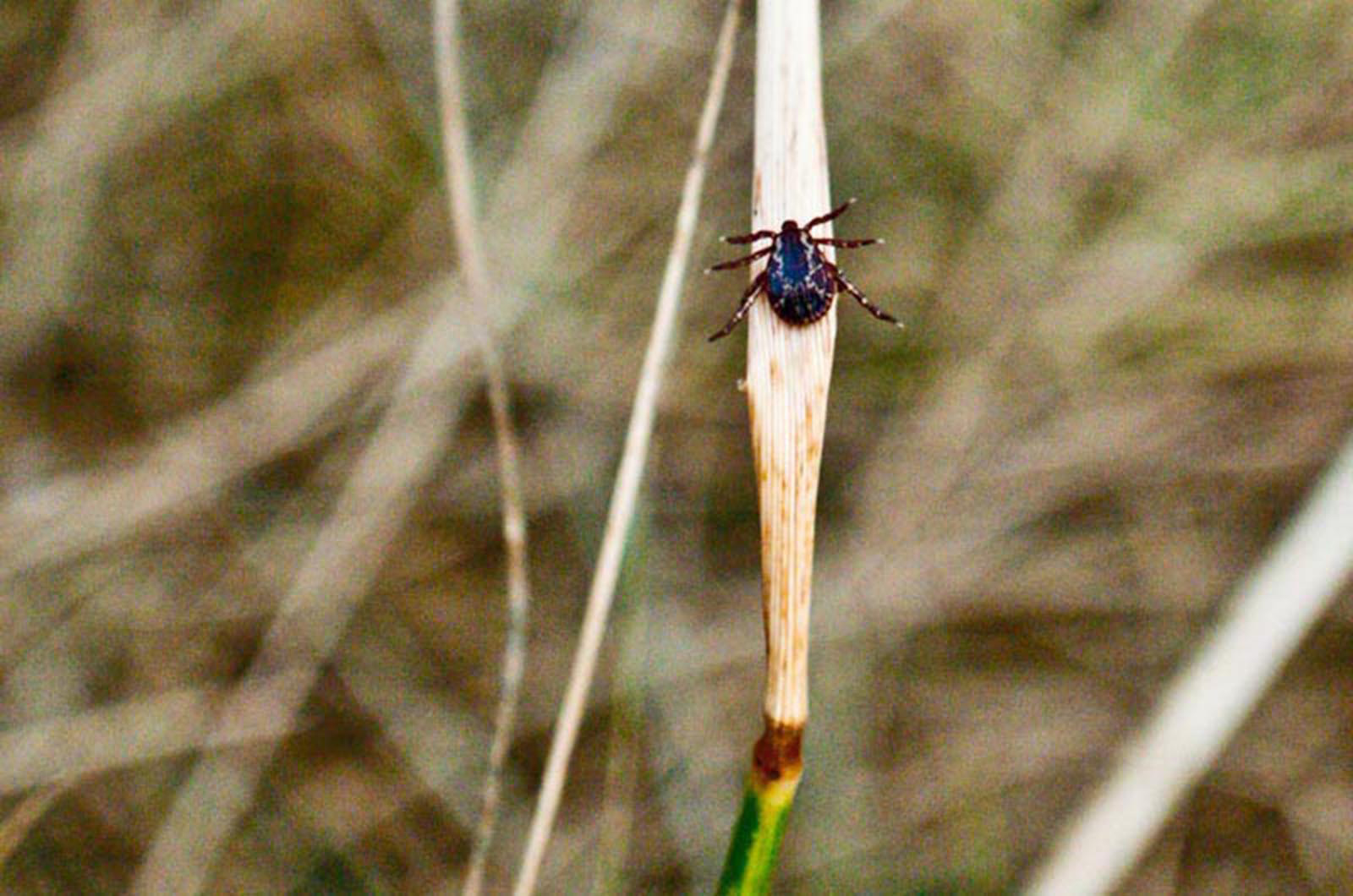
A team of researchers from the University of Massachusetts Amherst say they have come up with a more accurate way to test deer ticks for Powassan, a rare virus that has been found in pockets around the Island.
Researchers have developed a better way to detect an emerging tick-borne illness after surveying hundreds of ticks on the Vineyard and Cape Cod.
A team of scientists from the University of Massachusetts Amherst say they have come up with a more accurate way to test deer ticks for Powassan, a rare virus that has been found in pockets around the Island. The scientists believe the new testing method could be adopted to get a better picture of how widespread the virus, which can lead to fatal encephalitis, is across the country.
Powassan was first reported in the 1950s in a child who died of encephalitis in the town of Powassan, Ontario. The first Powassan virus case to be reported in the U.S. took place in 1970.
In 2023 there were 44 cases in the U.S., with Massachusetts leading the way for any single state with 10 cases.
According to the Centers for Disease Control and Prevention, many people who are infected with Powassan virus do not have symptoms, but it can cause an infection of the brain or the membranes around the brain and spinal cord. If a severe disease does set in, approximately one in 10 people can die, the CDC reported.
No human cases of Powassan were found on the Vineyard in 2023 and there has only been one case here since 2004, but the UMass study by the university’s microbiology department found a handful of ticks in Edgartown with the virus. The findings build on previous studies that show Powassan continues to have a foothold on the Island, even though human cases have been few and far between.
In the recent UMass study, seven sites on the Vineyard were surveyed in addition to eight on Cape Cod. The highest number of ticks with Powassan was in Truro, where 12 ticks, or about 10 per cent of the ticks surveyed, tested positive for the virus.
“We were surprised to see some of those incidences were quite high,” said Stephen Rich, a UMass professor involved in the study and the executive director of the New England Center of Excellence in Vector-borne Diseases. “That seems really high to us, because we don’t see that many people manifesting the disease.”
The new testing method is a real-time PCR method, which was matched up against more traditional testing. The new design reduces the risk of false positives and negatives and is an improvement over the current detection methods, according to the UMass study released last month.
With this more accurate testing tool, Mr. Rich said he would be interested in learning about how the number of ticks infected with the virus correlates to Powassan in humans. Such widespread testing rarely occurs, even for more prominent tick-borne diseases.
“We are not routinely testing people for it and seldom testing ticks for it,” he said. “We don’t know what that distribution looks like.”
For Patrick Roden-Reynolds, head of the Dukes County tick prevention program, Powassan has been a lower priority, with cases of Lyme disease and babesiosis seeing much higher rates on the Island.
“It’s something we’ve known about for a while,” he said. “It’s so rare in the ticks that it doesn’t translate to many human disease cases.”
Mr. Roden-Reynolds added that he met a person at last year’s agricultural fair who told him they were one of the handful of cases.
“It’s definitely something to keep an eye out for,” he said.
So far, during surveys this spring, fewer ticks have been found compared to 2023, though that could be attributed to the season’s initial wet weather.
But no matter the type of disease and transmission rates, Mr. Roden-Reynolds urged people to prioritize prevention. Covering up your skin in grassy areas, wearing insect repellent, treating clothes with permethrin and checking for ticks after trips outside can drastically cut down the risk.
“It’s all about before the bite and preventing the bite,” he said.
Comments
In the Summer of 2021 a team
Clarissa Oak Bluffs, MAIn the Summer of 2021 a team of medical professionals at Mass General tested my mother for Powassan. She had a mystery illness that led to encephalitis. She almost died. It turned out to be Powassan. My mom lives in Oak Bluffs and had not gone further from her backyard and down island beaches that summer.
Thank you for sharing this
Brian OBThank you for sharing this information. What treatment did your mother receive?
Unfortunately as far as we
Clarissa Stead Oak BluffsUnfortunately as far as we know there are no treatments for Powassan. She was very lucky to eventually recover from the encephalitis. She then spent a month recovering at mass general and then another month in a rehabilitation center learning to walk and move her body properly. She has continued with physical therapy here on the island. No other treatments are available as far as we know. No one seems to have any information about the disease. She is doing very well compared to how sick she was in the beginning but she does have isolated muscle loss and a few other strange long term side effects that make her day to day difficult.
Thank you for the informative
Betsy Oak BluffsThank you for the informative article. I was wondering if this disease had made it to the Vineyard. Probably a more informative photo for it would be a deer tick / black-legged tick though, since they are the species that transmits the virus.
Yes, accurate photographs are
Jane Norton ChilmarkYes, accurate photographs are required, given the lone star tick is now embedded on the island. I found the first dog tick on me today which looks like the photo. However, I read the article and know only deer tick/back legged ticks carry Powassan - I think?
Terrifying.
Tom Engley West TisburyTerrifying.
Are their doctors on island
Betsy Dripps West TisburyAre their doctors on island or in Boston that specialize in tick borne diseases?
I hope the doctors at MVH are
Carla A Cooper EdgartownI hope the doctors at MVH are paying attention. We should to have to beg to be tested for tick borne illnesses.
I don't hunt anymore but I
Charlie Callahan So Boston/EdgartownI don't hunt anymore but I think they should have a year round season on deer hunting. And the meat can go to the elderly and the food banks There are probably more deer per sqaure mile here than people and the deer are infested with ticks. I've known a lot of people with Lyme disease her and it is a terrible disease and this new thing is probably as bad if not worse,
The deer should be eradicated
Albert GosnoldThe deer should be eradicated.
Add new comment