

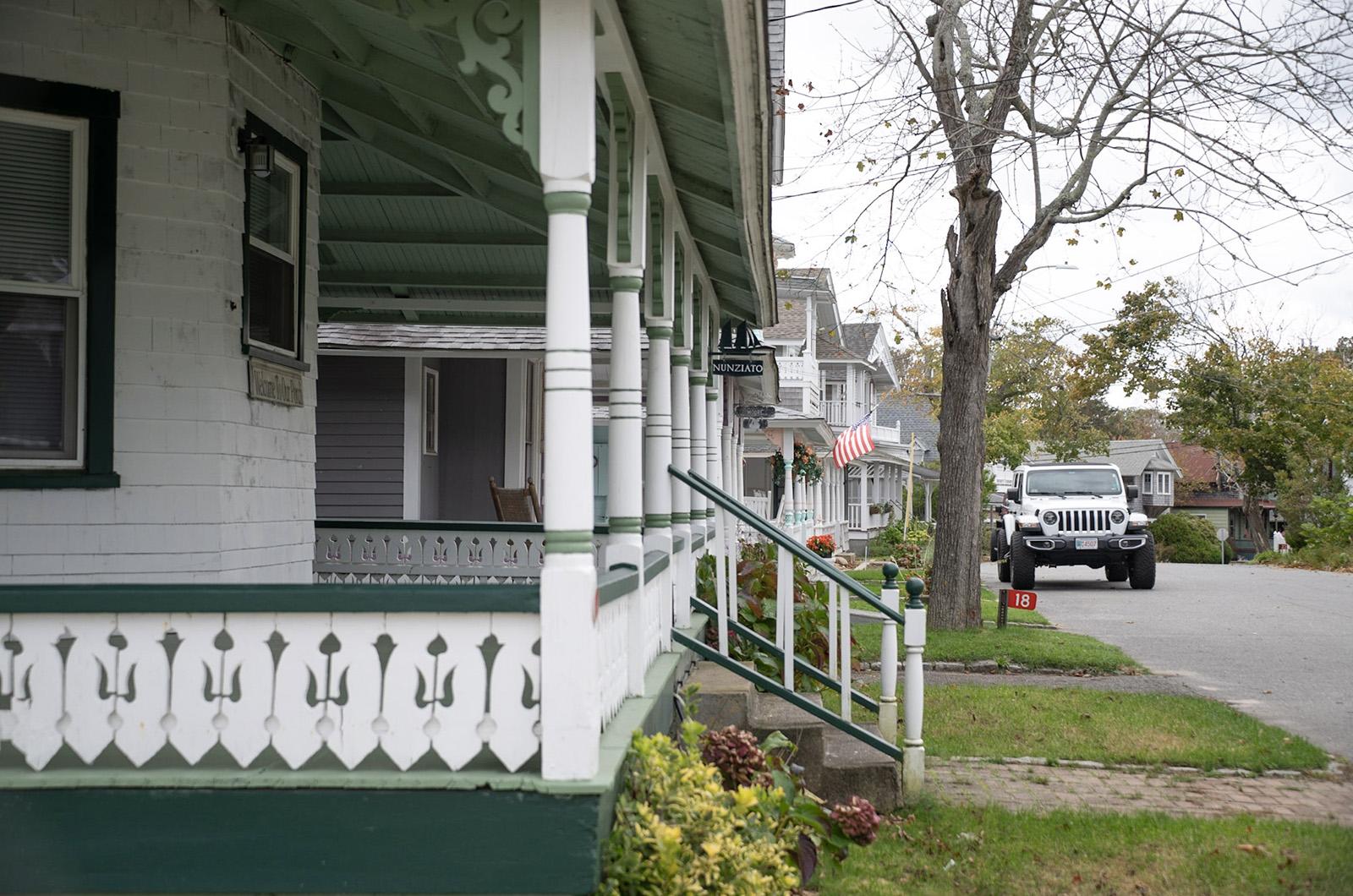
A state Land Court ruling last week involving a Nantucket rental home could set a precedent for how municipalities on the Vineyard handle vacation rentals, Vineyard officials said.
A state Land Court ruling last week that could shake up how short-term rentals are regulated across the state has Vineyard eyes turned toward Nantucket.
On Thursday, Land Court Judge Michael Vhay ruled that short-term rentals aren’t expressly allowed as the primary use for a home in Nantucket’s residential old historic district. He sent the issue back to the island’s zoning board of appeals to determine whether rentals constitute an accessory use.
The decision, in a case brought by a neighbor of a property used as a short-term rental, could set a precedent for how municipalities handle AirBNBs and VRBOs, several Vineyard officials said, though legal experts expect it will take time for the ruling’s effects to play out.
“It is close to home,” said Edgartown attorney Ron Rappaport who serves as town counsel to five of the Island towns. “It has direct relevance to us.”
Like Nantucket, the Vineyard has had a long history as a vacation destination, and short-term rentals have been a source of contention as the housing crisis on both Islands intensifies. Here on the Vineyard, there are more than 3,800 properties registered as short-term rentals and hundreds operate in residential districts, a proposition that now lies in legal limbo.
The Nantucket case revolved around a dispute over a Wellesley couple’s rental home on the island. In 2021, Catherine Ward sent the Nantucket building commissioner a letter asking him to stop her neighbors, Peter and Linda Grape, from renting their home on West Dover street.
She claimed that such a rental was an illegal commercial use of a property in a residential district. The building commissioner denied Ms. Ward’s request and the town’s zoning board of appeals backed the rejection.
Ms. Ward appealed the case to the state Land Court, where it landed in front of Judge Vhay. He determined that short-term rentals cannot be the principal use for a primary dwelling under Nantucket’s zoning, though they could be allowed as an accessory use.
Accessory uses, according to the town’s zoning, are subordinate to the main use of the home.
While there have been other court rulings on vacation rentals, Mr. Rappaport told the West Tisbury select board this week that this one hits closer to home because Nantucket’s zoning is so similar to the Vineyard.
“Nantucket’s bylaw is almost identical to our bylaw,” he said Wednesday.
Like Nantucket, none of the six Vineyard towns have zoning that explicitly allows short-term rentals as a primary use in residential areas. Nantucket’s zoning does allow for some business activity as an accessory use, and Judge Vhay ordered the zoning board to reconsider if the Grapes’ home would fall under that distinction.
The potential for a similar challenge on the Vineyard puts short-term rentals on shaky ground.
The Nantucket decision has raised concerns with West Tisbury officials, who have a general bylaw on the spring town meeting warrant that limit owners to renting only one property as a short-term rental for a minimum of seven days. Owners would also have to reside at the property for at least 30 days a year.
The Grapes argued in the Nantucket case that the town did have regulations on short-term rentals in the form of a general bylaw, which means they are allowed under zoning. But Judge Vhay said a general bylaw doesn’t supersede a zoning regulation.
“In fact, the law points in the other direction: if a municipality regulates activities through its zoning bylaws, it may adopt general bylaws that supplement zoning regulations, but not contradictory laws,” the judge wrote.
That language had the West Tisbury select board wondering what to do with the general bylaw article that is already on the April 9 town meeting warrant.
The town meeting date is too close to get a zoning bylaw on the warrant, though Bea Phear, the chair of the town’s short-term rental committee that worked on the proposed new regulations, suggested bringing zoning changes to a fall town meeting.
“I wish we had done this as a zoning bylaw,” she said. “It would be much cleaner if we had.”
Other attorneys weren’t so sure that the Nantucket decision was as much of a bombshell as initially believed.
Jessica Gray Kelly, a partner at the Boston law firm Freeman Mathis & Gary, has studied the Nantucket case and written about a previous case in Lynnfield that is one of the foundational rulings on short-term rentals.
In the Lynnfield case, the state’s Supreme Judicial Court ruled that short-term rentals were not allowed as a matter of right in single-family zoning districts. But that decision also noted that a different result was possible in other circumstances, depending on what towns’ zoning allows and what is considered a customary accessory use in each community.
Nantucket’s economy, like the Vineyard’s, is built on tourism and seasonal visitors who stay in short-term rentals and spend money at local restaurants and shops.
“In Nantucket, unlike Lynnfield, short-term rentals are customary,” Ms. Kelly said.
The more pertinent issue for Ms. Kelly is whether homes that are used as short-term rentals — but never actual residences for their owners — would qualify under the accessory use definition.
“The harder question for [Nantucket] and the ZBA will be explaining why short-term rentals are ‘subordinate’ to a primary use, where many owners of short-term rental properties may not actually use the property themselves,” Ms. Kelly said.
If Nantucket can clarify why short-term rentals should be permitted as an accessory use, Ms. Kelly believed the Land Court would uphold that decision.
Mark Leonard, chair of the Oak Bluffs affordable housing committee, said other towns were watching the Nantucket case as they try to wrap their heads around what to do about vacation rentals on the Vineyard. Both Oak Bluffs and Tisbury are planning to do assessments of short-term rentals in their towns.
Oak Bluffs voters will consider an article at the spring town meeting that would dedicate $50,000 toward the assessment, which would look into whether the town needs more regulation and, if so, the best way to go about that.
The Nantucket challenge to short-term rental’s status quo leaves a lot of uncertainty, Mr. Leonard said.
“It’s one of those unknowns,” he said. “It’s all pretty much new territory for everybody.”
But as town meetings approach, Vineyard officials will keep looking east.
“We’ll be watching this for a while,” Mr. Rappaport said. “We’ll see how they come out.”
Comments
Since short term rentals
Serious questionSince short term rentals existed for a century or so before most zoning, how is it even a question? I mean, just check the Time Machine in this paper
3,800 homes that could
Pearl3,800 homes that could otherwise house the teachers, police, nurses, trades people, neighbors, friends, and family we are voting “off the island” every day we allow illegal short term rentals to ransack the heart and soul of our community. The only place our young people can go from graduation if they want a chance of living independently is anywhere but here.
Pearl,
Laurie OBPearl,
Without short term rentals we won’t need all the housing for police, fire etc…out economy is driven by tourism, always has.
But Pearl you are making the
tom BostonBut Pearl you are making the assumption we all should get to live were we were born or raised. That is just not the reality. I think the Vineyard has less a supply issue than a demand issue. It's an island and a very expensive one. Bring on a high speed commuter ferry from WH.
I also think if all these homes are eliminated form rental market, many of the professions you cite won't be able to afford to buy them anyway. And if they are turned into long term rentals, the rents would be exorbitant. Prices would have to crater and if they do, the wealthy will scoop them up quickly and not rent them. If I owned a restaurant I would be incredibly nervous about all of this. The STR tax has already eaten into demand.
This is about private
Jen EdgartownThis is about private property. This is a slippery slope we are going down. Now they want to limit how many house party gatherings we can have… my god with all the other problems we have really???
This is a very informative
Ken Monahan Edgartown & Sanibel Fl.This is a very informative and well written article. Great journalism!
Residential areas should just
Jim MVResidential areas should just that. There are some wealthy people from Boston that buy up properties for the sole purpose of renting. That is a commercial use of the property and the zoning regulations should be clearly written and understood not allow that use.
Short term rentals need to be defined clearly before we can develop appropriate rules. Many communities in vacation areas define short term as 28 days no less as an example. What do we want to accomplish for our island? No one would argue that there are to many people here in the summer. It leads to not enough workers and over use of are island. In addition it pushes housing for islanders to unaffordable heights.
It’s time for the adults in the room to say our current spot and trajectory is not right.
Time to pass zoning laws and town bylaws that greatly reduce home usage in residential areas. We are past the point of making everybody happy.
"Time to pass zoning laws and
Albert Gosnold"Time to pass zoning laws and town bylaws that greatly reduce home usage in residential areas" Homes in residential areas should be used less? Less than than six months a year?
Is it time to pass more and more rules and regulations on how people may use their private property?
We are past the point of making anyone happy.
Why do homeowners that rent
Robbie OBWhy do homeowners that rent their home out more than two weeks per year pay the same property tax rate of non renters? I understand the new tax on rentals in Massachusetts but that’s only on a percentage of the rent and it’s seasonal. Plus the state gets a portion of this. If you are a business (which you are if you are renting out your home more than two weeks a year). Then your home should pay commercial property tax rate and the town should regulate how many of these properties are allowed per town. And before everyone reacts, you grandfather existing rentals homes that are registered with the town(but not from the commercial property tax). If the home sells then it’s subject to the maximum homes allowed to rent and might not be available to as a rental for the new home owner. That’s how you protect future generations and to make sure the island does not become a majority airbnb’s with no community. If everything keeps going the way it is, the island will become majority rental homes. Do the math.
The STR tax is hefty. Further
tom BostonThe STR tax is hefty. Further, people that rent their homes out pay significant taxes and they use very few of the services (esp the schools). Personally, I think you could continue to let homeowners who rent their homes out for a few weeks each summer (going on for decades) but limit the airbnb surge. 1) treat rentals less than one week differently and 2) limit the amount of rental properties used for STRs to one per owner.
Why do seasonal homeowners
Mark EdgartownWhy do seasonal homeowners pay a higher real estate tax than year round homeowners in some towns even though they are using the island’s infrastructure a fraction of the time?
Property taxes are based on
Albert GosnoldProperty taxes are based on the fair market value of the property, not it's occupancy.
Actually, each of the island
Bruce Stone EdgartownActually, each of the island towns' commercial property tax rates are the same as the residential property tax rates.
This is very important issue
Gary EdgartownThis is very important issue to watch. This could kill our economy as we know it. If you want a small fishing village you should move there. Why do some people want to ruin a good thing?
Whether your a police officer, nurse, trade worker you name it…. You have a job because of the folks that vacation here… it’s that simple.
I don’t understand some
Tina EdgartownI don’t understand some people’s comments? Take away rentals equals less tourists. Is that what you want?? Then there will be no need for affordable housing, as well as the plumber, electrician, health workers, first responders etc…
Be careful what you wish for.
ok....all the lawyers using
Michael edgartownok....all the lawyers using their home as a business. gone....plumbers, electricians, tradesman...doctors dentists real estate people using their homes for business? are you just going to single out vacation homes as businesses? you are absolutely crazy...see you later, rental, tax and tourism....you are nuts
Governent should stay out of
JJGovernent should stay out of regulating housing. Rent increases are direct results of the government policies. Why does everything have to be regulated? Just leave people alone. It is their property, owner should do what they want. Short term rentals have been in existence for hundreds yrs. Stupid things like zoning laws and regulations are causing the housing crisis. Most non-western countries allow mix-use zoning and western socieities needs tobadopt that. Many asian countries people live where they work. No money, time wasted in commuting and that cuts emission forbyou tree hugging liberals
"It is their property, owner
Albert Gosnold"It is their property, owner should do what they want."
Sell booze?
Weed?
Ten occupied beds per bedroom?
Rent mopeds?
Should the Island have no zoning laws?
Florida style twenty floor beachfront condos?
"forbyou tree hugging liberals" are the vast majority.
Does your animosity come from your deep island roots?
We need to enforce
Jenny VHWe need to enforce residential zoning to prohibit short term rentals (a commercial use). If we do this, prices will moderate and we won’t need a transfer tax to fund new affordable housing. We will preserve the island character without needing to build more housing.
I'd like to try this plan. I
PearlI'd like to try this plan. I vote for Jenny.
My family has been renting
Albert GosnoldMy family has been renting out our Island house when we we are not there. Should we be stopped?
The "island character" is
OB Resident Oak BluffsThe "island character" is that we are a tourist/vacation destination. "Big Corporations" are not buying up the island for rental houses. That sentiment is pure ignorance. Summer people, both those that rent and those who merely have a summer place for their family pay 80 per cent of all real estate taxes. There are no teachers, police, EMT's, hospital staff or town workers without them. It's time we start to thank them rather than complain about them.
OB resident is 100% correct.
VH resident VHOB resident is 100% correct.
The short term rentals allow us to stay in our houses, do upgrades, pay our taxes and enjoy our community for nine to 10 months out of the year. We do need to thank them. They are ones that pay the short term rental tax and fund a portion of our budgets throughout the year.
It is pure ignorance that corporations are buying up houses and renting them out. On the island, there are many island families that have been “forced” to create a S Corp or LLC in order to keep their real estate protected and for family planning purposes. A lot of these houses are in family trusts to protect them. They are not large corporations from off Island that are coming just to rent out houses on Martha’s Vineyard to make a buck. It’s not profitable enough for them. Vineyard Haven’s high real estate taxes, cleaning fees, fixing broken items, lawncare, common maintenance/ long range planning (roof, equipment replacement for HVAC / windows), etc are not enough for large corporations to invest in our towns. But it is a source of income and a way for island families to keep these houses in the family for future generations.
Pass a bylaw that bans short-term rentals and you will find wealthy people purchasing these homes (as second or third homes) and not renting them or making them available to anyone on the island. It will be reserved for their family, friends and their staff for overflow on vacations and holidays.
To clarify my comment: I
Jenny VHTo clarify my comment: I support people owning a house, spending a month (or more) living in the house themselves, and renting it for another month in the summer. What is causing harm is people (and LLCs) buying houses solely as an investment and renting them for the entire summer with no intent to live in the house themselves. That’s a commercial use, period.
dear anti rental crowd
Michael edgartowndear anti rental crowd
the only way I can afford my home is to rent it out in the. summer.....I dint have a trust fund, or rich parents who left me all I have
thank you very much
Michael
Weekly rentals have been the
maleeka ob and baltimoreWeekly rentals have been the norm. Renting by the day is a commercial use (like a hotel) and should be limited to commercial property. My family didn't buy next to a hotel as we chose a residential neighborhood. If you bought a home based on the rules in place and its more than you can afford, it was a poor decision.
Amen - like many of us.
Mike SomewhereAmen - like many of us.
I applaud the efforts to
Amy EdgartownI applaud the efforts to regulate the STR market! It’s out of control and the island community is loosing. Yes, there has “always” been a degree of STR and will likely always continue to be, however the major change is the sharp increase in properties now being bought & used solely for this purpose. Previously, an island family might move into their garage apartment or camp for the summer and rent out their house for income. In that case, you still have a stable island family, as an integral part of the year round community. You also had “summer residents”. Families who would come for the entire summer and stay in the same house, same family, year after year. Contributing to the community. What you have now is anonymous property owners and anonymous short term renters. And sadly, a lost community.
Exactly Amy. I have said and
PearlExactly Amy. I have said and will keep saying, "If you don't think there is a problem, it is because you are the problem". No one wants to hear they ruined the good thing. If they think "today" is the good thing, then they'll never have a clue.
You’re correct Amy but the
Thanking Amy The VineyardYou’re correct Amy but the difference here is short term rental regardless of knowing them or now. It’s the definition of short term. Most communities state anything less than 28 or 30 days is considered short term. Regardless of the anonymity of a short term renter, the high cost of the island has taken those all long summer renters and forced them elsewhere ( less costly vacation places).
We have the same issue here
Mark Paris, FranceWe have the same issue here in Paris. If people wish to invest in a property for the high yield airbnb market, then the property is commercial. And it's upto the zoning authority to decide on the parameters of commercial zoning. Having anonymous short term vacationers moving in and out of the house next door to me in my residentially zoned home, every few days, is obviously a no no.
People just don’t seem to
Mike B UpislandPeople just don’t seem to understand that more regulation simply means higher housing costs for everyone. The Land bank and soon affordable housing fees simply make real estate prices higher (and they are at least loosely trying to accomplish the opposite things!). If you add these two together and include a broker commission your round trip real estate transaction costs amounts to around 10%…..which makes home prices go up more…all else being equal. Regulation on the economics of real estate has the same impact….rents go up, vacancy goes down, and prices go up. These things simply accelerate the inevitable….higher prices. Everybody loves the island because it is a unique and beautiful place…..and it is an island….meaning that supply is limited. Nothing can stop increasing demand and increasing prices. 20% of the tax dollars have 80% of the voting power and if you spend you time trying to create regulation that hurts that 80% you will end up hurting all of us even more…. It is a reality everywhere in the country….you cannot simply choose to live wherever you want…..you have to be able to pay for your lifestyle decisions.
Add new comment