


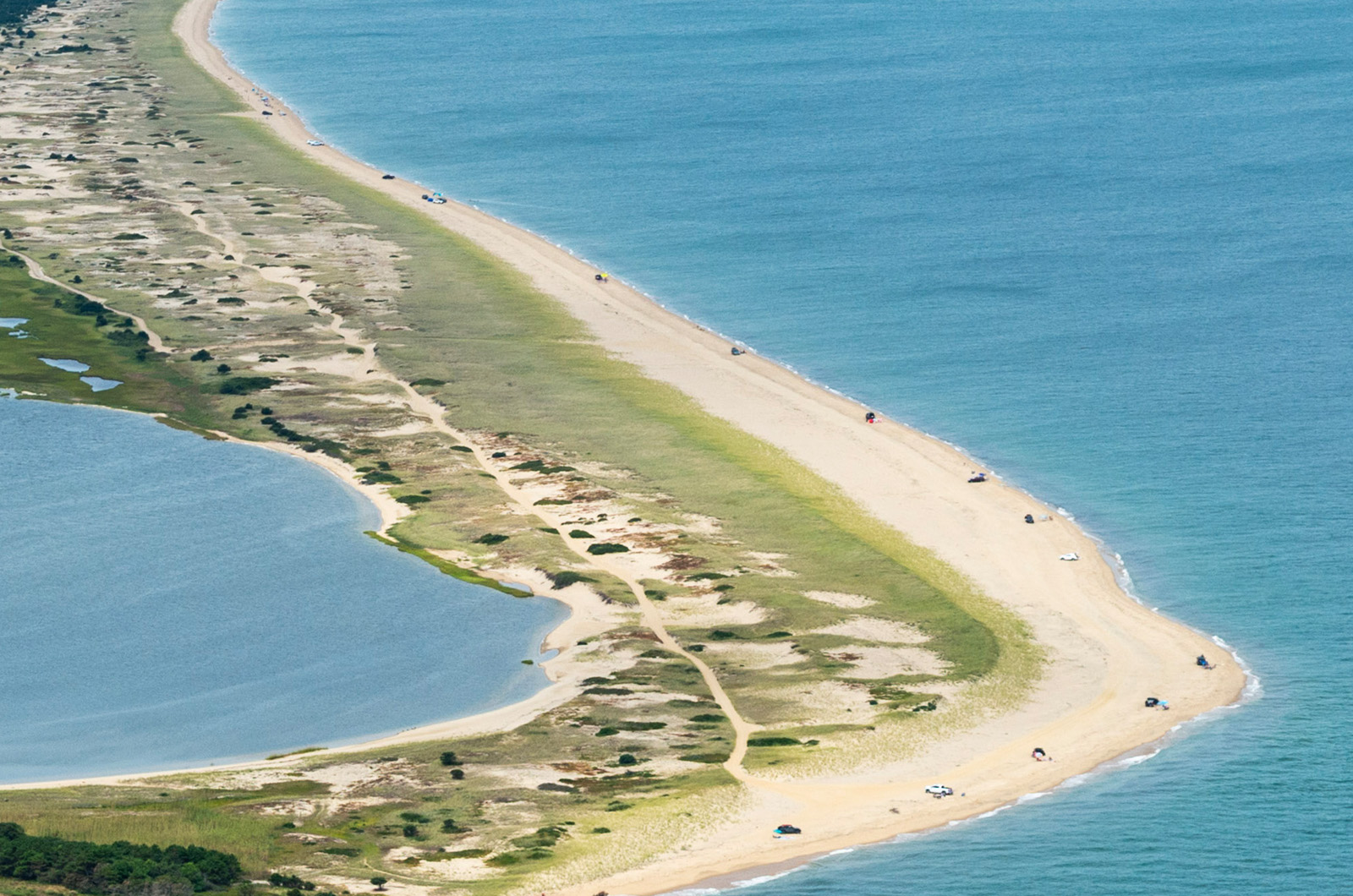
Located on the furthest, most immaculate tip of Chappaquiddick, Cape Pogue Wildlife Refuge is home to salt marsh, coastal cedars, endangered shorebirds and some of the best recreational fishing the Vineyard has to offer.
Located on the furthest, most immaculate tip of Chappaquiddick, Cape Pogue Wildlife Refuge is home to salt marsh, coastal cedars, endangered shorebirds and some of the best recreational fishing the Vineyard has to offer. Save for a few scattered houses, the property is untouched by development, although withered by persistent winter storms and erosion.
In recent years, the beach has also become a battleground.
For decades, The Trustees of Reservations has sold oversand vehicle permits to access its Chappaquiddick properties on Leland Beach, Wasque Reservation and, until last year, Cape Pogue. In 2022, the statewide land nonprofit returned to the Edgartown conservation commission to renew its program, kicking off a lengthy, embattled review process. Nearly two years later, the two parties are nowhere closer to a permanent consensus, and the road forward has only gotten bumpier as town officials, abutting residents and recreational beachgoers all spar over who can drive over the dwindling barrier beach.
Recently, the debate has become personal. In a conservation commission hearing Wednesday, Cape Pogue resident Rachel Self, who has long sought to limit OSV access on Chappaquiddick, said she has received hate mail and threats to her safety from OSV advocates. Earlier this month, Ms. Self filed an application to allow five fishermen to share her beach access during the Martha’s Vineyard Striped Bass and Bluefish Derby. The move has been criticized as impractical and disingenuous by Derby fishermen looking to restore wider public access.
OSV access as become a heated issue.
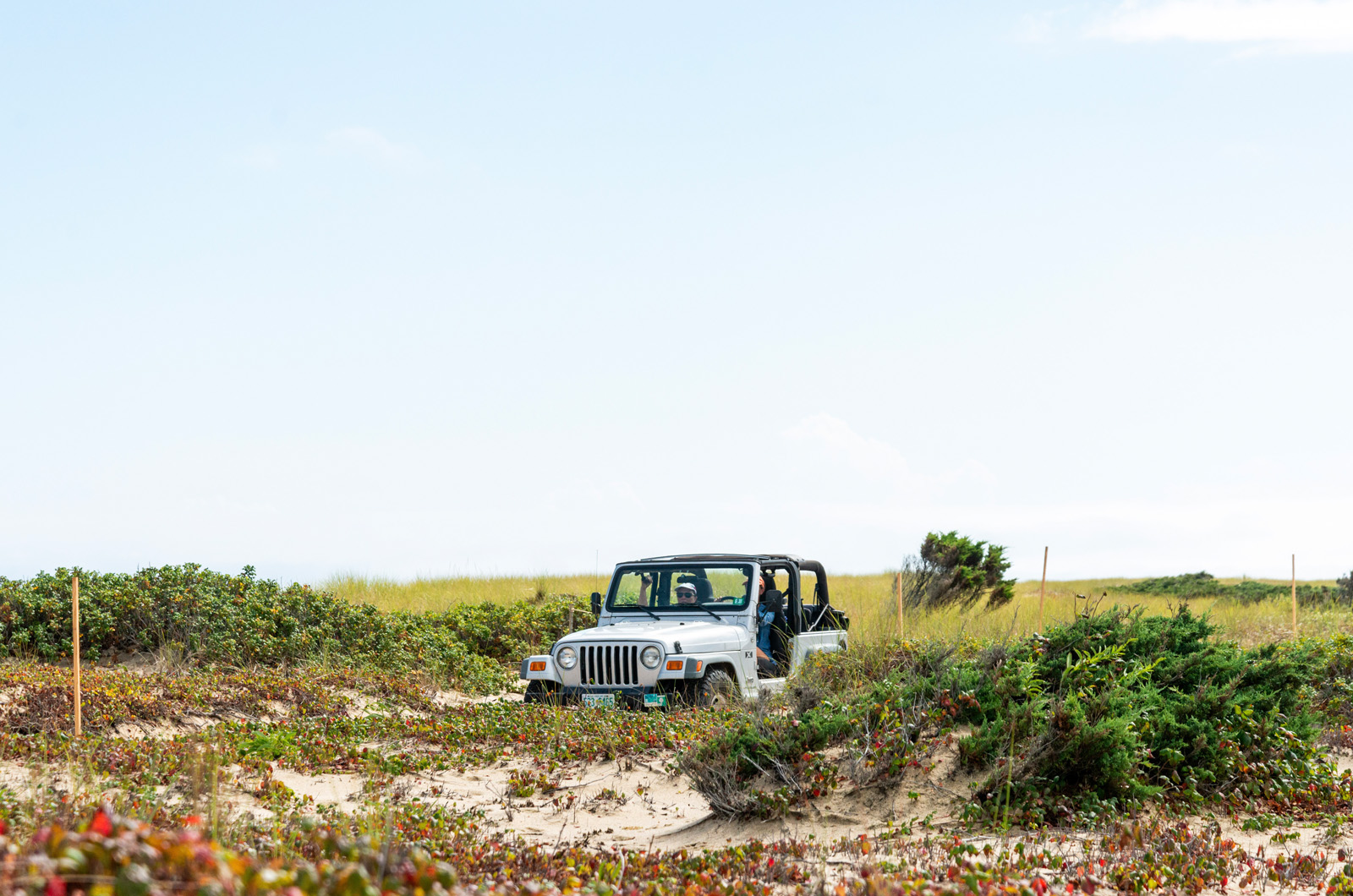
OSV access as become a heated issue.
Last month, the dispute hit another speed bump when the Edgartown planning board realized that a 1990 special permit that helped enable OSV access was nowhere to be found.
“To date I don’t know if we’ve seen a copy of the final approval by the planning board,” planning board member Doug Finn said in a recent meeting. “We can’t find the special permit itself.”
What the board does know is the permit was approved on condition that the Trustees undergo an annual review to reconsider management practices. In the 30-plus years since, there’s no evidence any such review took place, although the Trustees have returned periodically for specific projects. The issue now goes to town counsel, who has been asked to determine whether the Trustees will need to start over their application from scratch.
Talking to both abutters and OSV users today, each side seems to recall a bygone era when consensus came more easily and the Island community came together more readily. Vehicles have driven out to Chappy since the post-World War II era, predating the Trustees’ management. Until recently, Ms. Self said her family had peacefully coexisted with the Trustees for decades; her grandfather originally donated land at Cape Pogue to the Trustees in the 1970s. Lisa Belcastro has fished on Chappaquiddick for more than 30 years and said tensions have only begun to flare up in the past several years.
What documents remain surrounding the 1990 beach management plan and its approval seem to uphold this rosier view of days past. The plan itself is comprehensive and includes detailed financial plans, a professional land survey, a human impact survey and other environmental data. On its final page, it bears the signatures of surfcasters, shellfishermen, Chappy property owners, and conservationists alike.
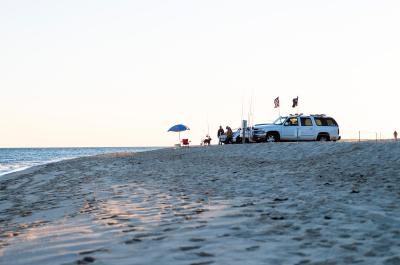
Fishermen want to maintain access to popular spot.
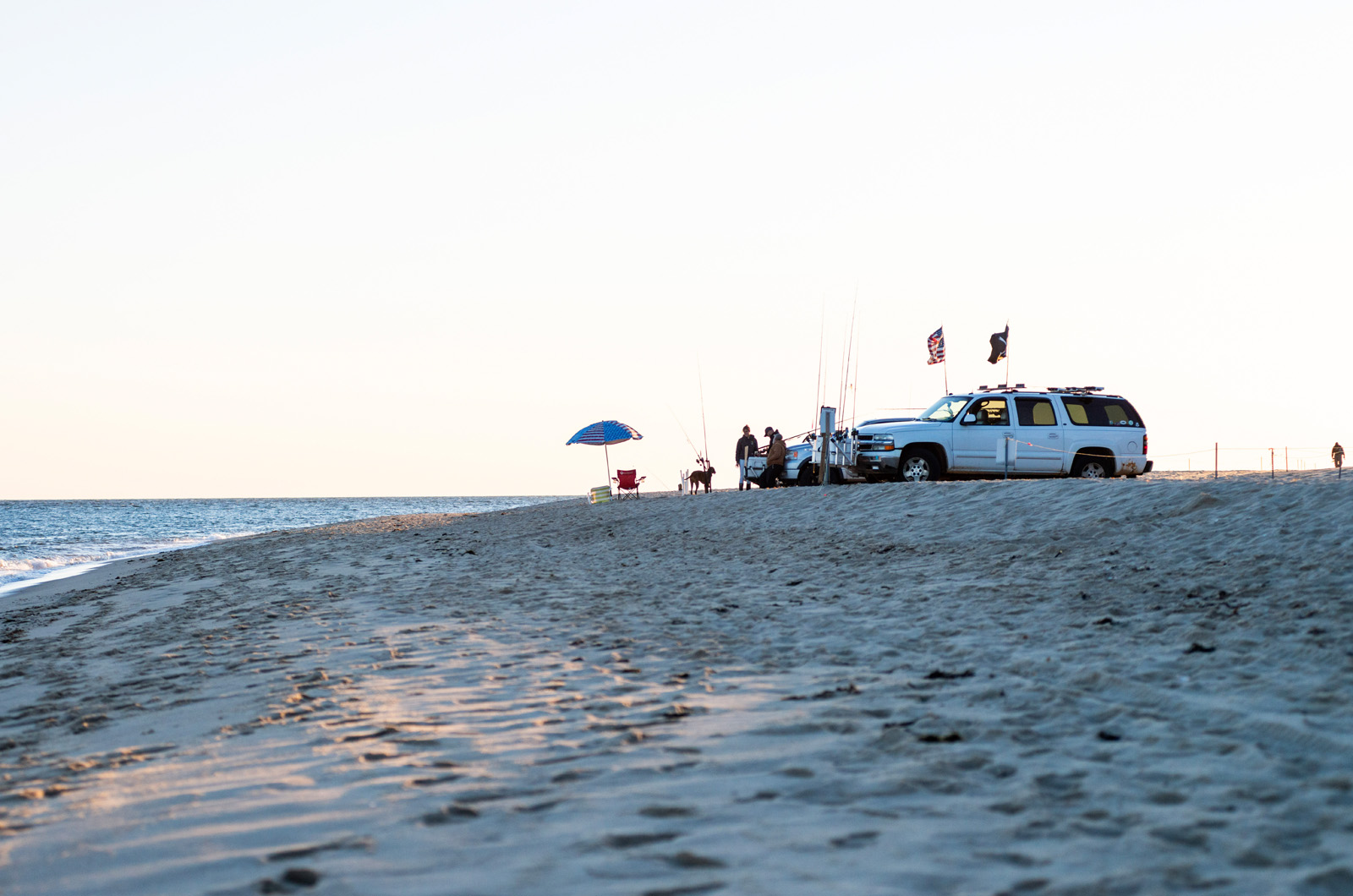
Fishermen want to maintain access to popular spot.
Tom Chase remembers things differently. Having worked as an ecologist for the Trustees from 1985 to 1994, Mr. Chase said today’s debates are just a new manifestation of the same problems that have confronted the Trustees for decades, even though the official documentation may paint a more harmonious picture.
The early 1990s were a time when the state and federal government began to take a harder look at ecological conservation, particularly regarding endangered shorebirds that inhabit Chappaquiddick and other parts of the Cape and Islands. Piping plovers, in particular, were known to nest in the coastal dunes and had the inconvenient habit of nesting in the deep tire tracks left behind by oversand vehicles. In 1993, the state mandated OSV trail closures during shorebird nesting season in an attempt to save the diminutive birds from the brink.
Since then, OSV users and conservationists have found themselves in different camps, Mr. Chase said.
As a land manager whose conservation budget is supplemented by OSV permit sales, the Trustees are somewhat straddled between those two camps. Last year, the Trustees sold 1,531 OSV permits for its Chappaquiddick properties bringing in an estimated $336,000 in revenue. Even so, the Trustees have reported operating at a deficit of $300,000 on Chappaquiddick, which it covers with a mix of state funding and philanthropic support.
“There’s no better way to sow discord in a community than to make two groups who formerly trusted each other not trust each other,” Mr. Chase said.
Edgartown and Trustees of Reservations continue to spar over the issue.
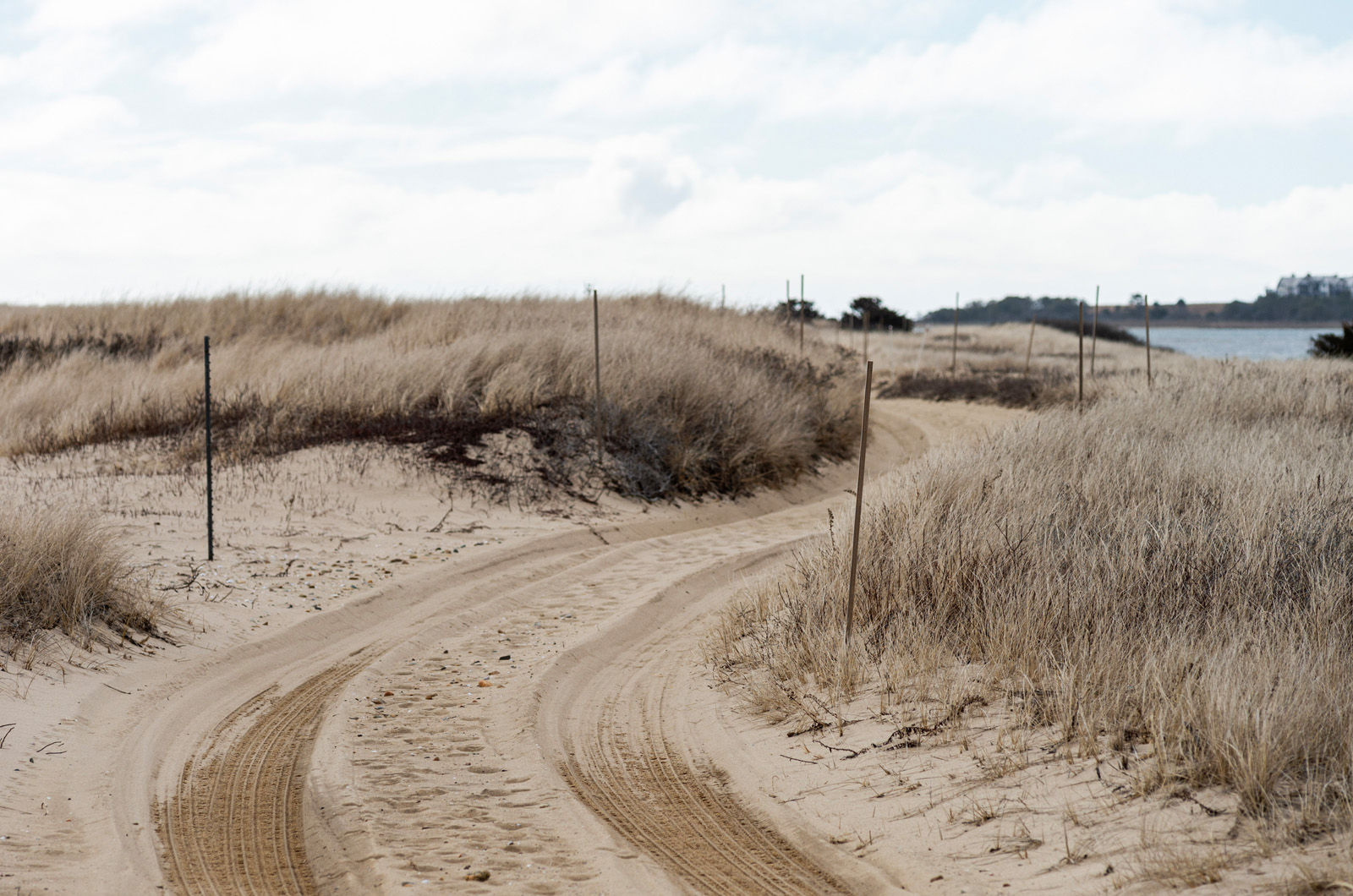
Edgartown and Trustees of Reservations continue to spar over the issue.
That discord often played out directly on the pristine shores of Chappy. In 1992, Mr. Chase hired biologist Luanne Johnson to oversee endangered shorebird monitoring on Chappaquiddick. The following summer was the first summer the state mandated OSV beach closures to protect piping plover nests, and Ms. Johnson was the person in charge of enforcing those closures.
“People screamed and yelled at me,” she said. “They’d yell at me on the Chappy Ferry and I’d roll my window up in their face.”
“’Piping plover tastes like chicken’ was a popular bumper sticker around that time,” she added.
After three years, Ms. Johnson said she eventually left the Trustees because she could not handle the ideological strain between conservation and recreation. But even in the face of such vehement backlash, Ms. Johnson said she always felt supported by Trustees leadership at the time, support she said has waned over time.
“In my conversations with current shorebird staff . . . I hear that their lives are much more contentious within the organization than when I was a shorebird person,” she said.
Ms. Johnson added that she believed the current Islands director, Darci Schofield, has worked harder to bridge that gap.
Former Trustees Islands superintendent Chris Kennedy also attributes today’s apparent breakdown to a change in leadership. For more than 30 years, Mr. Kennedy ran operations on Chappaquiddick before his retirement in 2020, providing the final sign-off on the 1990 beach management plan.
In the past five years, he said, most of the organizations’ longtime employees have left or retired, leaving little institutional memory intact. Recently, the Trustees have also encountered wider structural problems. In 2022, former CEO John Judge stepped down after just eight months on the job. Earlier this year, the organization laid off 10 per cent of its staff, including one Vineyard employee, due to “ongoing multi-million-dollar structural deficit.”
The personnel shakeup has in turn hurt the organization’s relationship with the Vineyard community, Mr. Kennedy said.
“We really did work overtime building a relationship with our neighbors,” he said. “That clearly doesn’t exist right now.”
That’s not all that has changed. When Mr. Kennedy served as Islands director during the first Dike bridge replacement in 1993, he was a vocal advocate for limiting OSV access on Chappaquiddick, claiming the delicate beach could not handle increased traffic from a vehicle bridge. Edgartown, on the other hand, supported unfettered vehicle access, not wanting to invest in a “bridge to nowhere.”
The town ended up winning out. In 1995, the newly rebuilt Dike Bridge opened to vehicles and pedestrians, eventually becoming the main access point to the Trustees’ Chappaquiddick beaches.
Today Mr. Kennedy’s public position has all but reversed. In conservation commission hearings, he is a frequent spokesman for the Martha’s Vineyard Beach Access Group (MVBAG), an organization dedicated to maintaining historic OSV access to Cape Pogue and other Chappaquiddick properties.
When asked why his position had evolved, Mr. Kennedy pointed to a study on Plymouth
Beach in Plymouth that determined OSV use had negligible impacts on coastal beach compared to natural tides and storm events. He also said OSV activity today is less than what it was in the 1990s.
“The perception may be that there are more vehicles out there, but in reality there really aren’t,” he said.
According to the Trustees’ data, while permit sales have increased since the 1990s, the beaches have not necessarily seen an increase in traffic. In 1993, Mr. Kennedy reported 17,000 vehicles per year on its Chappaquiddick properties before the Dike Bridge had been rebuilt. In 2023, the Trustees’ traffic counter at Dike Bridge reported 25,468 individual trips, or 12,734 vehicles entering and exiting the properties between July and October, the beaches’ peak season.
The barrier beaches themselves, meanwhile, have only diminished in that time. The Trustees’ property on Wasque alone has shrunk from 200 acres to just over 160 in the past 30 years, with the bulk of that erosion taking place in the past 15 years, Mr. Kennedy said.
Town officials have raised concerns about how OSV activity at its current levels might affect the natural resource. Unlike earlier beach management plans, the 2024 beach management plan does not contain any human impact studies or even a detailed financial plan of how the land trust will maintain its coastal properties. In emails to the Gazette, Trustees spokeswoman Mary Dettloff confirmed that the Trustees have not conducted a human impact study for the area since 1990, although there are references to the negative impacts of humans and OSV use in their 2004 beach management plan.
“Based on The Trustees’ long history of ecological scientists and professionals, a human impact study likely won’t tell us anything we don’t already observe or expect in our management of the Chappaquiddick beaches,” Ms. Dettloff said.
As the Trustees continue through the contentious, often-gridlocked review process, the priority stakeholders all seem to share is to preserve the unique character of Chappaquiddick for future generations to enjoy. Whether that future involves bikes, sand wheelchairs, or shuttles remains to be seen.
“I don’t know any fisherman that doesn’t want to preserve Chappy,” Ms. Belcastro said. “We want our kids to be able to fish out there, our grandkids to be able to fish out there.”
“It’s just that special.”
Correction: A previous version of this article misinterpreted Trustees' vehicle data. The article has been updated to distinguish round trips from individual trips.
Comments
Make no mistake: The Cape
Arnold ChappyMake no mistake: The Cape Poge landowners do not seek to protect the environment, they seek to create a private playground on public land. Without OSV access these beaches are inaccessible. I just hope that town money does not go into repair of the Dike Bridge if OSV access is stopped.
OSVs damage beaches.
Albert GosnoldOSVs damage beaches.
The beaches have always accessible.
You don't need an OSV to go to the beach.
OSVs do not improve the beach, fish or birds.
People do not live on the beach.
Fish and birds do.
Why would fish and birds want OSVs or people on the beach, they do not eat them.
cool - as long as the
fred edgartowncool - as long as the homeowners cant drive on the sand we are all good. at least be consistent.
Did you miss the part in the
Ted WTDid you miss the part in the article about the study that showed that OSV did not significantly impact the beach? Let's try to stick to the facts here and not muddy the waters by making stuff up.
The fisher-people want to
Mr. B. ChilmarkThe fisher-people want to preserve--they want to preserve whatever is necessary to allow them to drive out there to fish. Nothing more or less. Unfortunately there is one big factor working against them: Nature. In case Ms. Belcastro hasn't noticed, a fishing couple (2) that produce two children (4), who each get married (6), and they each produce two children (10). Well, you get the point. Pretty soon there are an awful lot of fishing folks who want to gain access to that preserved property. And while Mother Nature is happily producing more fisher-people, it seems that she is also (and even more quickly) reducing the "preserved" property for them to drive over.
Nasty comment Mr. B.
Peter D EdgartownNasty comment Mr. B.
You clearly are missing the
Fisher personYou clearly are missing the point and to say us fisher people only care about going out there to fish could not be more far from the truth.
You realize many people go
tom braunYou realize many people go out there just to enjoy the beauty and don't fish at all, right? I'm a photographer and some of my most prized photos are of Chappy. And the article states fewer people are actually driving out on the beach.
Mr. B - Thank you for a great
Lisa Belcastro Vineyard HavenMr. B - Thank you for a great chuckle. A friend texted me your comment and I laughed out loud. I'm quite good at math, and since you selected me as your focal point, I applied your hypothesis to my family. First, my parents, my brother, and my brother's family do not fish - at all. I have three girls, one biological, two acquired through love. None of them fish. I tried, but they have other fabulous interests. Your hypothesis failed with your first candidate. I will share that my granddaughter has shown interest in fishing on her visits, but it's far too soon to call her a fisherman and pair her off with another fisherman to then make baby fishermen. Though, as a fishing grandmother, one can hope!
And Mr. B., it's not nice to judge others or to assume you know what people think
Kind of random, but can
Poge vs PogueKind of random, but can someone explain why the spelling is Pogue when Gazette writes about the area but I look at maps from the early 1900s and it’s “Cape Poge” ?? Always wanted to know! Haha
"Cape Pogue is spelled two
Max Cape Pogue"Cape Pogue is spelled two ways, Poge and Pogue. The Algonquin word is Pogue, but the earliest cartographers misspelled it as Poge when they first mapped the sandy arm which reaches off the northeastern wide of Chappaquiddick to form Cape Pogue Bay." - https://vineyardgazette.com/news/2022/07/07/cape-pogue
The landowners are being
Thomas EdgartownThe landowners are being selfish and greedy. Public access should be continued for ALL of Cape Pogue right to the gut. Shame on them.
The funny is that the
Henry H. EdgartownThe funny is that the residents of Cape Poge also need an order of conditions from the Conservation Commission to access their property by OSV, so if the Conservation Commission denies the application for an order of conditions, the residents will only be able to access their houses by boat. Owning property doesn't somehow give them a right to violate the Wetlands Protection Act. This is a perfect example of cutting off your nose to spite your face.
This is actually entire
Silva BostonHenry H.-Your comment is actually entirely factually incorrect. Be careful of perpetuating false information, it's dangerous and can create a snow-ball effect of misinformation. If you don't have the facts, refrain from commenting.
The comment is legally
Henry H.The comment is legally correct. The residents purport to have property rights to traverse the beach (via their own property or via an easement over the Trustees property), but property rights are still governed by the Massachusetts Wetlands Protection Act. Property owners still need to seek an order of conditions from the Conservation Commission to perform activities governed by the Wetlands Protections Act. For example, look at every Conservation Commission meeting where property owners near water seek to build houses, piers, driveways, etc.--they may own the land, but they still need approval. Here, the residents need approval to drive their OSVs over the beach even if it's their own property. No one is above the law.
Silva,
Dave Spine ChappySilva,
Henry is correct about the special permit. Either all OSV's or none. No special provlidge. Driving out on the beach should always be allowed and the people who are so selfishly trying to stop it need to move to Nantucket.
It is incredibly
Ted WTIt is incredibly disappointing that Ms. Self who fights so wonderfully and valiantly for the rights of immigrants to come to and stay in America is so hypocritical when it comes to people accessing land that she does not own that is near her home. Be consistently in your beliefs, otherwise it feels like you are just doing it for the money and accolades when you try to limit public access to public lands.
Silva from Boston, in fact
Paul Cape CodSilva from Boston, in fact your comment is incorrect. According to Mass Department of Environmental Protection regulations, everyone who accesses a property, whether they own it or not, need to have a valid Order of Conditions issued by the local conservation commission, and reviewed by the Natural Heritage and Endangered Species program. Local property owners have been questioned for takes of endangered chicks in the recent past and therefore they may have easement rights but those rights do not overcome the requirement to comply with the Wetlands Protection Act and the Federal and Mass Endangered Species Act. Silva from Boston, you might want to reevaluate your own knee jerk response and consider the legal responsibilities the landowners and the rest of us have.
With so much compression on
Common Sands EDGWith so much compression on this issue, some thing, some side, some piece of this will be forced to bend. To submit to change, is on the horizon here. We need to be careful before this just unravels and no one is content. OSV access to Cape Poge is like a time machine. A magical landscape that should indeed be protected from excess. In my humble opinion here's a simple, creative thought. Every current OSV get's a sticker with a Serial # and each sticker has a year different #. Many bumpers you see adorn several stickers, if not a dozen or more. Some people put each year on the glass if their back window, and remove it, to pleace the next years. Stay with me here. One approach to making everyone happy here is just stopping the sale of "new" OSV permits. Instead, your 2023 sticker (all on file with TTO) is now your Account #. Consider adding a back period of 3 years with having an OSV permit and maybe that thins the herd to allowing the regular patrons access, satisfies Poge residents and further puts the TTOR in their place. If you're new to the island and to OSV yes you would be experiencing the change. However, there's a lottery for a select #of new permits accounts allotted by Conservation Commission, TTOR and so forth. Anyhow, this is just a creative proposition, to please save us from the energy required for uproar, legal proceedings and such. The point here is something will change from all of this, and wouldn't it be nice if we the OSV community could help guide any favorable outcome our way.
Just have to point out: the
Dana Gaines EdgartownJust have to point out: the aerial photo is of Wasque Point, Pocha/Poucha Pond and East Beach-- not Cape Poge/Pogue
Cape Pogue has always been a
Bo ChappyCape Pogue has always been a great place for beach parties, fishing, exploring, swimming and just enjoying, especially when I was a kid. But in 50+ years, Pogue has been declining, becoming old and weak like me. Sea-level rise and subsidence of the east coast plate due to tectonic activity has dealt devastation to our once mythical playground. We all wish we were young and vigorous again, yet Cape Pogue has taken a beating by Man and Nature recently. It should be allowed to regain its' natural form again. The effects of the huge OSV trucks have taken a toll on the ability to regenerate dunes naturally.
Pogue's 400 acres has well over 12 miles of trails, but the Cape Cod National seashore is 40,000 acres and it can only support 9 miles of trails in an area over 10 times our size. CCNS follows Federal and state regulations rigorously. We must limit the damage that we are doing to our most precious resource, or the MASS DEQ and FED Forest Service might do it for us. If we follow the state ORV guidelines and only allow traffic where it can legally, ethically and consciously travel, we might be able to access this area for generations to come, if we let the land recover and grow. Tread Lightly...
Protecting nesting shorebird
David Nash EdgartownProtecting nesting shorebird habitat has been a contentious issue since Ms. Johnson monitored shorebird nests as this article states in 1992. I can remember hauling vandalized plover enclosures out of Katama Bay in the early 2000's. The rallying cry of "tastes like chicken" has been alive ever since even though the effort now focuses on limiting nesting shorebird habitat. For years, small groups have lobbied TTOR to modify its' beach management procedures. I can remember Chris Kennedy hosting a meeting where OSV proponents wanted to use "plover whistling" to distract plovers and to be able to access beaches. It's too bad that self-centered landowners have now made matters much worse but for TTOR to manage these properties but the push for beach access by more and more potential users over the years has clearly exacerbated this as well. It may not be due to families and the offspring of fishing couples as suggested by Mr. B, but it is certainly due to more people coming here, fishermen and guides taking people out to Chappy, then they come back with their friends and so on and so on. It is hard to deny the attractiveness of fishing or simply exploring Cape Pogue. More recently the push to intercede and convince TTOR to alter their practices has been led by a more organized effort by the MV Beachgoers Access Group and the MV Derby Committee. These two groups represent 2000+ and 3000+ members/participants and that much pressure has further complicated matters with TTOR and local regulatory authorities. The Self NOI should be viewed as a starting point for better access and perhaps the Derby Committee should welcome that invitation to participate in the effort and be a part of the solution.
Add new comment