

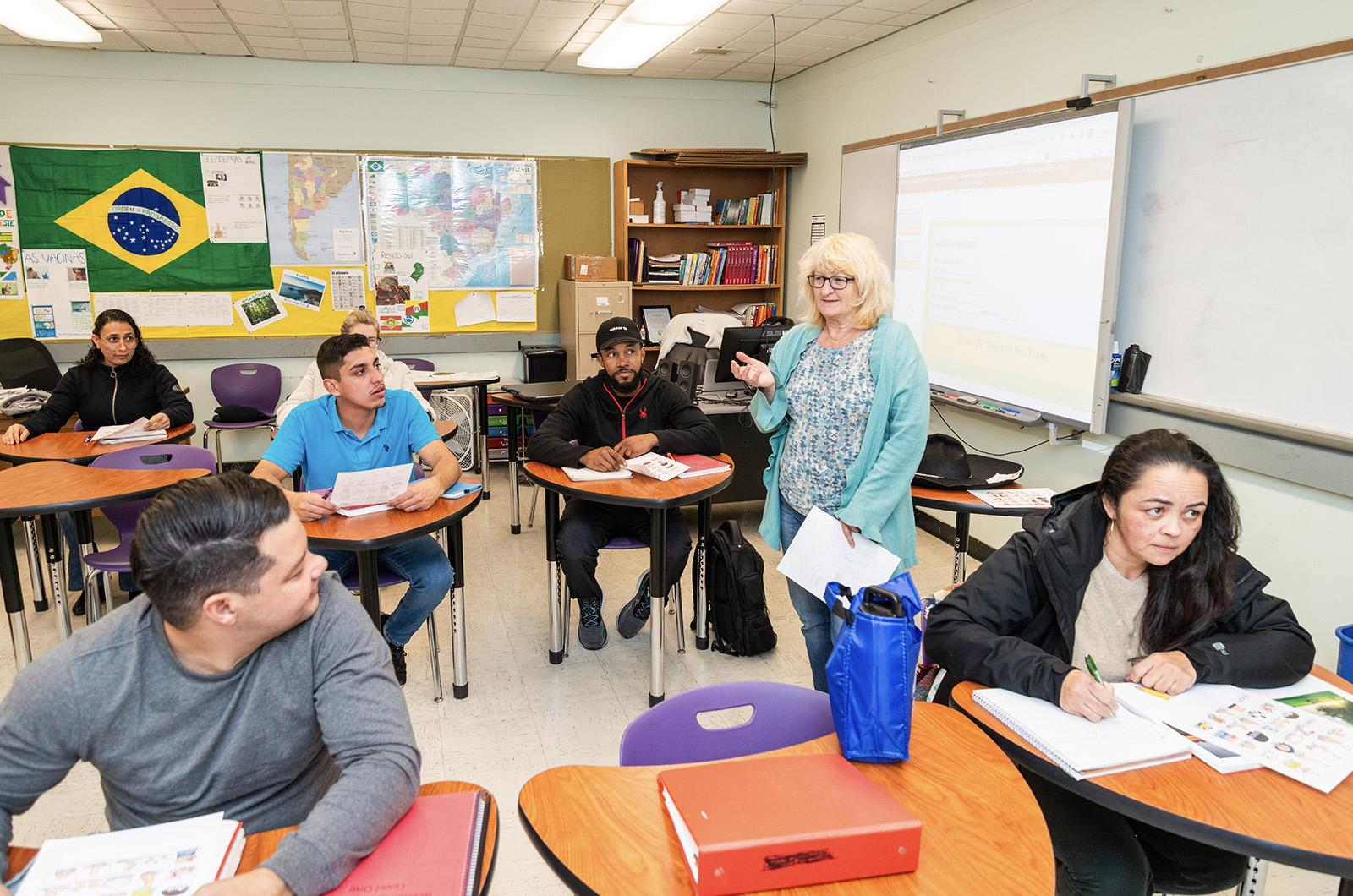
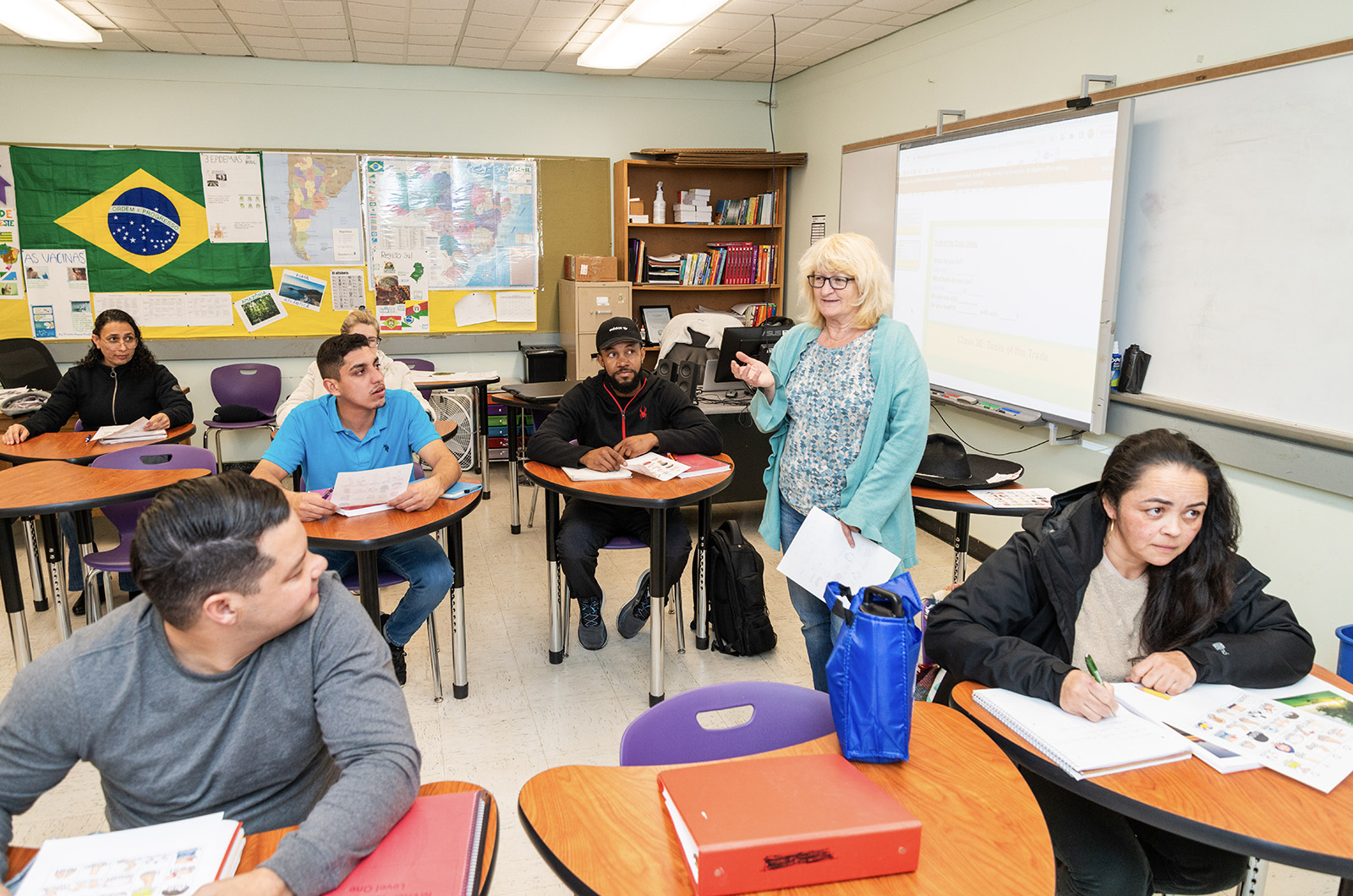
The adult language learning program was established 25 years ago at Martha’s Vineyard Community Services but moved to the regional high school in 2018. It caters predominately to Brazilian students and demand has soared in recent years.
Claudio deChiara knows how to learn quickly. When he first joined the Martha’s Vineyard adult language learning program as an instructor in 2016, he did not know a single word of Portuguese, instead communicating with his Brazilian students in a muddle of Spanish and Italian.
In January 2020, he took on the role of director, learning the ropes while stewarding the program through the worst of the pandemic.
“It made me miss being a teacher,” he said with a laugh.
The adult language learning program was established 25 years ago at Martha’s Vineyard Community Services but moved to the regional high school in 2018. It caters predominately to Brazilian students and demand has soared in recent years, Mr. deChiara said, as more adult immigrants look to learn English. Enrollment jumped from 80 to 118 in the past year alone.
The program offers four levels of English classes, but roughly half the students test into the beginner level when they sign up, Mr. deChiara said. Classes take place Tuesdays, Wednesdays and Thursdays from 7 to 9:30 p.m. from November through the end of March.
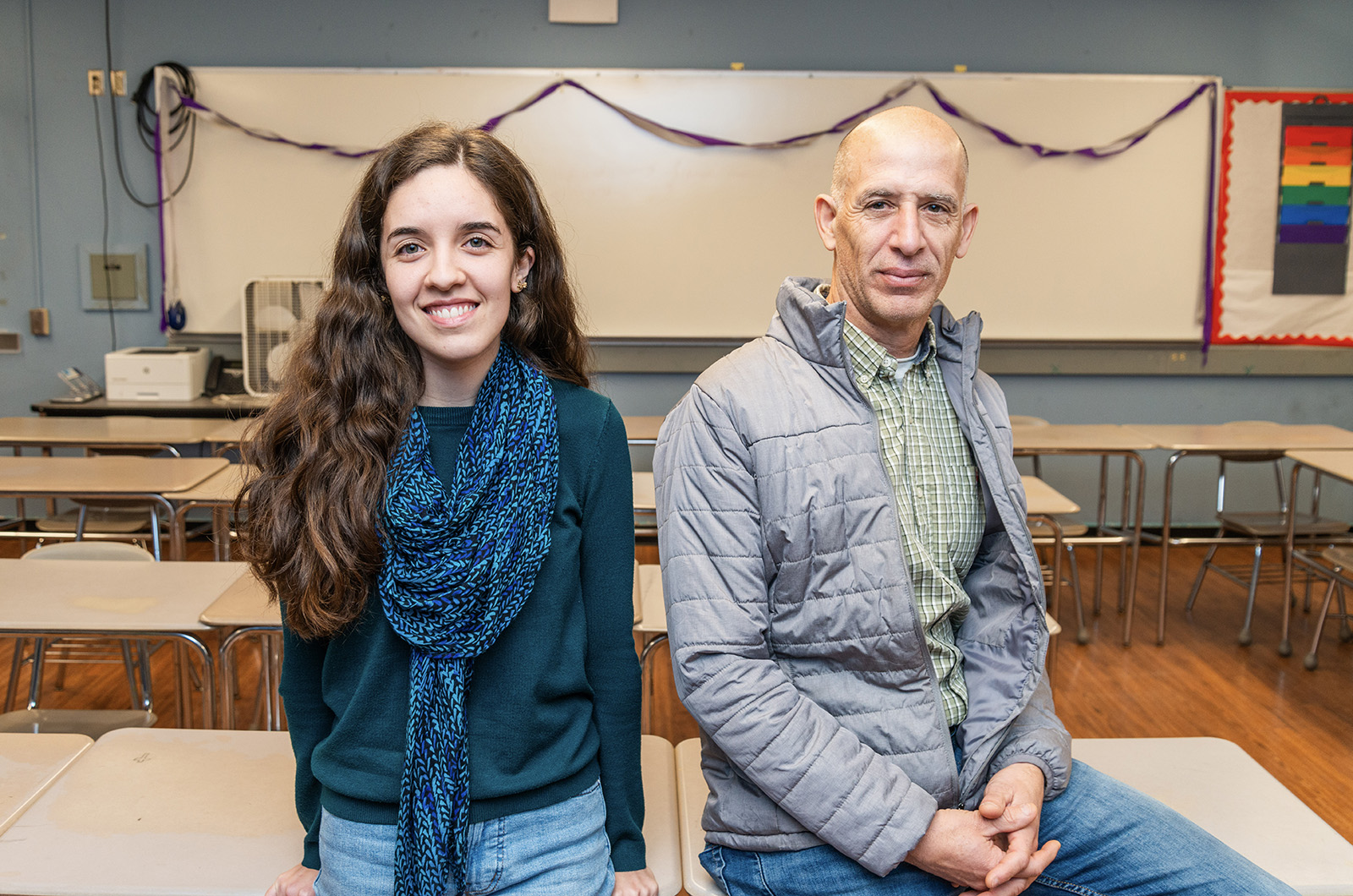
Director of the adult learning program Claudio DeChiara (right) and counselor Barbara DePaula (left).
Director of the adult learning program Claudio DeChiara (right) and counselor Barbara DePaula (left).
Because the program is administered and financed through the Department of Education, enrollment size is largely dependent on funding, Mr. deChiara explained. In 2020, the program expanded to offer online courses.
“You see students on Zoom with children in the background, other family members, who otherwise would not be there,” Mr. deChiara said. “So, in that way, we have been able to expand our reach.”
This fall the program launched a new course catering specifically to youth between the ages of 16 and 22, attempting to bridge the gap between adolescent and adult learning, Mr. deChiara said. It includes a youth counselor, Barbara DePaula, to address the unique needs of this age group.
“Often, those students will have dropped out to work to support themselves or support their families,” Ms. DePaula said. “This gives those students the opportunity to continue their English studies so they can get a better job or go back to school if they wish.”
The course it taught by Rachel Dragos, who commutes from her home in Falmouth. She is the first teacher in the program to not live on-Island, Mr. deChiara said.
Only eight classes into her new role, Ms. Dragos said she finds herself learning alongside her students. Like Mr. DeChiara when he started, Ms. Dragos does not speak any Portuguese and often relies on impromptu charades to get concepts across, she said. She feels confident, however, that her past teaching experiences have prepared her well for the semester ahead.
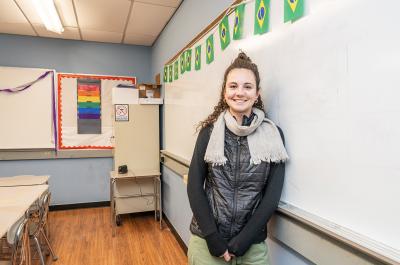
Rachel Dragos teaches the new youth course, catering to 16-22 year olds.
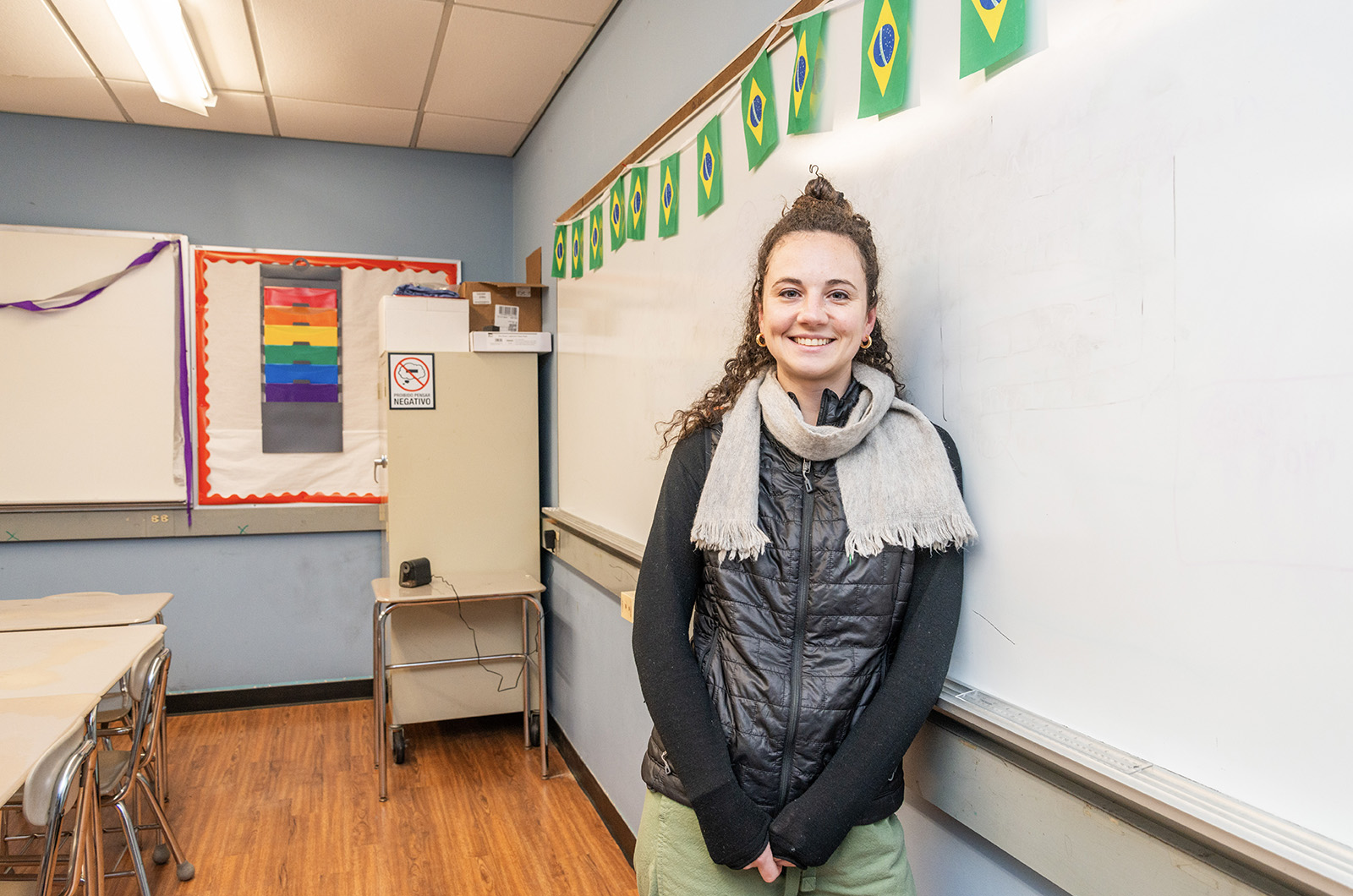
Rachel Dragos teaches the new youth course, catering to 16-22 year olds.
“I don’t think of it as English class,” she said. “I think of it as English practice. Like soccer practice, you get better by doing drills, playing games....People want to learn if you make it fun and you make it meaningful to them.”
Carmen Creanga works as the counselor for the adult program, offering support for anything from mental health services to financial resources. She said she makes herself available to students on an as-needed basis. Oftentimes, that means anywhere from once a semester to several times a week, she said, even though the position is only part-time.
Work schedules, childcare and transportation have all been barriers to her students’ education, Ms. Creanga said, but housing is still the number one issue affecting the Brazilian immigrant community.
“Some can’t find housing, some people have had to pay a lot of money — more than anyone would be able to afford,” she said.
Many students have had to move off Island, she said, although some have been able to continue with online classes. Those who stay face their own challenges. Even after mastering English, there are issues with finding licensing and training opportunities on the Island, she said. For that reason, the program has started to partner with ACEMV and other local organizations to make sure their offerings meet the needs of the community.
“If we don’t have a resource, we try to see if we can develop it,” Ms. Creanga said.
While these types of partnerships have been encouraging, Ms. Creanga said she would like to see more community support. Having emigrated from Romania to Martha’s Vineyard herself, she found the Island could at times can feel closed off to outsiders. The best way to support the Island’s immigrant community, she said, is to have empathy.
“People are working really hard and trying to be a part of this community,” she said. “Be open to them.”
Comments
These classes make me proud
Corn Fused TisburyThese classes make me proud of the teachers and the many students I know who have benefited from the help they provide.
I can only imagine how hard
Tom Engley West TisburyI can only imagine how hard it would be to move to any other country and go to school and or work. The language barrier is a big problem. The majority of younger immigrants and a lot of their parents speak Englsh only when they have to reverting to their native language in groups , church and at home. With the influx of thousands of people coming into the country on the southern border everyday and those same people being used as pawns by officials flown and bused to so called sanctuary cities. We know because it happened here. People blame our President Joe Bieden. But Mexico open its border for them to pass thru. It’s a mess and we are living in a difficult time. Teaching English is a great thing it works. Our schools are strained we need to think way outside the box with these issues.
It is great to see the
Brian VineyardIt is great to see the Brazilian population trying to assimilate- in most cities across America - that is not the case of most immigrants- Miami is a prime example- if one wants to assimilate they need to speak Spanish -
Thank you for teaching
LJ EdgartownThank you for teaching English to Americans. What a concept huh? Shameful for any parent to not teach their kids our language to assure they're successful in an English speaking country. If you're in France, they expect you to speak French. Germany? German. Nobody demands that they speak your language, you respectfully speak theirs.
Brava/Bravo to all involved
Elizabeth Bradley EdgartownBrava/Bravo to all involved with this program!
Add new comment