


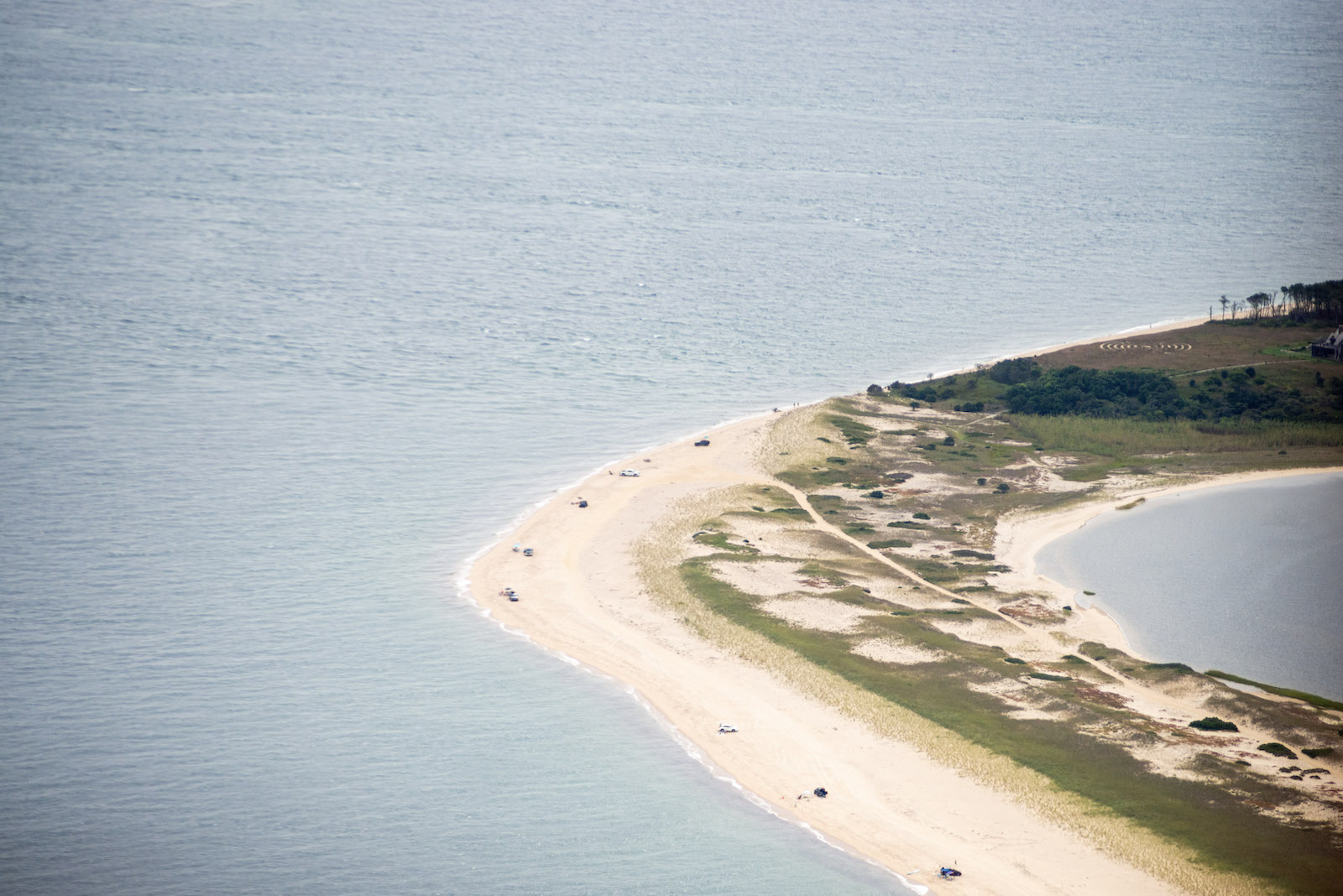
The Trustees of Reservations unveiled a new plan to manage its Chappaquiddick beaches Thursday, more than a year after it pulled a previous plan in response to backlash from residents and visitors.
The Trustees of Reservations unveiled a new plan to manage its Chappaquiddick beaches Thursday, more than a year after it pulled a previous plan in response to backlash from residents and visitors.
The updated draft, submitted to the Edgartown conservation commission, attempts to balance the dual roles of conservation land and recreational destination for the roughly 10-mile stretch of beach and wetlands beginning at Wasque Reservation and ending at the Cape Pogue Wildlife Refuge.
“The plan provides for practical access, protects endangered wildlife and habitat and builds resiliency to climate impacts,” the Trustees' Islands portfolio director Darci Schofield said in a press release. “Our goal has been to ensure that the natural beauty of these beaches can be experienced by everyone today as well as by future generations.”
If approved, the new plan would walk back several controversial policies, including the current prohibition on oversand vehicle access (OSV) on pondside trails and the ban on leashed dogs on Trustees beaches. The plan will continue following old guidelines on shorebird protections, as well as other safeguards for non-endangered species on Trustees-owned properties.
Erosion also emerged as a particular threat to the dynamic area, Ms. Schofield said, and the new management practices reflect a responsive, conditional approach to the ever-shifting environment.
“We’re being very responsive to the dynamic nature of the beaches,” Ms. Schofield told the Gazette in a phone interview Thursday. “We want to ensure this is here forever.”
At 83 pages, the new plan is almost twice the length of the management plan submitted – and later withdrawn – last summer. The Trustees said it is also a product of months of working group sessions that involved abutters, conservation groups, beach access advocates, surfcasters, recreational and commercial fishermen, and a member of the Wampanoag Tribe of Chappaquiddick.
The submission of the new plan follows a particularly tumultuous year for the Trustees, which has faced sustained backlash from abutters accusing the nonprofit of environmental neglect and mismanagement. In May 2022, two Chappaquiddick landowners took legal action to block OSV access at the tip of Cape Pogue. This past winter, abutters pushed back against OSV access during a series of public hearings with the Edgartown conservation commission, causing the organization to withdraw its application for OSV access on Cape Pogue.
In response to concerns from those hearings, the Trustees now require OSV operators to watch a safety training video before receiving their beach pass, and there is now a two-strike policy for safety violations. The Trustees have also promised to enact capacity limits on the Wasque and Leland Beach properties, limiting the beaches to no more than 300 vehicles combined.
There are approximately 16 miles of OSV trails on the Trustees’ Chappaquiddick properties. The area is a popular destination for beachgoers and fishermen, though considerable portions of the trails are known to close because of flooding or shorebird nesting.
Ms. Schofield added that families, recreational fisherman and shellfishermen have spoken out in support of OSV access, calling the issue a matter of “practical access” to the remote areas. Trustees properties are also accessible by walking and biking.
“There are many different perspectives within the community as well as on the working group,” she said. “While we are not able to honor every desired outcome, we believe we are releasing a plan that addresses much of what the community desires alongside our shared conservation goals, and it honors the tradition of beach access that is important to Island residents and visitors.”
The beach management working group has continued to meet informally, she said, and will continue to meet as the plan receives feedback from the public.
This fall, the Trustees hope to reinstate OSV access on Cape Pogue, pending approval by local and state regulatory bodies.
A hearing on the new plan with the conservation commission has yet to be scheduled, though Ms. Schofield sees at least one reason why things might go differently this time around.
“The biggest difference from last year is that we have this ongoing dialogue with the community,” she said.
Comments
The ban on dogs on Trustees
Buddy EdgartownThe ban on dogs on Trustees property is still in the plan. They are allowing leashed dogs on Leland’s only which is not owned by them.
Its been a nice summer
Trevor ChappyIts been a nice summer without the Trustees setting up their own tollbooth and running a highway all around Chappy. Maybe they should pay for road maintenance and a new bridge that their access utilizes almost exclusively? And once again after all this time “replanning” and you can’t specify as to what caps or limits will be implemented on a daily basis?
Once again Ms. Schofield provides her meaningless word salads and “promises” on working with the community and yet continues to ignore the central questions the community has asked.
More spin — and it’s still a Trustee money grab. Go back to the drawing board.
300 passes roughly equals we
Jeffrey Hill Queensbury300 passes roughly equals we're closing the beaches
I don't think 300 passes in
chrisI don't think 300 passes in total. Just 300 passholders per day can access. (which is, of course, 100 Chappy ferry runs worth of cars).
It’s a shame Edgartown doesn
Mike EdgartownIt’s a shame Edgartown doesn’t have the intellect or will to develop a similar plan for Norton Point that balances the interest of all vs turning it into a bird sanctuary …and we thought they were going to be better than Trustees…
I agree - once the breech
Hal EdgartownI agree - once the breech started, the whole access to the beach went to the birds - that is not even good bird management
Not much that the town can do
Susannah Born and RaisedNot much that the town can do when they are working against over-reaching protective laws put in place by the federal government decades ago. I, for one, am incredibly impressed with how the parks department has handled this transition, particularly given the timeframe they were able to do so within after years of mismanagement under the Trustees. If you have a bone to pick it is clearly not with the town or commissioners.
Add new comment