

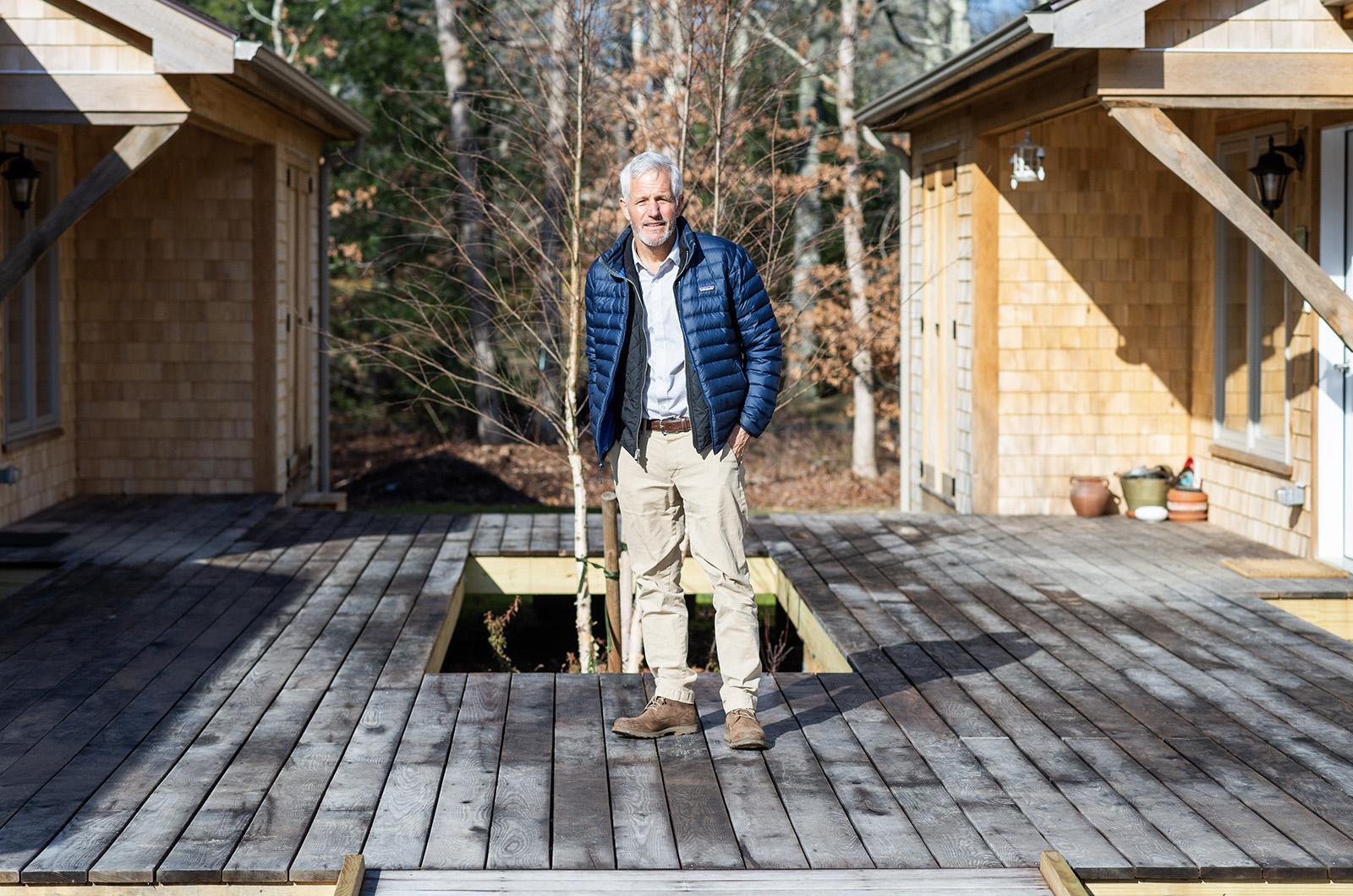
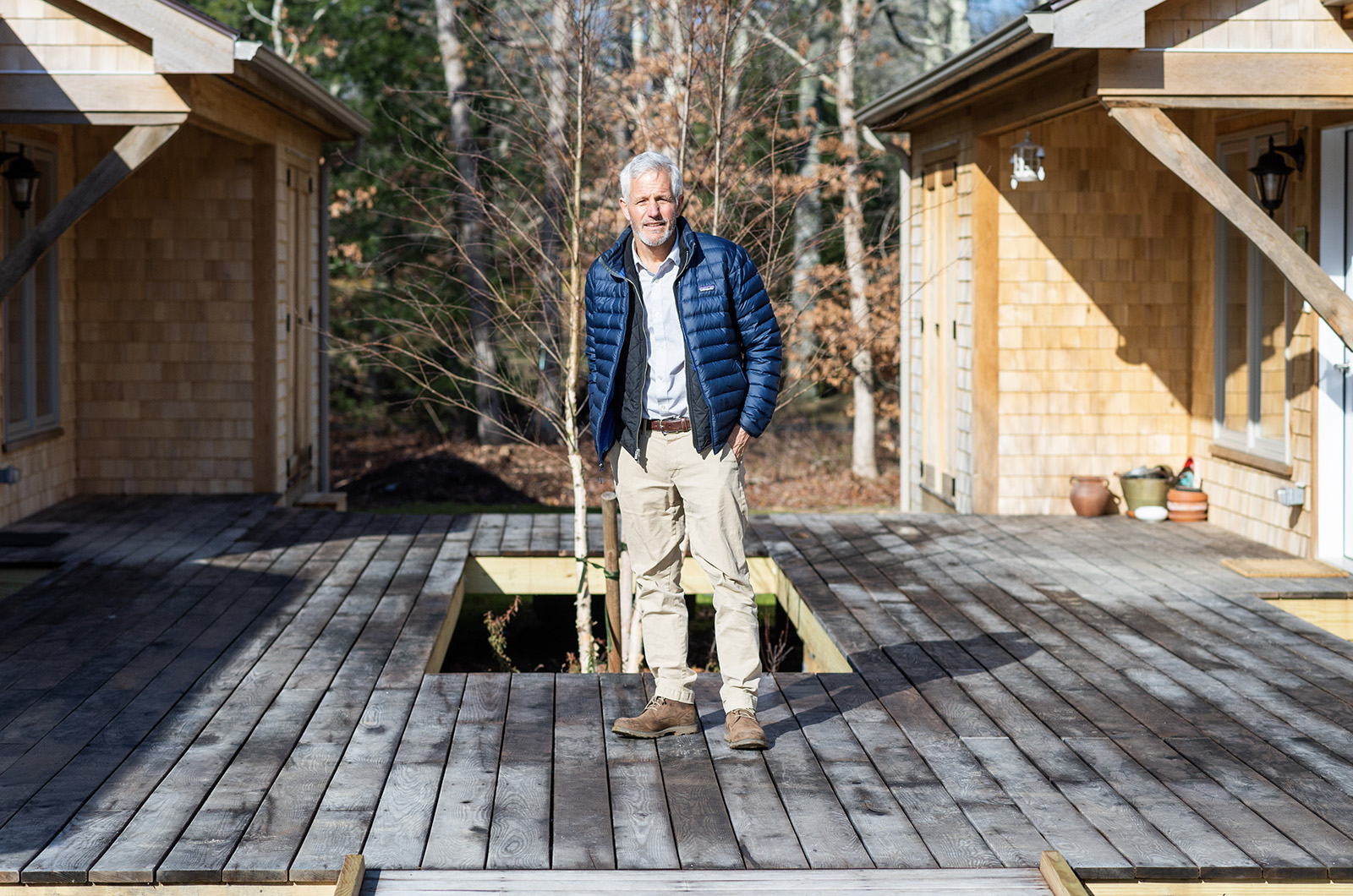
The refrain is familiar. Despite valiant efforts to create more affordable housing on Martha’s Vineyard, the gap between need and availability continues to widen.
The refrain is familiar. Despite valiant efforts to create more affordable housing on Martha’s Vineyard, the gap between need and availability continues to widen.
With several new affordable home developments now completed, plus deed restrictions and other projects, there are about 340 units of affordable housing on Martha’s Vineyard for people making under 80 per cent of the area median income as of 2020. Many more are being added as the Island sees some of the largest projects in recent memory come before planning agencies.
But several housing leaders on the Island said that even with the addition of affordable housing units from the Island Housing Trust, the towns and others, the Vineyard is struggling to keep pace with the conversion of homes to short-term rental or summer homes, and there needs to be more effort put into fighting the crisis before the Island’s median home price of $1.45 million continues to climb.
“What was once attainable for a middle-income household is no longer an option,” said Philippe Jordi, executive director of the Island Housing Trust. “(The need) is clearly growing in terms of scope.”
In a series of articles over the next few weeks, the Gazette will look at what has been done to address the lack of affordable housing on the Island, what is actively in the pipeline and what other resort communities have done to address a similar problem.
One target the Vineyard has firmly in its crosshairs is the creation of an Island-wide housing bank. All six towns have petitioned the state to allow them to create the new proposed housing fund, which would be paid for by a two per cent transfer fee on most real estate transactions over $1 million.
Whether or not the Housing Bank or other legislation passes to provide new funding for housing development, Laura Silber, the housing planner at the Martha’s Vineyard Commission, said the tide won’t start to turn until the six Island towns start seeing year-round housing as infrastructure, like roads, bridges and other town necessities.

Nearly 200 Vineyarders went to the State House last week to encourage legislators to pass housing legislation.

Nearly 200 Vineyarders went to the State House last week to encourage legislators to pass housing legislation.
“As an Island, year-round housing as infrastructure is not a place we have arrived at unilaterally,” said Ms. Silber. “There’s still a concept here that people need to pull themselves up by the bootstraps . . . Nobody has bootstraps that long anymore.”
In the past 20 years, the Island Housing Trust has set up about 170 units of affordable housing across the Island and is looking to add another 140 units in the next few years.
Meshacket Commons, a trust project, plans to bring 36 affordable units to Edgartown; Kuehn’s Way, a development in Vineyard Haven, added 20 units; Southern Tier, a project planned for Oak Bluffs, could inject as many as 60 units.
These are some of the largest affordable housing projects in recent memory on the Island, but that influx of housing won’t be enough to save many workers, families and residents from having to decide if they can make a living seven miles out to sea.
Hundreds of homes have dropped out of the Island’s year-round housing stock, meaning the big strides in housing production along the horizon are really just maintaining the front lines.
Between 2010 and 2019, the total number of housing units on the island increased by 4.2 per cent, but the year-round occupied housing stock decreased by 8.2 per cent, or by 603 units.
According to a Martha’s Vineyard Commission study released in 2021, seasonal units increased by 15.4 per cent, rising from 9,253 units to 10,681.
“There’s not much on the market to begin with, but what is (left) is being bought up quickly,” said Mr. Jordi. “We’re losing ground.”
Residents caught in the shuffle say they often find themselves on long housing waiting lists or frantically calling their entire rolodex to try and find a place to live.
Abby Bender is a dance instructor and choreographer on the Island who regularly struggles to find housing in the off-season between stays at her family’s non-winterized Oak Bluffs home.
Last week, she participated in the event, Martha Goes to Beacon Hill, organized by the Coalition to Create the Martha’s Vineyard Housing Bank, entreating legislators at the State House in Boston to pass legislation to help create the Island-wide housing bank.
Although Ms. Bender herself is housing insecure, she said she knows many others in far more precarious positions.
Kuehn's Way is one of several large affordable housing projects on the Island.
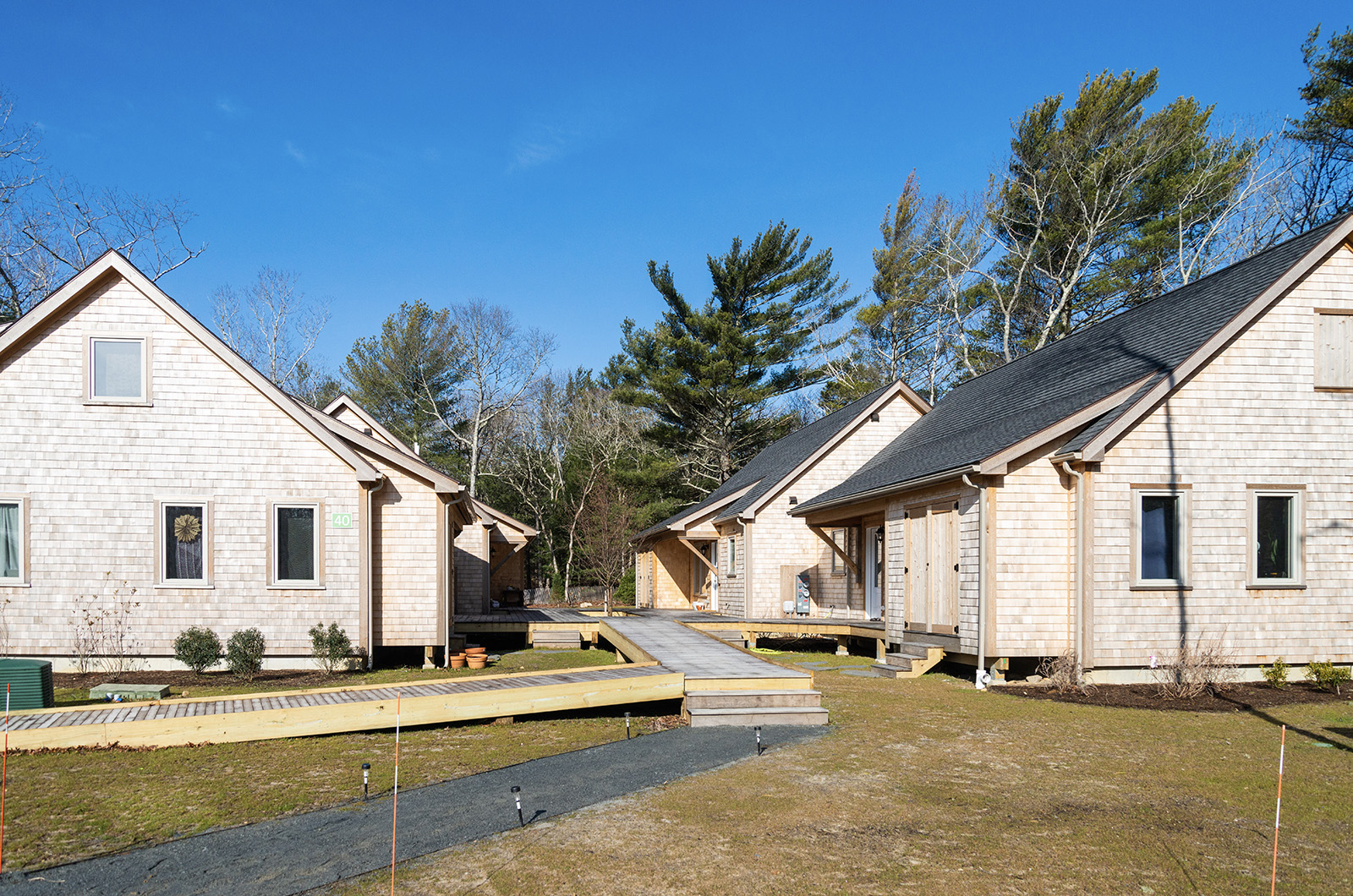
Kuehn's Way is one of several large affordable housing projects on the Island.
“Every time a new affordable housing unit opens up, there’s about 25 people I email right away,” she told the Gazette in Boston.
There are actually fewer affordable housing units on the Vineyard than there were only a few years, if using the strictest definition of affordable housing.
In 2013, there were 411 subsidized housing units on the Vineyard for people who make 80 per cent of the area median income. When the commission study was done in 2020, there were 339.
One of the strategies that has been used to secure affordable housing has been placing affordability restrictions on some new housing projects. These can often be rented out to people who have certain incomes.
Some of those restrictions have expired or are set to run out soon. Restrictions on 40 units at Hillside Village, a senior housing complex in Tisbury, are listed to expire in 2025. Nearly 250 subsidized housing units’ restrictions on affordability are expected to expire by 2057, while only eight subsidized housing units have been added to the Vineyard between 2013 and 2020.
While worrisome, housing officials note that affordable housing on the Island often extends past 80 per cent of the area median income, the state’s definition of affordable housing, and people here making up to 150 per cent of area median income are also struggling.
Due to the high cost of housing on the Vineyard and Nantucket, the state gave both islands special allowances to put permanent deed restrictions on properties for the higher income bracket.
According to the commission’s 2020 study, Vineyard communities have produced 166 housing units for people who make between 80 per cent and 150 per cent of area median income.
But the Vineyard towns have not dedicated the kind of money Nantucket has to the issue. Voters on the neighboring island will consider a $6.5 million override at town meeting this year to help fund housing efforts on Nantucket.
Since 2019, voters have supported approximately $70 million in funding for year-round housing, said Tucker Holland, the town’s municipal housing director, a position that has no equivalent in any Vineyard town.

Suvarna Maya, an Oak Bluffs resident, has been caught in the "Island shuffle."

Suvarna Maya, an Oak Bluffs resident, has been caught in the "Island shuffle."
“I think there is a growing view here that housing is infrastructure,” he said. “It is unquestionably the number one issue confronting the community today and has been for several years.”
Some Vineyard towns are also not taking the maximum tax revenue on short-term rentals and other lodgings allowed by the state, a strategy other resort towns have used and put directly towards housing.
Some are hopeful that momentum may shift and make Island life a little easier. Nearly 200 Vineyarders went to the state capitol last week to call for the creation of an Island housing bank fund, and town committees are starting to look at other ways to make housing more affordable.
Suvarna Maya, a single mother who works as a server in Oak Bluffs, has been living on the Island on and off since 2019. In that time, she’s stayed with friends, had rentals fall out from under her and had the all-too-common experience of frantically texting dozens of friends in hopes that someone knows of an open room.
Ms. Maya, who recently had to leave a rental this spring, said it’s a struggle to continue to live on the Island; she’s on several waiting lists for affordable housing and there have been times when she wonders if she should bother unpacking her belongings upon arriving in a new living situation.
Constantly thinking about finding a new seasonal rental can be mentally and emotionally taxing, but Ms. Maya tries to stay optimistic.
“I do have faith that this community can come together and that this can be solved,” she said.
Brooke Kushwaha contributed to this report.
Comments
Taxing responsible homeowners
Mark EdgartownTaxing responsible homeowners that have cared for and invested in their homes is not a solution. Increasing the frictional cost of real estate with such a high median property value will only make housing more unattainable.
The greed of our society is
Tom Engley West TisburyThe greed of our society is embarrassing and overwhelming. It’s pervasive across the country. Big business buying up properties and then renting them long term or short term. Here on MV that’s impossible why aren’t the towns taking 100% of taxes allowed. The only answer is to go all in on housing. Take every opportunity available. Think outside the box 140 units in 17 years is not working. Kuehn way took a decade to come to fruition. Now is the time to ask for 100% more than you think we need. Our State now has legal gambling on your phone. Please go all in. Ask for more.
It's unfortunate that this
Rational Person Oak BluffsIt's unfortunate that this single mother moved to the island a few years ago thinking she could support herself as a server. People need to have reasonable expectations. This is akin to someone spending the day in the hot sun without sunscreen and then lamenting the fact they got a sunburn. Buyer beware. Housing has been difficult here for decades and it's not a secret, so why do these people continue to think something is magically going to change? We need servers and other workers and we will find them. Most likely as commuters from off island and why would that be a bad thing? Let's focus on increased public transportation. Most notably high speed ferries running from early morning to late at night and subsidized by the money we're now throwing away towards affordable housing which this article has pointed out has been a failure in meeting island's needs.
As a community we need to do
Jim Feiner ChilmarkAs a community we need to do everything we can to support good quality affordable housing on our island. It is important that we have better zoning, funding, incentives and island-wide support to create the systems we need to sustain a healthy and vibrant year-round community who we depend upon for all the things that we love about our island!
Alas, one of the foibles of
Nicole Brisson EdgartownAlas, one of the foibles of the Vineyard is the refusal of all the towns to work together on island-wide issues. Yes, each town is different in its zoning laws and circumstances, but how about coming together to amend zoning laws for multi-family units and to address other issues that prohibit what is really needed: multi-unit apartments, not just single family homes. It’s time the Vineyard pulled it’s head out of the sand, stopped talking and DID something. Brooke Katzen sought permission for a multi-unit building in Vineyard Haven and was shot down. Why? Talk of a dormitory-style building at the airport has been ongoing for years, but I spoke with someone on the Airport Commission and the FAS prohibits long-term housing and requires a 99-year lease. Request land in the State Forest? How about someone research that possibility? We need community action and dialogue and for people to put away their NIMBY attitudes or the island will be without service people, educators, fire and police staff, town administrators and the list goes on…Please approach the situation as it exists now, make allowances for the changes that continue to occur, stop whining that “density is not the answer”, increase the services that would be required and act. Each year for the last few decades, as I understand it and at least for the 25 years that i have been a year-round resident (fortunate enough to purchase my house for $168,000 in 1999), the issue comes up repeatedly and has gotten kicked down the road. For the sake of our community, Do something actively cooperative and agree to multi-unit (and multi-storied,possibly three-story) buildings as they exist on the North Fork of Long Island and other year-round and seasonal communities. IHT can only do so much to build single-family developments, but perhaps they can advocate and donate some of their funds, along with the town affordable housing monies, to do this. We need big solutions to the overwhelming problem.
Great post. The Town
Lupi Robinson TisburyGreat post. The Town government system is the least efficient form of government here and elsewhere and its inefficiecies ans waste go well beyond the affordable housing issue. Time to stop celebrating our uniqueness and focus on our common needs and concerns.
OK so you are older and came
gina Menemsha/NYCOK so you are older and came to MV during a different housing landscape.. So today's housing situation isn't really a fair comparison. Large increase in general local population & business growth requiring employees to support it.. But the reality is the density issue & the infrastructure support it .. Agree IHT can only do so much but "Martha" can't be all things to all people.
While this is a very real
John Aldeborgh KatamaWhile this is a very real issue there are more sides to the story, which must be considered. One is property tax rates have skyrocketed, my wife and I built an 1,800 sqft home in the mid-1990’s and were paying $2,400/year in property taxes. We’re now retired and pay $13,000/year. Our house cost us less than $130K to build all in, this kind of escalation in taxes is driving people (family members included) off the island and my grandparents came to the island in the 1930’s. The bottom-line is we are forcing longtime residents into short-term rentals simply to be able to afford the home they already own. Next, the cost of building on island has reached the point of absurdity for the average family. Not counting land, which is unaffordable, the construction costs start at around $500 sqft, so a 2,000 sqft home will minimally have construction costs of $1M, again, unsustainable. These are both systemic root cause problems the towns have contributed to that need to be part of the discussion. We’re not going to simply tax our way out of this problem, that’s too simplistic, despite the fact that the narrative to taxing the rich makes an attractive headline.
It’s interesting to read
Business 101It’s interesting to read these same articles over and over. These articles are riddled with the same players telling the same story. How about talking about what’s often left out? Most of the core employees like police and teachers make too much for affordable housing even if we had it. The business owners work (really hard) so they can travel extensively, buy boats and anything else like a Fortune 500 CEO… just look at every contractor driving a 100k pick up truck to get to their 300k boat (tax write offs, ha). We all know a living wage is rarely paid. To have a business license you should have to have documented housing options for a large portion of your staff, those that do are fully staffed. Most business owners I know are housed, shouldn’t they house staff before they buy toys and trips to sustain their profits? This idea that the individual resident should supplement the businesses that directly profit from the availability of staff is perplexing. Why should property owners pay for their staff and then pay insane rates for services or dinner to boot? Is employee housing not a key component to your business model? There is no economy without the tourist season and with only 1200 or so hotel rooms on MV you won’t keep the lights on without short term rentals, nobody is coming for 28 days and 3 days seems to be the new norm. What happens to the cost of living in the winter without the volume of the summer season? Overhead of the SSA stays the same while you reduce volume by massive percentages, will that equal a $500 ferry ticket in the winter to go to the Doctor? A gallon of milk will be $25 like Alaska? The best suggestion that I’ve heard from a public official is create an inspection process for the short term rental to include zoning, health and safety. We all know that a giant number of these rentals aren’t legal units. Think basement apartments, rooms above garages and so on. Those would immediately go back to what they have always been used for, workforce housing. These units wouldn’t pass the permit process and the owners can’t complain as they’ve already been getting over. This process would immediately free up hundreds of already built rental units, immediately. This process would cost taxpayers zero by charging an inspection fee consistent with the cost of the inspection. This process would also have zero environmental consequence. Do away with the short term rental and you’ll have more housing than you’ll need and be wondering where all the people went when they couldn’t find jobs. Taxing commercial projects for housing, limiting short term rentals, no accountability for business license holders, transfer taxes and so on are all counterintuitive to a diverse community and only make MV available strictly to the wealthy.
Add new comment