

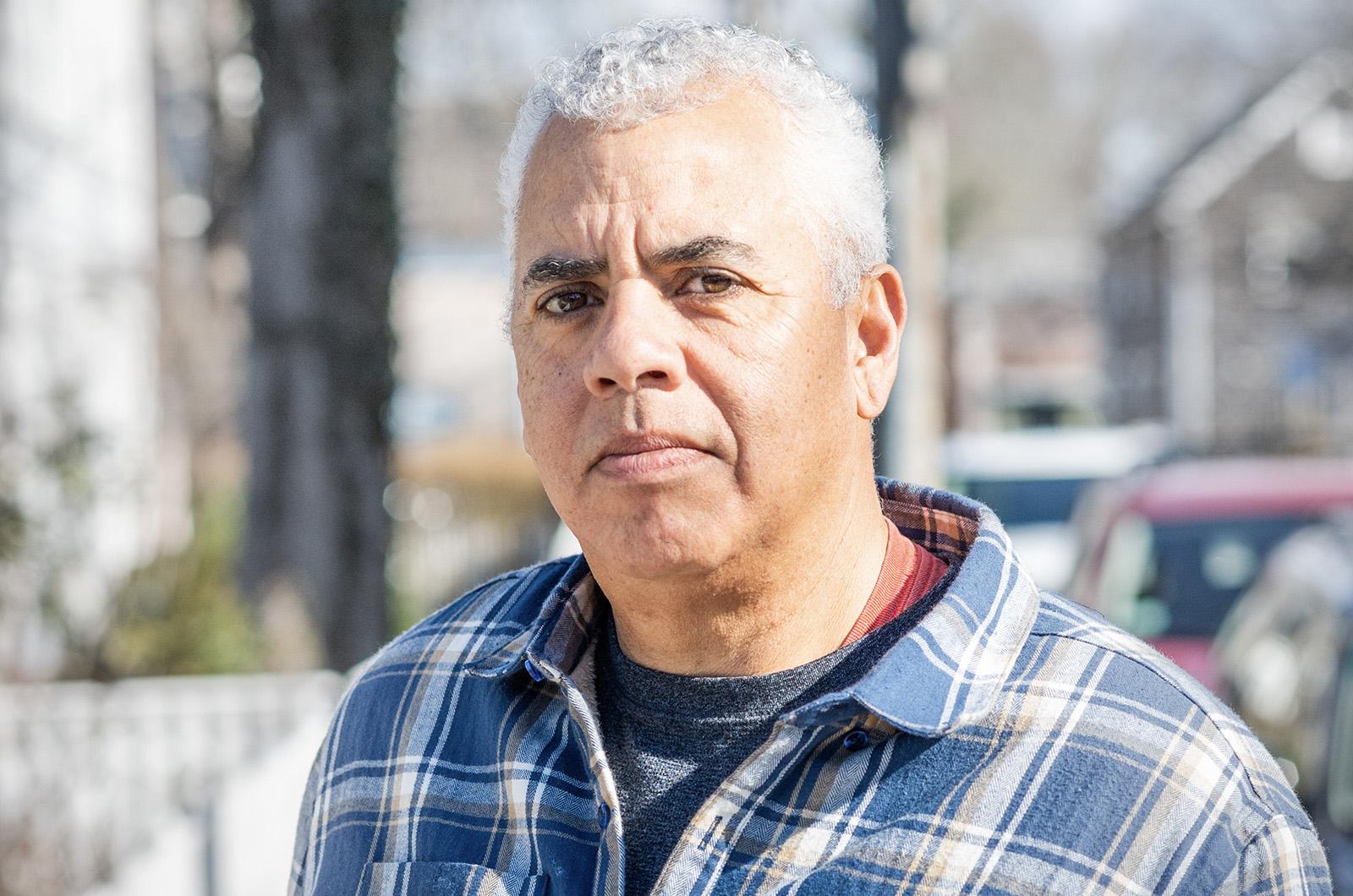
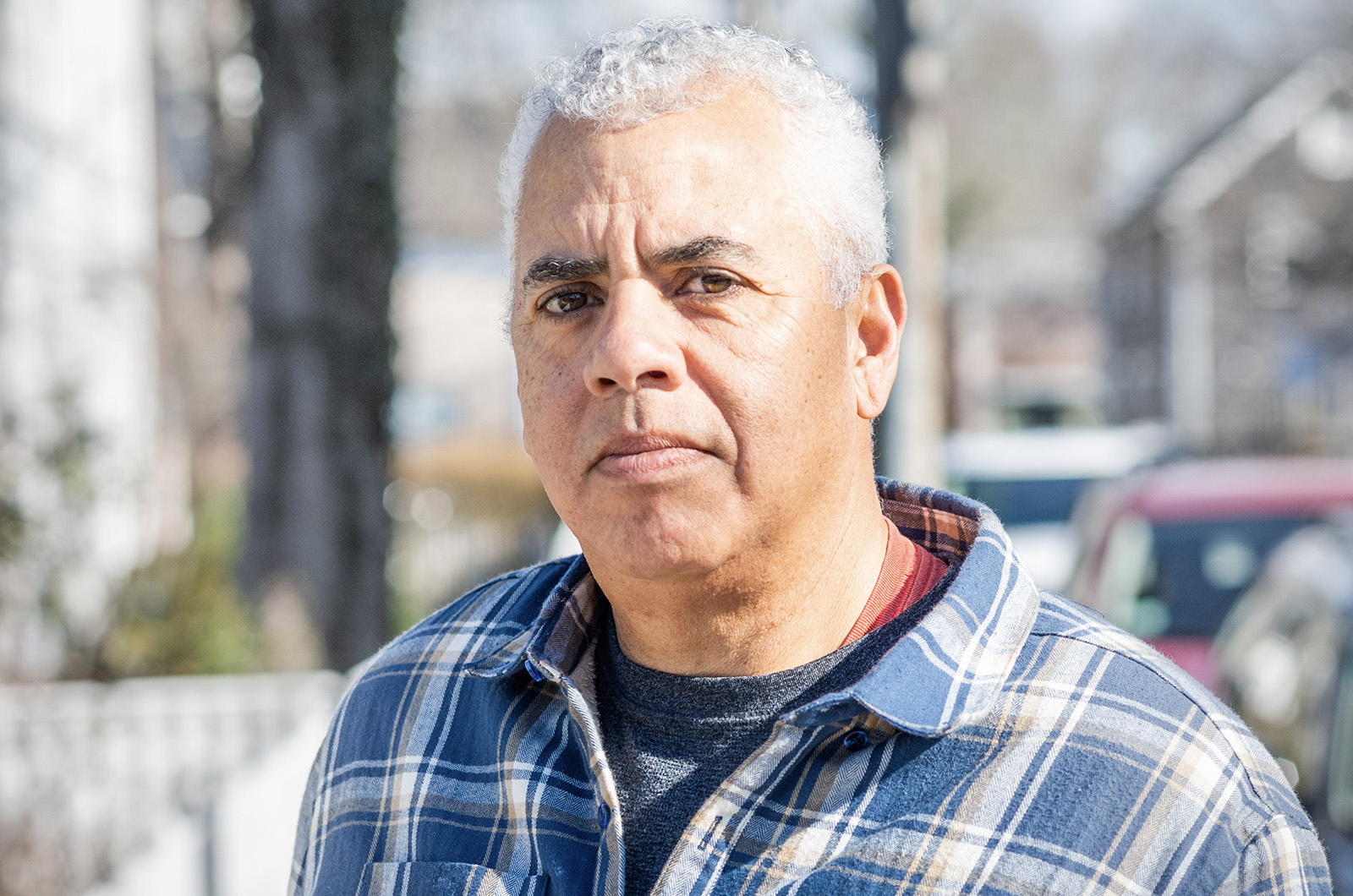
Going into the second season of Shed, a podcast about race produced by the Vineyard Gazette, host Eric Adams wishes more has changed.
Going into the second season of Shed, a podcast about race produced by the Vineyard Gazette, host Eric Adams wishes more has changed.
The first season was born out of salon-style conversations following the murder of George Floyd at the hands of police in 2020, and featured Islanders talking about their experiences around race. It aired during the summer of 2021.
Season two debuts this week on the heels of Tyre Nichols’ highly publicized death in January by five Memphis police officers.
“My immediate thoughts and feelings were . . . nothing has changed,” Mr. Adams said. “And then someone brought to my attention how if it wasn’t for what had happened at the George Floyd protests these guys wouldn’t have been wearing body cams, that the police chief, who is a Black woman, wouldn’t have acted so swiftly . . . so maybe that did move the needle in some way.”
Although Mr. Adams is a family therapist trained in leading people through difficult conversations, he had never listened to a podcast before stepping into the host position.
“This experience has made a real impact on me,” Mr. Adams said. “It’s allowed people to approach me and talk about their experiences with race. I’m deeply grateful.”
Shed season 2 features interviews with six Vineyarders.
Shed season 2 features interviews with six Vineyarders.
The podcast was inspired by weekly vigils held at Beetlebung Corner starting in 2020 at which people speak openly about their experiences of race and racism. Interviews conducted afterwards took place in a shed, one factor in the podcast’s name, though it serves another purpose: to encourage listeners to shed their preconceived notions about race and take action to deal with racism in their own lives.
The first season of Shed featured a variety of mostly seasonal Vineyarders, including filmmaker Stanley E. Nelson, Jr., and author and chef, Jessica B. Harris.
The second season focuses more on year-round Islanders, including Aquinnah select board member Juli Vanderhoop, Edgartown police officer Curtis Chandler, and West Tisbury resident Patty Favreau. All six episodes are available now.
The new season spans a wide variety of perspectives, a testament to the diverse population the Island attracts, Mr. Adams said.
Ms. Favreau, a member of the Black woman-led walking group the Good Souls, is the mother of two college-aged biracial sons raised on the Vineyard. During the conversation, Ms. Favreau and Mr. Adams discuss their experiences navigating the predominantly white year-round population on Island.
For Mr. Adams, the child of a white mom and Black dad, these kinds of conversations are nothing new, he said.
“I’m always having conversations about race,” he said. “What I’ve found is that...listening is a very underrated skill. When you give people the space to be heard, they’re more than happy to talk. And we don’t have many spaces to talk about these things.”
Mr. Chandler, an Edgartown police officer of white, Black and Wampanoag descent, discusses police reform from a law enforcement perspective.
An interview with Kevin Hooks, the star of the 1972 film Sounder, details the actor’s childhood experience filming in the deep South. In a particularly striking anecdote, Mr. Hooks shares a memory of visiting a segregated public swimming pool in Louisiana, where Sounder was filmed. He and his younger brother dove into a pool filled with white kids only to find it completely emptied by the time they surfaced. He likened the experience to the moment in Jaws when all the parents frantically grabbed their children out of the water, fearing for their lives.
There is a screening of Sounder on Monday at the Martha’s Vineyard Playhouse, at 6 p.m.
NFL cameraman Andy Italiano describes his upbringing in Syracuse, N.Y. and the racism he witnessed and had to unlearn in adulthood.
Mr. Adams said despite the difficult subject matter a glimmer of hope ran through all the conversations.
“I was surprised by how connected we all are,” he said. “We all feel things in the same way, we all care about the same things.”
Mr. Adams acknowledged that some of the topics broached in the podcast may be difficult to hear, and even more difficult to translate into systemic change. Issues such as criminal justice reform will take more than just conversations to address, he admitted.
The goal instead is to help listeners through the “stages of change” model, one he uses as a recovery coach for people with addictions. The narrative is one of movement, from not knowing there is a problem to contemplation of the problem, and eventually to action and working for change.
“It’s to go from never thinking about [race] to going, let me start to think about it, and then maybe reading more about it and starting to think about it in your daily life,” he said.
“We have to do things to try, if we care,” he said.
Comments
My entire adult life my work
George Stein OBMy entire adult life my work place experience has me surrounded by minority people, mostly black. Next season can the story line be how the majority of Americans embrace each other daily as family regardless of race. That is the God’s honest truth. Sure we have knuckleheads out there. Yes too many but the woke agenda focusing on divisive needs to show both sides of the story. Vineyard living is a haven for peace love and understanding forever. All politics is local. Bless all the great people who are raised to fulfill maintaining a heritage of proper respect for all. Celebrate that which is the clear majority of life experience. Absolutely clear up the problems but do not ignore the positive folks we are blessed by. My only lawn sign is the American flag.
I can't help noticing that
Susanna J. Sturgis West TisburyI can't help noticing that almost every step toward "a more perfect union" in U.S. history has started with someone(s) being divisive. "When in the course of human events . . ." Plenty of people thought that was divisive. Through the 1820s, '30s, '40s, and the bloody 1850s, people bent over backwards to avoid divisiveness -- to preserve the union by placating the slaveholders -- but appeasement, then as in the next century, didn't work. You can't get much more divisive than a civil war. Those working toward that "more perfect union" made some progress, but then the forces for (white) unity prevailed.
Meanwhile, women were called divisive for demanding the right to vote: women voting would destroy the family! the social order! Black people never gave up on the notion that they should be included in the "more perfect union" but guess what? they were accused of being divisive for demanding their civil rights. Women of all colors ditto. Also lesbians and gay men and a few others. I came of political age during this time, and let me tell you, it made a lasting impression.
Since the founding of the republic, many have cried "Divisive!" at every step taken toward a more perfect, more inclusive union. In hindsight we call them Loyalists, Confederates, Dixiecrats, misogynists, white supremacists, and, more recently, Republicans. They're on the losing side of history, though they sure haven't given up, so we have to keep at it. It may sound paradoxical, but to work toward that "more perfect union" we have to be willing to be divisive.
So often people want to just
Dana Nunes MVSo often people want to just voice their opinion, and be done with it; sort of a verbal hit and run. When you sit quietly, and listen, then you have the opportunity to learn, to discover that your reality is not the only one. Bravo, Eric!!
A good article about a good
Edward sussman Chilmark, maA good article about a good man doing good work.
I always knew this man would
Sonya Lima EdgartownI always knew this man would do big & important things, I am glad it is on Island.
The fact that Eric Adams’
Harry Seymour Oak BluffsThe fact that Eric Adams’ podcasts occur not in response to a specific event, but an on-going and festering condition is commendable. Indeed, the conversation about race by many, if not most, is quite difficult to have unless Black on Black or White on White. Obviously, this so because of the emotional intensity rooted in 400 years of a racial divide embodied by forced separation. Too often such conversations are superficial, patronizing and not completely honest, and thus, avoidance is by default. Not surprisingly, the national cry for the need of the race conversation seems a reflexive response after every recurrent and horrific racial event, with a brief period of mournful cathartic outpouring, followed by deafening silence. This national reaction is as predictable as the recurring racial incidences. Nonetheless, I believe such conversations are necessary if we are to cultivate alliances in furthering the goal of racial justice and equity in our democracy. Afterall, the human frailty of racism is a human condition no more likely to be eradicated than crime. However, to live in a civil and safe society, both must be contained.
Add new comment