


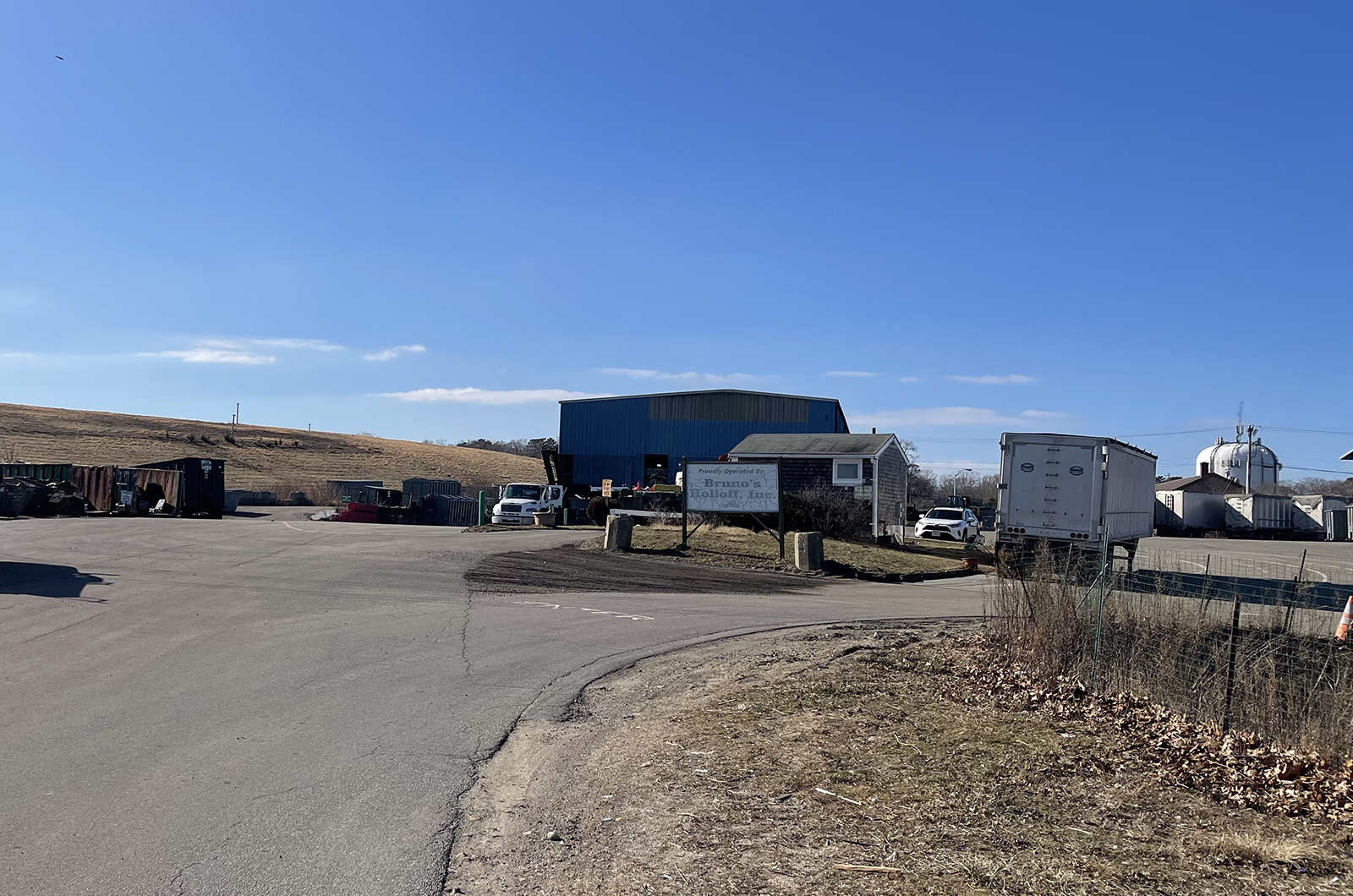
Oak Bluffs is pursuing $2 million in grant funding to start a food composting service at the town’s transfer station.
The select board voted Tuesday to submit a proposal to the U.S. Environmental Protection Agency for a composting facility that could process as much as 2,080 tons of food waste a year, cutting down on the amount of scraps that get shipped off Island.
The idea builds on a pilot project from 2016, where a group of nonprofits processed the scraps of restaurants and other Vineyard organizations to feed the insatiable hunger of compost among Island’s landscapers, gardeners and farmers.
“We want a circular economy,” said Emma Green-Beach, the select board member spearheading the project. “We want to reduce our carbon footprint by not sending so much waste off Island. We should be taking the opportunity to support the businesses in our community that are obligated to separate their food waste and do something productive with it.”
Past studies have estimated that about 6,500 tons of food waste is created on Martha’s Vineyard annually. Right now, much of that is loaded onto tractor trailers and shipped to the mainland.
Massachusetts instituted a ban in 2014 that requires food waste to be removed and processed separately from traditional disposal methods for all businesses that produce more than half of a ton a week.
Oak Bluffs wants to erect a building at the transfer station and put in a five- to eight-ton composting drum to expand the island’s current food waste collection. Only one hauler currently collects food waste for composting.
Ms. Green-Beach said the grant process is highly competitive and there is no guarantee that Oak Bluffs would get the money to pay for it.
The board approval included contingencies that the project get fully funded for the first three years, and after that other towns involved would have to share the costs of operating the composter.
Before passing the motion, several board members questioned if it was the right move for Oak Bluffs. Some worried the town would be taking on another expense that would benefit the entire Island, but only Oak Bluffs residents would be burdened with the cost.
Others also worried about becoming dependent on outside haulers to run the program and had concerns about whether the town would be liable if any of the compost produced there has per and polyfluorinated alkyl substances, better known as PFAS.
But after the contingencies, most of the board was comfortable with pursuing the grant. Only chairman Ryan Ruley voted against the project.
“I think it’s a no-brainer,” said board member Gail Barmakian. “I think we have an opportunity here to be at the forefront.”
Comments
Was there any testimony as to
Rational Person Oak BluffsWas there any testimony as to how many tons of compost the island consumes each year? What do we do with it if it's less than 2080 tons?
This is a bad idea… rats and
Jim OBThis is a bad idea… rats and rodents will be an issue.
I am all for composting, but
Sara OBI am all for composting, but not food and grease. Brings a lot of problems especially rodents.
Oak Bluffs has its present
IslanderOak Bluffs has its present transfer station built and paid for by the Martha's Vineyard Refuse district. After it was built and operated as a district benefiting the island they voted themselves out of the district and took full ownership of their transfer station. It is interesting to me that "Some [board members] worried the town would be taking on another expense that would benefit the entire Island, but only Oak Bluffs residents would be burdened with the cost."
My concern is rodents will
Teri Oak bluffs close to dumpMy concern is rodents will become out off control in this area damaging homes and property as well as Disease and the possibility of hurting our children and pets who play outside.
This is a bad idea! Rodents
Terry OBThis is a bad idea! Rodents will be a huge problem! What are these folks thinking??
Composting is a great thing but not food…
Rats and rodents bring diseases to people and pets…
This all sounds good…. But
Kate OBThis all sounds good…. But how about the rodents? I lived near a neighbor who did composting the correct way in a very small scale…
We had rats and more rats for years, until he stopped….
Composting leaves and landscaping debris is a no brainer. Food waste not a good idea.
As the island's local
Vineyard Conservation SocietyAs the island's local environmental advocacy group, VCS is an enthusiastic supporter of this project. Should the grant funding come through (full disclosure: we wrote a letter in support), the new facility in OB would be a huge leap forward toward the ultimate goal of processing all our island's food waste locally, instead of burning diesel sending it off island with the trash. (Fun fact: the estimated amount of food waste sent off island corresponds to 432 tractor trailer loads annually!) To the concerns about pest animals, this proposal is for an in-vessel composting system. Food scraps are loaded into one end of a large *fully enclosed* rotating drum, and come out the other end a few days later as nearly finished compost that has very little odor and is unattractive to rats, birds, etc. If anything, this system should represent an improvement in odor and pest issues over the status quo of mixing food in with the general trash.
We understand and share
Woody FilleyWe understand and share people's concerns about rats and odors when dealing with food waste. After many years of research, the MV Food Waste Initiative Committee chose drum composting (the technology used in this proposal) because it addressed all of these concerns by composting in a closed vessel instead of a wide open area. Right now food waste is mixed in with all the other trash where it is loaded into a tractor trailer awaiting shipment off Island. In the future the food waste will be separated from the trash and go directly into the composting building. It will be mixed with the carbon source and put into the drum. Because air is such an important part of the composting process, it is mechanically pulled through the drum, and then filtered after it exits the drum. After 4 days in the drum the initial curing process has completed and the mixture no longer has the odor or food attraction issues it did before processing. Right now many tractor trailer loads of compost are brought to the Island each year to meet the demand of landscapers and nurseries. When we did a marketing analysis for the compost now being created at the pilot drum, one landscaper said they would buy all of the material we could produce. For context, I am working with the Food Waste Initiative Committee and the various groups supporting composting of our food wastes.
I'm so pleased to learn about
Marc Rosenbaum West TisburyI'm so pleased to learn about the next steps in this effort. In closed drum composting there isn't a rodent problem (I looked into large scale composting years ago for a client and visited sites) and as pointed out above, this will be far better than current mixing of food and other waste. We'll save money by not sending food waste off-Island, and we'll have a valuable (and sale-able?) end result, compost to build our soil health. Thanks to all involved in making this a reality!
Add new comment