


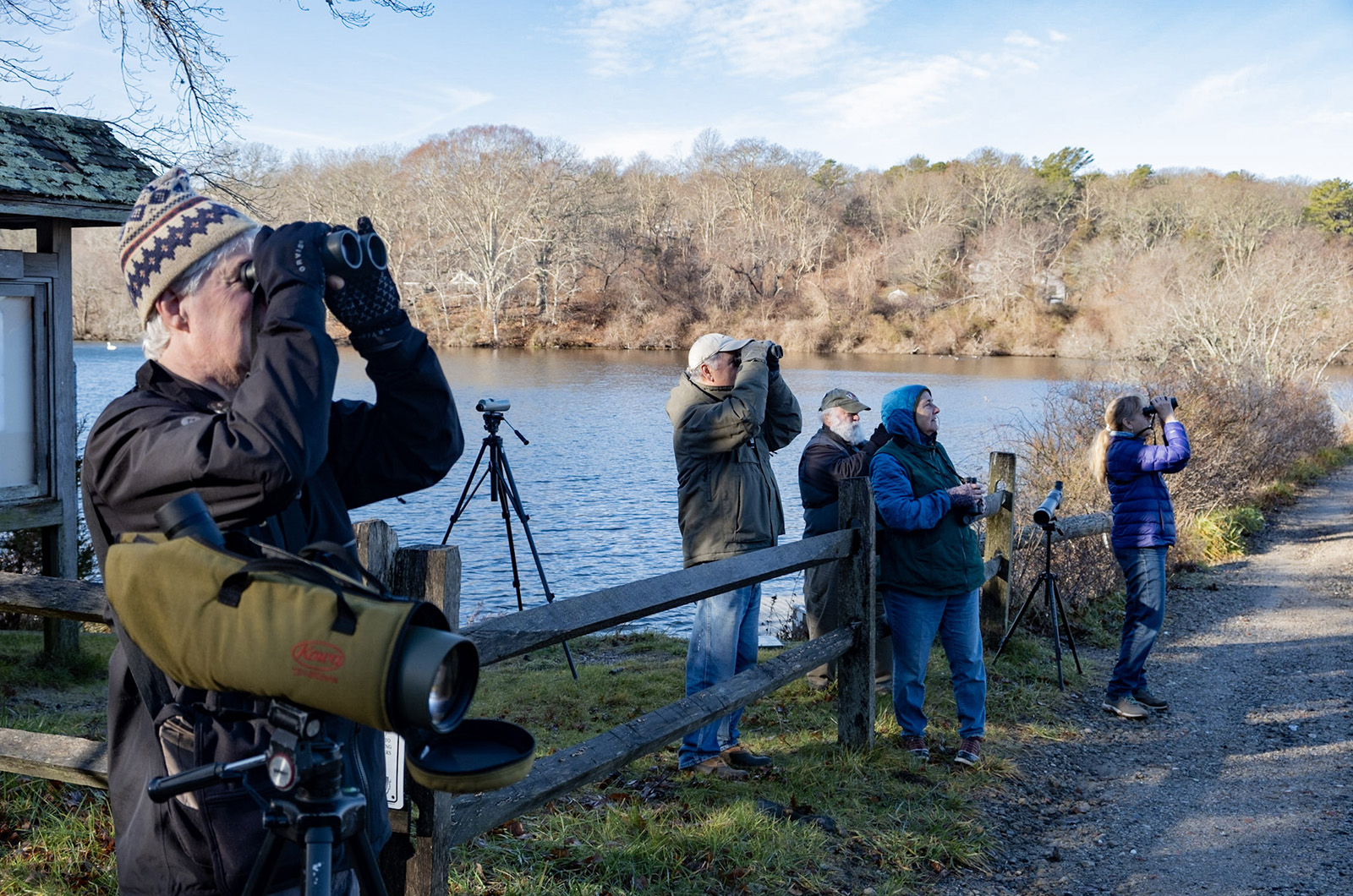
It would be a long New Year’s Day, starting before dawn and ending in darkness. The birds rarely stayed put, and neither did the birders.
Early on the first morning of 2023, as Luanne Johnson and Chris Neill unloaded their tripod-mounted bird scopes from the car trunk, they were greeted by an auspicious visitor: a Felix Neck barn owl, poking its head out to greet the eager birders.
“It’s a great start. They’re a rarity,” Ms. Johnson said, before turning her binoculars back to the sunrise over Sengekontacket and identifying an errant herring gull.
The race was on and he annual Christmas Bird Count had begun, as birders spread out across the Island to spot, count and identify as many birds as possible. It would be a long New Year’s day, starting before dawn and ending in darkness. The birds rarely stayed put, and neither did the birders.
A merlin is always a cool find.
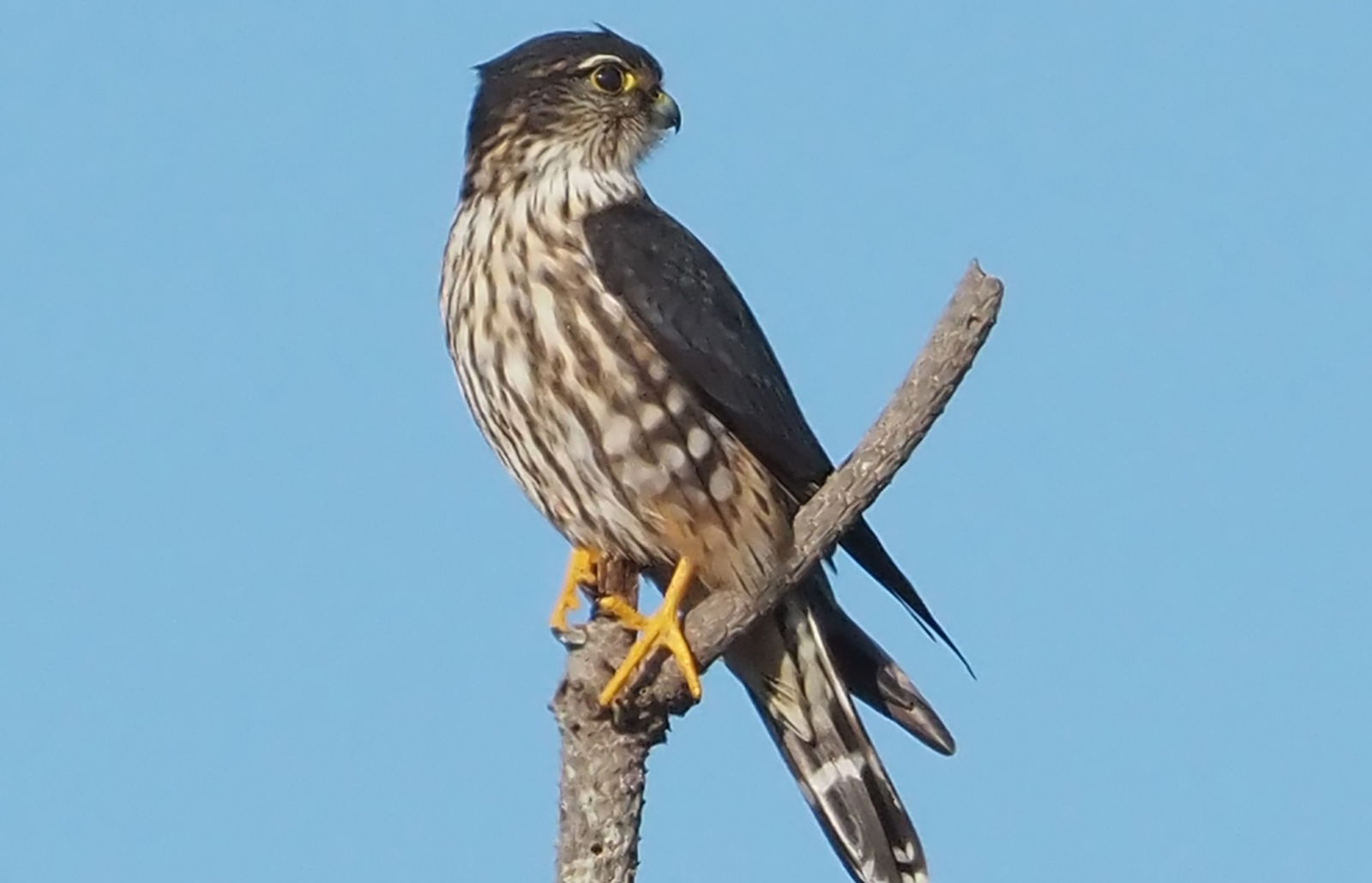
A merlin is always a cool find.
The roots of the Christmas Bird Count date back to 1900, when the Audubon Society encouraged a bird census as an alternative to the 19th century tradition of an annual bird hunt. On the Vineyard, it began in 1960 and has been a valuable resource for avian researchers and enthusiasts alike tracking the Island bird populations.
For ecologist Tom Chase, who has participated in the bird count since 1971, the event has been a great way to gain deeper insight into the changing Island ecosystem.
“You see things over the years and you start teasing out the larger trends,” he said while searching for sparrows in a Lagoon Pond thicket on Sunday.
Birders are deeply attuned to environmental changes, just as birds are sensitive to their climate. At a busy Felix Neck bird feeder that morning, Mr. Neill noted an abundance of Carolina wrens, a species which arrived on-Island after the last four decades of warming climate.
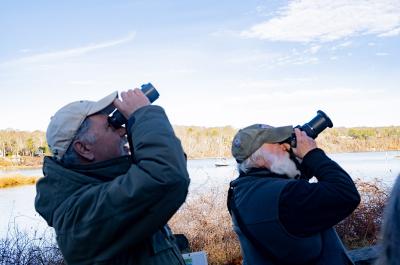
Tracking a bald eagle.
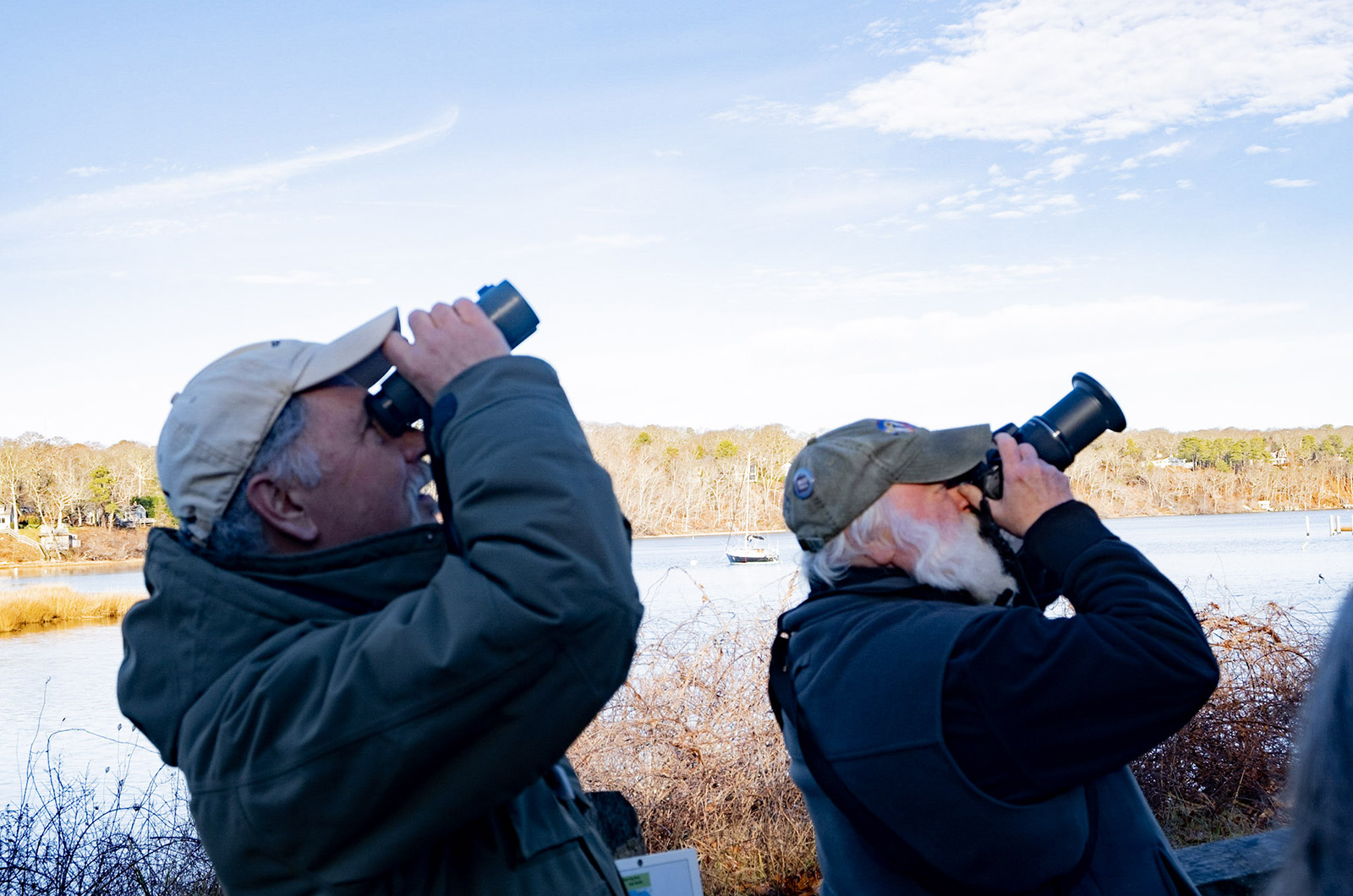
Tracking a bald eagle.
“I know it’s hard to imagine the Island without cardinals, but even they didn’t arrive until the ‘50s,” he said.
Felix Neck was abuzz with avian energy, with several rare species identifications. Among the highlights were an elegant, light cappuccino-colored pintail duck, a flock of energetic yellow-rumped warblers (colloquially known as butter butts) and a brown creeper, a dainty little brown bird that hops its way up and down trees in search of insects.
It was, in Mr. Neill’s birder parlance, “a pile of birds,” with 37 species in total.
It was a rather slower morning for Gazette bird columnist Robert Culbert, whose team covered territory south of the state forest, between Oyster and Tisbury Great Ponds. To aid in his quest, Mr. Culbert employed a secret weapon of winter birders: a recording of bird calls responding to the presence of a screech owl.

Canada geese take to the air.
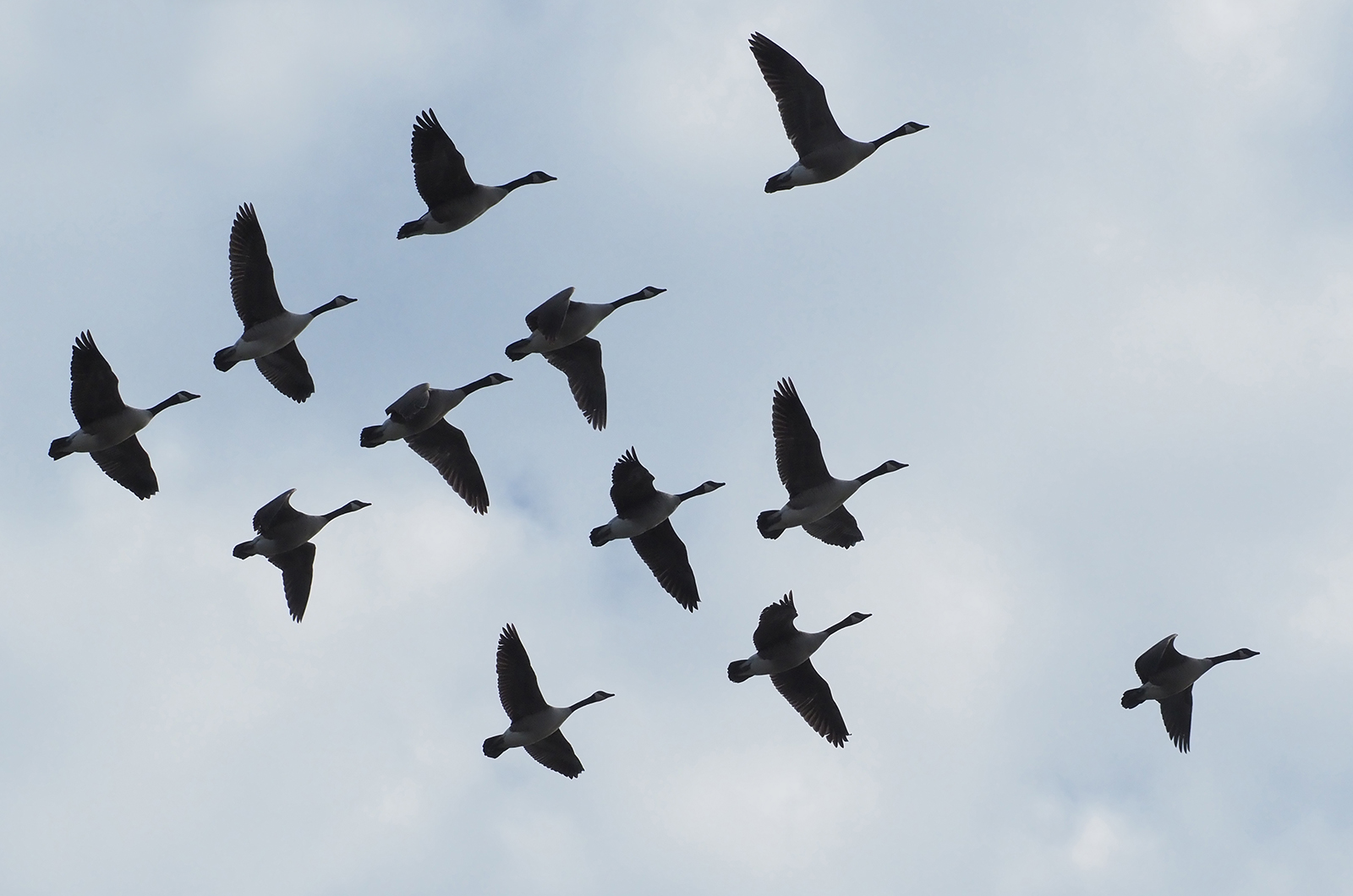
Canada geese take to the air.
“All birds’ alarm songs are fairly similar, so they all recognize each other,” Mr. Culbert said, explaining his use of the calls while looking up into a pitch pine cluster at Sepiessa Point. The screech owl impels the other birds into mobbing behavior, he said, where individuals of all species join to chase off the interloper.
It is a tool used sparingly by birders, given its propensity to irritate the birds. This was evidenced by a precocious chickadee who tried pecking away at the source of the screech owl call: Mr. Culbert’s phone.
On the other side of the Island, Nancy Weaver coordinated her own group off Lambert’s Cove Road.
“I’m not the best birder in the group, but I am the leader,” Ms. Weaver admitted.
Scoping off South Beach.
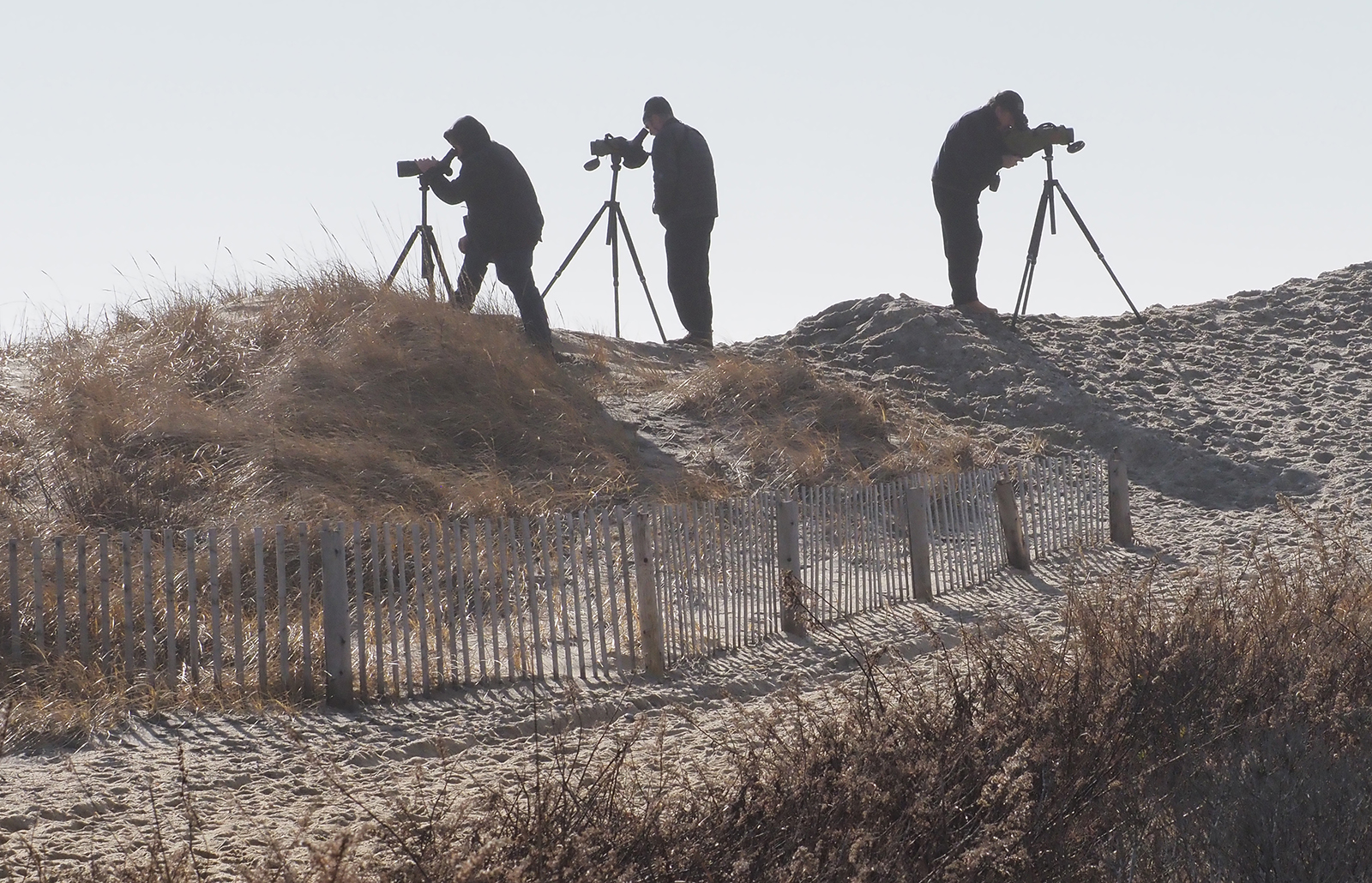
Scoping off South Beach.
While she organized the group's efforts, teammate Margaret Curtin kept her keen ears open for any calls she might be able to identify.
One of their best finds was a bluebird flock near Lambert’s Cove Beach. The group delighted when one individual swooped down from the tree, brought back a caterpillar and ceaselessly beat off its woolly hairs before devouring it in a single bite.
Following long treks through forest, beach and scrub, the bird counters reconvened at the Wakeman Center to compare notes, regale with stories of the days’ adventures and to compile a final tally. Many took note of the unusually pleasant weather for the Count this year.
“Here’s to a Christmas Count in sweaters!” Mr. Culbert exclaimed.

Tabulating the statistics at end of day at the Wakeman Center.

Tabulating the statistics at end of day at the Wakeman Center.
The final tally had ups and downs. Water ducks and sanderlings both came in with historically low numbers, while not a single pied-billed grebe was found. On the other hand, the group recorded 14 greater yellow legs, higher than any other recorded year.
The preliminary tally came to 120 species and more than 18,000 individual birds.
Most birders hung up their hats after the count, satisfied with a good day’s work. For Ms. Johnson, however, the day was not yet done, as she had resolved to go out owling that evening.
“It’s like a treasure hunt,” she explained. “You can always find one more bird.”
Comments
Bird watchers, I knew a few
Edward the Great EdgartownBird watchers, I knew a few that weren't there ;)
We have lived on a 110 acre
Gary Harmon 320 W. Lake Dr. Edwardsville, Illinois 62025 [email protected]We have lived on a 110 acre residential lake for 22 years. When we got here the first thing I did was install my bird feeders and I keep them full year around. I have noticed a huge decline in all types of birds, except Canada Geese, in the last 10 years. The Mallard duck population used to be so numerous that we had to be very careful not to run over them with our boat. We only allow 10 HP pontoon boats, no jet skis or fast boats. Every year there would be 20-40 Mallard hens with 6-12 ducklings each on the water. This past summer we counted 3 hens with a total of 10-12 babies. The goose numbers have dropped some and the numbers of babies too. Lots of water birds pass through each year including many duck, goose, swan, seagulls, and others species. We always have Bald Eagles, Ospreys, hawks, cranes, egrets, Kingfishers in attendance but their numbers along with the ducks, ect. seem to be slowly declining too. My big concern recently is that he song bird population has really dropped in the last 5 years. Our lot is wooded on the lake side where the feeders are. This year I added another seed feeder and a suet feeder. We can see the feeders from our living room and the patio so we spend lots of time watching birds. This year we did not see one bird from Christmas until today Jan 4. Normally the feeders are covered with Cardinals, Finches, Chickadees, Nuthatches, Woodpeckers and others with Doves feeding on the ground below. In past years I would go through at least 80-100 pounds of seed and filled the feeders once or twice a week. This year I have half of a 40 pound bag left that I bought last spring. Our weather has been typical for the St. Louis area, cold snaps for several days or a week followed by a few warm days and back to cold. That can't be the reason for the decline. Every year we have a fox family in our neighborhood and they may be raiding the duck and goose nests but they are not shy and we often see them passing through the yard but never with a duck or goose. However, much to my wife's delight they do good job of keeping the garden destroying squirrels in check. We were thrilled when the Bald Eagles began showing up 10-12 years ago. They will sit on the limb of one of our or our neighbors oak trees eyeing the water for fish. Some summers the female will show up with one or two yearling on tow showing them how to fish. I haven't found a nest on our lake but we are in the middle of town so that would explain that. However we are about 10 miles from the Mississippi River and there are thousands of acres of much wilder land between us and the river so they seem to like nesting near "civilization" but not with it. When I was a boy in the 1950's we could only see eagles on TV or in magazines and most of them were in Canada. Never ever thought I would see them perching on a tree in my backyard here in the Midwest! In the next few weeks I will be contacting our local state conservation, wildlife areas and Audubon Society to exchange notes about the local bird populations. Hope you folks have had a better bird story than us this year. Cheers... Gary Harmon
Hey Gary it sounds like you
Buck Martin EdgartownHey Gary it sounds like you lived on Dunlap Lake. I’m originally from Granite City but moved to the Vineyard in 87. I still go back home and spend a lot of time in Holiday Shores. You are correct in your bird counts. The population of pretty much everything except turkeys has declined.
The duck and goose population has been affected by breeding grounds up North. And the fact that climate change has made it more favorable for the bird’s breeding they’re not to migrate like the past because the temperatures are milder there. Good luck on the Birding
Add new comment