


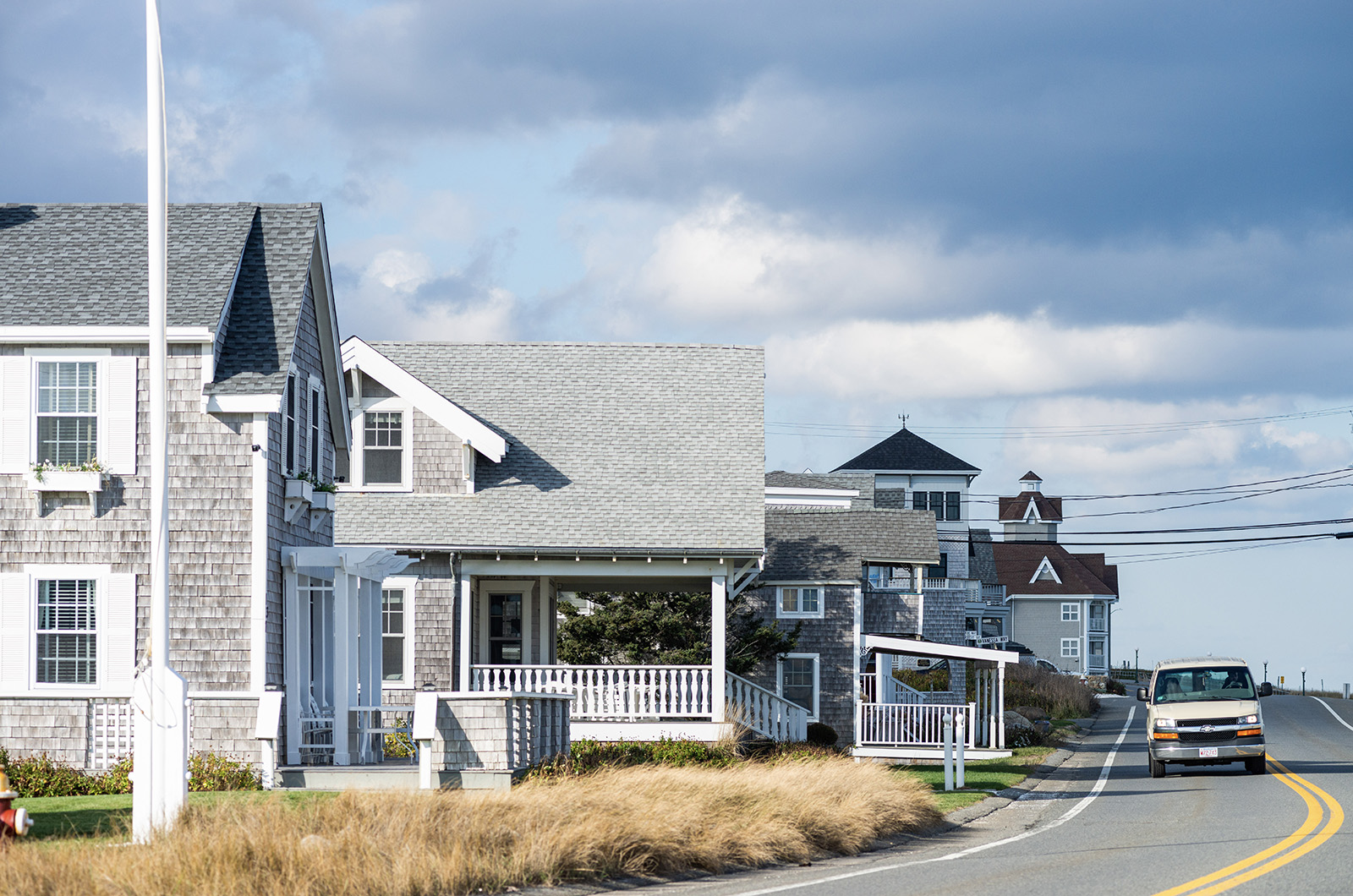
As the short-term rental business continues to boom, planners and housing advocates are weighing everything to address the industry's impact.
As the short-term rental business continues to boom — and state and local excise tax money pours into town coffers — planners and housing advocates are weighing everything from legislative action to local earmarks in an effort to address the industry’s impact on the Island’s housing stock.
The issue came into direct focus at an informal meeting of the all-Island planning boards in early November that included representatives from towns across the Island.
“We are hemorrhaging housing to a short-term rental industry,” said Ben Robinson, chair of the Tisbury planning board and a key player in organizing the meeting. “This issue, out of all the housing issues, seems like one that is squarely in the planners’ purview.”
Although planners didn’t focus on specifics in the meeting, they discussed the logistics of bringing proposed legislation to a future town meeting that would limit corporations from buying and leasing short-term rental properties. And they discussed broadly the impact the short-term rental industry had on Island housing, looking to work collaboratively to address the issue.
“I think we all can agree that we don’t want corporations, non-members of our community, to use our community to fatten their wallets,” Chilmark planner Richard Osnoss said.
Data from the state Department of Revenue shows that the Island has seen local receipts from the rooms excise and short-term rental tax steadily climb since the tax was instituted in 2019 — a growth that town leaders said could be both an indication of more scrupulous collection methods, as well as the enduring strength of the short-term rental industry on the Vineyard.
While the Island brought in $3.48 million total from the rooms excise tax in FY2020, that number ballooned to $5.54 million in FY2021 and $8.63 million in FY2022.
In the first quarter of FY2023, which runs from July 1 through Sept. 30, the Island brought in $3.82 million in tax revenue, more than it did in the entirety of FY2020.
The total represents the largest first quarter on record for the tax revenue, and includes $2.74 million in money just from the 2019 addition of short-term rentals to the tax on hotel rooms.
The tax allows towns to assess a tax of up to six per cent on properties rented short-term. Aquinnah, Chilmark and Edgartown assess a four per cent tax on the rentals, while Tisbury, Oak Bluffs and West Tisbury assess a six per cent tax. The tax is generally collected from renters, although the onus is on property owners to pay it to the state.
The state then pools the money and rebates it back to the towns on a quarterly basis. Since it was instituted in 2019, the short-term rental tax addition has brought in about $12 million in revenue to Island towns.
According to town administrators and accountants interviewed over the past week, the money goes into town general funds, where it is used to help decrease each town’s tax levy. At the end of the fiscal year, any amount of room excise above the town’s budgeted estimate goes into the town’s “free cash,” which the town can use for any municipal purpose approved at town meeting.
Because receipts from the tax have been unpredictable, accountants said that they have been budgeting for the tax very conservatively, meaning that there have been significant surpluses at the end of the fiscal year.
Edgartown town administrator James Hagerty estimated that the town would have about $11 million in free cash at the close of this year — a number he attributed in part to the short-term rental tax, and in part to spending freezes from the pandemic.
Tisbury town accountant Jon Snyder estimated the town’s year-end free cash in the $4 million to $5 million range, and said it has increased in the past four years, in part due to the excise tax.
“When you look at it year-to-year, it goes up steadily,” Mr. Snyder said. “But we’ve been estimating conservatively, because when you estimate your tax levy, you don’t want to have to go back to the taxpayer for more money.”
The extra free cash has been spent on a wide variety of projects in the towns, ranging from buying new highway department tractors to climate resiliency planning to financing capital stabilization funds, including affordable housing initiatives, town reports show.
But as towns grow more flush with cash from short-term rentals, planners are beginning to look at it as an elephant in the room, eyeing the money as a po
tential salve for affordable housing shortages. In Chilmark, the town’s affordable housing committee requested in a recent letter that 75 per cent of the revenue from the tax go to the town’s affordable housing trust. A similar request for 25 per cent of the funds was discussed at an affordable housing meeting in Edgartown.
“I can respect the request,” said Chilmark select board chairman Bill Rossi. “But we’re accumulating a lot of money for affordable housing without projects to spend it on.”
Town officials have pushed back on the requests to earmark the money specifically for affordable housing, saying that it could hurt their tax levies, that the revenues fluctuate and that there isn’t a large enough queue of projects to merit the funding. A prior iteration of the housing bank requested towns use 50 per cent of the short-term rental money to fund the bank — an idea that was soundly rejected at town meetings in 2019.
“When you commit to a percentage like that moving forward, it’s a little bit of a Russian roulette on both sides; the town doesn’t know much it would be giving up, and the housing bank doesn’t know how much it would get,” Mr. Snyder said. “It’ll be a few years before we really have confidence in the short-term rentals [revenue]. But of course they have an enormous impact on the affordable housing problem.”
At the meeting in early November, planners discussed both sides of the coin, noting the need for collaborative action but also that short-term rentals are an integral part of the Island’s economy.
Laura Silber, who was recently hired as a housing planner with the Martha’s Vineyard Commission, recommended that the planning boards examine the experience of similar, geographically isolated resort towns, like North Lake Tahoe and Provincetown.
“Because we don’t have enough hotel rooms, we do need to maintain a level of that inventory in order for our tourist economy to keep functioning,” she said.
In West Tisbury, the affordable housing committee has considered drafting a warrant clarifying which rental uses would be allowed in town considering the precedent of a 2021 Supreme Judicial Court decision, Styller v. Lynnfield Zoning Board of Appeals, that ruled a plaintiff’s short-term rental operation violated Lynnfield zoning bylaws on the grounds that it was a commercial operation in a residential zone. Under the decision, administrator Beatrice Phear said, most of West Tisbury’s short-term rental properties would also be illegal, although enforcement remains a challenge.
Others in the November meeting, like Jim Wallen from Aquinnah, felt strongly that banning short-term rentals would hurt Islanders.
“I think a lot of people wouldn’t be able to live here if people couldn’t rent their houses” he said, adding that he rents his house out in the summer to be able to live there in the winter.
The planners resolved to work with speed on the issue, and decided to reconvene on Dec. 14 to continue their collaborative discussions on legislation that could regulate short-term rentals.
“The question is where to draw the line,” Ms. Phear said during the meeting.
Brooke Kushwaha contributed reporting.
Comments
Money comes in… good for the
Got housing ChilmarkMoney comes in… good for the towns. My concern for mv is the lack of year round housing for middle income families. I am so grateful for the affordable housing initiatives on island. It excludes anyone over the income restrictions. Housing insecurity for local folks is growing. I love our island. I fear the departure of many people who want to stay, but who cannot find options for year round housing. Will we stay or will we go…? Wish we had decent options.
Money comes in… good for the
Got housing ChilmarkMoney comes in… good for the towns. My concern for mv is the lack of year round housing for middle income families. I am so grateful for the affordable housing initiatives on island. It excludes anyone over the income restrictions. Housing insecurity for local folks is growing. I love our island. I fear the departure of many people who want to stay, but who cannot find options for year round housing. Will we stay or will we go…? Wish we had decent options.
Thank you Mr. Rossie for a
Islander61 OBThank you Mr. Rossie for a town official to finally say it out loud, there aren’t enough projects in the works where you can spend the money, therefore, we don’t need the housing bank tax. For all you housing bank people, can someone explain exactly how this money will be spent? Are towns now going into the building business and rental business? I have yet to see a plan that explains how this will exactly work. You want to hire staff but don’t even know if this will work. We don’t even know how much money is needed but yet you want to start collecting it. Once you start a tax it’ll never go away. Here’s a thought. Take $3 million of this STRT and show us how it will work. Until you do that, don’t start collecting a dime.
This has been explained by
DownislanderThis has been explained by the Housing Bank Coalition MANY times over the past year. Go to their website. https://www.ccmvhb.org/
Thank you but it just
Islander61 OBThank you but it just increases my feeling against it. More taxes aren’t the answer to every problem. Eliminate the land bank tax and use this new money as the way to subsidize a housing plan that will fall within the available monies, you can’t just keep on adding taxes. Don’t create another tax, enough is enough. The increase of taxes is going to make living here even harder not easier, even if you can find a place to own.
All this talk of ST rentals
William Cumming New YorkAll this talk of ST rentals causing a housing crisis is incorrect, data available from the U.S. Census show the Island housing stock has increased only slightly, and is far outpaced by the Island’s year round population growth over the past 10 years. An increase in LT residents.... not rentals, look at the numbers as both island papers have reported this trend.
Your comment reflects a
Quitsa ChilmarkYour comment reflects a profound lack of understanding of the nature of the housing issues on the island. The question is not how many housing units exist on the island, the issue is the use of those housing units. Going back 150 years to the summer prayer meetings, there have been more housing units than year round residents. By now after decades of new summer home construction, the ratio of seasonally occupied houses to year round occupied houses is quite high, up to 75-80% up island. What has happened with the acceleration of the short-term rentals is that the stock of year round rentals is being depleted and converted to short-term.
The last thing we need is to encourage more construction and more dense development. The infrastructure of the island is already beyond the breaking point in terms of traffic and wastewater management. More development will be the nail in the coffin of the unique rural charm that makes Martha's Vineyard an appealing place to visit and of course to live. The crisis is to figure out and quickly implement mechanisms that will ensure a reasonable proportion of the EXISTING housing stock is available to year round residents.
Why not take the tax revenue
StephenWhy not take the tax revenue and offer to help anybody on the mainland to travel via SSA to the island to work on the short term? Defray the cost and look into long term housing issue solution.
The Island has been looking
Albert NauThe Island has been looking into a long term housing solution for at least sixty years that I know of.
The easy solution is to limit the population.
My favorite quote here is
Nis Kildegaard EdgartownMy favorite quote here is from Bill Rossi of Chilmark, who observes, "we’re accumulating a lot of money for affordable housing without projects to spend it on." It's past time for the leadership in Chilmark to see housing as an Island problem, not a Chilmark problem, and pitch in to support projects in neighboring towns. If Chilmark has the money and Oak Bluffs or Tisbury has the opportunity, then Chilmark should simply contribute and help make it happen. Why is this so hard to see?
Not sure this is inherently
mike kelfer chilmarkNot sure this is inherently "wrong"...the owners of these homes are paying their Real Estate taxes to Chilmark - seems reasonable that the collected rental taxes support local affordable housing efforts as well as other local needs. Perhaps a percentage of monies received could be earmarked for island-wide initiatives...
This is why people lose trust
Jose Oak BluffsThis is why people lose trust in government and government's "altruistic" designs. A well vetted plan to deploy the revenues should have been in place before any tax was approved. A tax without a plan to spend it seems more punitive than productive. While our politicians have now woken up and scramble to come up with a plan, prices continue to go higher putting more properties out of reach, meaning that opportunities to help the housing crisis are being squandered by lack of foresight. If these politicians have no plan, and have not given the whole matter enough thought, then please return the proceeds to the taxpayers. After all, it is their money, not some altruistic slush fund.
Instead of Pols, curtailing
Tony Driscol EdgartownInstead of Pols, curtailing the market forces of housing rentals, they could instead use the tax monies to build a employee housing village of 1500 studio, 1 2 and 3 bdrm apartments near the airport. this location is close to Edgartown and Oak Bluffs and rents could be held at $600-$1000 a month with the tax dollars covering the rest. But Pols do not have the earnest desire or civic aptitude to really build what the Island needs...BULK HOUSING for the island WORKER.. not more giveaways to those that are homeowners.
Where is this magical land
Rational Person Oak BluffsWhere is this magical land near the airport that can be developed? Can't happen at the airport of the state forest.
Between the Airport entry
mike SomewhereBetween the Airport entry road and the commercial strip on Barnes Road - Behind then new liquor store and Vineyard Decorators - Thats where.
This is an excellent idea,
Christine SengeThis is an excellent idea, Tony!
It is no secret that hedge
Marty Milner TALLAHASSEEIt is no secret that hedge funds, banks and private investment groups have moved into the purchase of single family homes in select zip codes. By capturing the improvements (like the best schools) families can no longer afford to buy in those zip codes, and can barely afford the increased rent. No doubt they have planned to leverage their equity cash flow by entering the STR market. Cash flow is king; community resilience not so much.
Martha's Vineyard has the right zip codes and the long term duration cash flow to attract these corporate buyers. It is time to define what a community is, and create businesses that provide high income jobs on the island so a permanent community can sustain itself.
Shooting holes in the bottom of the boat, hoping that fish will swim in, is NOT a sustainable strategy. There are sharks in the water that are experienced predators. Maybe you can forestall this intrusion; you are looking a deep pockets that can see the potential future cash flow for real estate on the island. Once they OWN the homes they have rights. Yes, there are towns around the country ACTING against this trend.
If all six towns don't have something in place before next spring it may be too late. Year round housing is a red herring( though an important issue!)- the very foundations of the island community has attracted concrete termites. Should families own the homes in the communities and any corporation be limited to homes only owned by CEOs of LLCs? Get four moves ahead, quickly.
Figure it out. Water is splashing over the gunnel, and you are almost out of sight of land.
Big corporations ae not
Rational Person Oak BluffsBig corporations ae not buying up island real estate for short term rentals. It doesn't make any business sense at all. Yes they may be buying up blocks of Miami beach or some other lucrative year round rental markets but the short season on the Vineyard is not on their agenda.
Sadly this is no longer true.
DH Vineyard HavenSadly this is no longer true. Several businesses I have worked with have now purchased multiple properties in order to house their employees through the season, it’s gotten too difficult to source a full staff from the local employee pool. They have all purchased the properties with all-cash offers and house employees there from Memorial Day onwards, with the houses empty in the off-season.
The revenue isn’t a windfall.
MV Taxpayer EdgartownThe revenue isn’t a windfall. Spend it wisely. How about making the Vineyard more affordable by lowering taxes. That makes it more affordable. Increasing taxes and fees make it less affordable. It common sense.
My family rented rooms and a
Mr. Burns VhMy family rented rooms and a small apartment to make things float. We have always done what is necessary to live on this island. It is the way. As an adult I do the same thing. I work multiple jobs and kill myself year round in order to get by. This ST rental tax is another way for wealthy people who don’t need the income to stick it to middle class. People who don’t need the income don’t rent their rooms. They don’t rent their houses and leave for the summer. You know what? The people coming up with the rules suck and probably have never struggled like the legitimate year round population. Try packing your whole life up in order to make enough money for amenities. Islanders, the real ones, are dying here. Why don’t the towns come up with something reasonable like changing zoning laws so we legally can rent out year round portions of our houses? Let’s think about single parents who are desperately trying to make up for not having a spouse and find something reasonable to help them. Why don’t you increase taxes further on mega homes or actual non-islanders who this is just an investment property for them, which creates hollow housing infrastructure. Why don’t you buy up a swath of land in the woods and put in a huge apartment building with those funds? Buying 1 duplexes with those funds is ridiculous and just funding the select group of builders who came up with this regulation. You want to preserve MV? Start by supporting the people who live here… not taxing them further.
You ask "Why don't you
Factual Taxation without Representation VHYou ask "Why don't you increase taxes further on mega homes or actual non-islanders who this is just an investment property for them, which creates hollow housing infrastructure." Tisbury actually does. If you knew and paid attention, the town is required every year to have a public hearing about tax rate and the town apportions those non islanders a higher tax rate while giving the residents a residential exemption. It's easy to say buy this and do this, and some of it does happen (Kuen's way) but the larger picture is what slows things down. Wastewater is a major concern as to how to deal with this housing you talk about being built on a swath of land in the woods. MV can't be preserved by saving a house that's over 100 years old. It's saved by taking care of the community and having knowledge to progress those ideas is what is key. Zoning by law changes is key. Edgartown has it right but other towns are downright lazy in changing their zoning to accommodate people with a little money (even though silver spoon syndrome is rampant on this island).
There is no island economy
Mark EdgartownThere is no island economy without STR, full stop. Siphoning taxes which are used to help keep overall rates down and more affordable for homeowners only contributes to the affordability issues.
How about asking the people
Chris KatamaHow about asking the people who pay the tax what they might like to see done with the money? Novel concept. Politicians know how to do one thing - spend other people’s money - and they all have ideas on what to do with this “excess”. Plainly and simply, this was a money grab by the state and towns. Another indication that Taxachusetts is alive and well.
Whatever you decide, please
Christine SengeWhatever you decide, please stop weekly rentals in residential neighborhoods. A weekly rental may work in a commercial downtown area. But we live a neighborhood association, outside of town, and a woman from out of state bought the house next door and turned it into her personal cash cow with noisy weekly rentals May through October.
I calculate short-term rental
Peter Bruce ChilmarkI calculate short-term rental revenue at about $25,000 per year-round household (($8,630,000 / 0.05) times 2.5 people per household) [average tax rate of 5%, population of 17,000]. Of course, a lot of that revenue goes to off-islanders. Still, there's average tax revenue of about $1250 per year-round household. That's a lot of money - will the island become dependent on its status as an airbnb destination?
There are so many people who
Oak Bluffs Grandma Oak BluffsThere are so many people who don't bother with paying this tax that these rental taxes must be from airbnb or vrbo rentals that collect this tax. Most campground cottages owners in OB rent directly themselves and just collect the rent - no tax, no fee, no cleaning fee, etc. so there's still a lot of tax to be collected, if you could look up and see if a house is registered but all you can do is see if a property on the street is registered so it's an easy tax not to pay. That said, glad to see the funds come to the island.
Focusing on the math for a
skip OBFocusing on the math for a moment, $8.6MM in tax payments to the towns imputes $140,000,000 in payments to homeowners who rent, creating a LOT of financial incentive to do so. Those payments would support $500+ million of commercial lending payments for Island home sales to commercial enterprises (read AirBnB, Vacasa, etc). Placing that on perspective, RE sales on MV totaled $1.3 billion and/or over a third of Island homes can be acquired for $500MM - that would wind up in use for three months annually. At the present growth rate this rental tax will surpass our oyster fishery in the next three years - as one example - while at the same time putting homeownership by families out of reach. We are half way to the US definition of a Metropolis whose future rests on the island sized global decision making of 6 townships.
This is crazy. If you have
Tom Engley West Tisbury.This is crazy. If you have yours you don’t want others to have theirs. People think about this. You could be living in Ukraine think about that please.
New taxes to our local towns
Rational Person Oak BluffsNew taxes to our local towns are like a drug. They need more and more and won't give up control. There is no such thing as "earmarking" them for affordable housing.
Our town needs to ban nightly
Paul J Vineyard HavenOur town needs to ban nightly rentals by requiring rental properties which wish to rent for periods less than a 30 day length of stay to have to abide by the same rules and regulations as a commercial hotel, that move would end air b&b in Tisbury
The housing crisis is the
Islander MVThe housing crisis is the logical result of the attitudes over the years of Martha’s Vineyard: all tourism is good, bringing money to the island is healthy, money, money, money. A larger perspective as to why this crisis has befallen us that goes beyond taxes and programs is needed.
Add new comment