

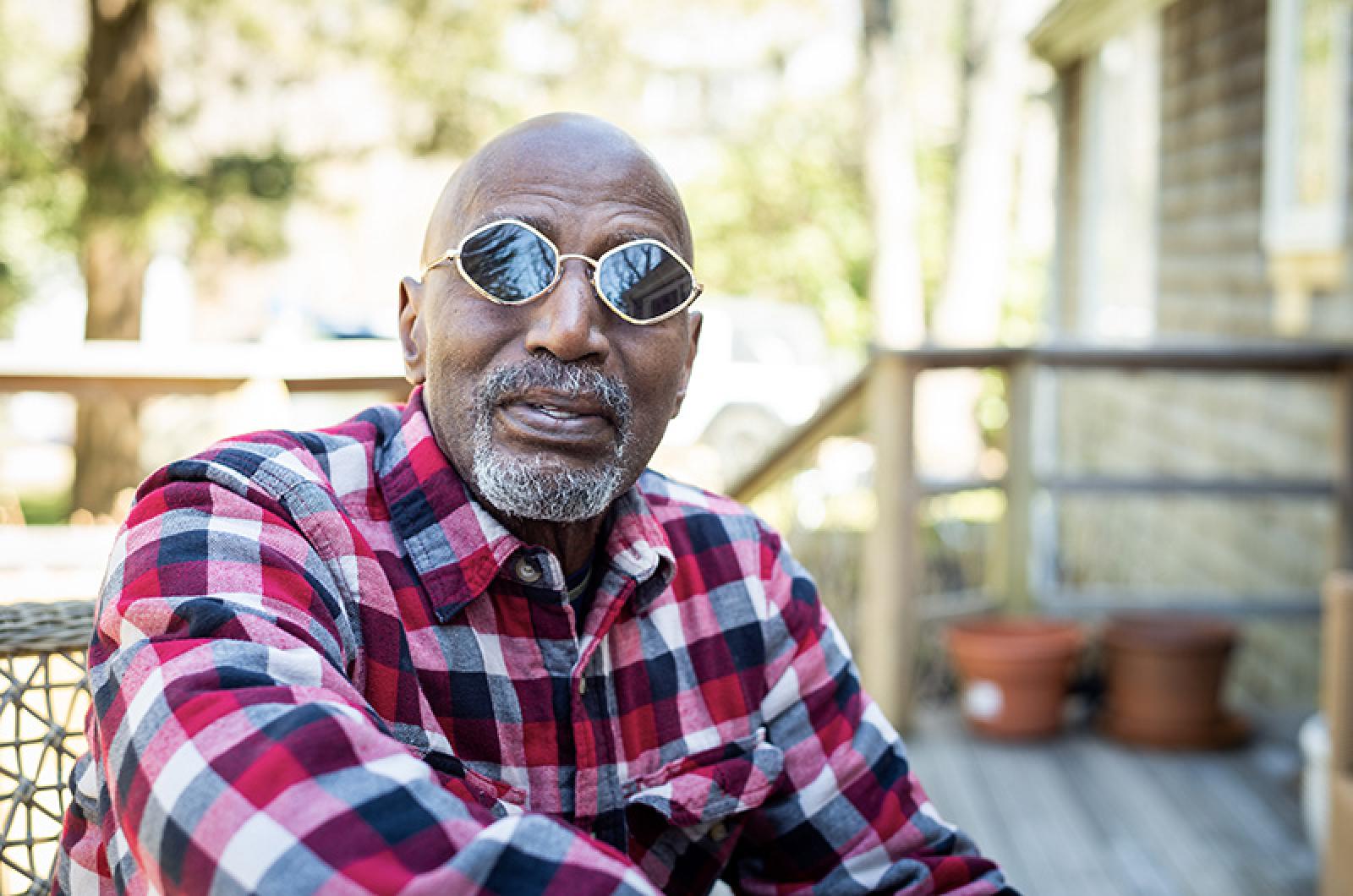
Growing up in New York city, Thelonious Sphere Monk 3rd did not think of his dad as a famous jazz pianist. He was just dad.
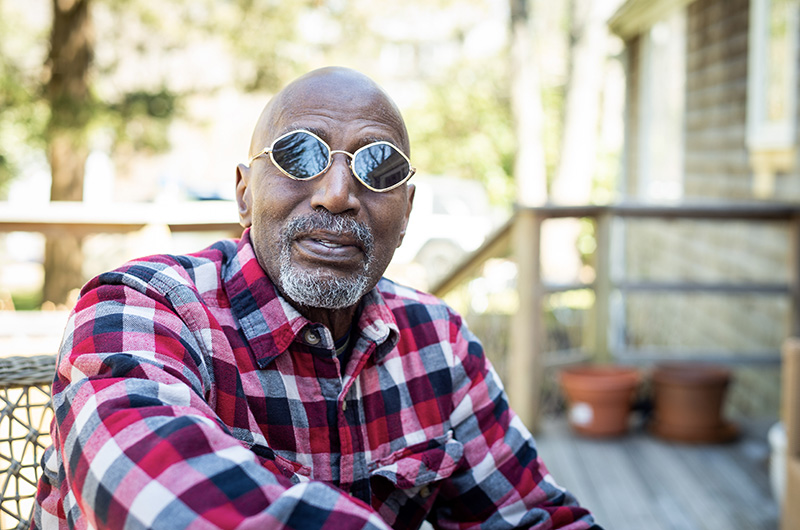
Growing up in New York city, Thelonious Sphere Monk 3rd did not think of his dad as a famous jazz pianist. He was just dad.
“People would say to me, ‘Do you know who your father is?’ which is a ridiculous question when you’re five or six years old,” Mr. Monk said. “Yeah, daddy, that’s who my father is.”
Mr. Monk did not understand his father’s musical genius until he was 19 years old, he said. In the summer of 1969 he was building a stereo system and needed a record to test out his new speaker, so he dropped the needle on an album by his dad and on came a song called Work. Mr. Monk lay down next to the speaker and became hypnotized by the song’s melody.
“I must have played that melody over and over again for 40 minutes,” Mr. Monk said. “It was that hot summer afternoon that I realized who my father was, and I said to myself ‘the guy who’s laying in the bed snoozing next to me is Thelonious Monk.’”
Sitting in his wife Gale Grain’s family home in Vineyard Haven, which Mr. Monk has been visiting since 1977, the 72 year old reflected on his relationship with his father as well as his own career as an award-winning drummer, teacher and steward of his father’s legacy.
“It’s been a fantastic magic carpet ride for me,” Mr. Monk said.
Thelonious Monk Jr., the pioneering jazz artist known as “the high priest of bebop,” died in 1982. In life he was criticized for his experimental style and eccentricity, the latter of which is now understood to be due to severe mental illness. His son reveals a fuller picture — one of a family man beloved by all.
“I am very, very grateful. I often tell my father, I say ‘Dad, you know what? You were right and they were wrong,’” Mr. Monk said. “I still can’t find anybody who’s ever had two bad words to say about Thelonious. He was just a stand-up guy and everybody loved him.”
The elder Monk told his son he did not have to be a musician. He should be himself, and if that meant being a garbage man then he should be the best garbage man around.
“He released me from his shadow,” Mr. Monk said. “I didn’t have to worry about being a musician because daddy was a musician.”
So when he started playing drums when he was 15, he knew he was doing it because he loved it, he said. Before that, he had only dipped his toe in the drumming world. He played a bit here and there but did not tell anyone at home because he wasn’t sure if he wanted to commit to it. But once he decided to go for it, he began practicing seven hours per day. Seven hours became 10 hours once he graduated from high school.
“I became a real maniac,” he said.
To keep from pressuring his son, the elder Monk never asked if he was practicing or commented on his progress, Mr. Monk said. But he was listening the whole time. And when he decided his son was good enough, his father asked him to join his band. The two played together for five years, until the elder Monk’s retirement in 1975. It was a validating experience, Mr. Monk said.
“My father was so real. As much as he loved me, if I couldn’t get the job done he would have fired me.”
Following his dad’s retirement, Mr. Monk started the T.S. Monk band with sister Barbara Monk and friend Yvonne Fletcher. The band emerged when R&B was bursting on the scene and jazz was receding from the cultural consciousness, causing Mr. Monk to pivot. For the first few years the band struggled to get traction in the new genre.
Then the group had a hit in 1980 with a song called Bon Bon Vie, Mr. Monk said. Released ahead of the group’s first album, House of Music, the song reached number 63 on the Billboard Top 100. The album was successful, giving the group stability.
The group rode that stability until tragedy struck in 1983, he said. Yvonne Fletcher and Barbara Monk both died of breast cancer four months apart from one another at the age of 29. The losses caused Mr. Monk to give up music when his career was beginning to blossom.
“I was on cruise control and I was feeling real good about life, and I felt that life turned upside down,” he said. “I stopped everything. I didn’t play drums, I didn’t want to play R&B, I didn’t want to do anything.”
Instead of playing music he became a mentor, teaching a group of kids who would later form a Grammy-award winning reggae band called Morgan Heritage. He also helped start the Thelonious Monk Institute of Jazz, a nonprofit focused on helping young jazz artists, he said.
He came back to music out of necessity in 1991. The Institute was sponsoring a concert and had brought in musicians, including Dizzy Gillespie, Lionel Hampton and Herbie Hancock, to play. But they couldn’t find a drummer and so Mr. Monk stepped in.
Shortly after he decided he wanted to play again. And this time he wanted to play jazz.
The second iteration of the T.S. Monk band, this time a jazz sextet, made its debut at the Playboy Jazz Festival in 1992. Despite having the noon slot on the first day, not exactly primetime for a three-day festival, the group played for a crowd of 19,000 people and the Los Angeles Times called it the best set of the weekend, Mr. Monk said.
“Jazz was in my blood,” Mr. Monk said. “I didn’t know how the jazz community was going to take to me coming out of R&B, but they took to me.”
In 1998 Mr. Monk won the DownBeat Album of the Year for Monk on Monk, a tribute album to his father. Since then most of his work has shifted to behind the scenes. He has spent a lot of time teaching and connecting young jazz musicians with producers as well as running his father’s estate, he said. But he has not stopped making music of his own. His band will soon release the album Continents, its first in 13 years.
“My father had told me ‘don’t just be no drummer, that’s corny,’” he said. “My life has been just an adventure, right down to right now.”
Comments
What a great story,
Taalibah Oak BluffsWhat a great story, validating my thoughts on how DNA transmits not only physical traits but intellectual and emotionally as well...viva La MONK!!!
I remember hearing Mr. Monk
Michael Oak BluffsI remember hearing Mr. Monk often in my studio throughout the 90’s. He was featured heavily by Eric Jackson on WGBH. Great article and legacy.
In high school, I was a
Steve Pembroke, MAIn high school, I was a member of the Columbia Record Club. Every month a new LP was mailed for me to keep, and pay for, or return. The Freewheelin Bob Dylan didn't appeal to me and I sent it back. But then Monk's Criss-Cross arrived and I loved it. Like he can be heard to say at the end of the tune: "Man, that's wild!"
Yeah I remember T.s like it
Jose ortiz Bronx NYYeah I remember T.s like it was yesterday. I was there when tragedy struck twice loosing two people he loved was heavy on him. He gave me my first weight set. He was a tremendous help to as a trouble youth he always had a smile and encouraging words. He's a chip off the old block much love!
What a blessing to have had
Mark Lyons New JerseyWhat a blessing to have had such a wonder father who was not just another jazz musician but a unique one-of-a- kind treasure. I began listening to Thelonious Monk's music back in the early 80's and now in my late 60's, I am still listening to his music, savoring it just like when I first heard it. I've heard Mr. Monk referred to as a genius. When I listen to the melodies that came straight form his soul, I am inclined to agree. I wish young people would discover this great music. There is nothing today that come close to the repertoir of the incomparable Thelonious Monk.
Add new comment