

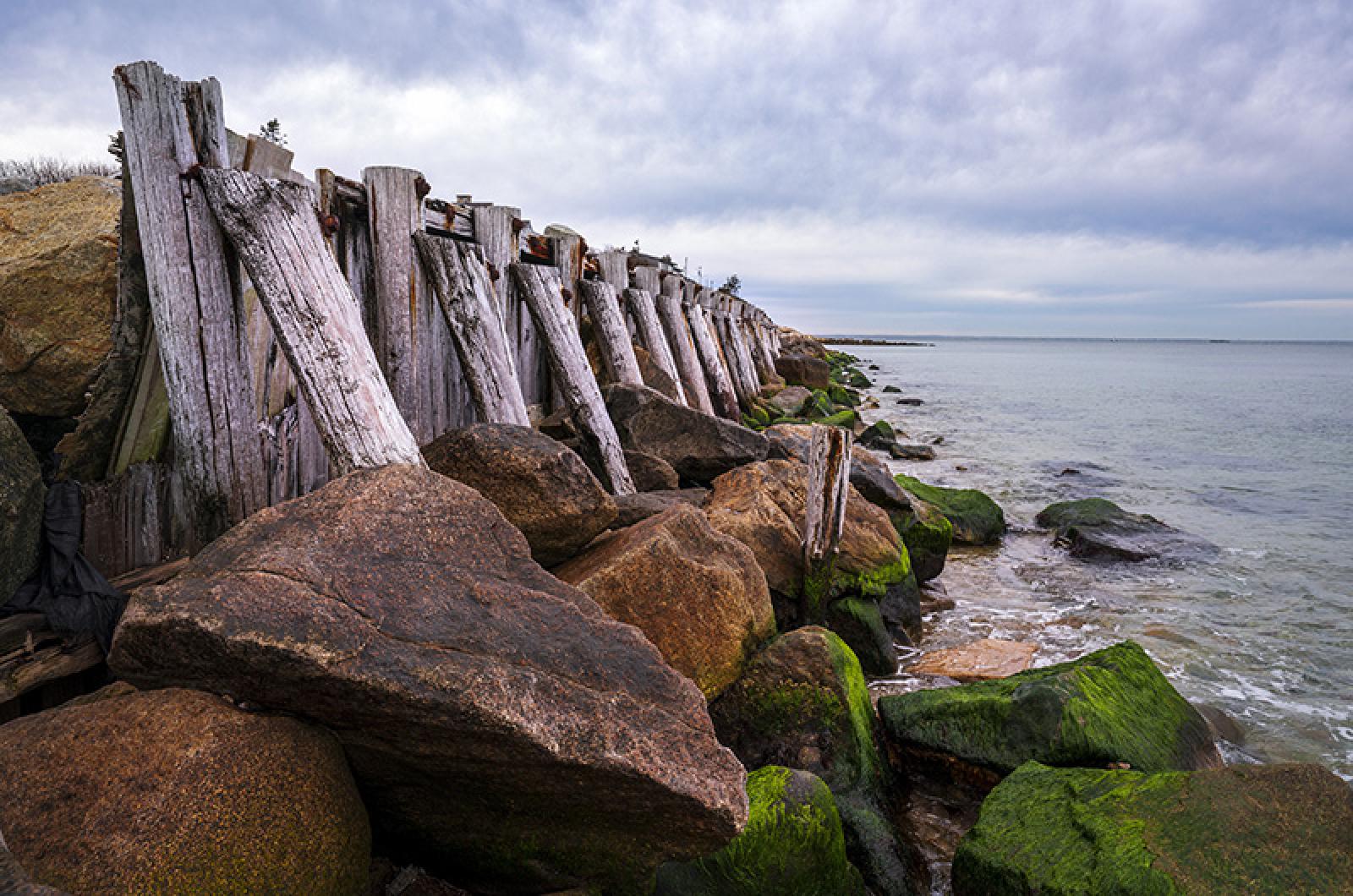
More than 100 people with a wide range of backgrounds atended an online meeting as the Island formally kicked off its climate action plan.
“Our greatest, most urgent challenge.”
“Deeply concerned about habitat loss and fragmentation.”
“Protection of water quality in our ponds and our aquifer.”
“The chance to work on something important, Islandwide.”
These were just a few of the comments that spilled out in the Zoom chat bar early this month when the Island formally kicked off its climate action plan. More than 100 people with a wide range of backgrounds atended the online meeting. All expressed a strong desire to contribute.
Two years in the making and funded by modest startup grants with more funding still needed, the climate plan now kicks into high gear. Organizers have set an ambitious deadline of six months to complete a 20-year blueprint for an Island on the front lines of the global climate crisis.
The group, made up of dozens of volunteers and leaders from the Island’s many diverse communities, is working under the umbrella of the Martha’s Vineyard Commission.
“We are slowly building a climate army,” said Meghan Gombos, an Aquinnah resident who is a consultant for the group.
In a recent conversation with the Gazette, a small subset of the organizers described the broadly-drawn plan which aims to set priorities, goals and actions for the Vineyard in the face of climate threats. All said they are not blind to the daunting task that lies ahead.
“There’s so many things that we’re talking about doing, and we have to be realistic,” Ms. Gombos said.
And where some climate think tanks might rely on experts and consultants, the Vineyard group is instead taking a ground-up approach, opting to focus on community leaders as liaisons. Personal climate stories, such as the effects of climate change on agriculture as told by Island farmers, will be part of it all.
“Because they have a critical role in that area,” said Ben Robinson, a Martha’s Vineyard Commission member and climate action planner. He noted that the approach has its risks, but said the group is hoping that a regional, grassroots approach to combating climate change will be attractive for grants and other funding.
“It could make or break it,” Mr. Robinson said.
The group will consult climate experts when needed, and is now seeking grants and funding for a slew of projects, plans and surveys. But Ms. Gombos said it starts at home. “It’s us that have to take action,” she said. “And then we can be targeted about what we get that expert to go do.”
With water quality, traffic, wastewater and resiliency of the electric grid among the concerns facing the Vineyard, the climate action task force has identified six areas to focus on: land use and natural resources, food security, infrastructure and transportation, public health and safety, economic resilience and energy.
“All the six themes are interconnected,” said MVC climate planner Liz Durkee. She said risk analysis will be important. “What is the Island going to look like in 10 years?” Ms. Durkee said.
Part of the project also will focus on climate issues affecting tiny Gosnold — the Elizabeth islands chain.
A common thread that runs through much of the early research is so-called tipping points, where systems such as housing, infrastructure and transportation collapse under the weight of their own burden. With a first-of-its-kind carrying capacity study the MVC plans to conduct with the Army Corps of Engineers research division, the group hopes to identify exactly how much growth the Vineyard can sustain.
Planned in collaboration with Gosnold and Nantucket, the $1 million Army Corps study still needs official state approval and local funding to get off the ground.
“These are big bucks here,” said Kathy Newman, an Aquinnah resident who sits on the MVC. “These are not $20,000 things.”
One idea the group plans to pitch to the utility giant Eversource is using the Vineyard as a pilot for grid modernization.
“Let’s use the Island as a testing ground,” said Mr. Robinson.
When the draft plan is released next year, the group expects to launch a dashboard website that will keep track of progress on individual goals and present information on a rolling basis.
As items are checked off the to-do list, Ms. Gombos said she hopes the plan has a “snowball effect,” bringing more and more people and positive change.
Eventually, planners believe a “climate lens” can be applied to decisions large and small, including government decisions. The idea is to help sort priorities when the hard decisions inevitably present themselves.
“What are your limits of acceptable change?” Ms. Gombos said. “What are you willing to let go of?”
Comments
I had to read this several
Roddy Seasonal VisitorI had to read this several times, and I still can’t figure out what these groups will actually use this free grant money to do other than study island growth related issues they have wanted to do for years anyway, all under the guise of the overused term “climate change”.
I love the term free grant
Bob EdgartownI love the term free grant money. Every time I pay taxes I realize where all this free grant money comes from. Unfortunately there is a disease in this country where everybody wants free grant money for their pet project. And my pet project is always the most important and I need the most free grant money. Someone please stop the madness.
We have many environmental
Lauren Jones Vineyard HavenWe have many environmental issues facing the island. Unfortunately using the term "climate change" for a one size fits all description of our many real problems obfuscates our issues and makes them more difficult to understand and ultimately to tackle. A truly localized effort would be to understand each issue we face and come up with solutions rather than calling everything "climate change" in order to attract giant grant money with strings attached.
For example, habitat fragmentation is a very real issue that is not caused by climate change - it is caused by development. Habitat fragmentation does cause climate change, but is not caused by climate change. Lets figure out how to deal with habitat fragmentation and development. When we come up with a solution for that it will also help the climate.
Nitrification of our ponds is also caused by over development that brings more runoff from over fertilized lawns and septic leakage. Lets understand those problems. By calling these types of important problems "climate change" we make people throw up their hands and go "oh well - it's a global issue - what can we do?"
The concept of carbon footprint was first popularized by British Petroleum because "grid modernization" and major utilities projects can then be the solution. On island, energy prospecters came decades ago and started a campaign to get local buy in to giant ocean energy projects by pointing everyone towards climate change as the problem and thus wind turbines as their solution. Those years of work they put in have now paid off as our nearby waters have been grided out and bid off to giant multinational energy developers while many local people looked the other way because they've been successfully convinced that its green to sell off the ocean to the highest energy company. It's sad, really.
The climate plan is a
John Bolduc Oak BluffsThe climate plan is a critical step for the island. There are two sides to the climate problem, eliminating the greenhouse gas emissions that cause the problem and preparing for and building resilience to climate change impacts caused by sea level rise, more tense storms, higher temperatures and heat waves, rising groundwater, and shifting precipitation patterns. Reducing emissions means taking responsibility for our contribution to the problem qnd trying to innovate approaches that others can adopt. Preparedness and resilience must be built up because climate change is a threat multiplier, making risks we already face more severe and frequent, and will bring new risks like new insect borne diseases and changing our average climate to something more like the mid-Atlantic and southern states. I support the island’s work on this critical challenge.
Add new comment