
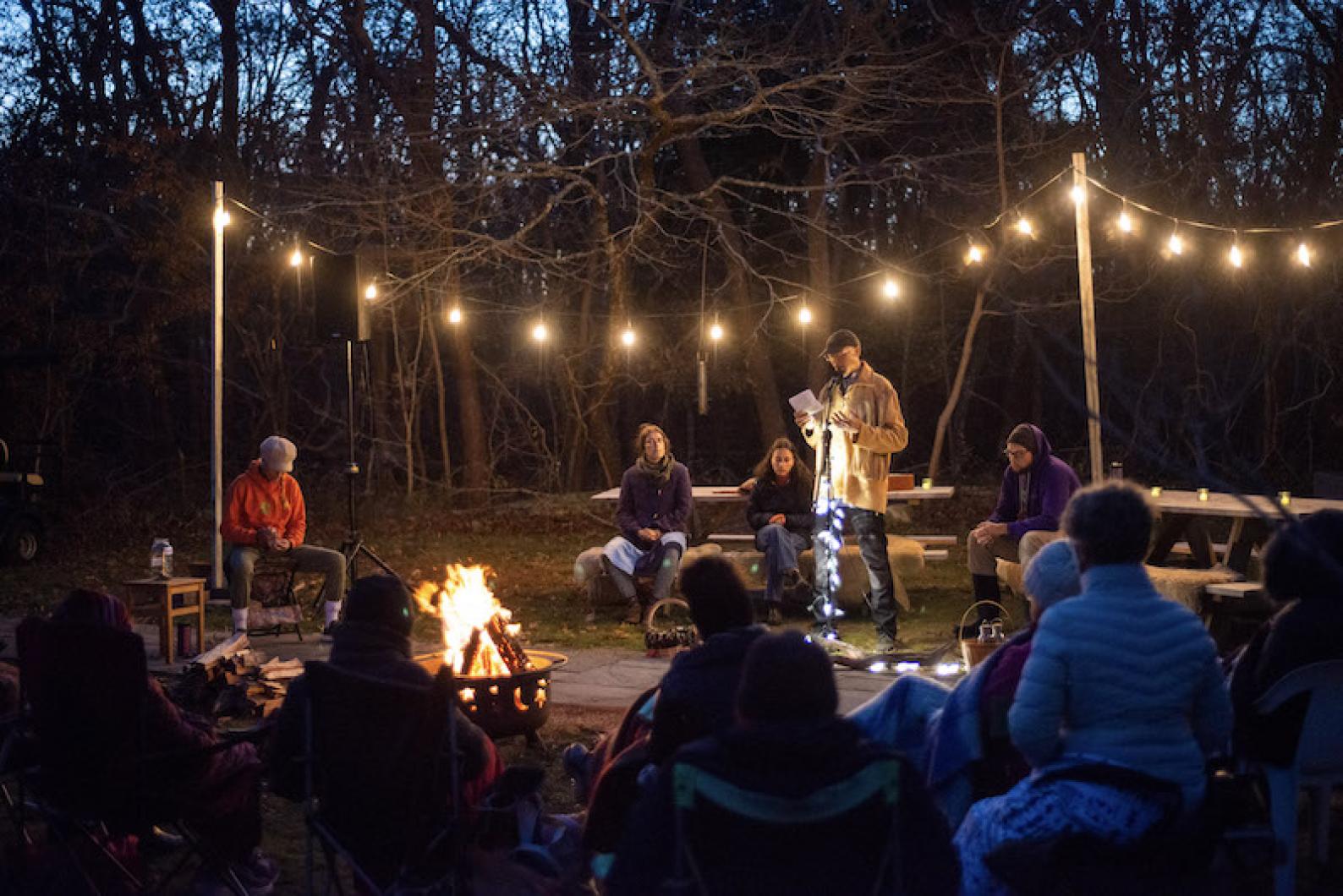
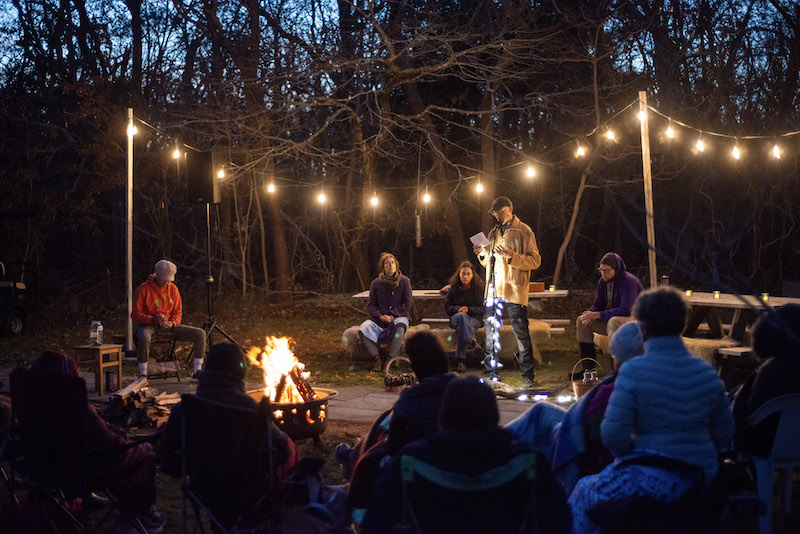
With Thanksgiving on the minds of many, members of the Wampanoag tribe spoke on a chilly Thursday evening to reflect on what to them is not a festive holiday.
With Thanksgiving on the minds of many, members of the Wampanoag tribe spoke on a chilly Thursday evening to reflect on what to them is not a festive holiday, but rather a reminder of a dark, traumatic event — the true meaning of which has been sanitized by the historical record.
Titled An Ungrateful Taking, the talk took place at Felix Neck Wildlife Sanctuary and was hosted by Sassafras Earth Education co-founders David and Saskia Vanderhoop. Mr. Vanderhoop started by offering a litany of things he is thankful for, then speakers shared their thoughts about the history between native people and the United States.
Aquinnah tribal ranger Michael Sellitti opened by reminding the group of about 30 people that all of Massachusetts and much of the Northeast was Wampanoag territory.
“We acknowledge those ancestors and all of their ways . . . their wisdom and intuition when it came to being stewards of this land,” Mr. Sellitti said. “We acknowledge that this wisdom that they had was passed for many generations and that seeds of that wisdom exist within us today.”
Mr. Vanderhoop said Thanksgiving is a day of grief for native people.
Alexis Moreis, of the Chappaquiddick Wampanoags, spoke about making Wampanoag land rights a priority.
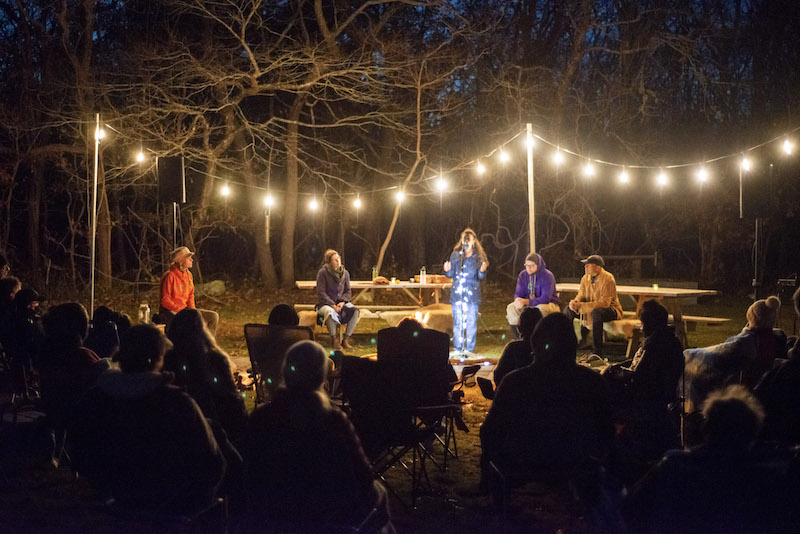
Alexis Moreis, of the Chappaquiddick Wampanoags, spoke about making Wampanoag land rights a priority.
“Now that’s not to take away from any celebration that you all have in your house, where it’s a wonderful thing to gather with family and friends,” he said. “But what I am saying is that for me, as a Wampanoag man . . . it is not a day of thanksgiving. It’s a day of mourning . . . that reminds us about what has been taken from us.”
The first gathering, 400 years ago in 1621, was a minor event, Mr. Vanderhoop said. The Pilgrims were celebrating a successful harvest, he continued, which happened because native people showed them how to cultivate the land, and shot off their rifles in revelry. Thinking the gunfire signaled trouble, an army of Wampanoags showed up to honor a mutual-defense pact with the Pilgrims. There is scant evidence of a celebration between the two groups, he said.
What’s more important are the subsequent early gatherings, which were parties to celebrate the genocidal conquest of native people and their land, Mr. Vanderhoop continued.
“There are numerous accounts of these celebrations where white people played soccer with native peoples’ heads,” he said.
Thanksgiving did not become a national holiday until 1863, when Abraham Lincoln declared it as a way to bring together a nation fractured by the Civil War, and the story of docile natives breaking bread with paternalistic Pilgrims was born, Mr. Vanderhoop said.
“The action of this lie carries over from that time in the 1800s right up to today, as this white colonized system is still driving native people into debt, stealing their land through so-called legal practices, and keeping us impoverished on our own land,” he said.
Native people rank at the top of “every single negative list,” Mr. Vanderhoop said, from drug abuse to alcoholism to suicide. “That is only part of the harm that still continues today.”
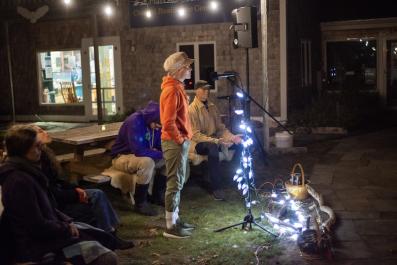
Saskia Vanderhoop urged the crowd to sit with their discomfort.
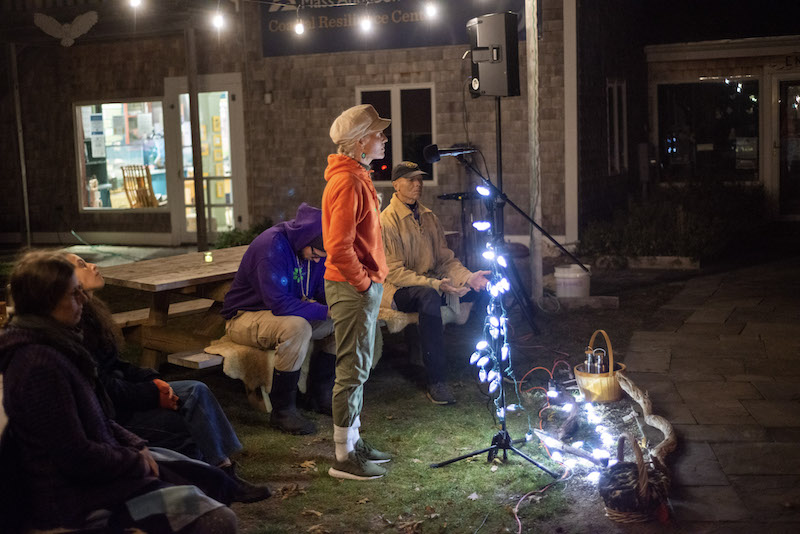
Saskia Vanderhoop urged the crowd to sit with their discomfort.
Alexis Moreis, of the Chappaquiddick Wampanoags, gave a more Island-centric account of native land dispossession and its continuing impacts.
“The Chappaquiddick Wampanoag tribe we had . . . 800 acres allotted to reservations,” Ms. Moreis said. “Today the Chappaquiddick Wampanoag nation owns zero.”
Wampanoag voices should be centered in Island conservation projects because they know the land, Ms. Moreis continued. Efforts to bring affordable housing to the Island must also consider Wampanoag people, she said, as the ones who have left have done so by necessity.
“We’re benefiting from 12,000 years of Wampanoag people living and taking care of this place,” Ms. Moreis said. “There needs to always be a priority of making sure that the Wampanoag people are able to stay here, [live] here, and provide sustenance for their families.”
Audrey van der Krogt, who is not of native descent, offered an apology to the Wampanoag people.
“For the lack of truth and history taught in the schools . . . for there still being Columbus Day on the Martha’s Vineyard school calendar. For the [United States] government not offering their condolences and acknowledging this country’s history, I offer my condolences,” Ms. van der Krogt said.
Recognizing the truth is the first step towards reconciliation, Mr. Vanderhoop said.
“It just uplifts me so much to see you here, to be able to listen to some history, and to be able to talk about it and maybe do something about it,” he said. “Bring this to your table. Truth talk. That’s what you can do.”
Comments
To live with and celebrate
Harry Seymour Oak BluffsTo live with and celebrate such an ugly truth with blindfolds and earplugs makes us blind and deaf to our own basic humanity..
Truth Talk, yes and thank you
Susan Desmarais Oak BluffsTruth Talk, yes and thank you.
That was then, this is now.
Hugh Saac Oak BluffsThat was then, this is now. How can we make today better?
Well put, Hugh. Thanksgiving
Jesse Chase Martha's VineyardWell put, Hugh. Thanksgiving is a day of gratitude. What can we all create together going forward to increase our collective gratitude?
Let's all learn from Native Americans today and celebrate our gratitude for their deep, beautifully inspiring, and insightful collective wisdom. Thank you to every Native American in our country. We are blessed by your profound experience and wisdom.
And a very special and heartfelt thank you to our own beloved, June Manning. Her own Native American Wampanoag spirit remains and teaches us by example here on Martha's Vineyard.
Happy Thanksgiving. May we be blessed with profound Gratitude now and forever more.
The “white people playing
Jill Newman W TisThe “white people playing soccer” at these “celebrations” isn’t quite accurate. Although a similar ghastly act may very well have occurred-as it is documented in a historical account-there is no written evidence of this “soccer” happening as a game played among “white people”
The true historical accounts are indeed bad enough. Really no need for embellishments.
The “soccer ball” reference was from a 1637 account during the Pequot War.
From the ‘Manataka American Indian Council-Introduction for Teachers’
“Colonists along with their Indian allies (Narragansett and Mohegan) attacked a Wampanoag village in present day Groton, CT.
“ Following an especially successful raid against the Pequot in what is now Stamford, Connecticut, the churches announced a second day of “thanksgiving” to celebrate victory over the heathen savages. During the feasting, the hacked off heads of Natives were kicked through the streets like soccer balls.”
Great question Hugh. Here are
Gary & Kristina Kinsman Maynard West TisburyGreat question Hugh. Here are some easy things we can do right now:
1. Return all un-ceded town owned lands (yes there are such lands) in all island towns to the tribe now.
2. Include Wampanoag membership on the boards of all island conservation groups now.
3. Prioritize Wampanoag residents for island wide affordable housing now.
4. Visit and donate to the Wampanoag Cultural Center, Sassafrass Earth Education or other native cultural groups now.
5. When it comes to native history, listen and hear them tell it. Others have written what we have been taught for 400 years. Now it is their turn.
6. Recognize that all of our towns have names thousands of years older than the names we use. Change all island signs Now to include these names.
8. Support indigenous artists, designers and businesses. Buy from “Inspired Natives” not “Inspired by Natives.”
7. Educate yourself by reading, watching or listening to indigenous written and produced books, film and podcasts now.
It is important to know that we white people believe what we were taught, a narrative that has been doctored over centuries to make us feel better about ourselves. Just read our own historical documents, real written records of what happened, when and why. That was the “then” and it has not ended until we re-examine our relationship with history. The “now” is to listen to native voices with open minds and learn to live with the uncomfortable truth you find.
David Silberman’s book is a
Carl Oak BluffsDavid Silberman’s book is a detailed and sobering account of that time and what really happened. It’s a must-read for anyone who wants to learn our history.
This Land Is Their Land: The Wampanoag Indians, Plymouth Colony, and the Troubled History of Thanksgiving https://g.co/kgs/fX793x
We will not embrace this new
Bob EdgartownWe will not embrace this new cancel culture. Happy Thanksgiving.
To me; Thanksgiving has
mike SomewhereTo me; Thanksgiving has always been about; Family, a great year, bountiful harvests and accomplishments. Has never been about celebrating genocidal conquest of Native Americans lands. That may have been then, but most assuredly is not the case now. For I believe many do as I do. The rhetoric saying it is - and that it applies to all whites is disturbing and divisive to say the least. Let it rest - or - oh no - not until you pay your dues to us. With this type of sentiment - it seems will never be able to get to the other side. There are a lot of uncomfortable truths that have happened over time in all areas of the world. Can we - COEXIST. - That would make the world a better place going forward into our future.
We disrespect our ancestors
Rebecca ChilmarkWe disrespect our ancestors by changing their stories to make ourselves look better, and we do children a disservice by feeding them false narratives…someday they will learn to google and know that we have lied. Truth may be bitter but it’s not toxic.
Add new comment