

With a torrent of offshore tropical storms and hurricanes churning up dangerous, heavy surf south of Martha’s Vineyard throughout the summer, Chilmark beach manager Martina Mastromonaco spoke with the Gazette this week about best techniques for avoiding rip tides and staying safe in the water.
With a torrent of offshore tropical storms and hurricanes churning up dangerous, heavy surf south of Martha’s Vineyard throughout the summer, Chilmark beach manager Martina Mastromonaco spoke with the Gazette this week about best techniques for avoiding rip tides and staying safe in the water.
According to Ms. Mastromonaco, the surf on the south side of the Island can be unpredictable, determined by factors that include offshore storms, winds, the moon and tides.
“We had a couple bad days this summer,” the longtime beach manager said.
Waves and strong surf can create a combination of rip currents, rip tides and undertow — all technically different in the field of physical oceanography, but effectively similar in practice.
While rip currents are narrow, localized currents that flow away from shore, rip tides are very strong currents that form as the tide pulls out of an inlet, such as the cut in the Tisbury Great Pond. Undertow occurs underneath all shore-approaching waves, with varying degrees of strength.
All three can be powerful enough to carry even the strongest swimmers out to sea.
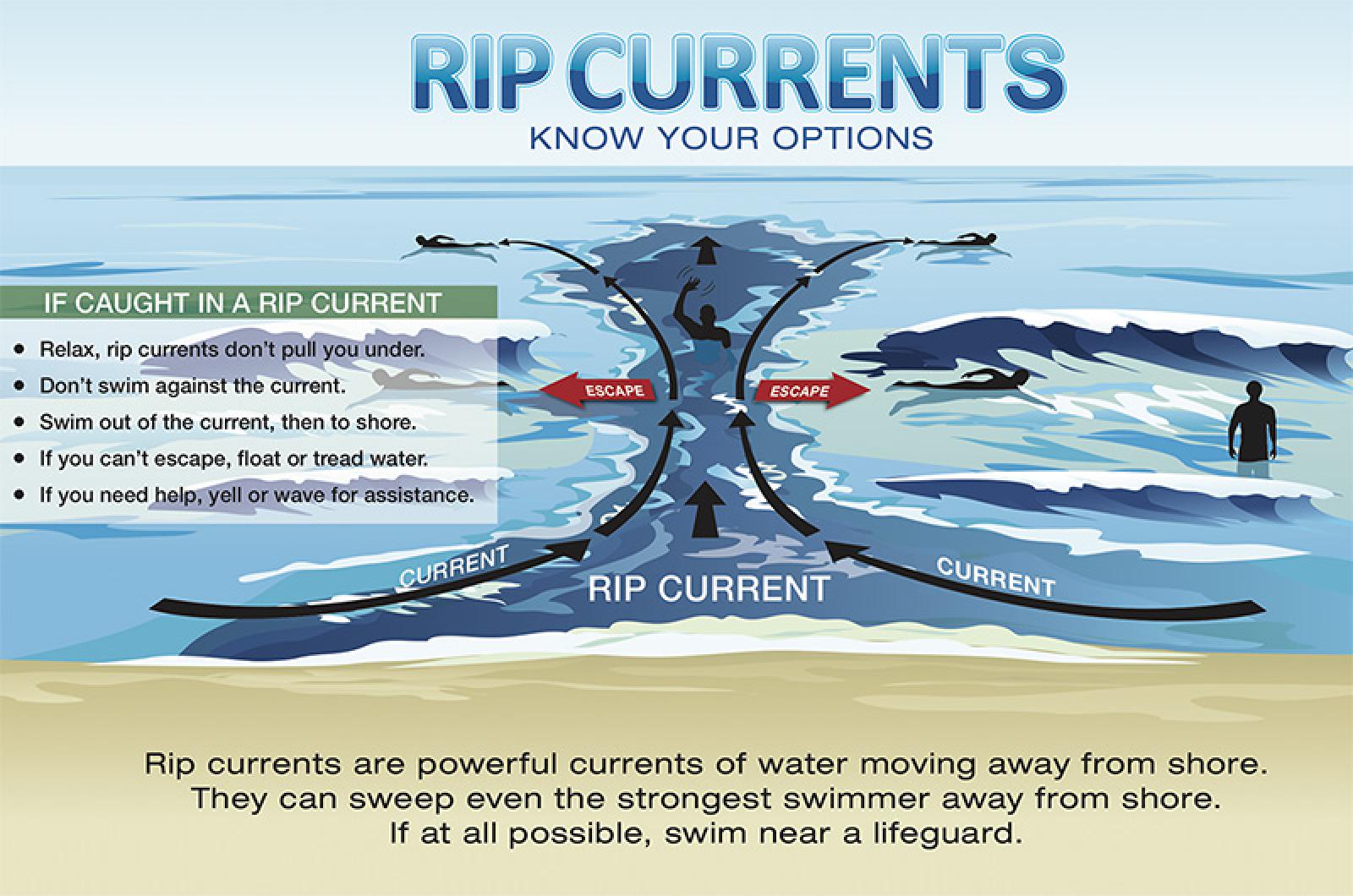
Ms. Mastromonaco described the best technique for handling a rip current, saying not to panic or resist the current, but to swim parallel to shore.
“When you’re in a rip, it’s pulling you out. A lot of people don’t realize that they are getting further and further out from shore,” Ms. Mastromonaco said. “Instinctively, they want to swim back to shore. But they don’t make any headway, so to speak, because they are still in the rip. So the best thing to do is to swim along the shore, until you come out of it. Eventually you will come out of the rip, and then you swim back to shore.”
She continued:
“Unfortunately, people panic, and they get tired. Depending on how big the surf is, they could totally be getting a beating with the waves. It’s better not to fight it, to try to relax, and to swim along the shore to come out of the rip — if, in fact, it is the rip causing the problem.”
The oceanography at places like the Tisbury Great Pond cut, which experience extremely strong tidal rip currents, is slightly different, but the technique for avoiding the rip is similar.
“Once they open the cut, there’s a strong surge of water leaving the pond,” Ms. Mastromonaco said. “If you’re standing on the sides of it, you could be pulled out.”
Tides from the cut can be so powerful that they often create their own waves, counter to the shore-bound surf. Ms. Mastromonaco said the area near the Tisbury Great Pond also has a steep bottom drop-off, meaning people can quickly lose their footing or get swept to sea. The tidal forces at the cut are generally the strongest soon after it is opened, weakening as it closes up through natural processes.
“You could be walking out, and then all of a sudden, it drops straight down,” Ms. Mastromonaco said. “And so you have a tendency to have more of a pull to the left or to the right. But it can also be a rip, which pulls you out, especially as you get closer to the opening.”
Ms. Mastromonaco said she suggests flotation devices for most swimmers.
“If you get tired, you just rest on the flotation, and try to kick your way along the shore, until you’re not being pulled out anymore,” Ms. Mastromonaco said.
She added that a strong rip tide is always more powerful than even the strongest swimmer, meaning everyone should take caution.
At press time Thursday, national weather forecasters were tracking Hurricane Sam, a huge category four storm swirling offshore east of the Leeward islands in the Caribbean. The storm is expected to stay well offshore but kick up large swells and dangerous surf along Atlantic-facing beaches over the weekend.
Comments
Thanks for publishing this;
Gabrielle West TisburyThanks for publishing this; excellent work
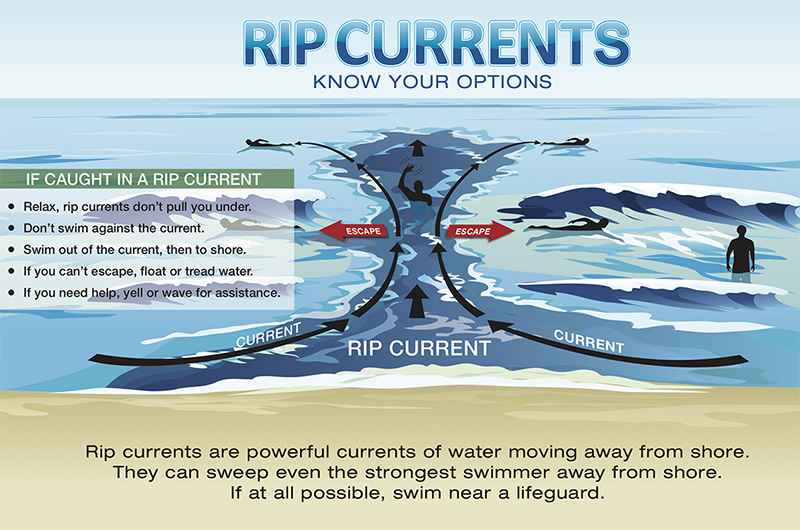
NOAA has rip tide posters in
Albie Scott York, MaineNOAA has rip tide posters in both English and Spanish that can be downloaded/printed. Seal in plastic, mount on a board, and post at beach entrances where they'll be seen.
How wide is the worst rip
Frank EdgartownHow wide is the worst rip tide, and do you have any lifeguards who can describe their own experience with any?
The correct term is rip
Steve M ChilmarkThe correct term is rip current. The width can vary a lot, depending on the bathymetry of the inshore surf zone. The velocity of the outgoing water depends on the size of the surf and the bottom contours.
Excellent article. It is
Chris ChappyExcellent article. It is unfortunate that the self inflating life preservers are so costly. They will save your life 100% of the time. They can be worn around your waist or other models are worn like a harness with minimal impact on your movement while swimming. They should be encouraged.
The terms rip tide and
Steve M ChilmarkThe terms rip tide and undertow are misnomers and are never used by professional lifeguards or ocean scientists. The correct term is rip current.
Add new comment