

Right Whales Increase Activity in Ocean Waters Slated for Offshore Wind Farms
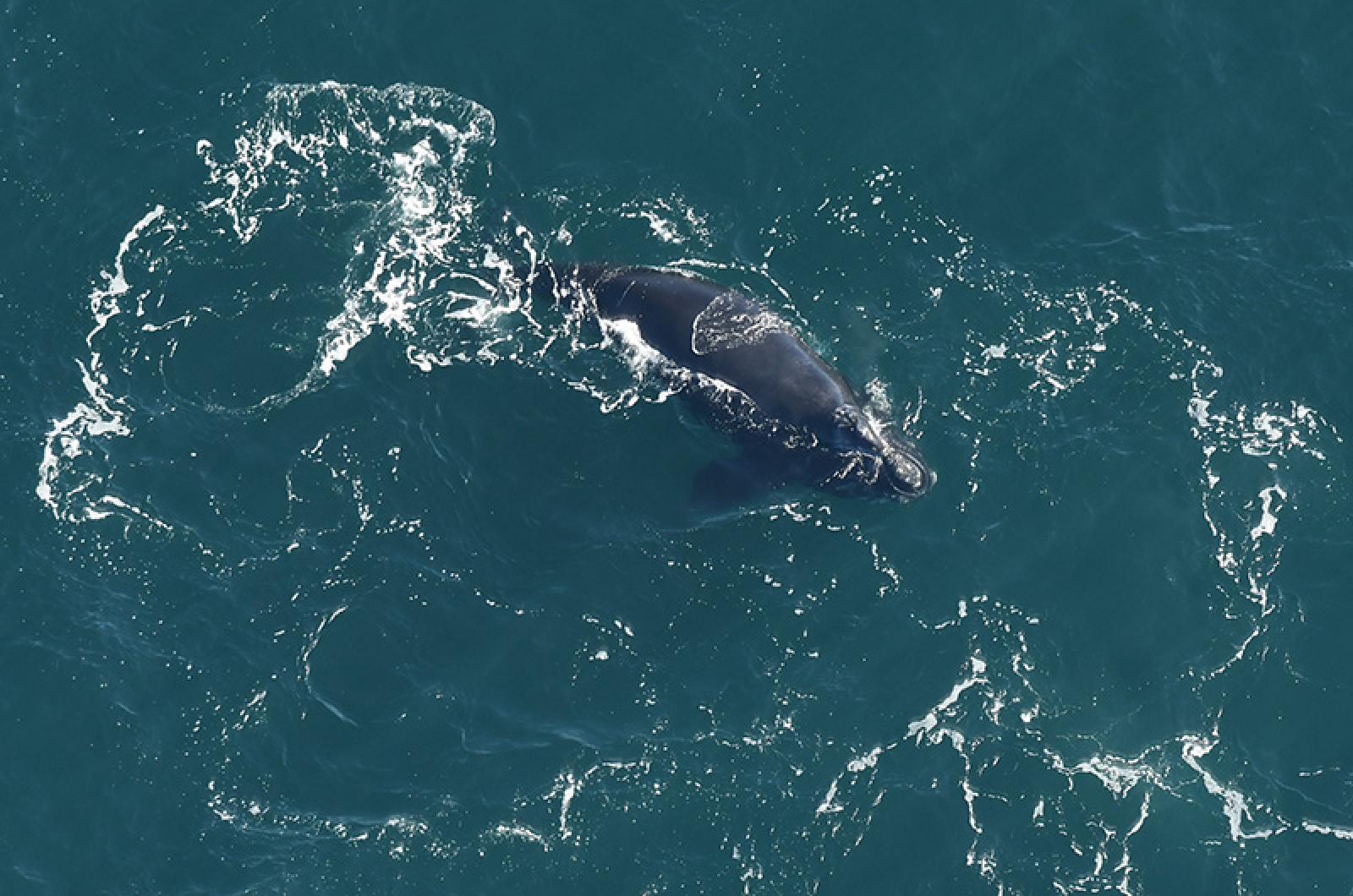
Critically endangered North Atlantic right whales are increasing their presence in waters south of Martha’s Vineyard, according to a recent study, including large swaths of ocean slated for wind energy development.
Critically endangered North Atlantic right whales are increasing their presence in waters south of Martha’s Vineyard, according to a recent study, including large swaths of ocean slated for wind energy development.
Conducted by scientists with the New England Aquarium, NOAA Fisheries and the Center for Coastal Studies using aerial survey data from 2011 through 2019, the study found that 327 unique right whales have been spotted in the waters of southern New England, making the area a crucial habitat for a species teetering on the edge of extinction.
Scientists estimate the North Atlantic right whale population at less than 400 total specimens, including approximately 100 breeding females.
Meanwhile, the study comes just as the country’s first industrial-scale offshore wind farm, Vineyard Wind 1, has cleared federal approvals and is scheduled to go online by 2023, jump-starting a nascent offshore wind energy industry that could lead to the construction of hundreds of underwater wind turbines in the region.
According to Vineyard Wind, the project will include 64 turbines approximately 15 miles south of Martha’s Vineyard. Additional leaseholders in the area, including Mayflower Wind and a second Vineyard Wind project, would significantly increase turbine counts.
In the study, scientists noted that the presence of right whales has been sighted in the area south of the Vineyard every month in recent years, with large aggregations occurring during the winter and spring.
Between December and May, almost a quarter of the right whale population may be present in the region, and the individual residence time for whales has increased to 13 days during the period, the study states. Visual and acoustic monitoring, from flight surveys and photography, showed consistent use of the wind energy area by a third of the species, including 30 per cent of breeding females.
The study was funded by the Bureau of Ocean Energy Management, the federal agency responsible for permitting offshore wind development, as well as the state Clean Energy Center.
Tim Cole, a co-author of the study and leader of the whale aerial survey team at the Northeast Fisheries Science Center, said in a statement that continued studies were crucial considering the increased presence of the species in the area.
“Since a number of large commercial offshore wind energy projects are proposed off southern New England, construction and operation of wind farms are relevant to conserving the species,” Mr. Cole said. “Considerable uncertainty still exists regarding how the development of the region could have an impact on right whales just as they are becoming more reliant on the region.”
In an email to the Gazette, a Vineyard Wind spokesman said the company would continue to work hand in hand with regulators to protect the species.
“This report is based on science that we have been engaged in and following closely for years and this information is included in our project mitigation,” spokesman Andrew Doba said. “We have and will continue to support the application of good science throughout the development and operation of this first project and future projects.”
First documented in southern New England waters in April of 2010, little was known about the presence or migration patterns of right whales prior to last decade. But even as their overall numbers have declined, scientists have noticed an uptick in their presence south of the Island, considering it an important feeding ground, socializing habitat and through-way as the whales travel south to breed or north for the summer months.
Scientists noted that offshore wind development could impact the whales in a variety of ways, including an increase in vessel traffic — one of the leading causes of right whale deaths — as well as increased ocean noise and habitat alterations, potentially affecting plankton populations.
In 2019, Vineyard Wind signed an agreement with leading conservation groups that, among other things, requires the company to curtail turbine construction during winter and early spring when right whales may be present in the region, as well as dampen construction noise and undertake a comprehensive whale monitoring program.
But with the recent study, scientists pushed for continued mitigation efforts, and in the report emphasized the importance of balancing offshore wind development with right whale migratory needs.
“Implementing mitigation measures by all companies holding leases will be crucial, and should be adapted and reevaluated continually in relation to the whales’ use of the area,” Mr. Cole said in the statement. “Given the large-scale shifts that the species is experiencing, a variety of studies will be needed to understand potential changes in right whale distribution patterns and to inform appropriate strategies for future wind energy development.”
Comments
Get rid of the wind, keep the
Don Edgar Oak BluffsGet rid of the wind, keep the whales!!
We, myself included, could do
Vasha Brunelle Vineyard HavenWe, myself included, could do much more to reduce our energy needs, although to give up the pleasure and convenience of some energy grabbers, many not even necessary, may be too challenging for us. Then there is all that money to be made by growing the economy. Can we do better?
No construction in winter and
Bob EdgartownNo construction in winter and early spring and now we need to add summer looks like the fall is the only time they can build. Save the ocean save the whales and save our tax dollars and stop this feel good project.
We are wasteful people.
Lorraine EdgartownWe are wasteful people. Drive around any neighborhood and see houses blazing with lights, huge gas guzzling monster vehicles sitting in driveways, water running while tooth brushing, running errands in a scattered manner, we like to talk about husbanding our resources, but it is much easier to virtue signal than to do it. My take on this, at least, after decades of observation of my fellow man.
We need clean energy
Jim P.We need clean energy desperately, but not at the expense of this precious marine ecosystem. This wind farm is slated to be the first of MANY, imagine the entire area between Nantucket and block island covered in these in the next few decades.
If we protect piping plovers
Kristen Araujo EdgartownIf we protect piping plovers at all cost, not a single OSV down S. Beach when they nest, then why on earth would we not do even better by our Ocean ecosystem & endangered whales? We need our Ocean healthy & strong.This project wreaks of damage & disturbance to marine life, keep the project on land! We are a greedy species of excess & convenience. it's high time we re evaluate need vs. want. More isn't always better. I'm all for wind energy, just not in our oceans!
They only point out the
Prowindguy New englandThey only point out the negatives , expected during the construction of the turbines which might impact whales.
Making offshore wind turbines is good for us, and protects the water surrounding from traffic/fishing to the improvement of sea life. Maybe not seabirds, but the structure and lack of negative human activities once built increases the muscles and clams that attach to the poles, increased fish and crustacean too!
Anybody who cares to take a look at the underwater life surrounding the block island offshore wind can see video of the biodiversity and biomass increase (sharks, fish, muscles, vegetation)
It's like if you noted the cost to build an eco friendly fence around a nature preserve as negative impact to the deer because it scares them off while you put up the fence
I have long believed that the
David Damroth ChilmarkI have long believed that the windfarm areas be set aside as marine reserves, open only to recreational fishing. That set-aside would create a far safer habitat for the whales while, at the same time, allow fairly large areas to function as marine nursery areas for fish.
My marine biology teacher said something in the first class, "anything at the bottom becomes habitat'.
When is the government going
Susan McHughWhen is the government going to realize a global scale wind farm in this area is such a bad idea due to the impacts on one of the top 10 ocean ecosystems in the world
Thank you Noah for diligence
Gregg Rosner DelawareThank you Noah for diligence in writing this article. There’s great concern for these species on their migratory route through the Mid Atlantic, and all marine life in general that will be impacted by our energy need and greed. The best first step and a job maker would be to make homes/businesses energy efficient to use less or Net Zero.
For decades Massachusetts has
Paul Craney MassachusettsFor decades Massachusetts has balanced environmental preservation with commerce and recreation. It would be heartbreaking to see all that progress and shared sacrifice lost in order to quickly rush an industrial offshore wind development...
Add new comment