

Rising heating bills and a pricey track and field project led to the need for nearly a dozen line item budget transfers at the monthly meeting of the regional high school district committee.
Rising heating bills, insurance costs and a pricey track and field project led to the need for nearly a dozen line item budget transfers at the monthly meeting of the Martha’s Vineyard Regional high school district committee Monday.
The mid-year transfers, which total $250,000, are intended to reconcile various line item overages in the school operating budget, business administrator Mark Friedman told the committee.
A handful of increases can be tracked to the pandemic, Mr. Friedman said, including about $34,700 for electricity and propane, and $34,500 for Covid cleaning supplies.
Another $12,000 transfer was to cover a school committee secretary and a nursing position, and $44,164 was needed to pay for added insurance needs.
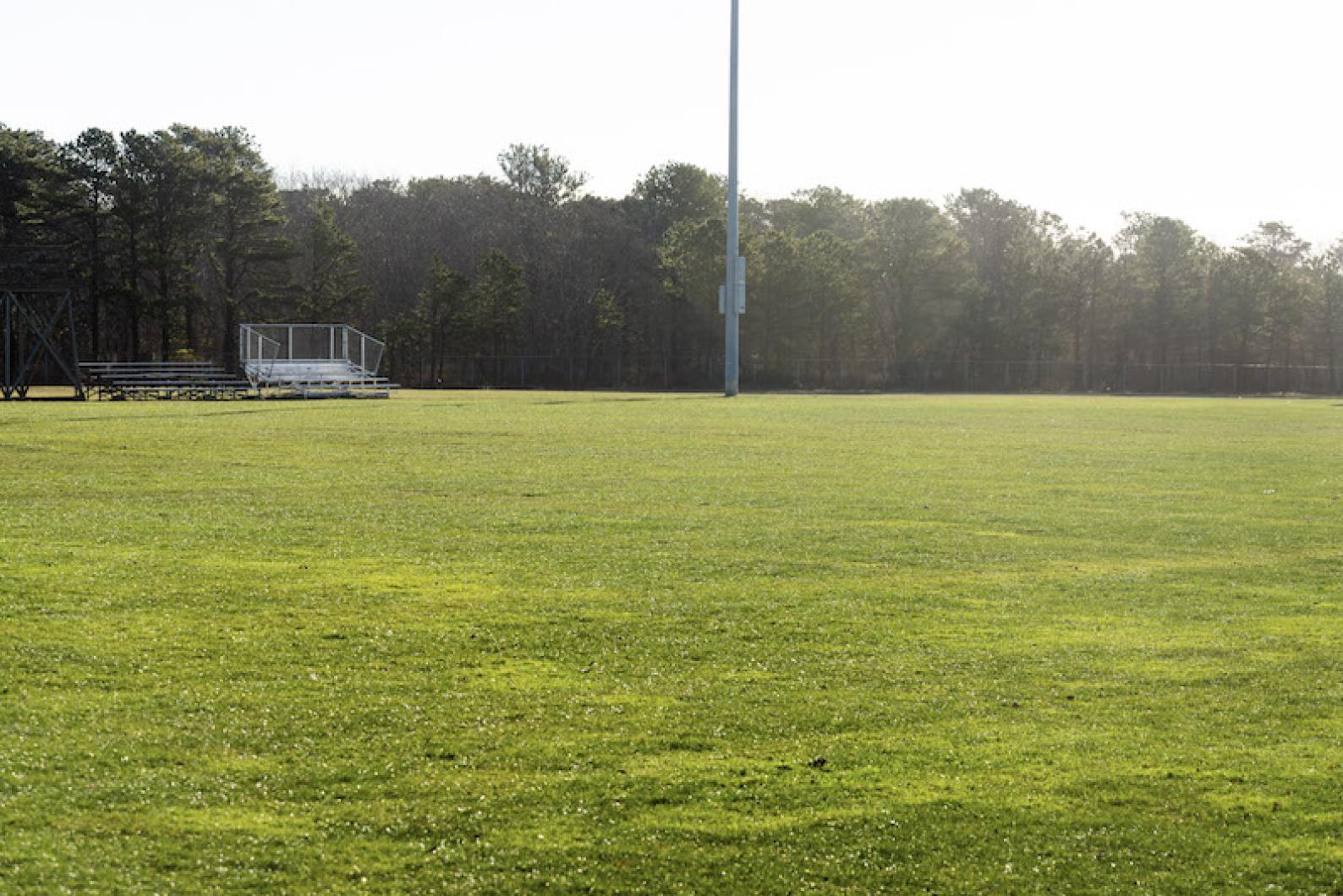
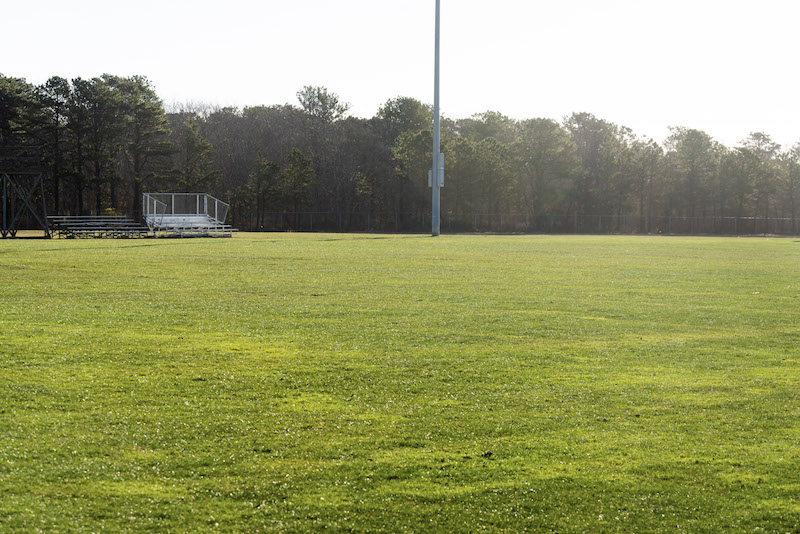
But the budget transfers hit a bump in the road when Mr. Friedman requested $75,000 to cover unbudgeted expenses for a project to replace the main high school athletic field with synthetic turf. The $7 million project, which has sparked controversy, is currently under review by the Martha’s Vineyard Commission.
The $75,000 is to pay for a toxicology report, a peer review and unforeseen engineering expenses required by the commission, Mr. Friedman said.
“[This] is a projection of official costs that the high school is likely looking at for the continuing review process of the track project at the Martha’s Vineyard Commission,” he said. “These additional expenses are being driven not by the high school’s design, but they are in response to questions, peer reviews, and the other boards and commissions that are reviewing the school’s project.”
The work was ordered by the commission but must be paid by the project applicant. The final price tag for the school could rise depending on future studies and reviews, Mr. Friedman said.
A number of committee members called the expenses excessive.
“The Martha’s Vineyard Regional High School as the applicant wholeheartedly supports thorough testing,” said committee member Kris O’Brien. “The testing that’s being required that is so exorbitantly expensive and beyond our original quote . . . is beyond Prop 65 of California, it’s beyond Massachusetts EPA, it’s beyond EPA.”
Mike Watts agreed. “This is the MVC saying you have to use funds to answer a question that we already have an answer to,” he said.
Others expressed dismay that the burden would ultimately fall on taxpayers.
“I believe we had told more than one group of individuals we would not be spending any more tax dollars on this project after the appropriation was secured,” said committee member Skipper Manter. “I truly am against it.”
Voting on each one separately, the committee ultimately approved all the transfers, but not unanimously.
The field project expenses were approved 6-3, with Robert Lionette, Mr. Manter and Roxanne Ackerman voting nay.
In other business Monday, the committee heard a presentation from high school principal Sara Dingledy on the school’s accountability report — a compilation of school data, including MCAS test results — and the ongoing work to narrow achievement gaps.
Ms. Dingledy shared results from the 2018-2019 school year, noting that statewide tests were not administered last year due to the pandemic. Among the highlights, Ms. Dingledy noted a sharp decrease in absenteeism and suspension rates over the past few years.
She called the improvements “slow and incremental, but . . . still moving in the right direction.”
Ms. Dingledy also highlighted the importance of supporting students who take more than four years to graduate.
“We are raising expectations, we are raising supports and we are graduating kids who are ready to graduate. If it takes five years, it takes five years,” she said in part.
Ms. Dingledy also said the school will continue to support underserved groups, including the ESL and high-needs populations.
“This is the reform that we’re working on. This is what I think will yield results in the near future,” the principal said.
Comments
Maybe administrators should
Mark EdgartownMaybe administrators should focus on teaching given recent MA DOE accountability report and leave the finances to those capable of managing them without burdening tax payers.
Can you provide more details?
Barbara Fortes Vineyard HavenCan you provide more details? Who is the independent environmental consultant? What firm did the MVRHS hire for $75,000 to pay for a toxicology report, a peer review and unforeseen engineering expenses?
MVRHS didn't hire an
Islander61 OBMVRHS didn't hire an independent consultant, an independent toxicology consultant was paid for by a private source to defend false accusations being made by opposition groups and to give the community reassurance that this project is safe based on the science associated with THIS project. The $75k is to pay for ADDITIONAL testing that the MVC is requiring (see Mr. Watts comments above), even though all previous testing resulted in a tests well below EPA allowances for the materials tested. The additional testing is not needed but the MVC is hiring another company to do tests that have already been done and that is done on the HS dime equalling $25k. The additional engineering was to design a septic system that can't be used because it would be too costly and probably wouldn't pass the OB health department. This is needed to bring the field up to code regarding bathroom availability for the site. The OB sewer system is at full capacity, OB needs to upgrade the capacity of their waste water system to incorporate the high school and other areas of town, thus putting the field house part of the project on hold until OB sewer will allow the school to tie in. Lastly, the MVC has asked the school to answer over 200 questions regarding the project. This takes time and time is money, something that couldn't have been predicted when bidding the project.
Islander61 you seem to have
Barbara Fortes Vineyard HavenIslander61 you seem to have first hand knowledge regarding THIS project perhaps you could use your name when commenting on important matters concerning the high school's facilities especially if you are employed by this public school system.
Mr Friedman stated at the Feb. 1st School Committee meeting "the $75,000.00 is to pay for a toxicology report, peer review and unforeseen engineering expenses required by the Commission" In your comment you accounted for $25,000.00 of the $75,000.00 affirming it was for another toxicology report. Can you clarify so that the general public has enough information to form an educated opinion, has the remaining $50,000.00 already been tapped into for "unforeseen engineering expenses" that is the septic design that will not be used, or are these funds strictly for ADDITIONAL projected costs? 25K for a toxicology report and 50K for a septic system design "that probably wouldn't pass the OB health department" is excessive and down right outrageous, if I'm to understand yo correctly.
Add new comment