

The event at the center of Lieut. Col. William Baker’s posthumously published book, The Brownsville Texas Incident of 1906, happened at midnight.
The Brownsville Texas Incident of 1906: The True and Tragic Story of a Black Battalion’s Wrongful Disgrace and Ultimate Redemption, by Lieutenant Colonel William Baker. Red Engine Press, 2020, 504 pgs., $24.95
Lieut. Col. William Baker died in October 2018. It would take two more years for the seasonal resident of Oak Bluff’s masterwork to be published posthumously, thanks to the efforts of his wife Bettye Baker.
The event at the center of Mr. Baker’s book The Brownsville Texas Incident of 1906 happened at midnight. On August 13, 1906, a wave of violence swept through the town of Brownsville, Tex. Windows were broken, property was damaged and destroyed, and a spray of gunfire not only wounded a policeman but killed a bartender. The shooting lasted less than a quarter of an hour, but it left a deep mark of carnage in its wake.
The townspeople had been traumatized, and they didn’t have any trouble assigning blame, because unrest had been festering in Brownsville for months, ever since the town learned that the War Department was going to replace the all-white battalion at the town’s Fort Brown with the all-black First Battalion, 25th Infantry Foote US Army, composed of 167 black men.
William Baker (right) with the last surviving Brownsville veteran, Dorsie Willis.
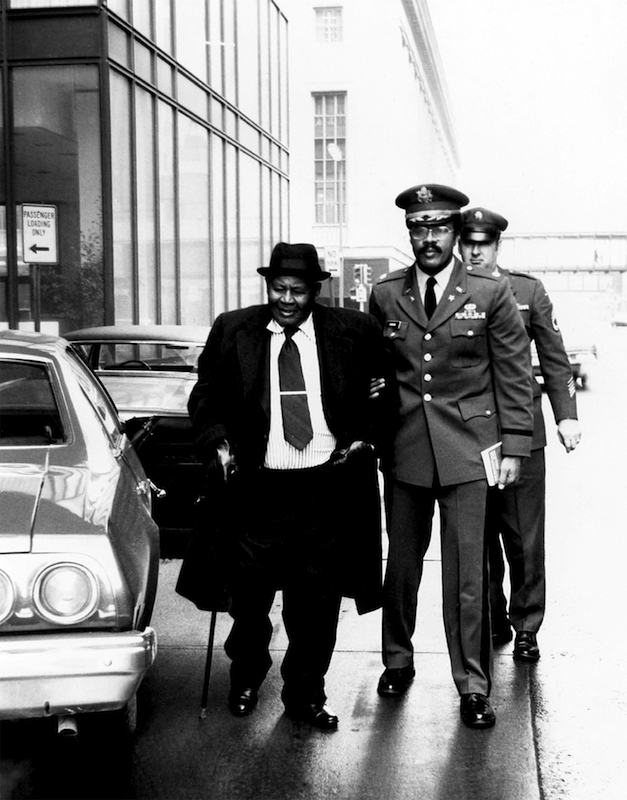
William Baker (right) with the last surviving Brownsville veteran, Dorsie Willis.
The town’s mayor, Dr. Frederick Combe, knew that President Theodore Roosevelt’s Secretary of War, William Howard Taft, had received many complaints about this choice — and some threats of what might happen if those complaints were ignored.
Taft eventually responded with his typical combination of logic and optimistic cluelessness, assuring Brownsville that “Sometimes communities that objected to the coming of colored soldiers have entirely changed their view and commended their good behavior to the War Department.”
Taft’s boss reacted with far less enlightenment after the incident. Roosevelt imagined a “conspiracy of silence” among the First Battalion and held all 167 of them responsible for the violence. He discharged them without honor and without trial, stripping them of their pensions, banishing them from government work, and laying on them a weight of disgrace that would mark the former members of the battalion forever.
“It followed almost all of them into old age,” Mr. Baker writes. “It drove some into insanity. And cruelly, it followed most of them to their deaths. Along the way, as they wandered across the country, they told stories of their innocence to anyone who would listen.”
Mr. Baker came to the Office of Equal Opportunity at the Pentagon in 1972, and he did deep and unprecedented research into the Brownsville incident, presenting a case to the Department of the Army that resulted not only in the reversal of Roosevelt’s decision and the exoneration of the First Battalion but also compensation to the one surviving member of the unit.
Mr. Baker’s work did what the work of scarcely any historian ever does: it changed history. And in The Brownsville Texas Incident of 1906, he transforms that research into a narrative of gripping power and chilling relevance in the age of Black Lives Matter.
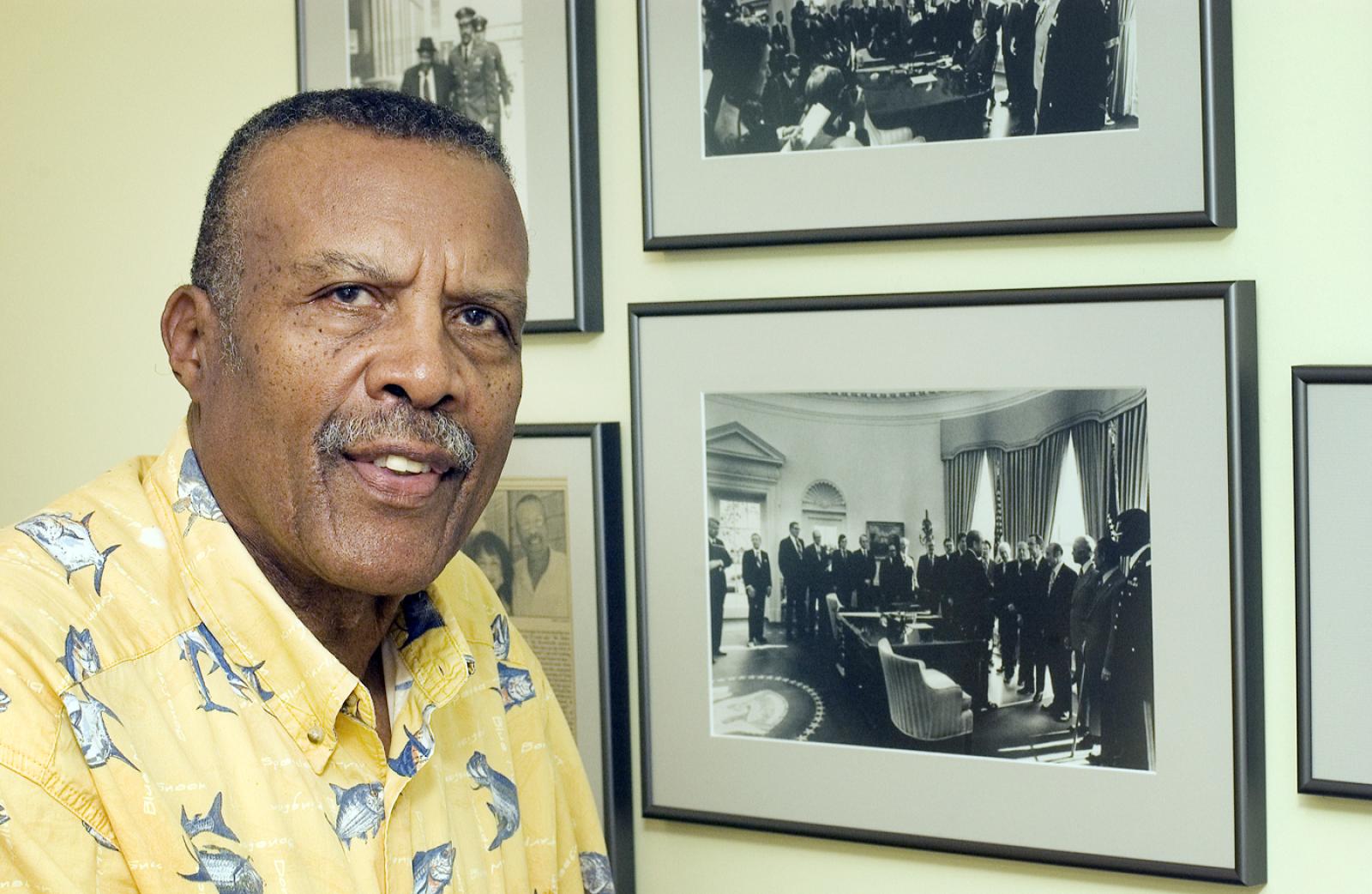
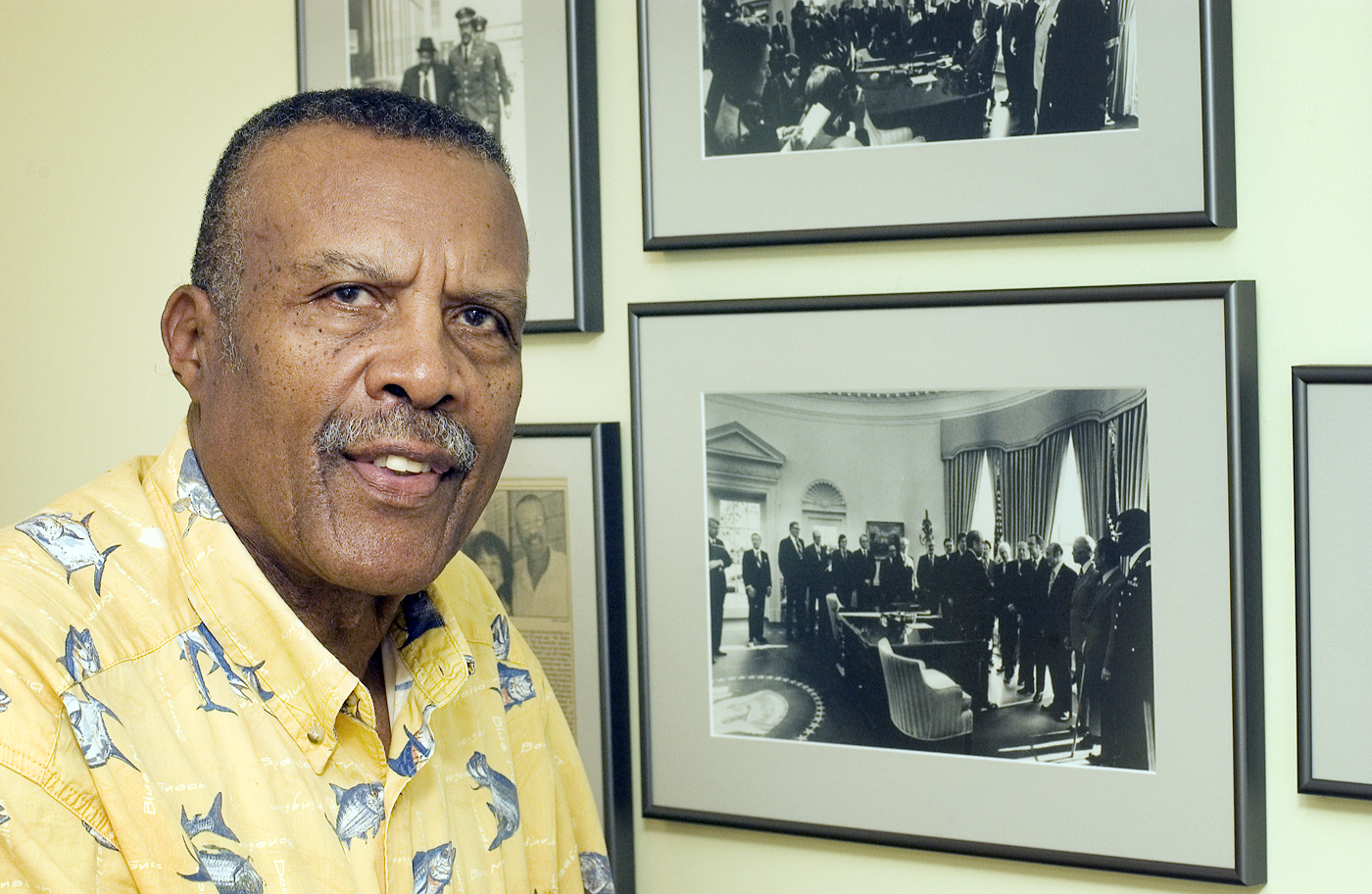
The book often makes for disturbing reading, obviously. In order to fully flesh out the long ordeal of the First Battalion members, Mr. Baker takes readers deep into the world of early-20th century racism. And although large swaths of the story have depressingly precise echoes in our own era, Mr. Baker is careful to bend the arc of his story in some positive directions, culminating in an Oval Office ceremony in 1973, with President Nixon granting thousands of dollars of compensation to any surviving Brownsville veterans and their widows. A few years later, in 1977, the last surviving Brownsville solider, Dorsie Willis, died at the age of 91.
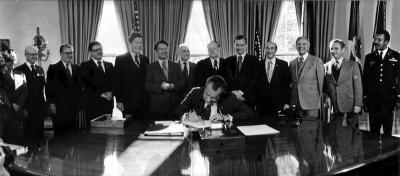
President Nixon signing a document to grant compensation to Brownsville veterans and their widows (William Baker far right).
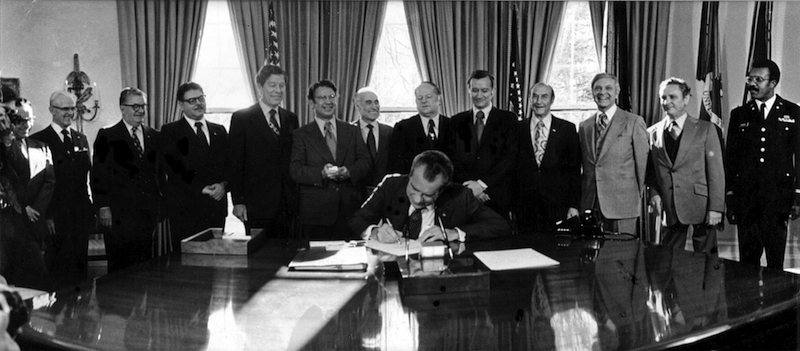
President Nixon signing a document to grant compensation to Brownsville veterans and their widows (William Baker far right).
“A lone bugler played taps,” Mr. Baker writes. “The honor guard fired the gun salute and Dorsie Willis, honorably discharged US Army veteran, formerly Company D, Brownsville station, was finally at rest.”
Mr. Baker investigates every aspect of the incident, and he makes the valuable decision to make his own investigations a large part of his narrative. This book is not only the definitive account of the Brownsville Incident — a long-needed corrective to the standard versions of this old story — but also a completely fascinating look inside the historian’s craft, a very effective dramatization of how researchers go about sorting reliable information from the mass of random historical records.
He also makes the slightly more controversial decision to let those records actually speak directly to the reader. Throughout the book, we get tense, dramatic exchanges like this one between Inspector General of the Army Earnest Garlington and a hapless sergeant merely trying to tell the truth: “All the men deny it [the sergeant said]. I’m convinced that no man in the 25th Infantry did this. Sir, I believe that they don’t know anything to tell you. That’s why they’re not telling.”
Mr. Garlington pounded the table with his fist. “You’re a liar. You are lying, sergeant!”
The Brownsville Texas Incident of 1906 would be an important book even if it were just Mr. Baker’s account of a wretched mark in U.S. history. But because Mr. Baker himself was precisely the right man at precisely the right time, the book is doubly valuable. It not only tells the story true, but it literally sets the record straight.
Comments
Thank you, Bill Baker, for
Linda Earley Chastang Washington, DCThank you, Bill Baker, for telling this important story and for setting the record straight!
Never underestimate the
Edward Redd Oak bluffsNever underestimate the committed & tireless efforts of a committed husband & wife team .Kudos to Bettye Baker and her now deceased husband Lt.Colonel William Baker in getting the wonderful story of the “Texas Brownsville massacre told.It’s a good and worthwhile read .Well done!
Bill Baker’s book is a must
Shirley Redd Oak Bluffs, Mass.Bill Baker’s book is a must read that should be part of our American history books for all high schoolers across our nation and one that exposes an injustice to black American soldiers and the extraordinary efforts of an African American man to set the record straight. Grateful to the Baker Family!
I lived the Brownsville story
Bettye F. Baker Gettysburg, PAI lived the Brownsville story with my husband, LTC (Ret) William Baker for over forty years and understand the depth of its importance to him and to the men of the First Battalion Twenty-fifth Infantry who didn't live to see the justice due them, with one exception, Dorsie Willis. As Bill Baker, said: “I am convinced that justice is not always inspired or achieved by the law, and certainly not by well-meaning platitudes, and not even by just having constitutional rights. Those rights must be activated. It was goodness, the God within, and struggle that achieved a measure of justice for the soldiers. What they got was delayed, imperfect, but redemptive. Truth prevailed. And in this case, ‘truth crushed to the earth’ did rise again.“
what a beautiful quote from
Katie West Tisburywhat a beautiful quote from your husband, thank you for sharing
As painful as it is to read
Roger Lund New Oxford, PAAs painful as it is to read about what these American soldiers endured, the resistance of Bill Baker is an inspiration to us all. What can be more important than the truth? Netflix: you paying attention?
So well done. I think there
Wayne Lau New oxford pa.So well done. I think there’s a Pulitzer Prize here!
Well deserved, for it is such
Elaine Savory Jones Manhattan, NYCWell deserved, for it is such a fine book. Bettye, you and Bill saw this through to a superb conclusion.
Once again, congratulations!
Bettye, thank you for your
Ursula Parrish Daniels San Diego, CaliforniaBettye, thank you for your steadfast commitment to the completion of this book that honors the Legacies of LTC Bill Baker and the men of the First Battalion Twenty-Fifth Infantry. What an inspiration!
What an amazing work of
Evelyn Steen Gettysburg, PAWhat an amazing work of history! It is a wonderful read and I recommend it highly. Enormously proud of Bettye Baker for making sure her husband's life's work was published after his passing. They were quite a team! Can't wait to see the movie version.
Not only is this such an
Warren Steen Gettysburg, PANot only is this such an important story of our American past that must be told, but the manner in which Baker tells the story reads like a novel. I simply could not put the book down until I had finished it. It is a perfect book to help us understand how the troubles of today relate to our past. A great legacy for William and Bettye Baker!
I am just finding out through
Shannon Frost San Jose, CAI am just finding out through ancestry.com that my ancestor was part of the Brownsville Affair. I am so excited to read this book to learn more details about what happened. This is part of history and our children should be given the full picture, I’m thankful that I can share it with mine. I really wish I would have know about this while my elders were still here to tell their stories. Thank you Mr. Baker for writing this book and to you wonderful wife for ensuring the rest of the world would have access to it.
Race, and the American West
Tom Kiniry Carroll Valley, PARace, and the American West
The Brownsville Texas Incident of 1906, by Lt. Colonel William Baker, is a peek back to the early years of the 20th century to the racially charged Texas border. In many ways, Brownsville is a contemporary Ox-Bow Incident. I would not be surprised, due to all the fascinating real life characters who emerge in the story, both in 1906 and later in the that 60's and 70's , that the story of Brownsville becomes a movie.
Highly recommend this book.
Joseph Wyatt Boston, MAHighly recommend this book. It is a part of American history that must be told. Also the story of LTC (Ret) William Baker's efforts to get justice for these soldiers is inspiring. Should definitely be a film.
Add new comment