


Lone star ticks — and thousands of their larvae — have overrun the town of Aquinnah, biologist and tick expert Richard Johnson told Aquinnah selectmen Wednesday.
Lone star ticks - and thousands of their larvae — have overrun the town of Aquinnah, biologist and tick expert Richard Johnson told Aquinnah selectmen at their meeting Wednesday, following reports that showed a high incidence of tick-borne disease in the town this year.
In a letter that went out last week, the town board of health reported 13 new cases of tick-borne illnesses since April of this year, including cases of Lyme disease, ehrlichiosis, babeosis and Rocky Mountain spotted fever. At the meeting, Mr. Johnson said he was in Aquinnah on Tuesday surveying yards for ticks and found lone star larvae in every location he visited.
“I was horrified,” Mr. Johnson said. “I’ve looked at a lot of ticks over the past 10 years and the number of lone star larvae I found was just astonishing,”
Mr. Johnson is director of the Martha’s Vineyard tick-borne illness reduction program. He said he receives at least one call or email a day alerting him to newly discovered clusters of lone star ticks on the Island.
“They’re everywhere,” Mr. Johnson said. “Every property that we have gone to in Aquinnah to do a survey we’ve found lone star ticks. They’re literally every place in the town except maybe the [Gay Head] Cliffs.”
Lone star ticks are a relatively new species of tick to the Vineyard. Although they do not carry Lyme disease, they are known to carry other harmful pathogens that can cause diseases like ehrlichiosis and Rocky Mountain spotted fever, as well as a red meat and or dairy allergy in some individuals.
Mr. Johnson told the selectmen that he hopes this year is an anomaly and the reason behind the explosion of lone star tick larvae is climatological and weather-related.
“I hope this isn’t the new normal but I fear that they’re exploding in numbers,” he said.
Mr. Johnson said lone star ticks and larvae are normally found on the edge of the woods, sometimes in fields but also anywhere where the grass is at least six inches tall. The larvae are the size of a pepper flake, he said. And according to Mr. Johnson, lone star larvae, unlike deer ticks, stay balled up in groups of 2,000 to 8,000 ticks until they are nymphs. Brushing up against a cluster could mean hundreds or possibly thousands attaching themselves to skin or clothing.
Currently, Mr. Johnson said the best way to avoid contact with the clusters of larvae is to wear permethrin-treated clothing or spray clothing and shoes with 30 per cent DEET spray.
Thinking of ways to combat the problem, selectmen Juli Vanderhoop said she has previously suggested that the Aquinnah fire department conduct controlled burns along the edges of people’s yards to eradicate the larvae. Mr. Johnson said Ms. Vanderhoop’s idea is an interesting one that he would like to see explored. He said he knows of a woman in Georgia who is studying the use of fire to eliminate ticks.
“If they burn out underneath the woods enough it takes away the undergrowth, changes the habitat and lone star ticks disappear. Which is totally consistent with what I know of pre-European and pre 20th-century management on the Island. You used to be able to see right underneath the woods, you could walk along and there was not all this undergrowth. If we can find a way to do that, that would be fabulous,” Mr. Johnson said.
Another suggestion mentioned at the meeting was introducing more bird species, like turkeys, towhees and sparrows, to eat the ticks. The problem is that the birds carry them, too.
“It’s a tradeoff,” Mr. Johnson said. “My feeling is that more ticks are surviving by feeding on the turkeys and quail people are releasing than are being eaten by the birds. I think we’re shooting ourselves in the foot if we start releasing more birds. They definitely do eat them and I wish we had more towhees, but we want to really be careful of unintended consequences.”
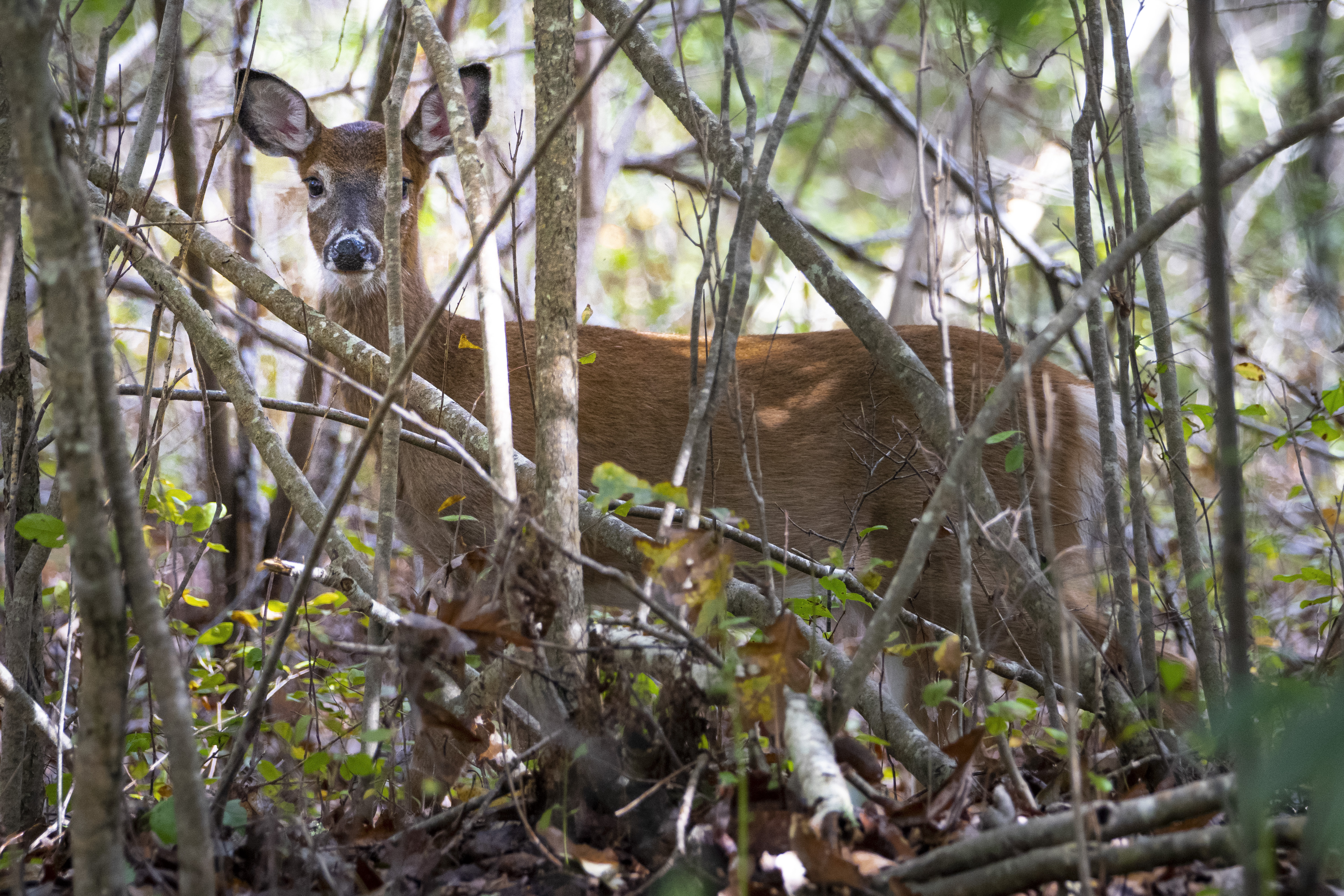
He told selectmen that the number one thing the Island can do to reduce the threat of tick-borne diseases is to reduce the deer population. Bow hunting season began this week, which includes a $100 subsidy for each eligible tagged doe, funded by the tick prevention program.
In other business at the meeting Wednesday, Theresa Manning of the Youth Task Force asked the selectmen for Aquinnah to be the lead municipality behind the organization as they apply for a state-sponsored grant that funds their efforts.
In taking the lead, Aquinnah will carry no financial obligation or fiscal management responsibility.
“It’s truly just an endorsement to say that you believe in the work that we’re doing and that you’ll stay connected to the work that we’re doing,” Ms. Manning said.
Selectmen Jim Newman and Ms. Vanderhoop said they liked the idea.
“I think Aquinnah should be participating more with things that reflect on the community,” he said.
The selectmen unanimously voted to be the lead municipality for the task force.
Before adjourning, town administrator Jeffrey Madison introduced Ron Ferreira as Aquinnah’s new plumbing and gas inspector. He was appointed to the position by Aquinnah building inspector Lenny Jason after George Apostolides resigned.
Comments
I plead with all the hunters
mrrr ChilmarkI plead with all the hunters to do the best they can to kill as many deer as possible. It is a public duty for the public safety to do this. There should be a bounty of whatever it takes to drive the number of deer killed this season to over 2000.
Good idea Ms. Vanderhoop. We
TisKid VHGood idea Ms. Vanderhoop. We have nothing to lose and a lot to gain with that idea.
We need more hunters but one
Bob EdgartownWe need more hunters but one of the issues is the anti gun noise across the Country. This does have effect on the young people who we need to be hunters. The average hunter on this Island is old and getting older. All the years of the no hunting on my property crowd has not helped either. It could be the answer will be coyotes.
My understanding of coyote
Mr B ChilmarkMy understanding of coyote feeding patterns is that the coyote will go for the low-hanging fruit first--and there is plenty of that on the island: dumpsters, cats, dogs, chickens, turkeys, ground-nesting birds, rabbits, field mice, rats. I am sure there is more to add, but deer--even the youngest--will not be high on their list. I believe that the answer will be professional hunters, brought in for the sole purpose of culling the herd by 75% over the course of three years.
Let's start a fund or use
Bob EdgartownLet's start a fund or use public money to hire the professional hunter to do just that.
Kill the deer and feed the
Charlie Callahan So Boston/EdgartownKill the deer and feed the hungry. It's more humane to shoot the deer than to let them starve during the winter,which is what happens to most of them. There are too many deer and not enough vegetation to feed them. Although the tree huggers won't admit that. And killing them also gets rid of millions of Lyme diseased ticks
I completely agree!!!
Amy west tisI completely agree!!!
Opossums Love ticks
Jill Syracuse NYOpossums Love ticks
Nope. Shooting deer is not
JB MANope. Shooting deer is not really a “cure” for booming tick populations. It may make humans feel like something is being ‘done’, but the deer just repopulate. And it’s not just deer that cause the tick population to boom! Birds carry ticks, small rodents carry ticks, etc., etc., etc. Not sure who thought turkeys and quail would help with ticks (??), but there are other birds that eat much more ticks. Of course, people need to TAKE CARE of these birds, dusting their bedding with appropriate, nontoxic tick killing substance, etc.. Also, area tick spraying and posted signs is a MUST for Lyme Disease pandemic areas, to make unsuspecting people aware. Tick-check Shower Card hangers should be in everyone’s showers! When you’ve been outdoors, IMMEDIATELY take off all your clothes & run them thru a dryer on High for 10 minutes, to kill ticks. Check yourselves meticulously. Wear a Deet bug spray, DAILY. Spray your clothes extremely well with a permethrin-based tick spray, and air them outdoors (spray away from pets!!!) for a few hours. The spray lasts through many several washings and repels ticks. PREVENTION is key!! You do NOT want these illnesses that cause massive suffering, and for which there is no real cure. Also, be sure to use flea & tick prevention on your pets MONTHLY and prevent your pets from walking through woods. Spread Diametious (sp?) Earth liberally around your yard and home, and place tick traps on your property every 6 months! You can find them on Amazon, or make them out of toilet paper rolls and cotton balls soaked in permethrin. Tuck them in rocky areas and under shrubs, away from pets..they help cut down on tick populations. The problem is that EVERYONE has to be motivated and take action. Be safe & God bless!
Add new comment