

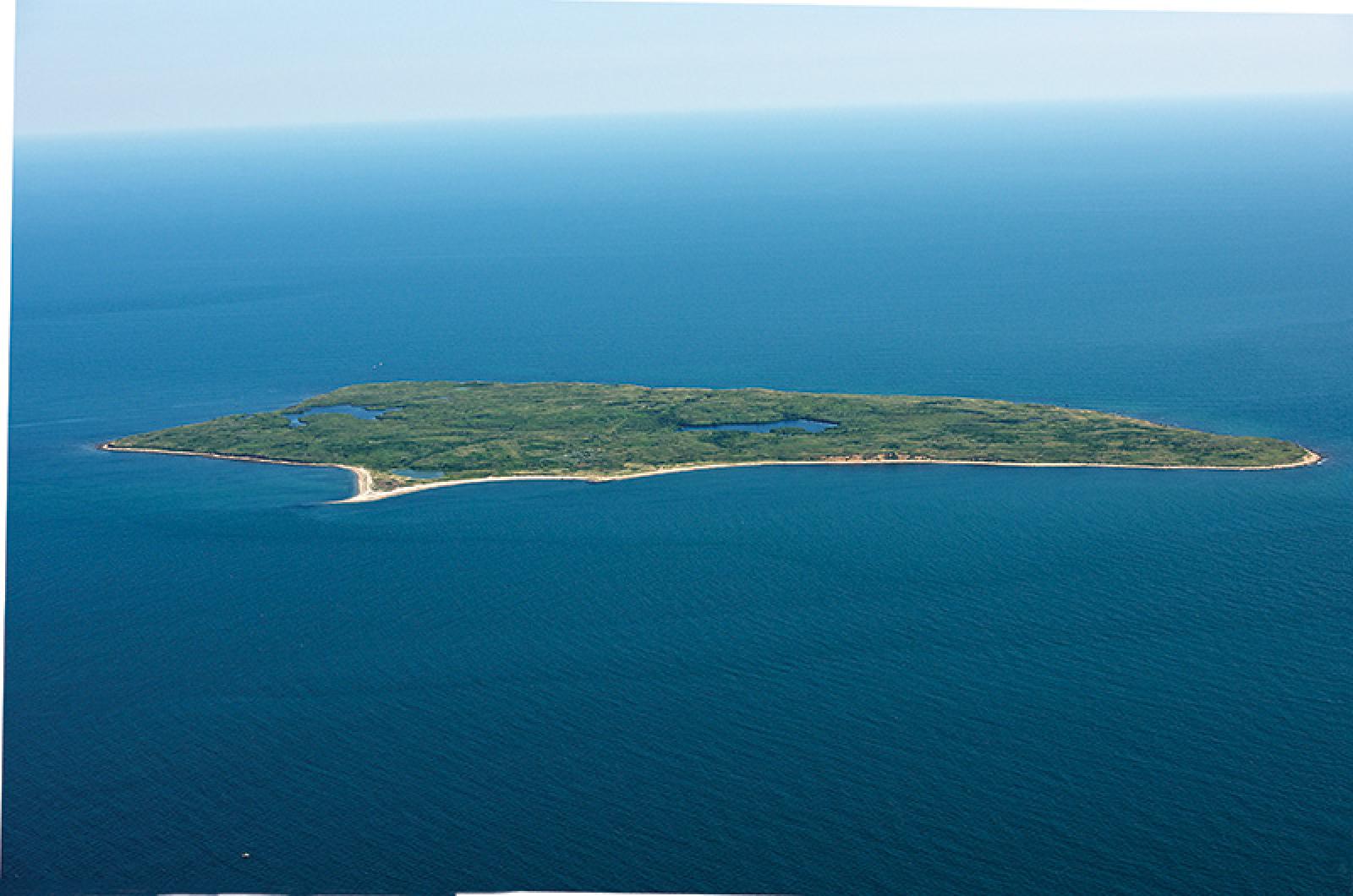
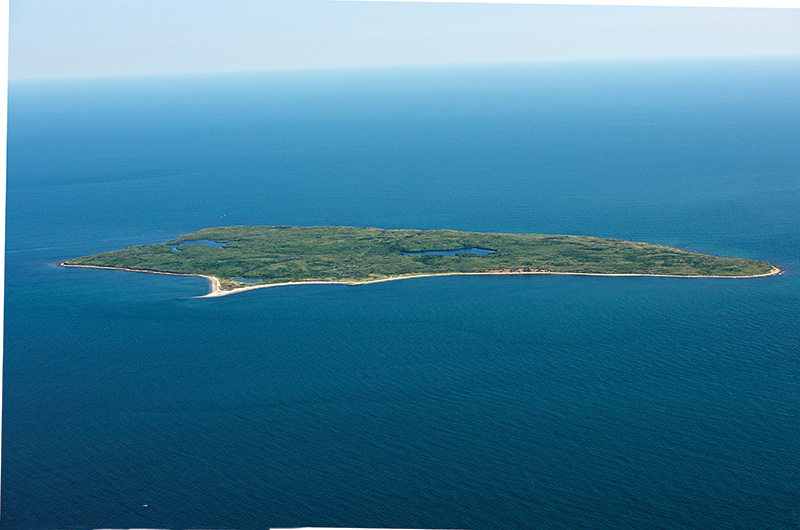
Facing criticism of a plan to stop clearing unexploded munitions left over from years of target practice on Noman’s island, U.S. Navy officials will take public comment until Nov. 2.
Facing criticism of a plan to stop clearing unexploded munitions left over from years of target practice on Noman’s island, U.S. Navy officials will continue to take public comment on the proposal until Nov. 2.
Owned and operated by the U.S. Fish and Wildlife Service, the 628-acre island has been designated as an unmanned wildlife refuge with heavy public access restrictions since 1998. Between 1997 and 2014, the Navy cleared 11,000 ordnance-related items — nearly 671,306 pounds-worth — as well as some 550 additional munitions-related items, according to a report issued in August.
The Navy is now recommending that removal efforts be discontinued, proposing instead to continue to restrict access and ramp up a public awareness campaign about the island’s safety risks. The campaign would employ signs, pamphlets and fines to restrict access to the island, with an estimated price tag of $11 million over 30 years.
At a public hearing Tuesday, Larry Kahrs, a licensed site professional advocating for the Navy plan, said that with former target sites, the possibility of eliminating all risk is virtually impossible.
“We still have a risk of harm to safety,” said Mr. Kahrs. “This is a former range, and we’re going to have that risk into the future.”
But Vineyard residents voiced concern over a plan they said would leave the neighboring island both inaccessible and hazardous.
“My interest is in the island being accessible to people by request if needed,” said Anne Cook, a resident of Chilmark. “There’s still more to do. It’s a fascinating situation, but I do think that opting for this alternative of keeping people away, and not removing the subsurface ordinance, to me, is not really acceptable.”
Bret Stearns, indirect services administrator for the Wampanoag Tribe of Gay Head, urged the Navy to pursue a more thorough cleanup of the island, requesting expanded access for tribal use and burial.
An alternative plan to remove all remaining ordnance from the island — less popular among Navy officials for its potential damage to island wildlife — is estimated at $31 million.
“The tribe desires greater and safer access to the island, both for cultural use, and for general access by tribal members that was something that was promised, from the very beginning,” Mr. Stearns said. “We maintain a partnership and we want to be treated in such a way so that we can help leverage funding and opportunity to assure that they’re safe lands for everyone.”
He also stressed the risk of inaction, noting that erosion on Noman’s could wash unexploded munition ashore on the Vineyard and threaten local communities.
“Let’s not lose sight of the people who live here . . . the impact really is to the community in which we all live for the munitions that end up in the waterways and back on our shores.”
Others, like Dix Leeson of Cuttyhunk, raised questions about the extent of the damage that would result from a more aggressive ordnance removal plan. “I would like to have a better explanation of what happens to the ecology if the ordinance is removed, under that alternative,” he said.
While Mr. Kahrs explained the damage to the native wildlife species and the land would be severe, audience members like Ms. Cook pushed back. “It will cause initial environmental trauma, but I can’t imagine it’s going to come anywhere near the trauma that the island dealt with from the bombing,” she said.
According to Navy policy, no Navy officials responded verbally to the comments raised during the formal public hearing.
A public comment period was scheduled to end in mid October, but with a high volume of feedback already registered, hearing moderator, Navy BRAC Environmental Coordinator David Barney, extended the deadline until Nov. 2. Comments can be emailed to [email protected]
Comments
New ground scanning LIDAR
Mark New HampshireNew ground scanning LIDAR technology will tell them where every single piece of ordinance and metal lies.
Yes. Finish what they
Wolly AquinnahYes. Finish what they started and clean it up. To leave it now would be an insult and embarrassment.
The Navy will ask for our
Roger S. MVIThe Navy will ask for our money in 15 years from now to do it properly. Just do it right the first time.
LIDAR will penetrate some
JaredN Boston/ChappyLIDAR will penetrate some vegetation, but it won't penetrate the ground. Most of the unexploded ordnance is underground. Ground penetrating radar has been used to help find unexploded ordnance, but it is far from perfect.
“He also stressed the risk of
John Aldeborgh Edgartown“He also stressed the risk of inaction, noting that erosion on Noman’s could wash unexploded munition ashore on the Vineyard and threaten local communities.” Really, a bomb dropped 75 years ago on an island well off shore will somehow drift over to Martha’s Vineyard? What study shows this to be a measurable probability?
“ The tribe desires greater and safer access to the island, both for cultural use, and for general access by tribal members that was something that was promised, from the very beginning,” Who promised and specifically what, from the very beginning? From before WWII? This is a bold accusation.
Erosion and moving tides make
Brian Vineyard HavenErosion and moving tides make it probable for ordinance to "relocate". While some may laugh at that thought, it happens all the time. I would argue that degrading munitions pose a much bigger risk to our (EPA designated) sole-source aquifer as they enter the water table. Munitions that rust away could actually be considered more dangerous for this reason. The water departments painstakingly monitor (for specific contaminants), but think of all the people using well-water. There's over 800,000 chemical compositions known, and the majority do not even require a material data safety sheet; unless of course that chemical is proven to be harmful to humans. The water departments are only required to meet a minimum standard health requirement in supplying consumer water. Unfortunately, people make the assumption that their drinking water doesn't require additional filtration once it reaches their residence. Heavy metal in the water table is a growing world-wide problem (i.e. Flint MI, Elk River WV). Consumption of heavy metals is a known silent killer - especially in our area. The lands were used as a targeting range, and the waters for munitions dumping (i.e. fishing grounds locally known as "the dump", and Operation C.H.A.S.E. Cut Holes And Sink Em). Nomans only contributes to the big picture; and these munitions are relatively consolidated.
Bottom line, it is universally known to pick up the trash you drop - should this be any different when it comes to the government leaving bombs in our community? Chilmark, would you prefer to continue collecting a few thousand dollars each year because Nomans is off limits, or have an island that would be worth nearly a billion dollars today?
Add new comment