

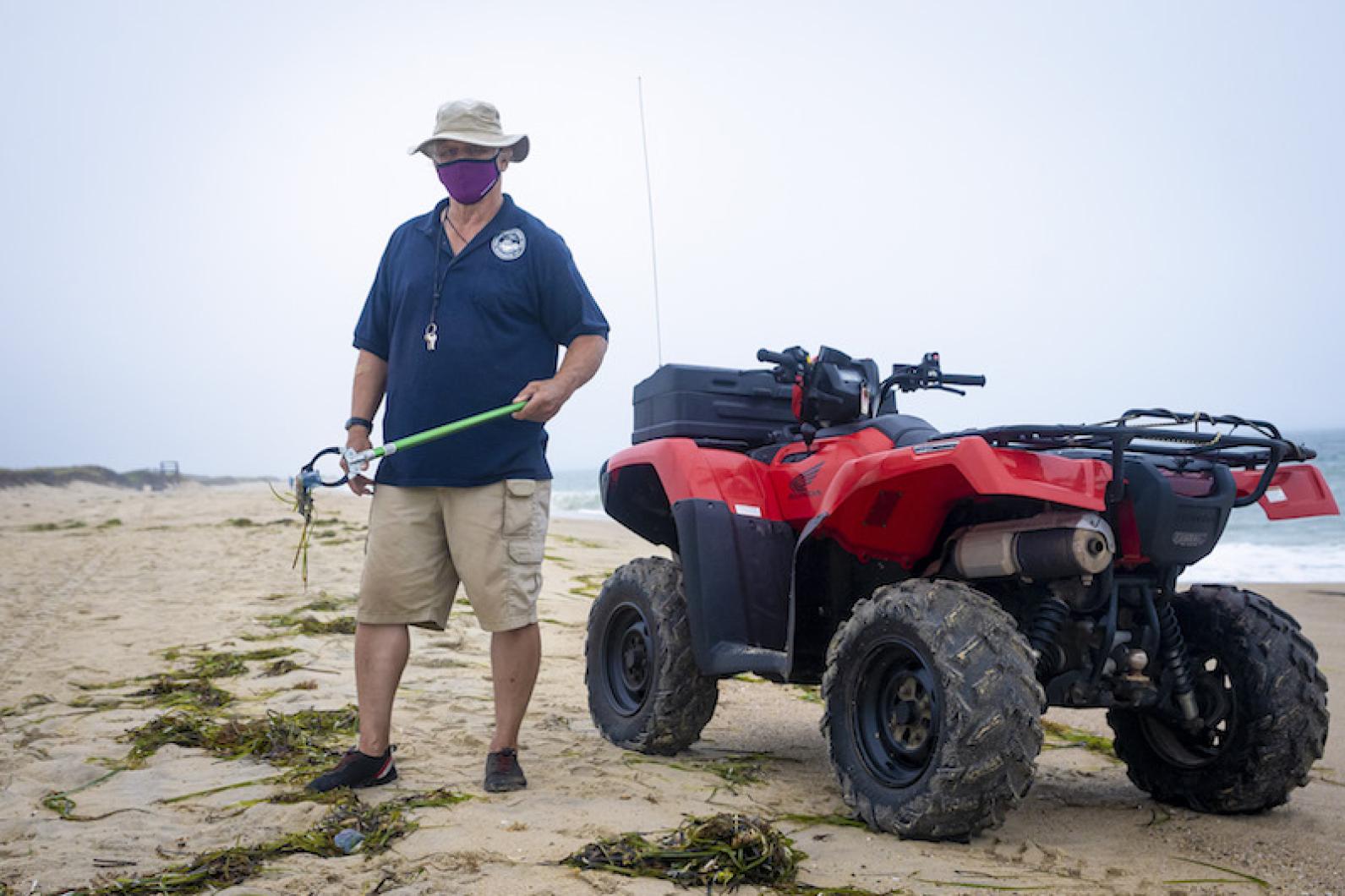
Beaches along the south shore of the Island were closed to swimming as of early Thursday morning, as unusually large waves of the creatures continued to wash up.
Beaches along the south shore of the Island were closed to swimming as of early Thursday morning, as unusually large waves of hazardous Portuguese man o’ war continued to wash up along the shoreline.
At 9 a.m. Thursday, the Edgartown parks department closed South Beach to swimmers until further notice, according to a statement released on the department’s Facebook page. At the same time, all swimming areas operated by the Trustees of Reservations, which include Cape Pogue Wildlife Refuge, Wasque Reservation, Norton Point and Long Point Wildlife Refuge, have been temporarily closed for swimming, the organization said on its Facebook page.
The swimming prohibitions come as large swarms of the highly dangerous, jellyfish-like creatures have been discovered at beaches across the Island’s south shore this week. The swell of man o’ wars was first reported earlier this week on Tuesday and Wednesday mornings, when just over 100 were discovered by lifeguards at Squibnocket and Lucy Vincent beaches in Chilmark.

The animal, sometimes called the floating terror, belongs to a dangerous class of hydrozoan.
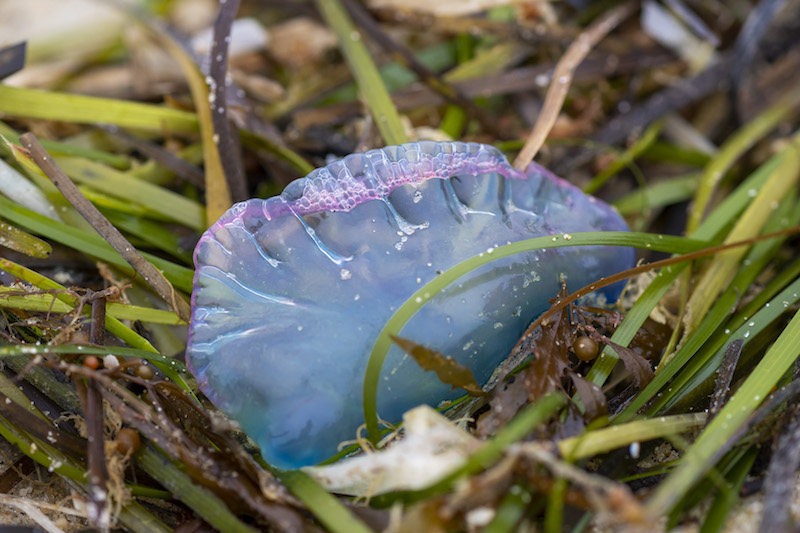
The animal, sometimes called the floating terror, belongs to a dangerous class of hydrozoan.
At South Beach in Edgartown, 70 man o’ wars were removed on Wednesday morning, followed by an additional 40 earlier Thursday, Edgartown parks administrator Jessica McGroaty confirmed.
Farther up-Island at Long Point Beach, Trustees Island director Sam Hart reported over 50 man o’ wars were removed from the beach, with sporadic sightings at Norton Point and Chappaquiddick beaches surfacing throughout the week.
In Aquinnah, town administrator Jeff Madison said a resident sighted “hundreds of thousands” of the animal swarming in the waters just off Gay Head Thursday.
The animal, sometimes called the floating terror, belongs to a dangerous class of hydrozoan found in the Atlantic, Pacific and Indian Oceans. Though closely resembling a jellyfish, unlike the single-organism jellyfish, the man o’ war is classified as a siphonophore, a colonial organism made up of multiple parts.
The man o’ war is distinctive for its vibrant blue and pink color and long curling tentacles, which are studded with venomous nematocysts and can extend up to 30 feet in length to encircle its victims. The man o’ war is a danger to fish and swimmers alike, and can deliver a painful sting both in water and when washed up on shore.
According to Mr. Hart, the animals are not uncommon in the Cape and Islands region, but the high volume sighted on beaches this week is abnormal. “This is an unusual event,” said Mr. Hart. “They’re everywhere, it’s just a very high number of man o’ war this year.”
Mr. Hart said the last time the Island saw such a heavy influx of the creatures was seven years ago, in 2013.
The high volume was also notable to Ms. McGroaty, who recalls seeing only a few last year, much earlier in the summer season. “They came up last year, but not in these numbers,” she said.
So far, no sting injuries have been reported at any Island beaches, which remain open to the public for non-swimming activities.
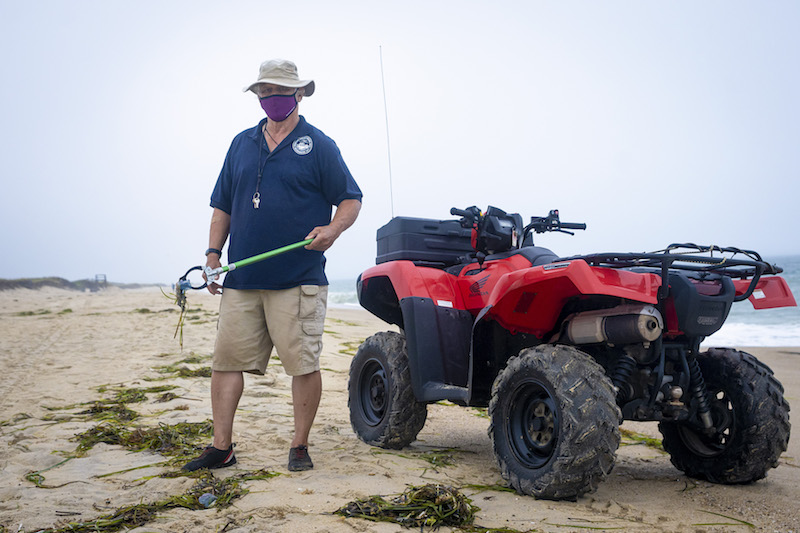
According to protocol, lifeguards and attendants at the beaches have removed the creatures from the shore and placed them out of the way of foot traffic, in some cases burying them in the dunes. At Squibnocket and Lucy Vincent, a purple flag has been raised signaling the presence of jellyfish and signs warning of the dangerous animals have been posted at multiple beaches as well.
Both South Beach and the Trustees-owned areas will remain close to swimming until the surge of man o’ wars dissipates, officials confirmed. Ms. McGroaty said South Beach will remain closed at least through the end of the day.
Because the animals typically move in swarms, beach officials expect to continue seeing high numbers of man o’ wars washing up on shore in the days to come.
Comments
I remember getting stung by
J Klingensmith Naples FloridaI remember getting stung by one of those Man-O-War's when I was a kid swimming at South Beach. I could do the dog paddle fast enough to get out of the water.
Back in the day the big
Richard hertz Western massBack in the day the big challenge would be to swim under the road at crab creek and try not to be bit by any blue claws or stung by jelly fish. My cousin Andy Norton would challenge us to see who could make it first. Robbie Rudolph was always too large to fit through so he gave up early, but it was Steven B Gentle that always made it through, he wore a white tank top, which is how he got his nick name TT... it was that tank top that saved him from being stung by the many jelly fish..
When I see a man o war , I
gary bertz edgartownWhen I see a man o war , I just hold my breath and swim under them so i dont get stung
2020 just keeps getting
Tamara Chin Oak Bluffs2020 just keeps getting better and better. Let us pray!
Got stung by J fish years ago
Stanley Field W Tis uryGot stung by J fish years ago. Never forgot. Learned a lesson.
I have been seeing them
Bill OBI have been seeing them throughout the Edgartown harbor and bay for the last few weeks. On a paddle board I see one about every 30 feet. You can go for a dip if you are careful, but swimming distances or laps really isn't possible without running into one. On the other hand, they don't swim on beach sand.
Years ago I was walking on
Graham Fitzsimons Durham NCYears ago I was walking on the beach with someone who stepped on the tentacle of a dead MOW that had washed up. A lot of pain and red welts across the bottom of her foot resulted. Stay well clear of these creatures!
Add new comment